
2002 Damnations
Futurism vs the music press

As the calendar ticked over to 1981 the UK futurist music and subculture scene began to assert itself with a third front. In 1978 we had the early post-punk synth-pop ventures by nascent labels such as Mute, Industrial and Rough Trade, followed over the next two years by the commercially-backed shift of new romantics from clubbing to music-making (Spandau, Visage, etc) as meticulously documented in The Face. And so, inevitably, 1981 witnessed new stirrings – a reassertion of the earlier ventures and some newcomers. The first months of 1981 saw a proposed tour by Stevo’s Some Bizzare label, a Mute Records label gig, and the ‘2002 Revue’ package assembled by the band Classix Nouveaux.
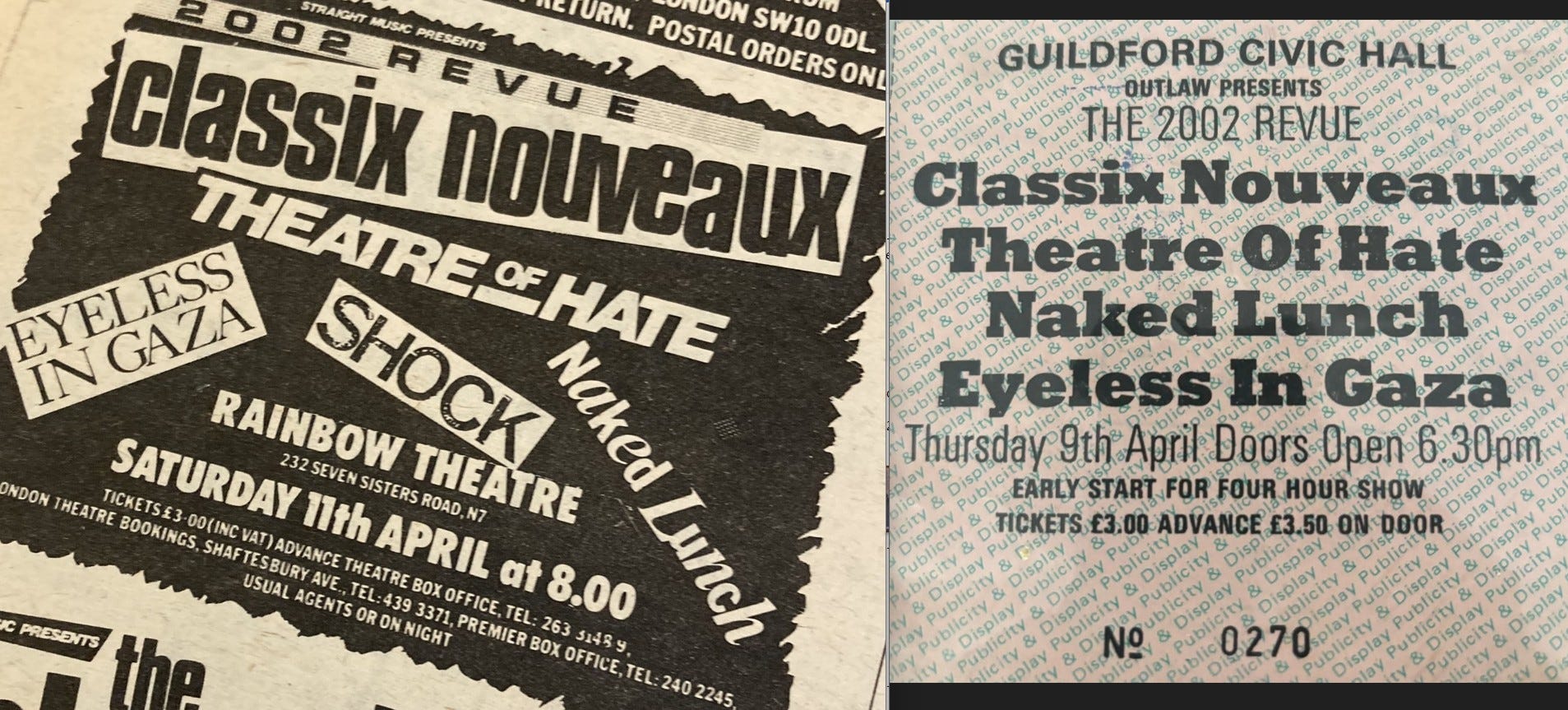
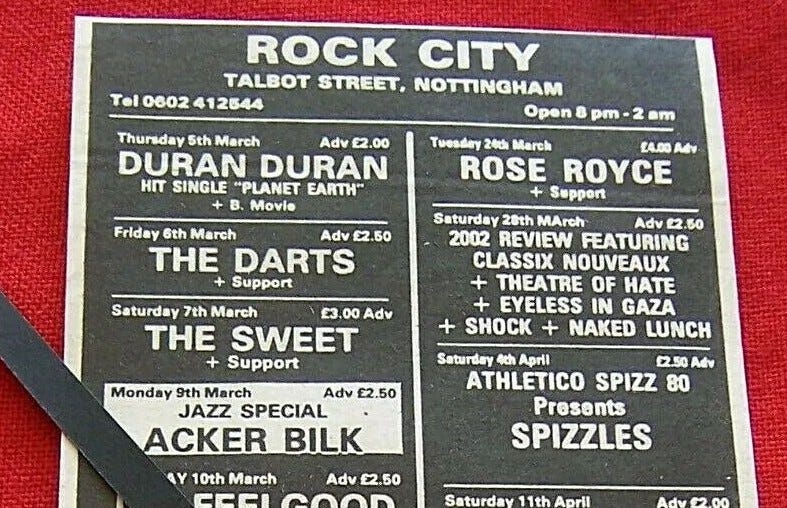
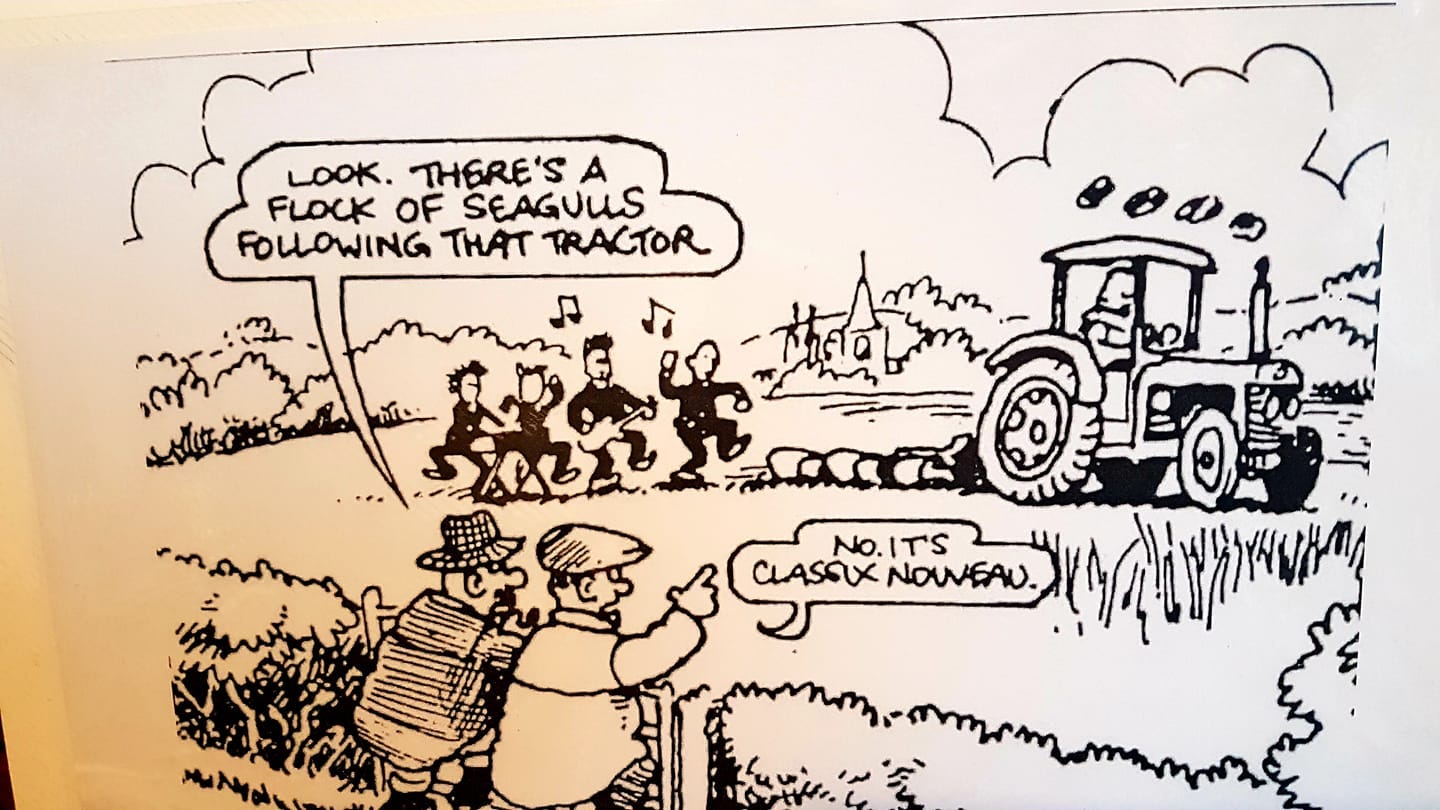
Formed in 1979 as a stylised hybrid of earlier band The News merging with ex-members of X-Ray Spex – Classix never sat easy with a UK music press who harboured deep suspicions about the flowering futurist scene. When trying to conceptually differentiate themselves from this new scene Classix were often accused of evoking a return of pomp rock and, in particular, Queen. In short, they were damned if they did, and damned if they didn’t. The striking frontman Sal Solo, with his shaved head and avant-garde dress sense, drew particular scorn, with scything quotes of his vocal style and dress sense following him from feature to feature.
In their early days Classix were grafters, carving out a nascent fanbase with relentless gigging in the capital. They packed their performances with theatricality and energy, poaching a number of Ants fans as that band started to explore more commercial avenues throughout 1980. On the final Sunday of January 1981, as ‘Antmusic’ sat at number 2 in the charts, Classix announced the inaugural 2002 Revue at the Lyceum Theatre. The decadently decrepit theatre was a venue well accustomed to post-punk multi-bill extravaganzas, with events starting mid-afternoon and finishing before midnight. I have fond memories of entering the building in the glaring daylight and losing track of time, only to emerge in darkness, frantically trying to get a tube to St Pancras in the slim hope of making the last train home north and school the next morning.
Other early 1981 Lyceum Sunday events included Throbbing Gristle’s industrial evening (the band’s final UK gig), a chaotic Some Bizzare showcase where the co-headliners Depeche Mode and Soft Cell never materialised, and a one-off Mute Records night. It was a great time to be exploring new music and new scenes.
The Revue was Solo’s idea, an attempt to offer a consistent event rather than a hierarchy of filler bands. The ensemble included several bands who were around Stevo’s initial Some Bizzare album (Blancmange, Naked Lunch), oddball-amongst-the-oddballs Nash the Slash, the dance-performance outfit Shock, poet Martin Besserman, and a somewhat out of character Theatre of Hate (described in the press as “Spandau bootboys”).
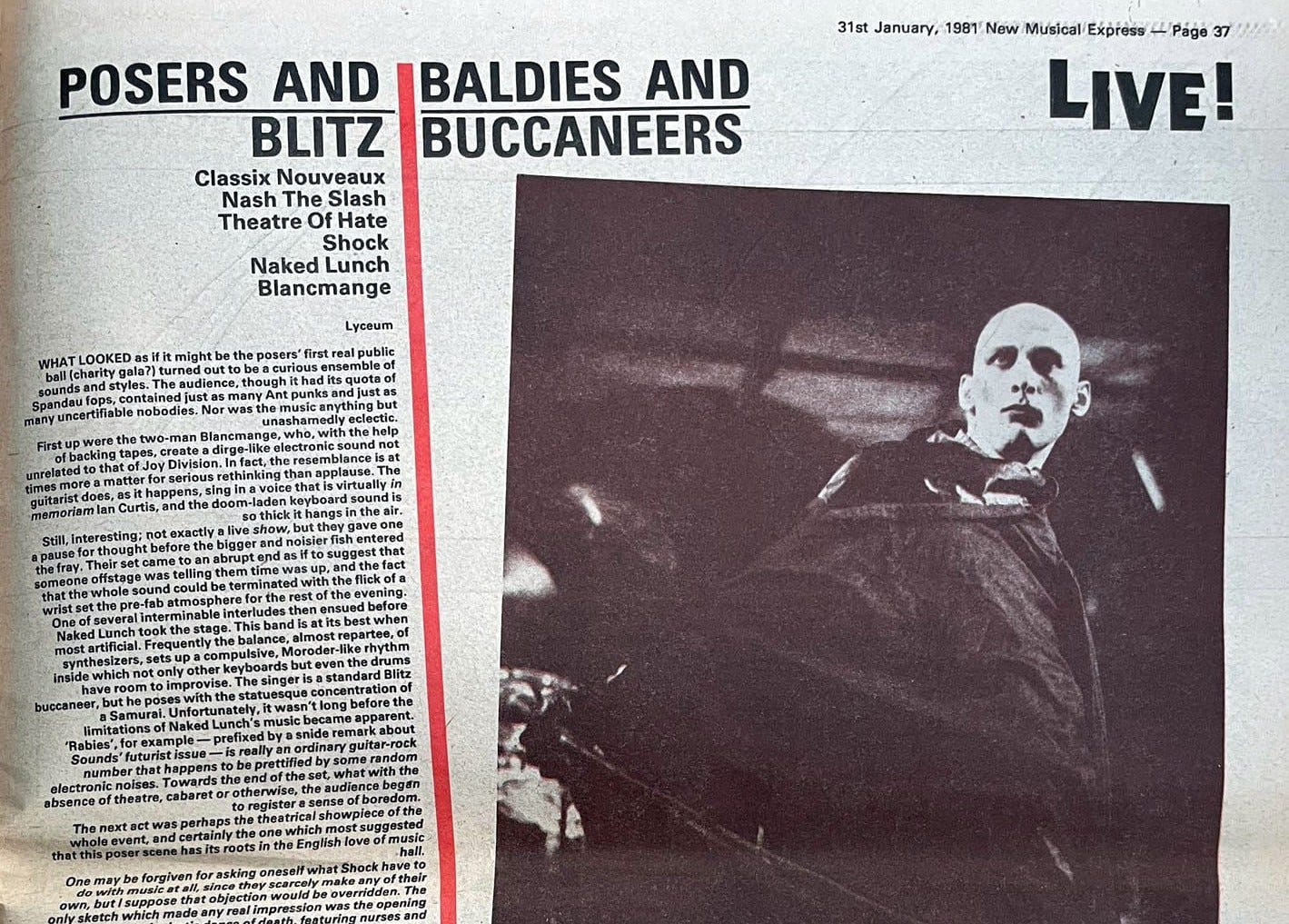
The Revue (often misspelt Review) was critically savaged in the music press, with NME unsurprisingly quick off the mark to stick the boot in with Barney Hoskyns’ write-up ‘Posers and Baldies and Blitz Buccaneers’. He disparagingly described the audience of “Spandau fops” and “Ant punks”, referring to Shock as performing a “robotic dance of death, featuring nurses and doctors out of Horror Hospital”. Classix signalled their arrival with Solo scaffolded above the drum kit, described by Hoskyns as “Gothic-operatic” (the G-word was thrown around quite a lot during this period, though the subcultural stub ‘goth’ would not be coined until 1983).
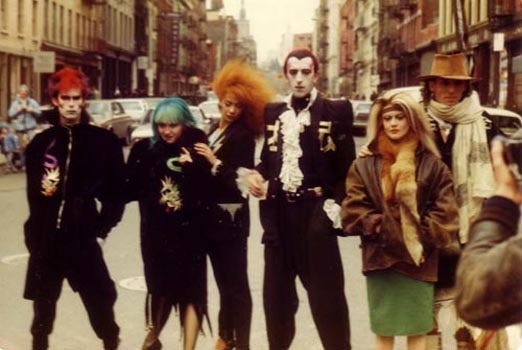
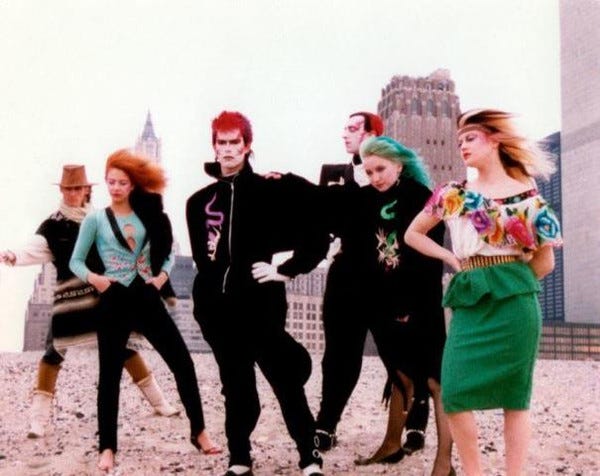
It is worth gathering a few historical notes on Shock, as the contemporaneous reviews often single them out as being exemplars of this 2002 package. The band certainly looked the part, with outfits all designed by Birmingham duo Kahn and Bell, major players in the new romantic scene (and also a precursor to ONE strand of British goth). Their debut single ‘Angel Face’ is something of a cult classic, being a Glitter Band cover and produced by John Hudson who is associated with the glam glitter-best sound. It’s flipside ‘R.E.R.B’ is even more fashionable, being an initialism of Rusty Egan and Richard Burgess who provided twin drum programming. Shock included Tik (Tim Dry) and Tok (Sean Crawford) who both had a very stylised look. Not far behind was Barbie Wilde, who went on to have a role as a cenobyte in Hellraiser II. However, the strangest Shock story involves Carole Caplin who went on to be a lifestyle advisor to Cherie Blair (!).
After the Lyceum event Classix hit the road to promote their new single ‘Guilty’. The release was another chance for them to be savaged by the NME: “The band most willing to live with the dopey futurist tag are predictably the worst. Imagine a pub of the future with a revox tape programmed with Bowie parts replacing a battered piano and a drunken vocalist taking the mike to do his Saturday night Tom Jones impersonation and you’ll have some idea of how forced Classix Nouveaux sound”.
Fielding the brickbats, they headed north to take in the usual gritty post-punk venues such as Sheffield Limit, Scarborough Penthouse, Blackpool Norbreck Hotel, Liverpool Bradys and Retford Porterhouse – all places long gone. However, they were also arranging an ambitious UK-wide extension of the 2002 package, which launched at the end of March with events at larger venues including Bristol Locarno, the Rotters venues at Doncaster, Manchester, and Liverpool, Newcastle Mayfair, Leicester De Montfort Hall, Nottingham Rock City, and Leeds Tiffanys. After a week off there was a final flurry of Revues at Guildford, Brighton, and the London Rainbow (confusingly billed as the ‘2003 Revue’). The band Eyeless in Gaza were added to the bill but split away, and we also had more cabaret-style performance artists with Biddie and Eve.
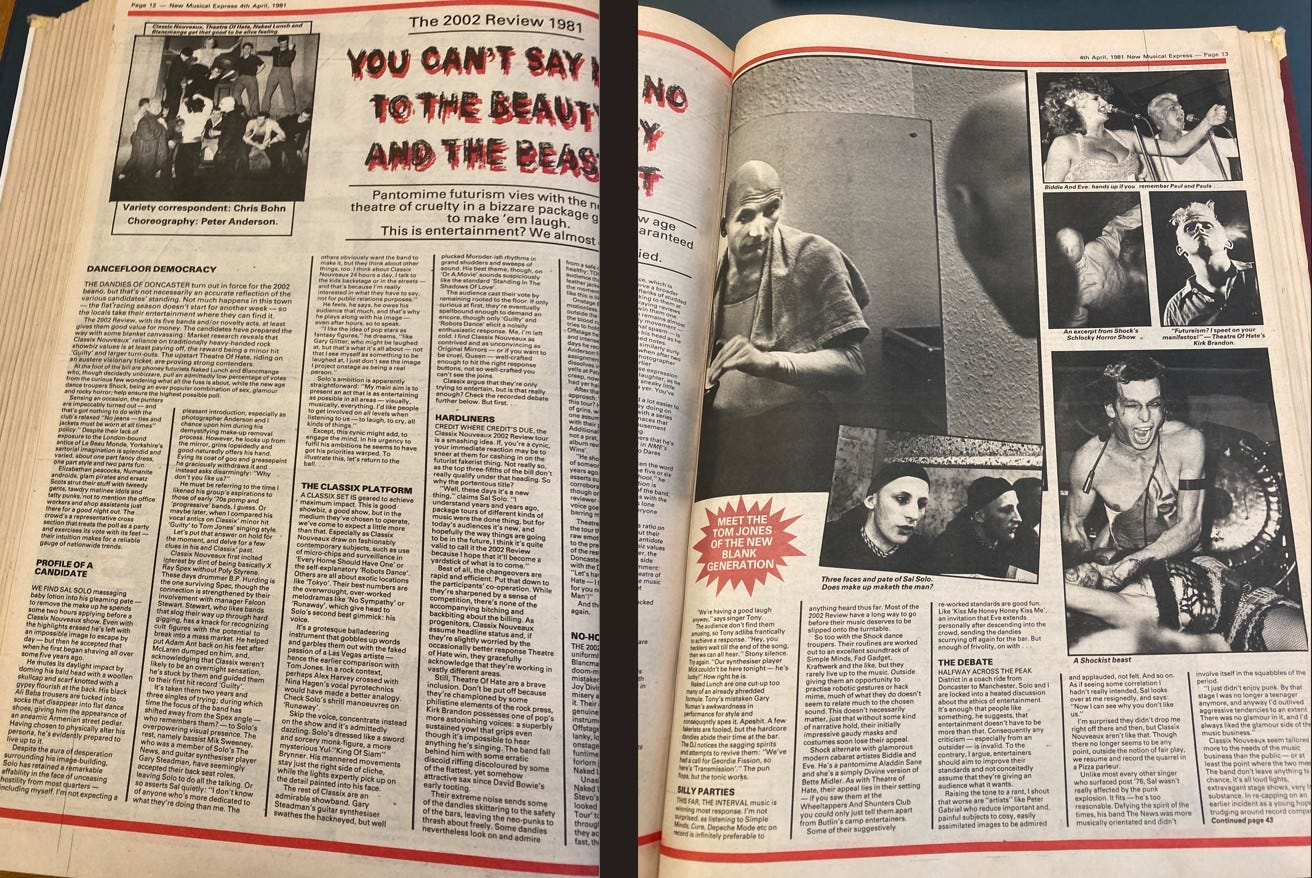
Meanwhile, NME revisited the subject, devoting a three-page feature with a sub-heading inviting the readership to “meet the Tom Jones of the new blank generation”. Chris Bohn, who (as Biba Kopf) would go on to champion avant-garde post-punk artists such as Cabaret Voltaire and Einsturzende Neubauten, was given the task of articulating Solo and his band of merry men.
The scene is set in Doncaster, allowing the journalist some added snarkiness due to flat-cap-flat-beer nature of the place. Bohn describes an audience of “Elizabethan peacocks, Numanite androids, glam pirates and ersatz Scots”, apparently heaping praise on the Yorkshire crowd as wannabe pop-fans and Blitz-kids. Solo (in his “Ali Baba trousers”) is quickly typecast as looking like an “anaemic Armenian street pedlar”. However, his genuine persona and intent cannot fail to win any journalist over – Bohn included – though the writer remains steadfast in asserting that Classix (and the other artists) offer nothing to prompt a deeper thinking or reflection.
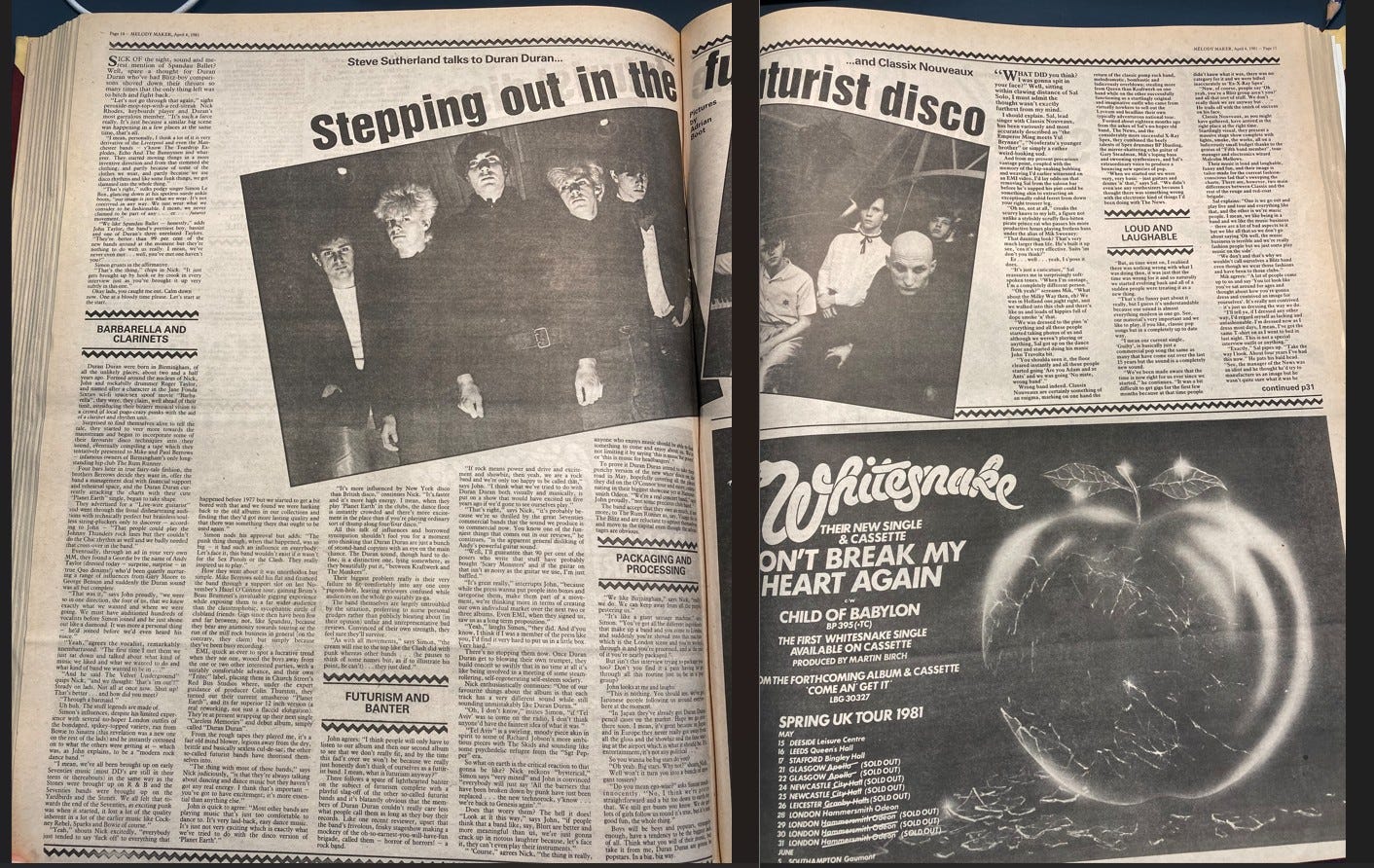
Running the same week is a Melody Maker double-page feature on futurism by Steve Sutherland, split between Duran Duran and Classix, who distance themselves from being pigeonholed as futurists. Two weeks later Sutherland reviews the conclusion of the 2002 Revue tour at the Rainbow, celebrating a return of “showbiz” and “ham theatrics” from punk earnestness. It’s praise of sorts.
Record Mirror also review the tour, alighting on the Newcastle gig. The reviewer singles out Theatre of Hate as being different, while the rest are dismissed as “dancing clothes-horses”. Shock’s miming pair (later rebranded as Tik and Tok) seem to inspire a journalist competition for the wittiest analogy, described here as “mummified petrol pump attendants”.
Scene lynchpin Tom Vague embedded himself on some of the tour, printing an interview and tour write-up in his Vague fanzine. At Bristol he observes locals transformed from Crass fans to Blitz kids: “they’ve rolled their football socks over their tartan trousers, got side-partings and make-up”. Tom always functions as a historical marker, adding social and cultural context. He remarks on the space shuttle launch televised in the pub before the Brighton gig, a beach taken over by tribal fans of the various bands, and an extended episode after the gig reminiscent of the 1979 film The Warriors as he huddles at the station and finds an early morning café trying to avoid potential trouble with a roving gang of local skinheads. He arrives in London the next day just as the Brixton riots commence. Welcome to 1981.
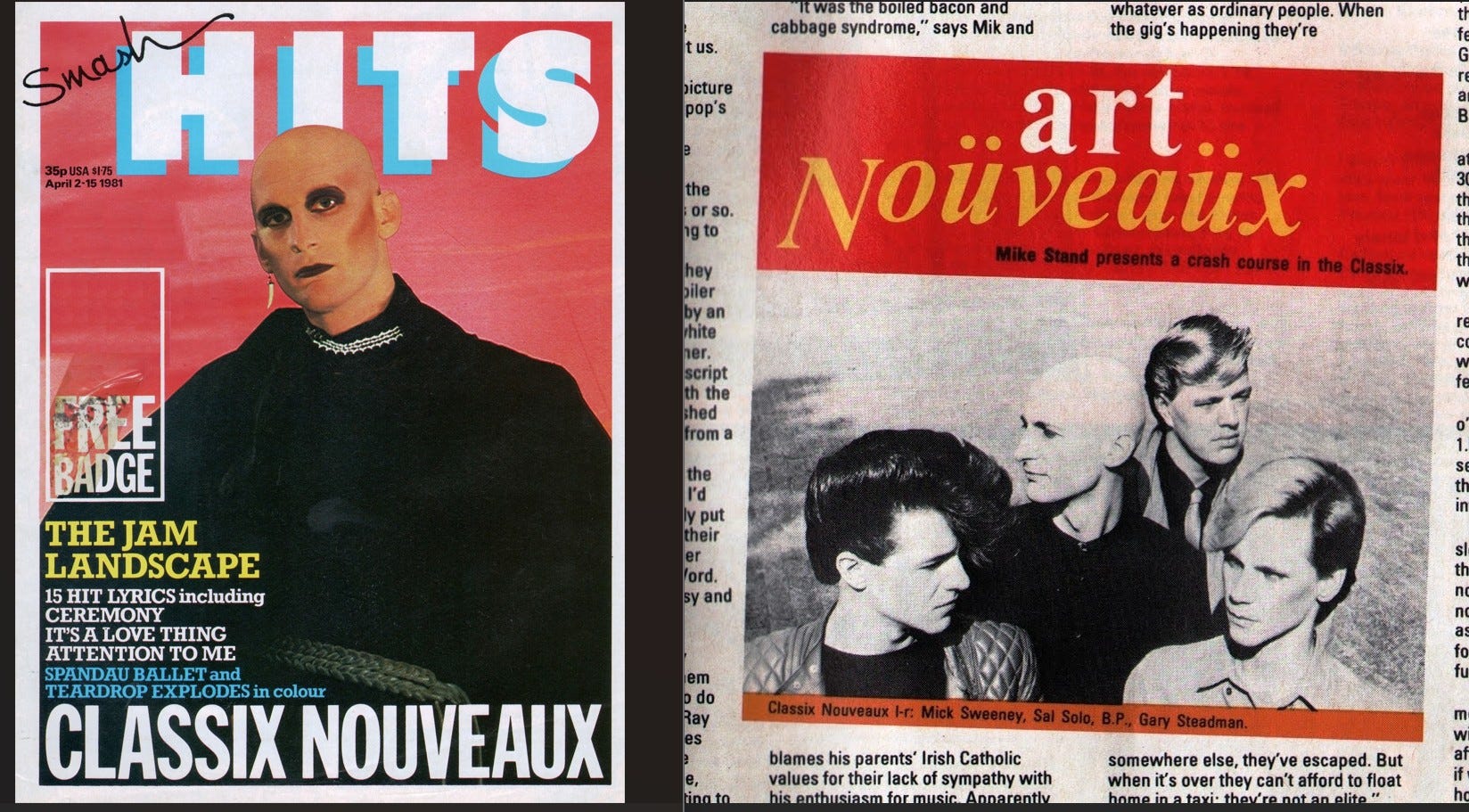
Things were hotting up on the scene, with April releases of Duran Duran’s debut and Soft Cell’s ‘A Man Can Get Lost’ and ‘Memorabilia’. The Classix single ‘Guilty’ sits just outside the Top 40, failing to attract the crucial attention of Top of the Pops. Classix do have some luck, landing a Smash Hits cover and feature in which they expertly extol the new romantic pose and poise with the quiffs, wedges and multi-directional askance glance group shot. They also bag a surprise feature in The Sun declaring Solo as “Kojak of pop”. Any publicity is good publicity.
By May the Revue concept is over, and Classix are back to regular touring (with Wasted Youth and Our Daughter’s Wedding) to promote their debut album Night People. The record is strongly reviewed in Sounds but unsurprisingly warrants more journalist ire in NME as they try to summon the end of the new romantic scene. Barney Hoskyns undertakes the demolition of futurism as a worthless scene and takes the criticism of Solo’s voice to a new ‘high’ by suggesting it resembles “Roger Chapman having a haemorrhage or perhaps the Gibson Brothers throwing up”.
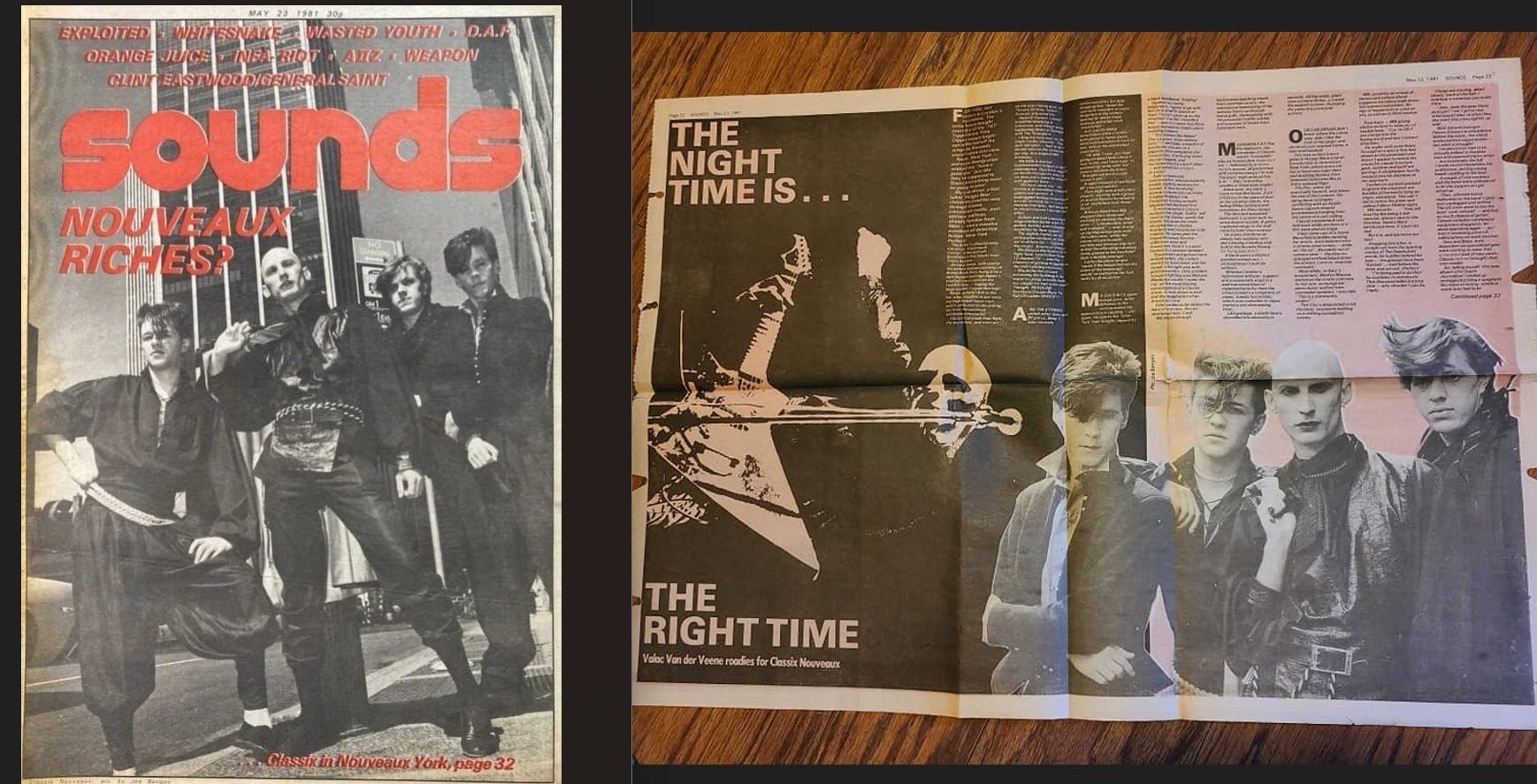
A last gasp of hope is given with a New York cover feature in Sounds, as Classix take a very much new romantic visual package to The Ritz, but they then fade out of critical focus (good or bad) for the remainder of the year.
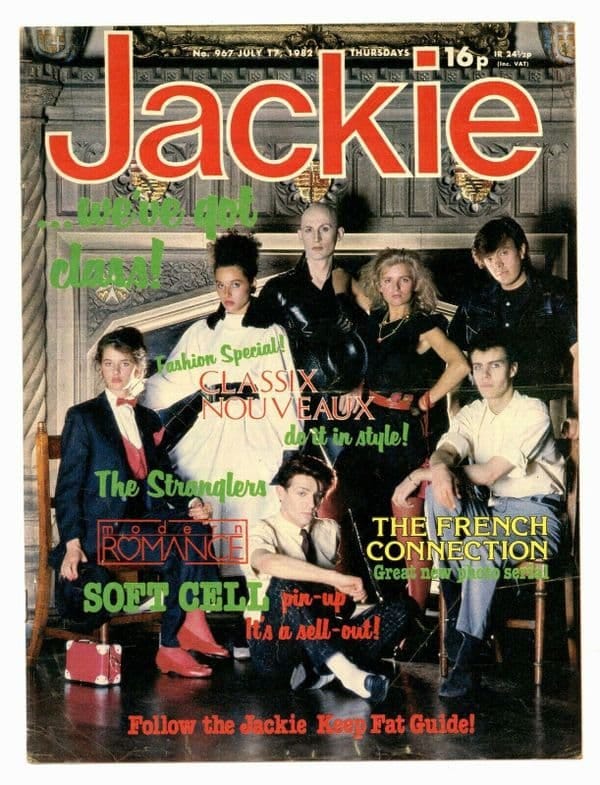
A clutch of singles follow – ‘Tokyo’, ‘Inside Outside’, ‘Never Again’ - all grazing the edges of the Top 40, until March 1982 sees them having their moment of success with ‘Is It a Dream’. Top of the Pops, Solo on Pop Quiz (with BA Robertson and David Gahan), a July 1982 cover-shoot for Jackie on new romantic fashion, an overwrought video in a gothic revival country house (Wykehurst Place near Brighton) with bushido fighting, Solo looking like a 2020s manifestation of Rick Owens and the guitarists flawlessly mastering the art of juddery swooping dance moves with feet seemingly stuck to floor.
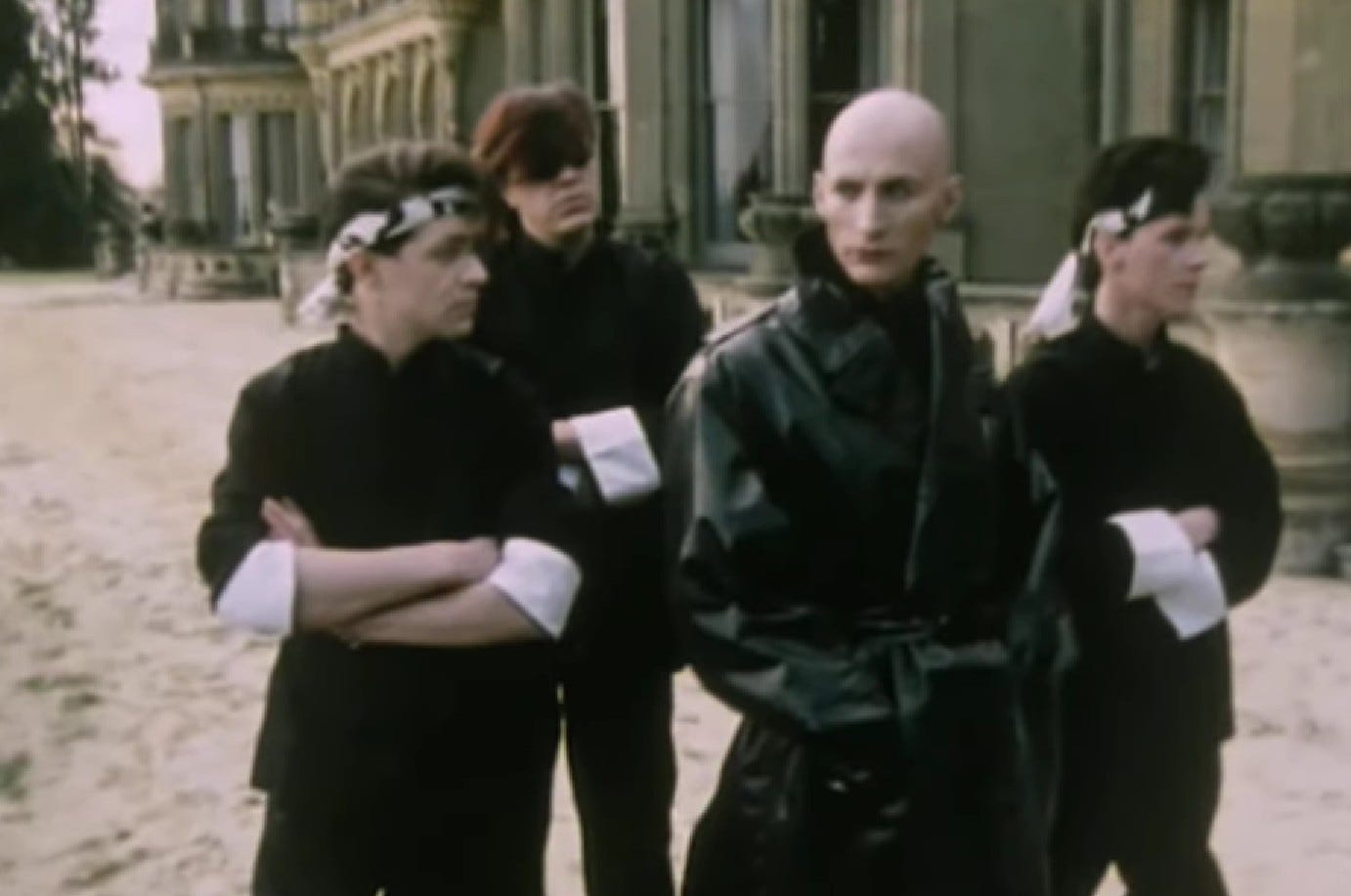
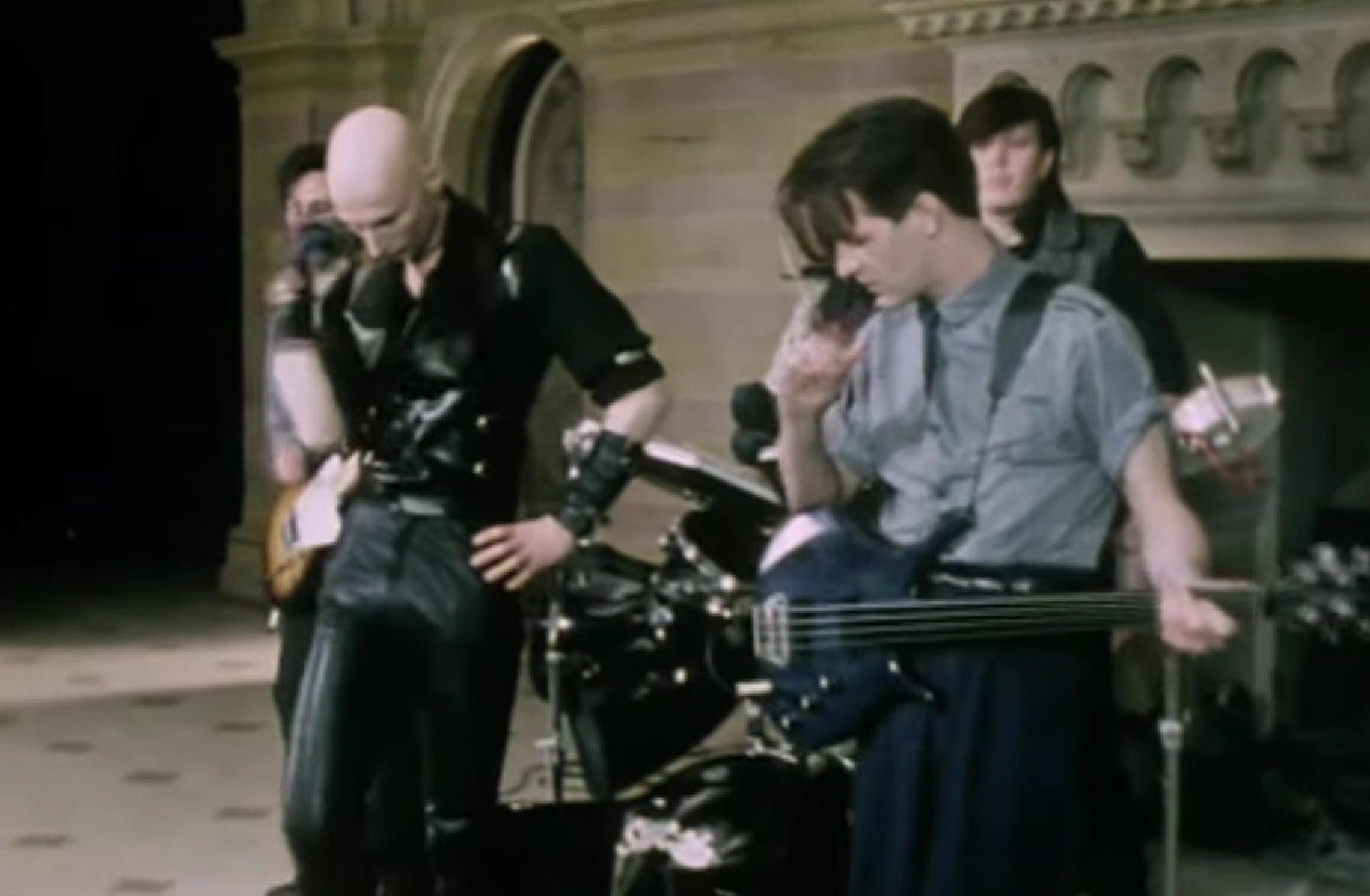
Praise from the press is still scant, with Melody Maker’s Adam Sweeting attending a May 1982 return to the Lyceum and declaring “Queen have given birth to a precocious infant clone of themselves”. Meanwhile, NME’s Paul Morley gives the band a legendary savaging when reviewing their April 1982 at the Dominion Theatre - under the heading ‘Daft Air Raid Siren’ hw compares the band’s appeal to a “bursting sausage and warm beer”.
This is their famous 15 minutes, as follow-up single ‘Because You’re Young’ just misses the top 40 and the band flounder with second division tea-time appearances on Crackerjack and Razzamatazz performing the unfortunately titled ‘The End… Or the Beginning?’.
The 2002 Revue is now a distant past, overshadowed by the band’s hit single and their well-earned status on the European pop circuit – but it was, and remains, an important moment in our shared futurist history. Even with the robotic shenanigans of Shock.
A great fun read. For futurism it now seems like prehistory.
I never knew that about Carole Caplin.