
American Epilog
On 'Street Dancer' Miami (artwork by Chris Gadd as Matrix, completed March 1994)

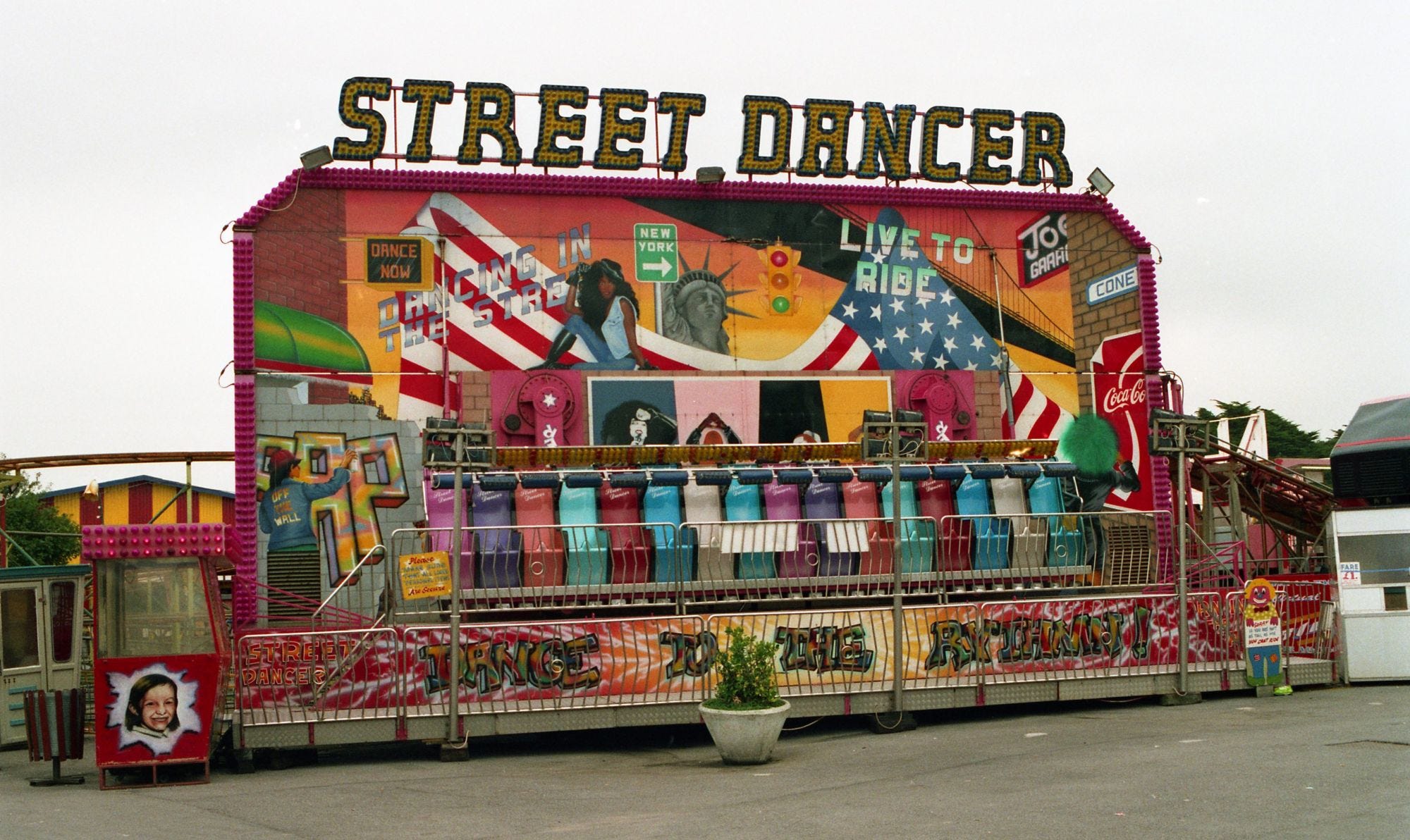
Here’s another focus on a piece of fairground art that caught my interest and has some crossover to pop culture and subcultures. This is the artwork for a ride generically called a ‘Miami Trip’ which took hold of the UK fairgrounds from 1990 onwards. It is a ride type favoured by showmen for being a quick and simple machine that is easily manoeuvred into a ‘side ground’ position. It is a favourite with the punters as there is a degree of interaction, with the riders sitting (gurning) face on to both general onlookers and those queuing for the next ride. Finally, it is of interest in terms of fairground art as it can be considered as ‘100% flash’, in that the entirety of the ride coincides with its decoration.
It was key to the next generation of fairground art that favoured both a new method of application (airbrush as opposed to paintbrush) and an expanded canvas that had a rectilinear shape (like a ‘real’ painting). It thus leant towards having a continuous and singular piece of artwork that didn’t depend on segments, motifs or repeating patterns such as with traditional fairground art that generally worked on an assemblage of surfaces. As the Miami Trip arrived with the onset of a new decade, there were also gradual attempts to draw from new themes such as rave and dance music. That said, it took some time before the new artists had the confidence to create something dynamic and expansive, and there were generally discrete nods to old style fairground art. In addition, the fairground would often respond slowly to popular culture – or at least at different registers across the industry. This meant that there were some strange, anachronistic artworks – of which this is perhaps an example.
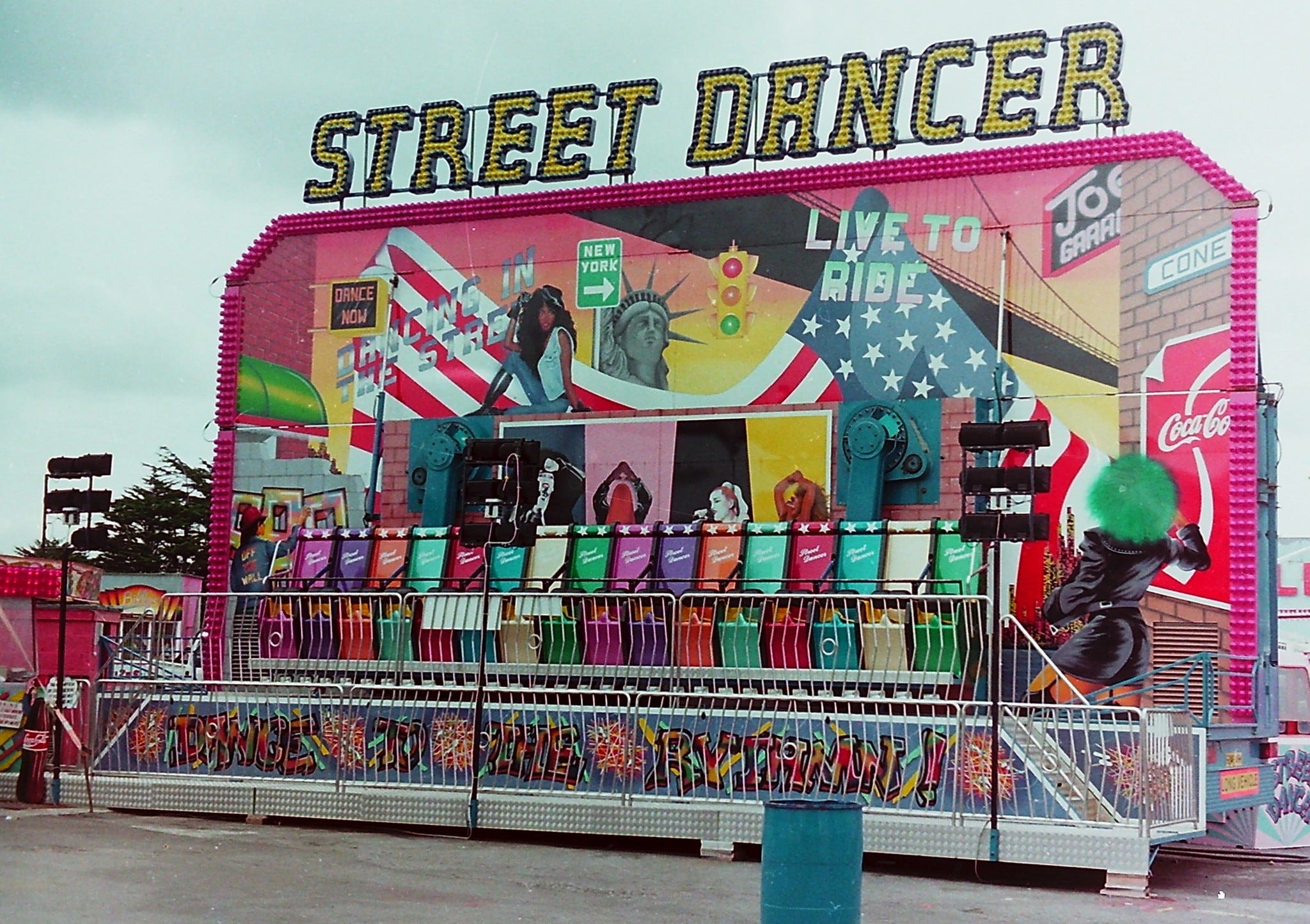
Or perhaps not. It could be argued that Street Dancer, debuting in March 1994, is an attempt to do something different and tap into classic pop cultural imagery. The early production line of UK-built and decorated Miami rides tended to work with either a beach scene, a ‘Music Trip’ scene (I touched on this on my rave and the fairground essays), or a montage of Americana that drew from the early-90s predilection for crassly branded things like Hard Rock Café, Harley Davidson and Hollywood. The ride is manufactured by Fairmatt, who were one of two companies building such rides for the quickly growing UK market. Street Dancer is their final machine before the company rebranded.
The main artist associated with Fairmatt was Mark Gill, who trained as a classic brush painter with Fred Fowle, known as ‘the master’ of traditional art. Mark was on his own when he was tasked with painting these new rides, and had to quickly learn how to spray paint to create hybrid works. His main rival for painting at Fairmatt was ‘Matrix’, the alias of South Wales artist Chris Gadd. Matrix had painted a couple of standard beach and crashing wave comedy scenes, a more contrived Americana themed backdrop (I will give this a better look in a follow-up article), and finally Street Dancer. Chris (Matrix) is sporadic with his artworks, and most of his post-90s efforts are rooted in club-glamour which seems to have become the norm. This makes his artwork for Street Dancer of particular interest. Chris is also a first-generation airbrush artist (even though there appears to be some brushwork on Street Dancer).
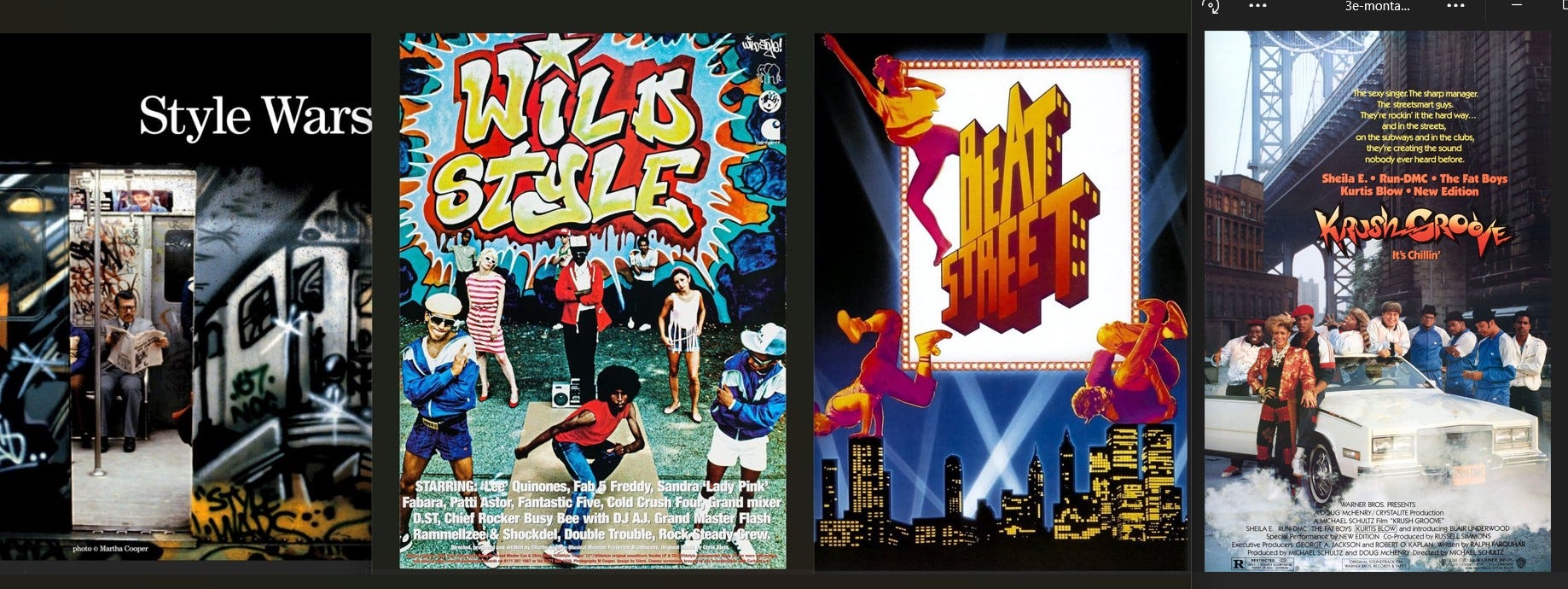
At a push Street Dancer can be classed as a nuanced take on Americana with the New York street-style references and American flags and iconography. But there is also a strong throwback to the New York subcultures of the early-80s that crossed over into the UK through Malcolm McLaren’s ‘Buffalo Girls’ and the likes of Grandmaster Flash. New York street culture had grown through the 1980s with the birth of rap, hip-hop and electro, alongside breakdancing and graffiti crews and a fashion subculture that merged sportswear and sneaker worship. These things would define the direction of fashion in the next millennium. The early key films in this vein include Style Wars (1983), Wild Style (1983), Beat Street (1984), Breakin’ (1984) and Krush Groove (1985), with this legacy persisting into the 1990s rave and techno subcultures in the UK, as well as the streetstyle fashion continuation.
Chris blends these original elements with a more classic 1980s Americana-pop take on street dance, with references to Tina Turner and Jagger and Bowie’s number one single ‘Dancing in the Streets’. His artwork is worthy of a closer inspection as he attempts to create a holistic piece with centre-line perspective and bring in coherent scale and layering to make the whole appear as a real space. He is clearly thinking at a different level to standard fairground art which can often reside as discombobulated elements in a flat plane. Chris strives for a multi-layered illusion.
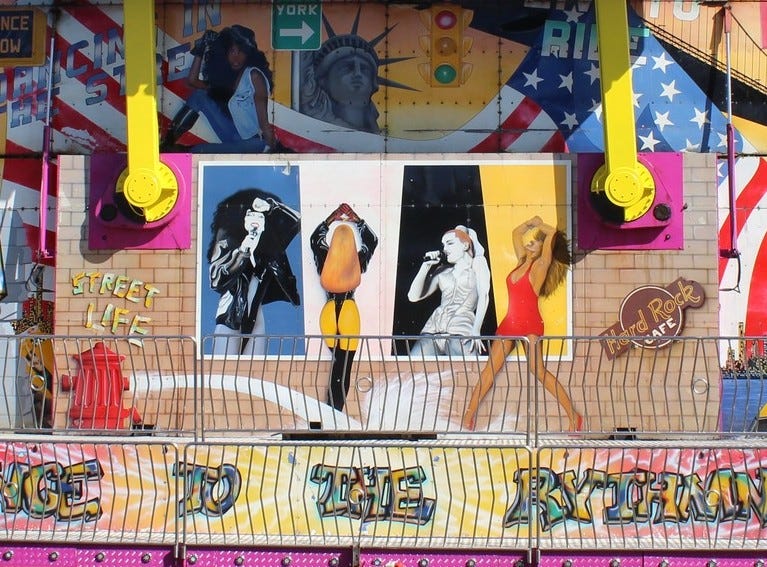
The foreground image sits behind the bench and is painted on the section of the ride that stands out by boxing in the drive mechanism. The scene is revealed when the ride sets off in motion, depicting a regimented rectangular brick wall with a quartet of pop figures (Madonna, Tina Turner, Cher, and a fourth figure I’ve not identified) framed in off-vertical monochrome segments – in the style of classic pop art. There’s an instant illusion here as figures two and four extend outside of this framing, vogueing and striking a pose in front of the poster to become part of the poster. A fifth figure (Donna Summer?) sits on top of the wall.
The rest of the brick wall has a graffiti sequence on the left stating ‘Street Life’ and a Hard Rock Café logo on the right. A fire hydrant splashes water in front of the foreground, drenching Tina. As this is an artwork depicting artworks (graffiti) we could also imagine all of this lower assemblage (hydrant, two figures in frames, two outside) to be a representation of a single painting…
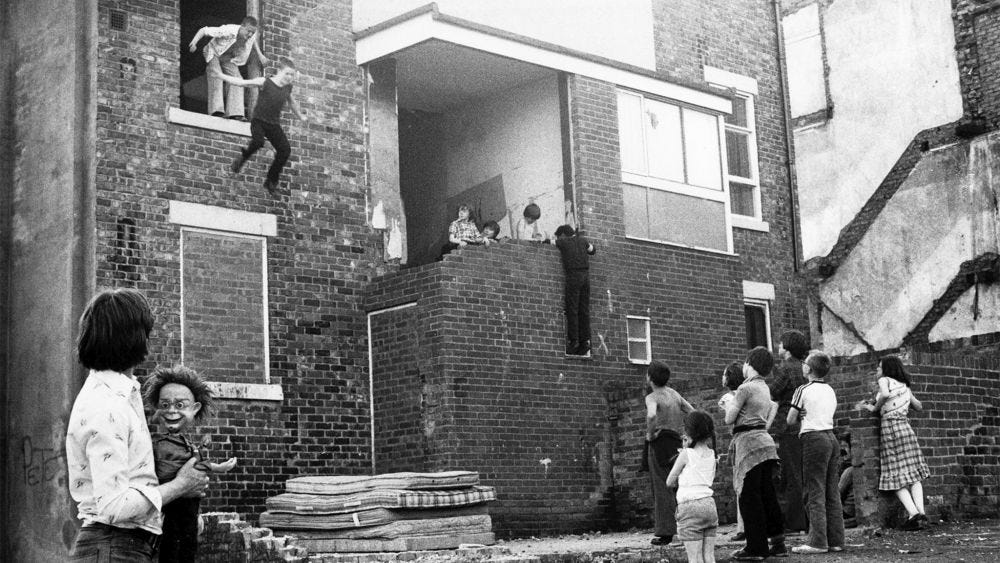
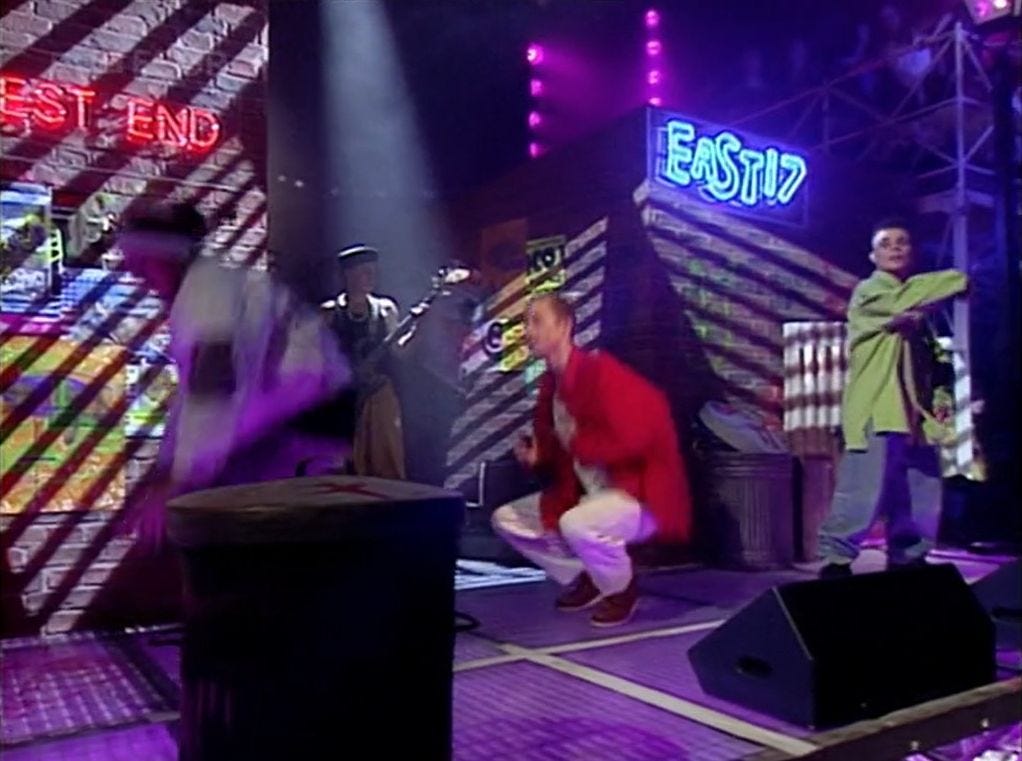
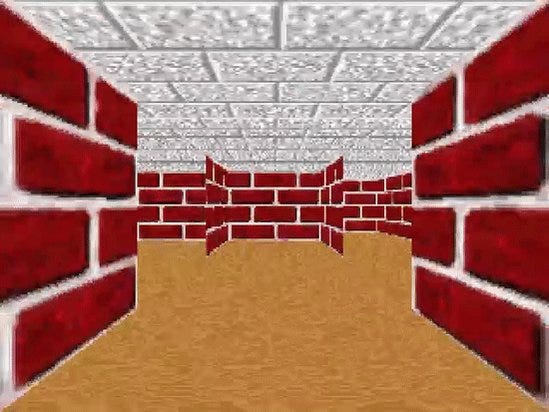
Outside of this frame, on the left and right edges of the backflash, there are two towering brick walls angled in with the perspective. This creates the image of a labyrinth of spaces whilst also serving as a device to draw the eye into the centre of the artwork like angled theatre curtains. Of course, for graffiti artists the brick wall was the canvas, but the brick wall as a subject of art is also intriguing. This use of intersecting and nested brick walls reminds me of the (very British working class) early 1980s photography of Tish Murtha. It also occurs rather naffly in the June 1993 appearance of East 17 on Top of the Pops performing the Pet Shop Boys hit ‘West End Girls’ wedged between two (fake) brick walls and an array of dustbins. And, on a more everyday level, who remembers the 3-D maze Windows 95 screensavers which gave a relentless head-on view of cascading around a red brick labyrinth… Chris’ almost anticipates this with his 1993 painting!
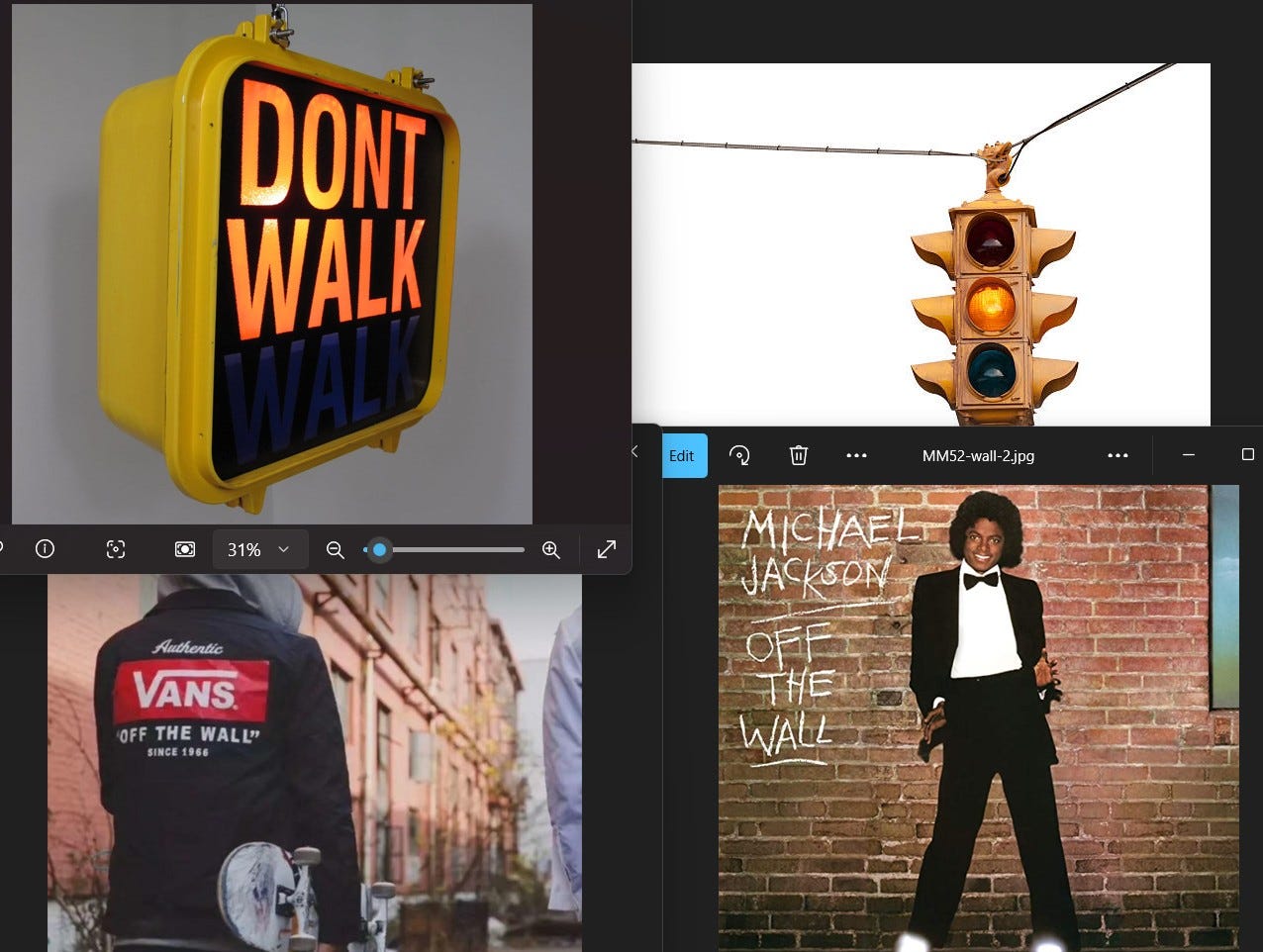
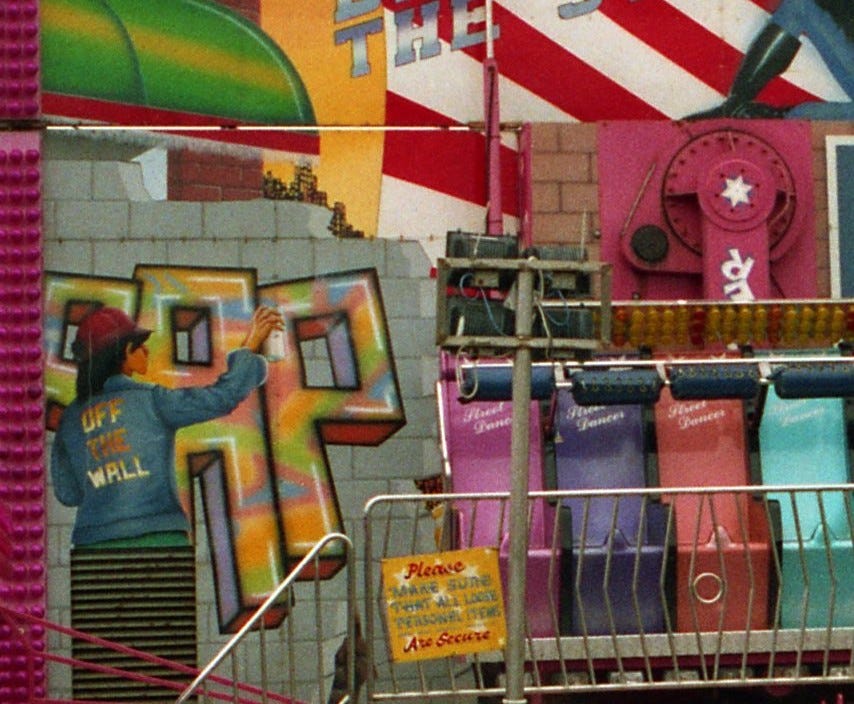
On the lower left we see a graffiti artist from the back (with an ‘Off the Wall’ jacket named after Michael Jackson’s 1979 breakthrough album and later used by the skate clothing company Vans), arm outstretched spraying the phrase RAP in the style of a tag on a broken wall of grey breezeblocks. There is a transparent green semi-cylindrical fixture painted halfway up the artwork, which adds to the trompe-l’oeil chaos. On the right the tall wall is identified as ‘CONE…’ doubling as Coney Island (the New York amusement park) and Porthcawl’s Coney Beach (where this ride spent its first 12 years).
A punkified street woman (frizz of green hair, leather jacket, stockings and suspenders) stands with her back to us, in symmetry to the graffiti sprayer, her arm also outstretched to reach towards a peeling Coca-Cola poster. Behind the rectangular wall we have a drooping American flag which further reveals a street sign, an iconic hanging traffic light, a repurposed ‘Don’t Walk’ sign saying ‘Dance Now’ (mirrored by a Joe’s Garage sign), the Statue of Liberty and a generic sweeping receding bridge structure vanishing into a yellow and orange sunset.
This mix of walls, street fixtures and engrossed figures in the act of painting recalls Blondie’s ‘Rapture’ video. Released in January 1981 and pre-dating the streetstyle type films, ‘Rapture’ is a thrillingly endearing gobbet of pop culture. The video was set in the East Village as a kind of Debbie Harry one-take wandering dream-sequence and featured dancer William Barnes, American iconography (Uncle Sam etc), graffiti artist Jean-Michel Basquiat.
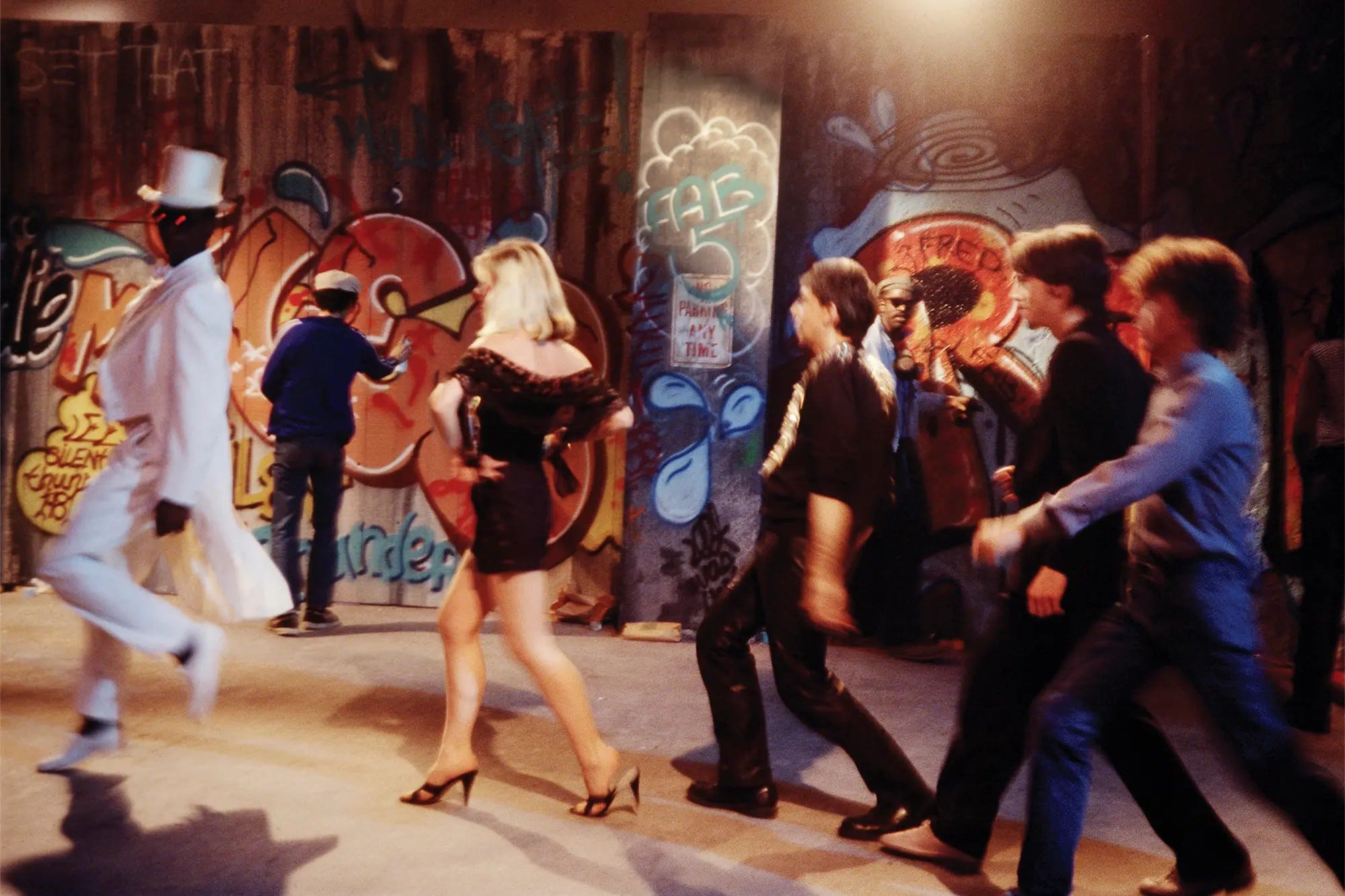
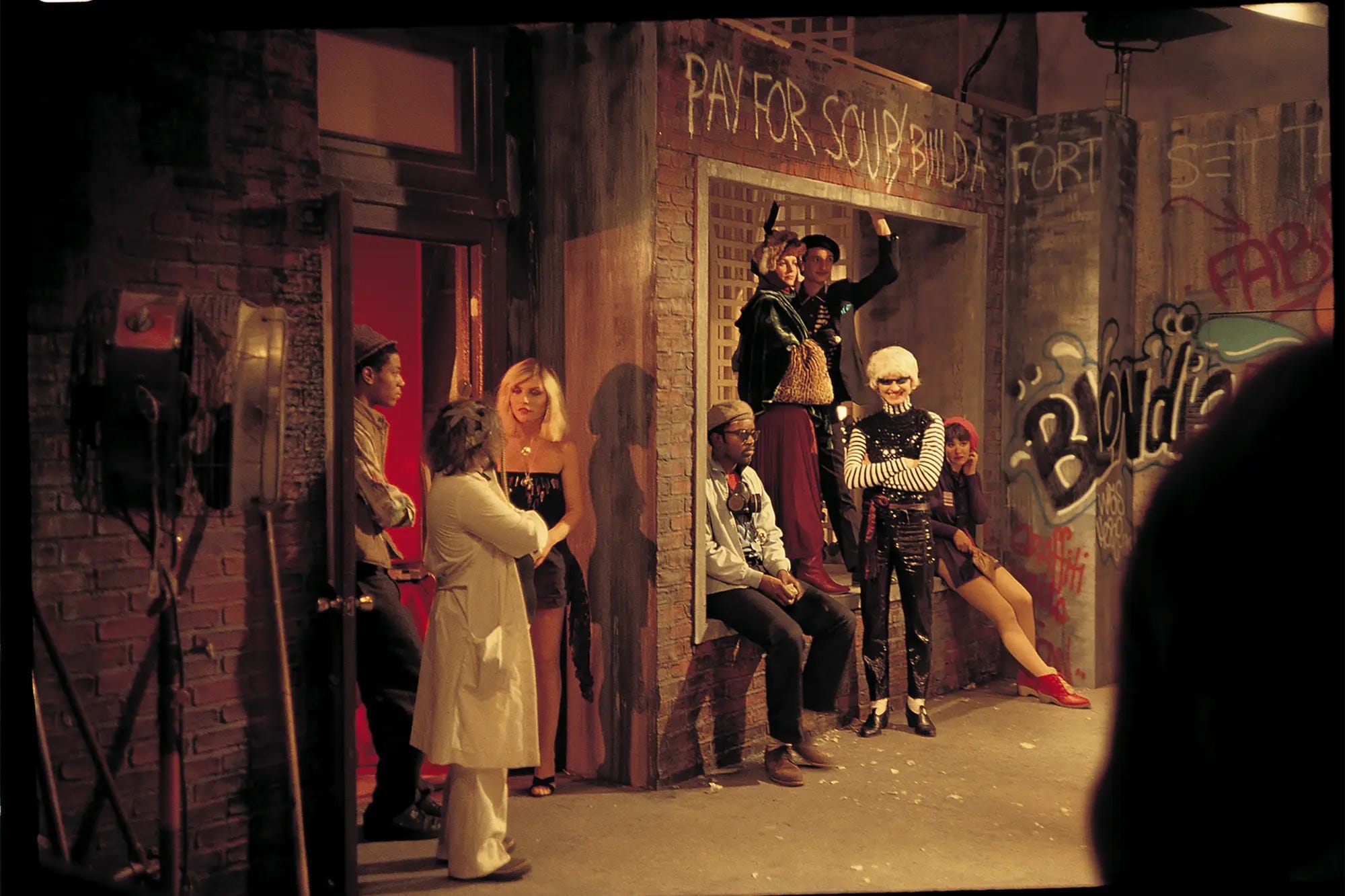
There are minor touches of deeply invested detail, like the cascading outline of a city skyline sitting on top of, and mimicking, the broken breezeblocks, or the brief glimpse of a New York cab. On top of all this, proudly pasted onto the picture plane and announcing the whole as an illusion, we have the song title ‘Dancing in the Streets’ and the very American motto ‘Live to Ride’. Chris liked to carefully construct a layered artwork and then flatten it to a pop art montage with a single stroke.
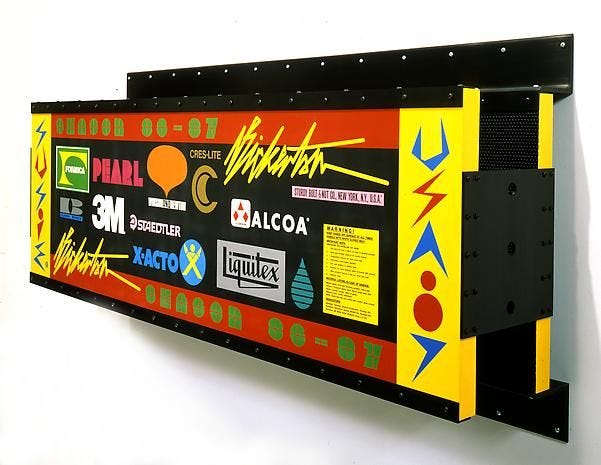
The ride itself is completed with a fibre-glass bench of colour sequenced seats, running lights, and an excess of chrome barriers and chequer plate flooring, making it look like a Neo-Geo Ashley Bickerton artwork.
And of course, the bottom shutters have the obligatory fairground misspelling of rhythm….
Astoundingly, in this age of ephemeral and disposable fairground art, this backflash survived intact (up until the ride going in to store a couple of years ago). It is currently the oldest piece of original Miami Trip artwork.
long shot but did you do a zine type thing called Autotoxicity some years ago?