
Atomised (1 of 6)
Part 1 – We mainly drift

‘Atomised’ is an exploration through pop, fashion and image culture based upon a pair of photographs that caught my attention 20 years ago. The photographs were portrayed across three pages of i-D magazine in summer 2005. They were featured as i-D had just reasserted itself by launching volume 2 in its numbering system. However, there was some deliberation and the magazine is branded equally as issue 252 (evoking continuity) and volume 2, number 2 (announcing rupture).
As I’ve referred to before, I was a fan of i-D at its inception and strived to get copies of the magazine during its underground phase. I lost interest in fashion magazines as the 80s progressed and I lost interest in everything through the 90s. By the 00s something had stirred in me regarding fashion and subcultural nostalgia, and I recall buying the rebirthed (sequence-wise) i-D in the summer of 2005 – I still have that copy although I suspect it has little heritage value. I recall taking it as casual reading to a summer camp for home-educated kids in the Peak District – it pissed it down and my main priority was to keep my magazine intact.
The second issue was also purchased but evidently didn’t survive my regular culls of printed media. This is because the images of the Vivienne Westwood campaign have been torn out and filed, allowing me to write about them now and try to work out what they mean(t) to me. They were sequenced in the magazine with a single portrait page of Dita Von Teese followed by a double page of Marilyn Manson allowing for a full landscape image. Let’s have a look at them:
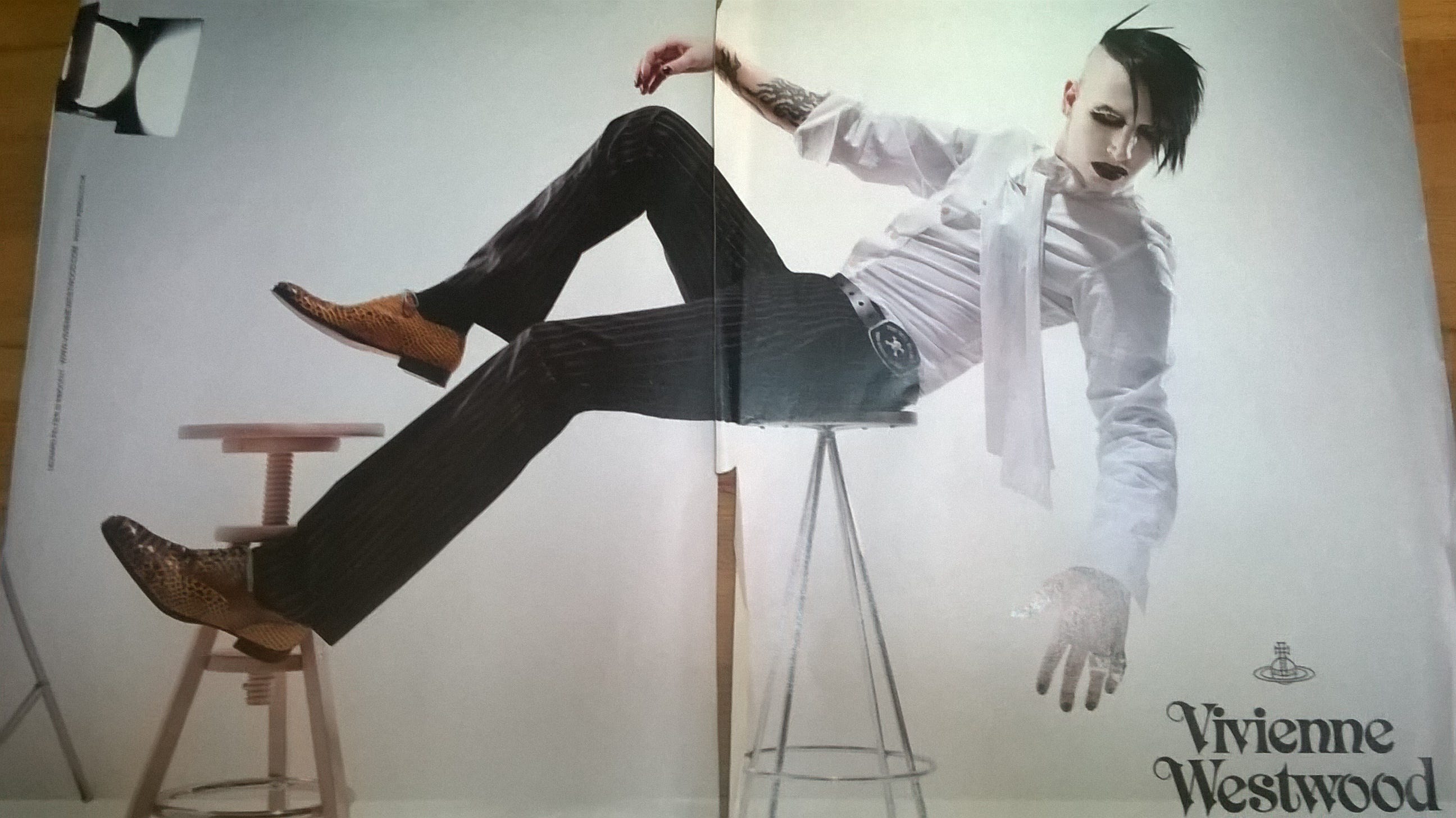
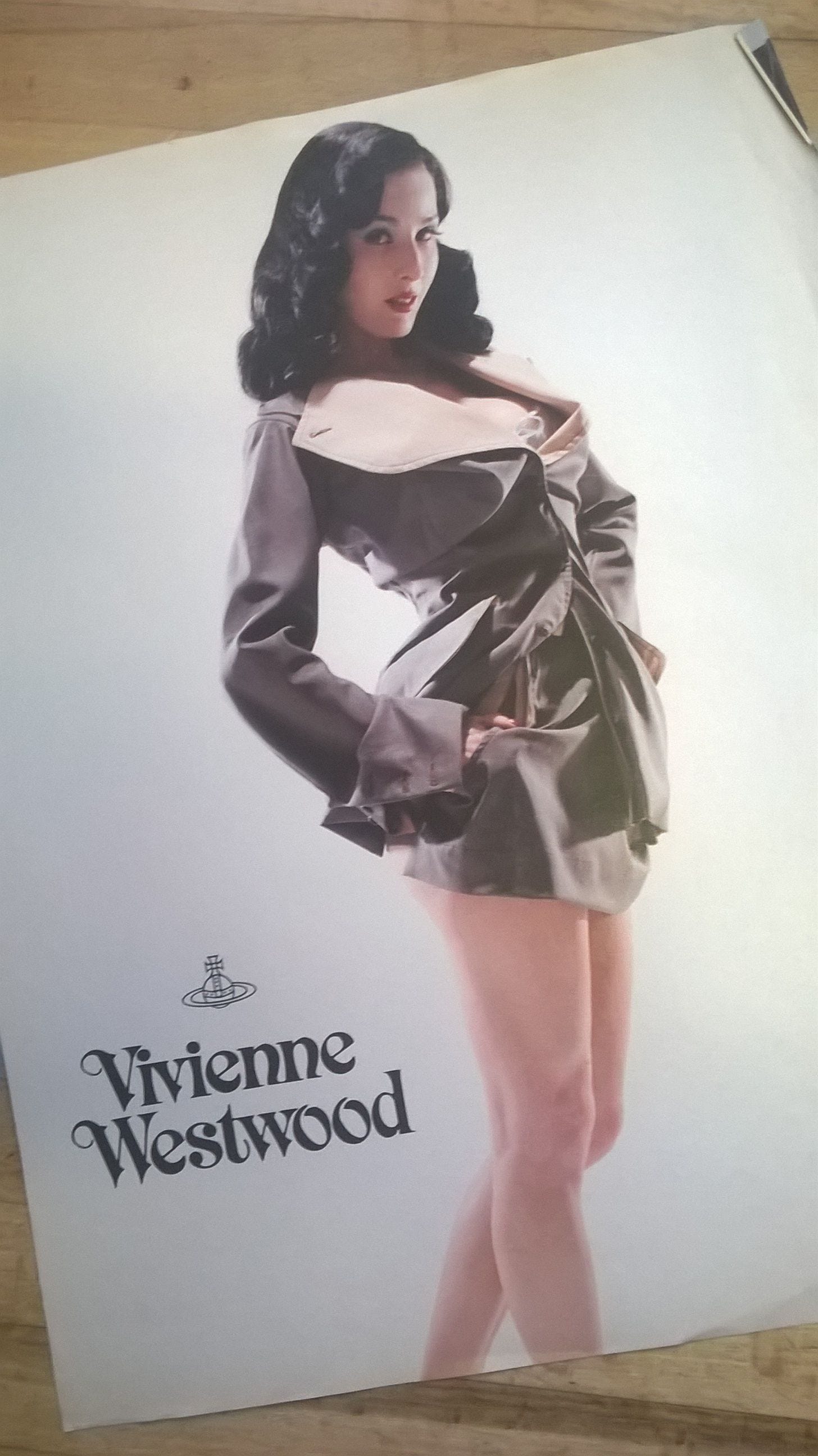
Vivenne Westwood has always used humour and distorted glamour in her advertising campaigns, calling on oddly striking and strikingly odd celebrities alongside utilising avant-garde photographers. In 2005 she enlisted the (soon to be) briefly married stardom couplet Marilyn Manson and Dita Von Teese to model her clothing. The UK Vogue website has some archiving of this coming together, suggesting that Vivienne (and her partner Andreas) met the couple at a dinner party. According to the article it seems that the couple were engaged to be married (Wikipedia confirms a proposal date of March 2004) and Vivienne was designing the dress. In addition, Manson had become something of a fan of the label and in turn the label was using his 2004 track ‘Personal Jesus’ (a cover of the Depeche Mode 1989 original) for their catwalk shows. Westwood is quoted as saying: I like his music; I like his brain, his looks and his style.
As with many things Westwood, there is tactical ‘misremembering’ and – perhaps more so in this case – little contemporaneous shifts of the narrative to fabricate and assert authority and authenticity. Another, more likely, version of this coming together is that the photographer Perou (who had a longstanding relationship with Manson and Von Teese) started to pick up work for Westwood after a recommendation by stylist Robert Morrison, and so brought the parties together.
Before explaining what initially took my interest with these two specific photographs, I can add a little background and context from my own position as a consumer (of clothes AND images). Westwood’s SS 2005 MAN collection carried through a number of themes and ideas in the lookbook. It was possibly known as ‘Tiger Rock’ with additional phrasing stating “It’s now or never” on the montaged arrangement that had marked maps of Milan showing the new shop and show venue. It is vaguely psychogeographic in the way that the Situationists like to mess around with the functionality and aesthetics of cartography and schemata.
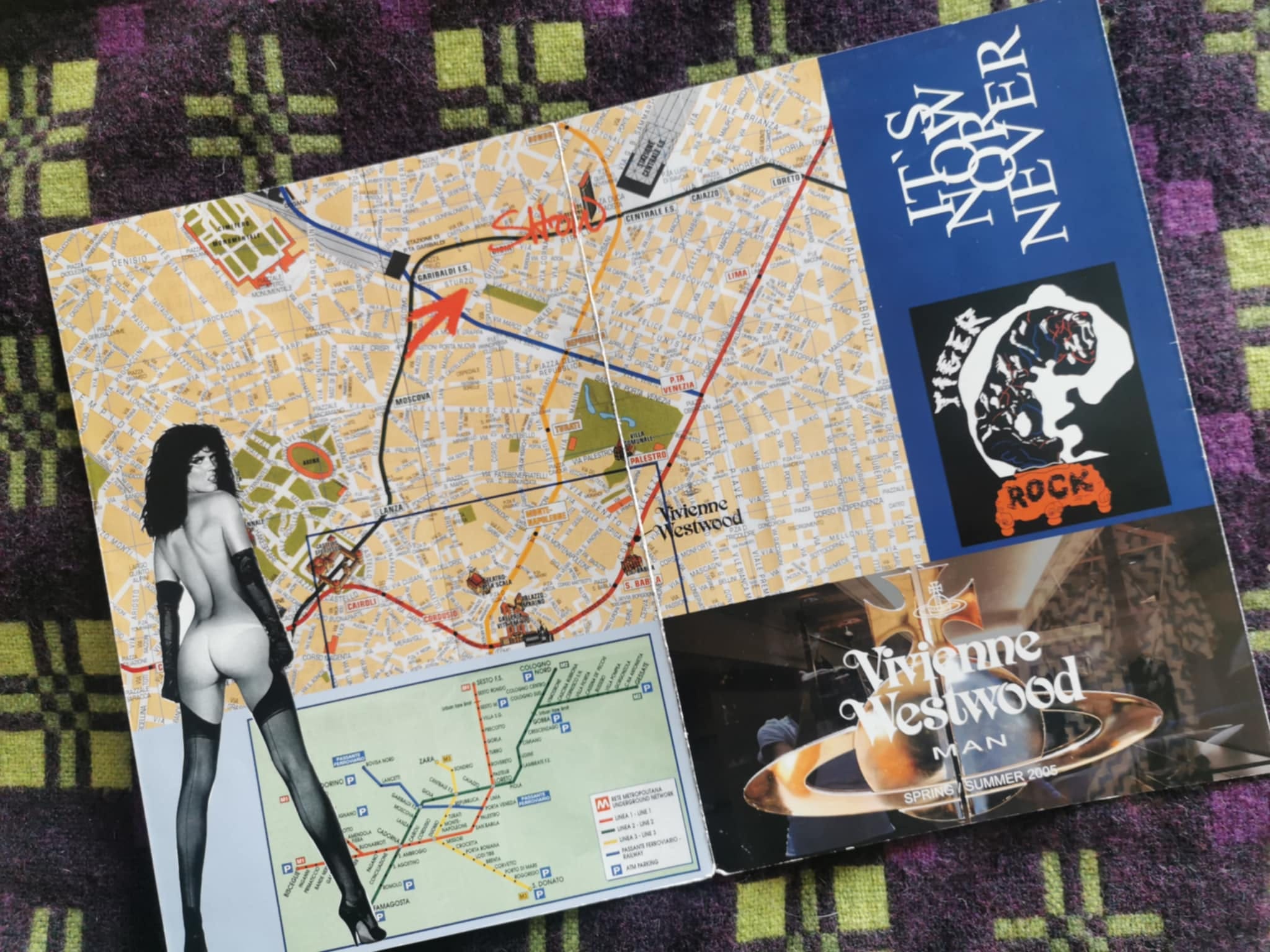
Not evident in the lookbook but printed in small type on the adverts was her continued commitment to ‘Leonard Peltier is Innocent’. He was the subject of numerous human rights organisations but would not receive a change in his circumstance until the final day of Biden’s presidency in March 2025. So, like this article, 20 years later.
For the collection Westwood revisited and reworked many archive pieces, including items from her important time with Malcolm McLaren under the Seditionaries banner. One of the heavily featured concepts was a return for the iconic bondage suits with jackets incorporating bands of horizontal belts across the neck, chest and waist restricting movements, and trousers incorporating the under-the-legs zips and hobble straps. Never one to simply regurgitate previous output, the bondage clothing was remade for 2005 in corporate culture colours giving a contradictory no fuss and attention-seeking aura to the garments – a kind of Brutalist aesthetic simplicity and London business pinstripe. The bondage suits need no further introduction, and I’ve featured them previously in SUB>SUMED essays. They had a long story arc having been taken over by BOY and reworked with new prints and then produced as replicas by Tiger London and numerous manufacturers for the Japanese fan market. However, they were, and remain, a punk imprimatur.
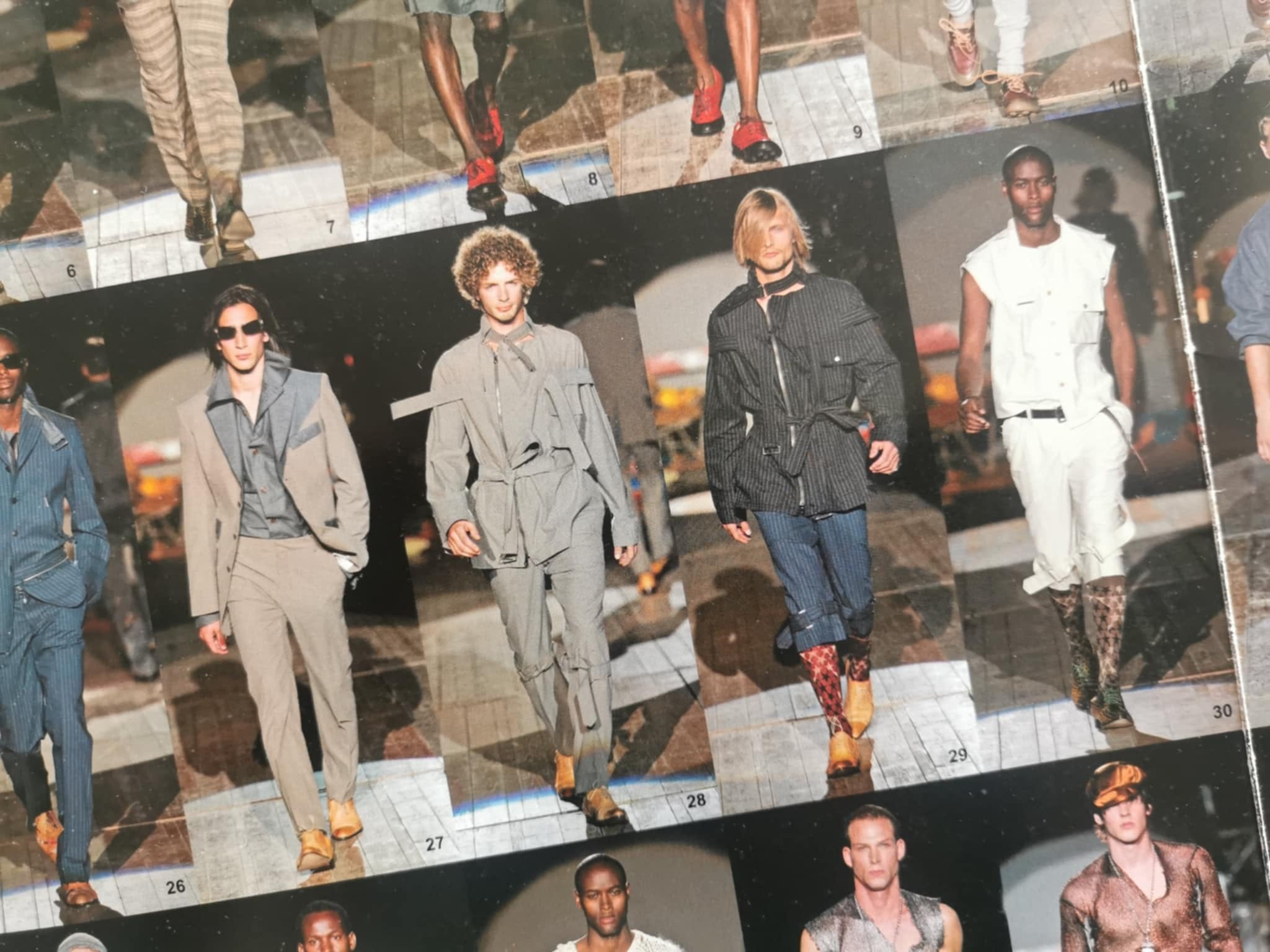
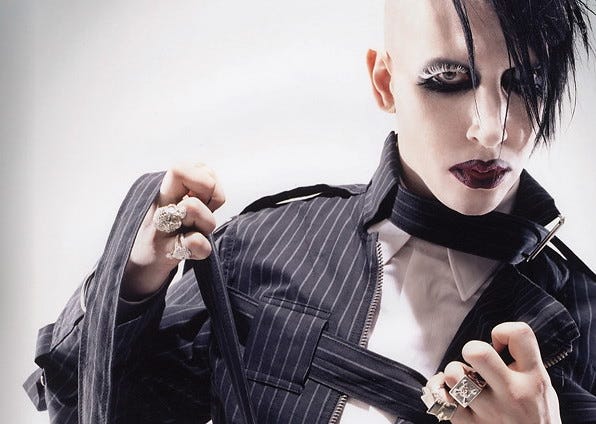
There are also a few images of Manson in the pinstripe bondage jacket and if you browse the web he can be found holding a wide-leg stance displaying the bondage trousers:
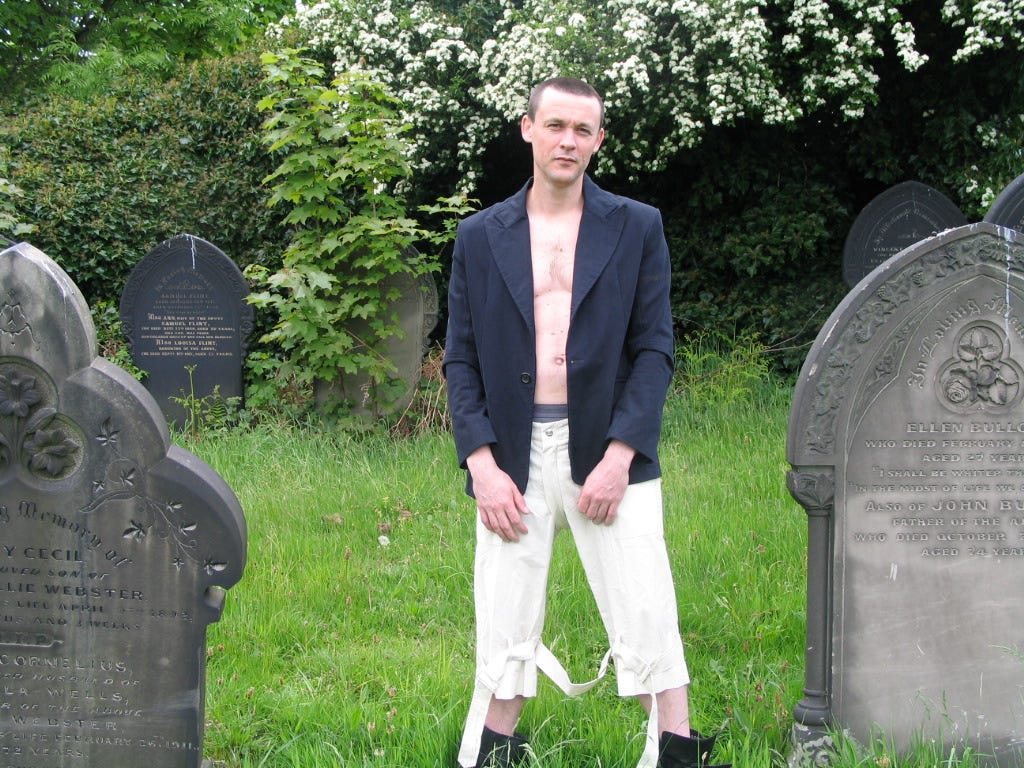
As there was a Westwood franchise in Barnsley having a frantic closing down sale at the point of this collection I ended up with quite a few odds and sods from this range. This included the pinstripe bondage shorts, a pair of cream oversized bondage shorts, and a concrete bondage jacket. Annoyingly, I sold the oversized shorts in 2008 but still have the strange photograph that I used for my eBay advert with me posing in Burngreave cemetery directly behind my house in Sheffield. My daughter Daisy, who would have been 12 at the time, took the photographs. I did get a good price for them but would prefer to still have them.
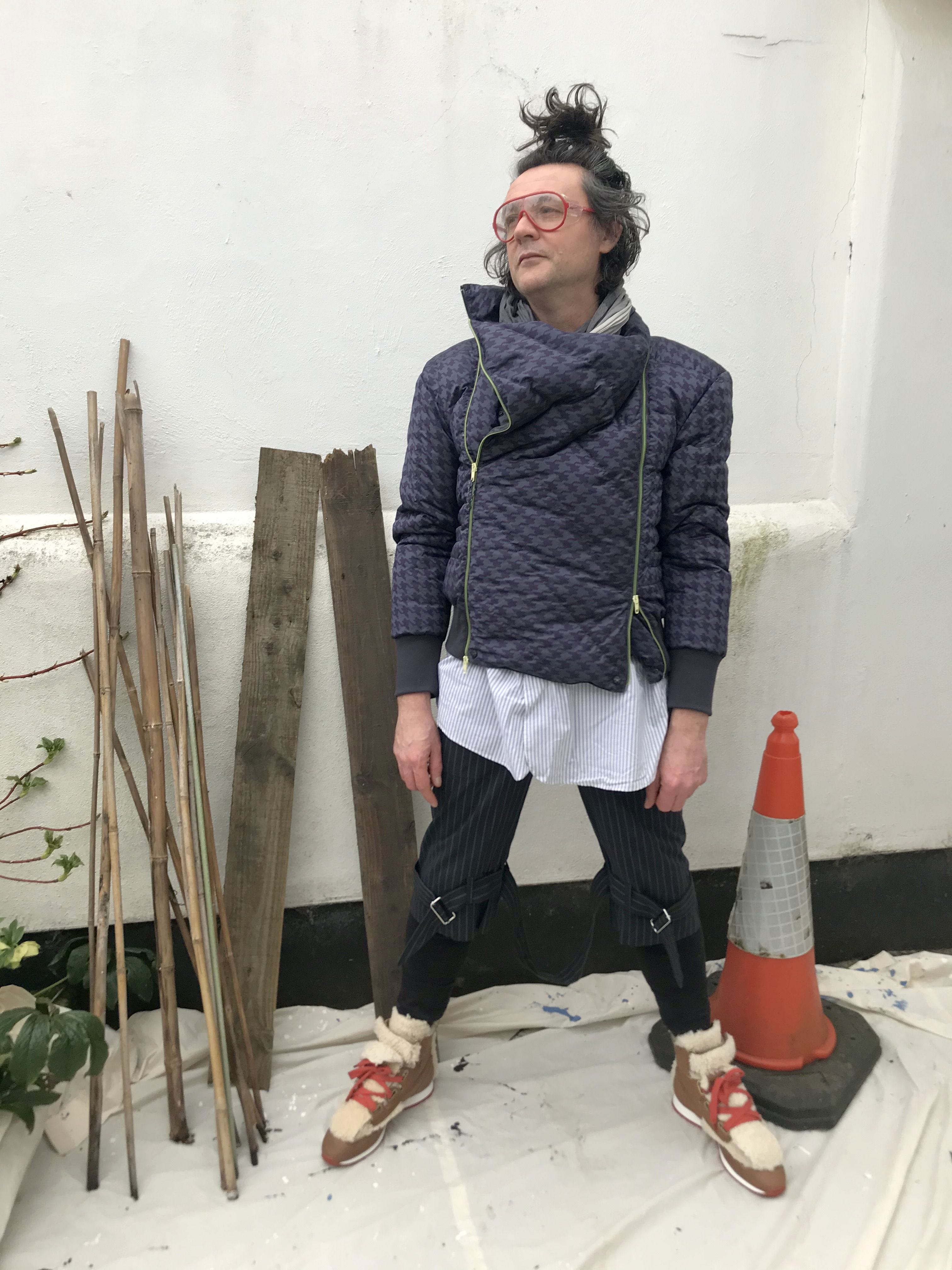
The pinstripe shorts are still here and featured in a lockdown insanity photoshoot that we were doing day-to-day at our cottage in Cambridgeshire to alleviate boredom. It was a peak moment here as I have gone full on to create a midsummer skiing image with a painter’s dustsheet as pretend snow, some random street objects, and a ‘full kit wanker’ of Westwood clothing. These shorts are more ‘to size’, and I find them a bit constrictive. I don’t think I’ve ever worn them out of the confines of the home.
The stone-coloured bondage jacket came out in the same year in the same place at the side of our house, but it looks like it needs a good iron and I haven’t bothered to thread the various straps properly. We were all getting a bit stir crazy at that point in time. I have worn this bondage jacket from time to time, including (most insensibly) for a clifftop hike along the Cleveland Way between Robin Hood’s Bay and Whitby.

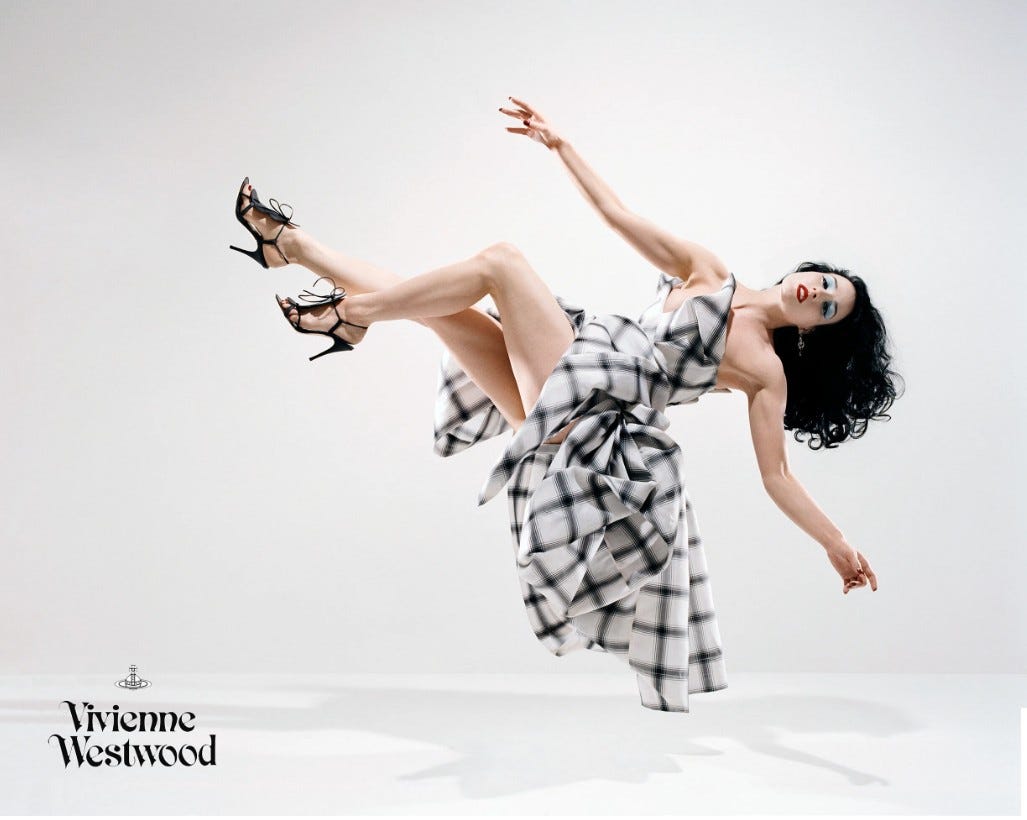
As mentioned, the photoshoot of Manson and Von Teese was done by a music and celebrity photographer Perou who is still very active. He has an approximate online archive of projects with just a single image from each assignment archived. It looks like he did a couple of Westwood commissions, before she moved on to use famous photographer Juergen Teller. The single photograph chosen to represent the whole is interesting, as it shows Von Teese in the floating position that Manson attains for the original advert that caught my attention. More on this later.
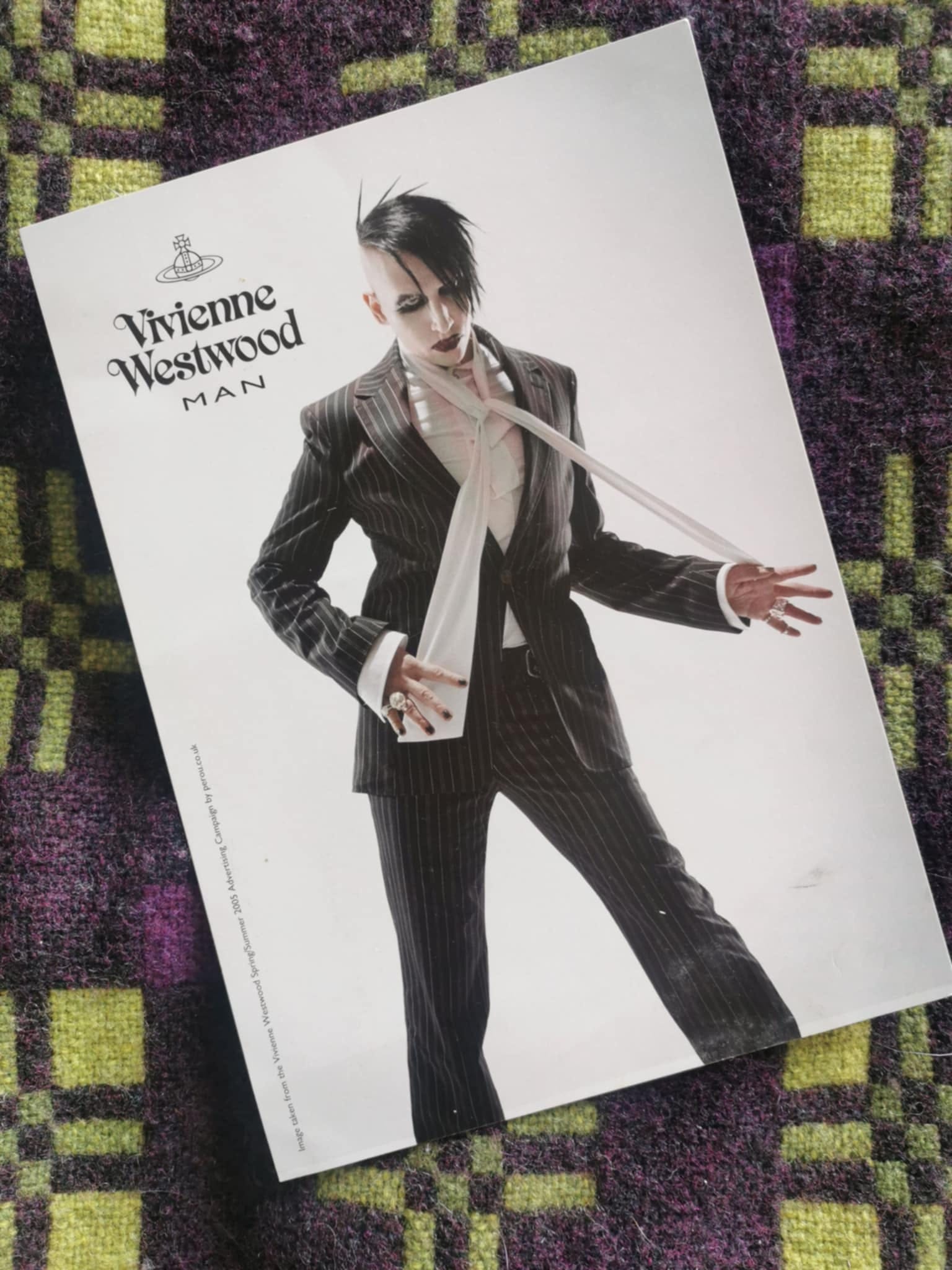
Finally, there is a further image from this campaign which came into my contemporaneous view with Manson featured on the A5 postcard that was mailed out to subscribers to announce the end of season sale at the various outlets. This has Manson wearing a fitted pinstripe suit and a formal shirt that plays with the hangman’s noose theme that McLaren developed in the Seditionaries era. Manson pulls at the extremities of the garment to emphasise afflictive self-imposed discomfort. There is evidence of the puppet-like aura that I will talk about in detail when I get onto discussing Manson’s photograph.
It was the original photographs in the twinned i-D adverts that grabbed my attention, and this is what I returned to 20 years later to try and see what they mean and where they might go in terms of visual culture and pop culture. Manson is wearing the pinstripe arrangements which I really admired, but Von Teese has a jacket on that is either a women’s version of a men’s garment or is the men’s garment. Whatever, by an odd circumstance I also had this jacket! This gave the pair of photographs something like a personal edge, harking back to the dawn of my subcultural musings and my writing about buying (or not buying) the exact replicas of what your punk-pop-stars wore.
At the time, in 2005, Manson and Von Teese pair embodied a kind of subcultural, glamourous and sleazy morphology – merging into one and the same, becoming interchangeable as subcultural exemplars. In the advertising campaign, Von Teese draws on her ample reserve of vintage-glamour-sleaze prowess to model an oversized jacket with a part Alice in Wonderland and part Brobdingnagian aura, whilst Manson impossibly reclines adorned in a corporate revisiting of the punk heritage.
Manson and Von Teese split up and divorced less than two years after being the poster-couple for this collection, a typically fractious relationship lived out in the public spotlight and media feeding frenzy. Their fortunes have since taken various turns that reflect different poles in the changing nature of a society infatuated with celebrity and social media. As such, the photographs here take on a haunted quality, belying a fractured path from then to now.
In his magisterial work Camera Lucida, French philosopher Roland Barthes proposes that if the portrait photograph tells us anything it tells us that the portrait – the people, in the time, in the circumstances – is no longer possible. It is retreating from a lived actuality whilst simultaneously frozen on photographic paper – a negentropic illusion. Manson and Von Teese, as an interchangeable duo, looking sublime and embodying the spirit of Westwood and under the direction of Perou are in an increasingly distant past – their selfhoods as both individuals and dyadic assemblage are unravelling at an accelerating rate.
The subsequent parts of this essay-drift will track this unravelling and simultaneous meaning-assertion in popular culture.
I had to look up negentropic.
🤓
I remember these ads too, but have to say I prefer it when Juergen T used Viv and Andreas in the campaigns.
I too sold quite a lot of my Westwood clothes which I regret and have no images for eBay. Good work by your daughter.
Nice to see you modelling the clothes for eBay, something that would not exist if you hadn't sold. Wonder if any of the style mags today have done an eBay-themed declutter / declobber shoot?