
Atomised (3 of 6)
Part 3 – Mirror moves (1)

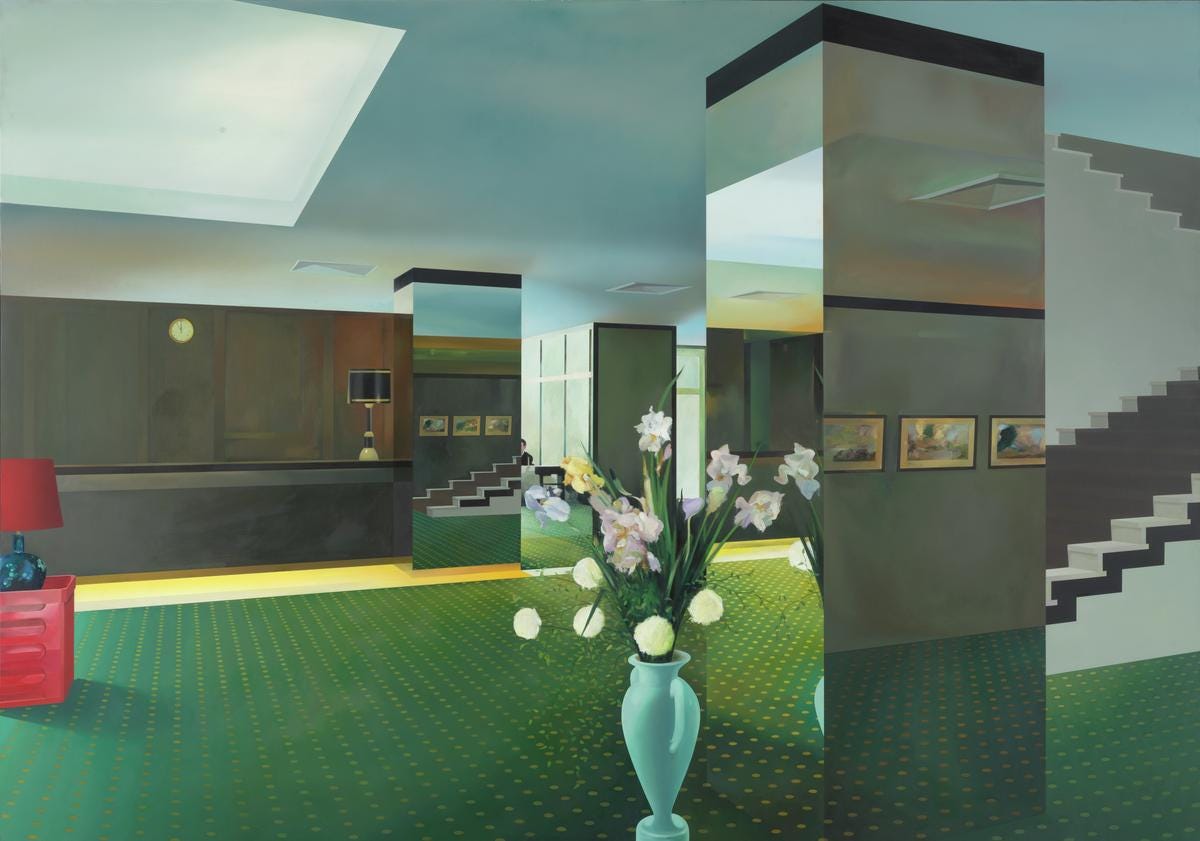
Here is the 1984 work Lobby by British pop artist Richard Hamilton, an artist who hovers on the verges of avant-garde art and pop culture and is subsequently always someone to call on for the SUB>SUMED project. Lobby, which seems to reside as progressive versions, draws from a mixture of the banal space of hotel receptions and Hamilton’s interest in how interior spaces are often presented via promotional literature as something more than they are. He is trying to get to grips with how institutional and urban spaces such as hotels, banks and arcades present sequences of infinite reflections. You are seemingly everywhere at once, but equally nowhere, or more so in the banal space of the everyday.
I knew that Lobby was connected to his Hotel Europa paintings, which were based on postcards for the hotel of the same name in Berlin. I always assumed that the Hotel Europa was the famous one in Belfast which has (had) a reputation of being the most bombed hotel, and Hamilton and already created numerous works that addressed The Troubles in Northern Ireland. It was odd, as I was thinking about Hamilton only last week when I was in Belfast, and then I turned a corner and walked past Hotel Europa. But this wasn’t the hotel that fascinated Hamilton.
Here’s a bit of description of Lobby:
‘Lobby’ is a painting by Richard Hamilton that shows the foyer of a hotel, with floors covered with greenish carpet, a large vase of flowers in the forefront, mirroring walls and a free-standing mirror-faced rectangular column in the middle of the room; stairs leading upward. The source for the painting was a postcard of a Hotel Europa in Berlin that the painter received from a friend round 1974. The painting is fascinating because it is very difficult to actually read the space. The space is empty, however there is a person visible in the back of the scene, but only as a suggested reflection of another space. The pictorial sense of the work being very retinal and illusionary.
Art in both the canon and avant-garde has a constant interplay with mirrors. As well as being a tool in construction or the focus of the artwork itself, they are often built into an artwork to allow elements existing outside of the picture frame (hors champ in art terms) to be glimpsed, or to show multiple perspectives or sight-lines of the depicted subjects to be displayed concurrently.
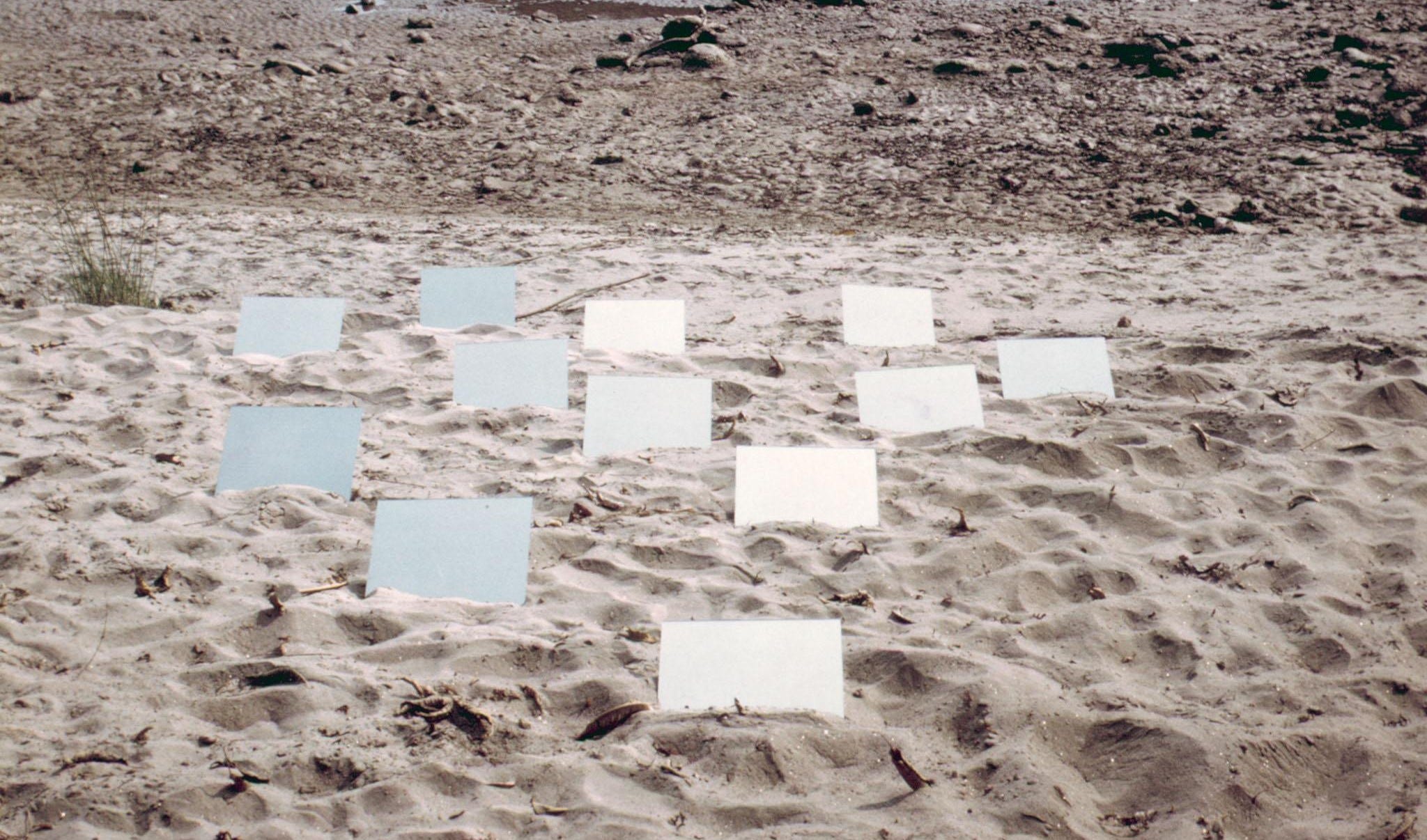
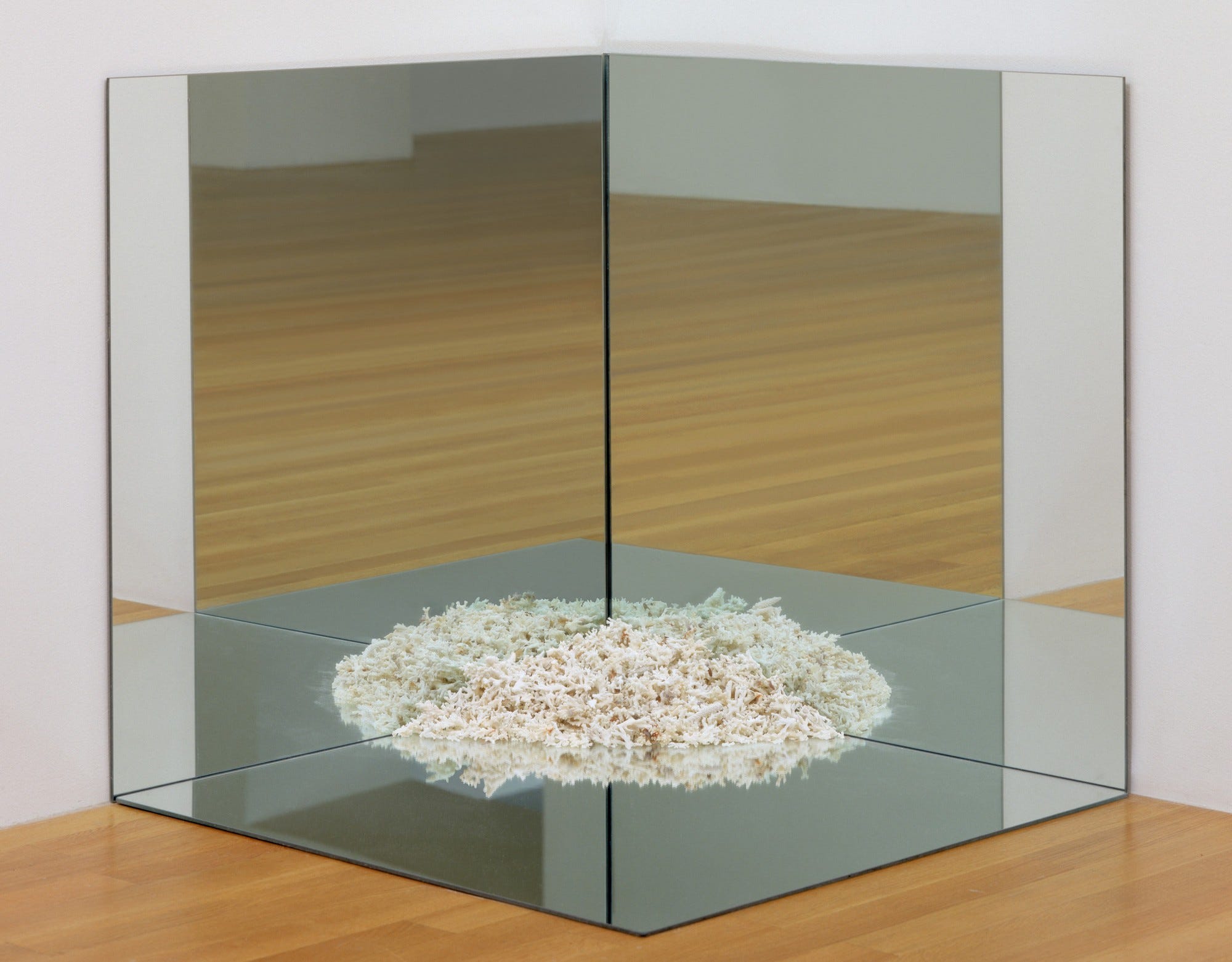
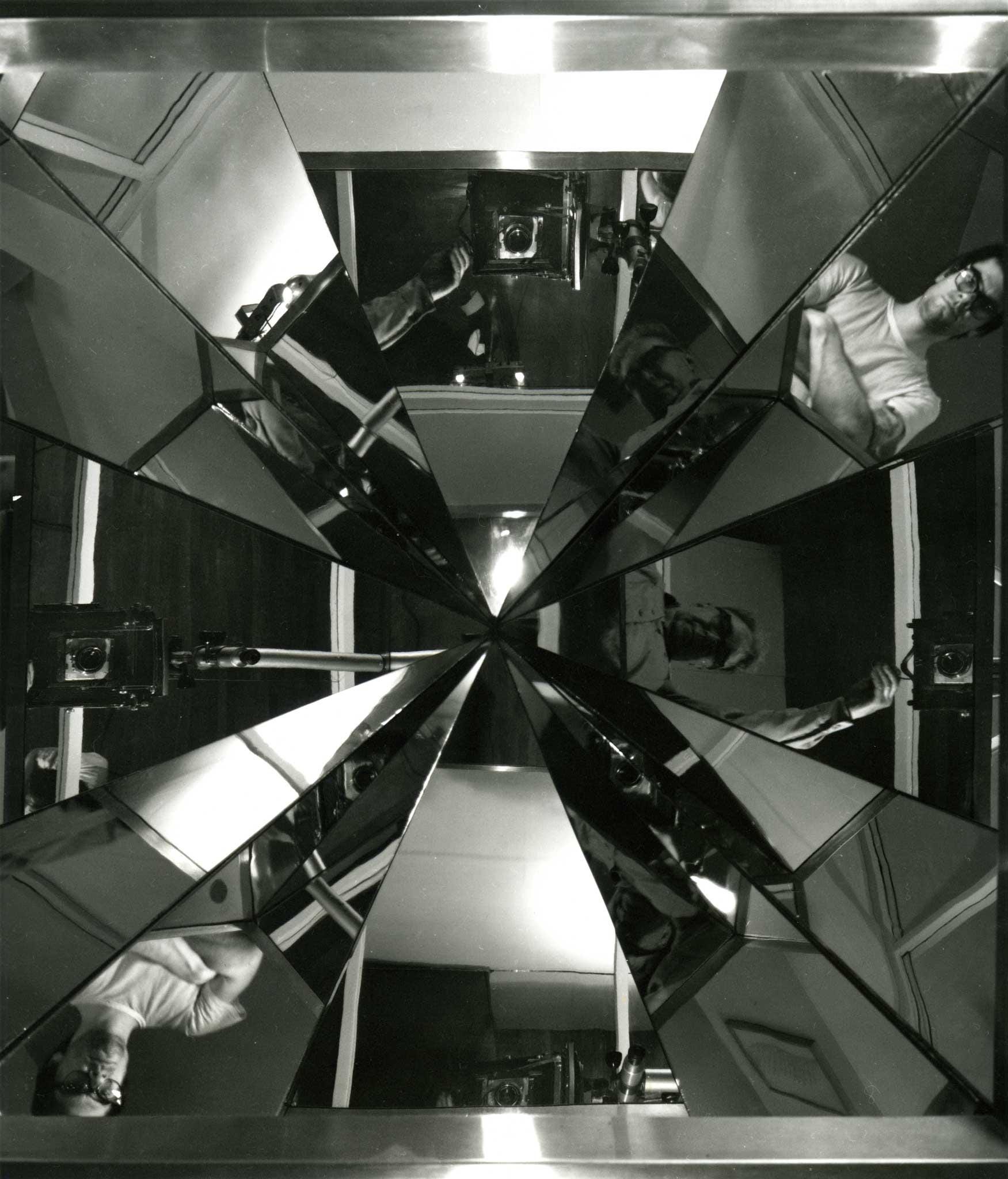
Land artist and proto-conceptualist Robert Smithson incorporated mirrors as both elements in his series Yucatan Mirror Displacements, utilised mirrors as space displacements and ‘illusionistic extenders’ in the gallery, and wrestled with their enantiomorphic properties (whereby we see our image as reflection but accept it as a visual ‘reality’).
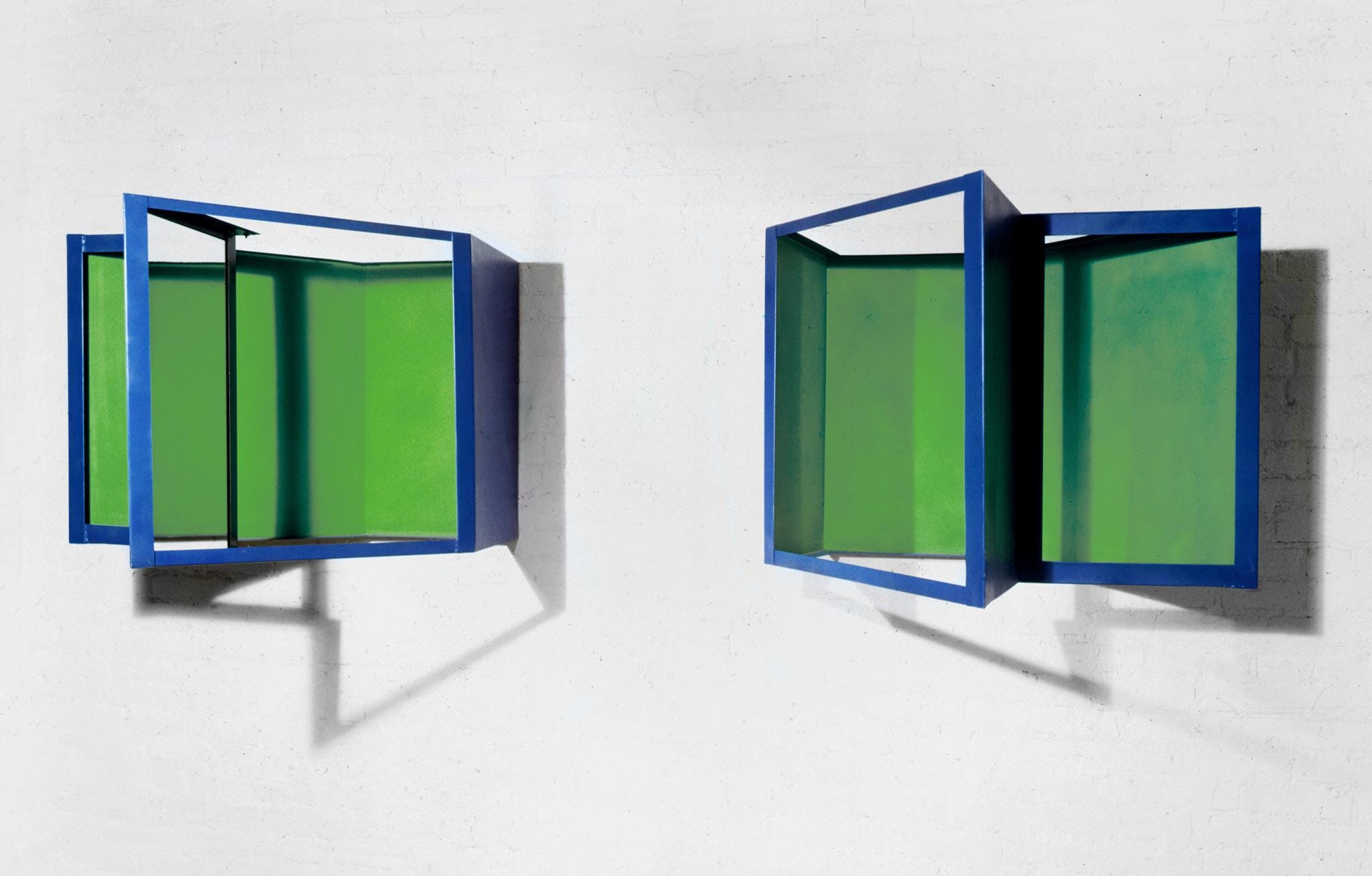
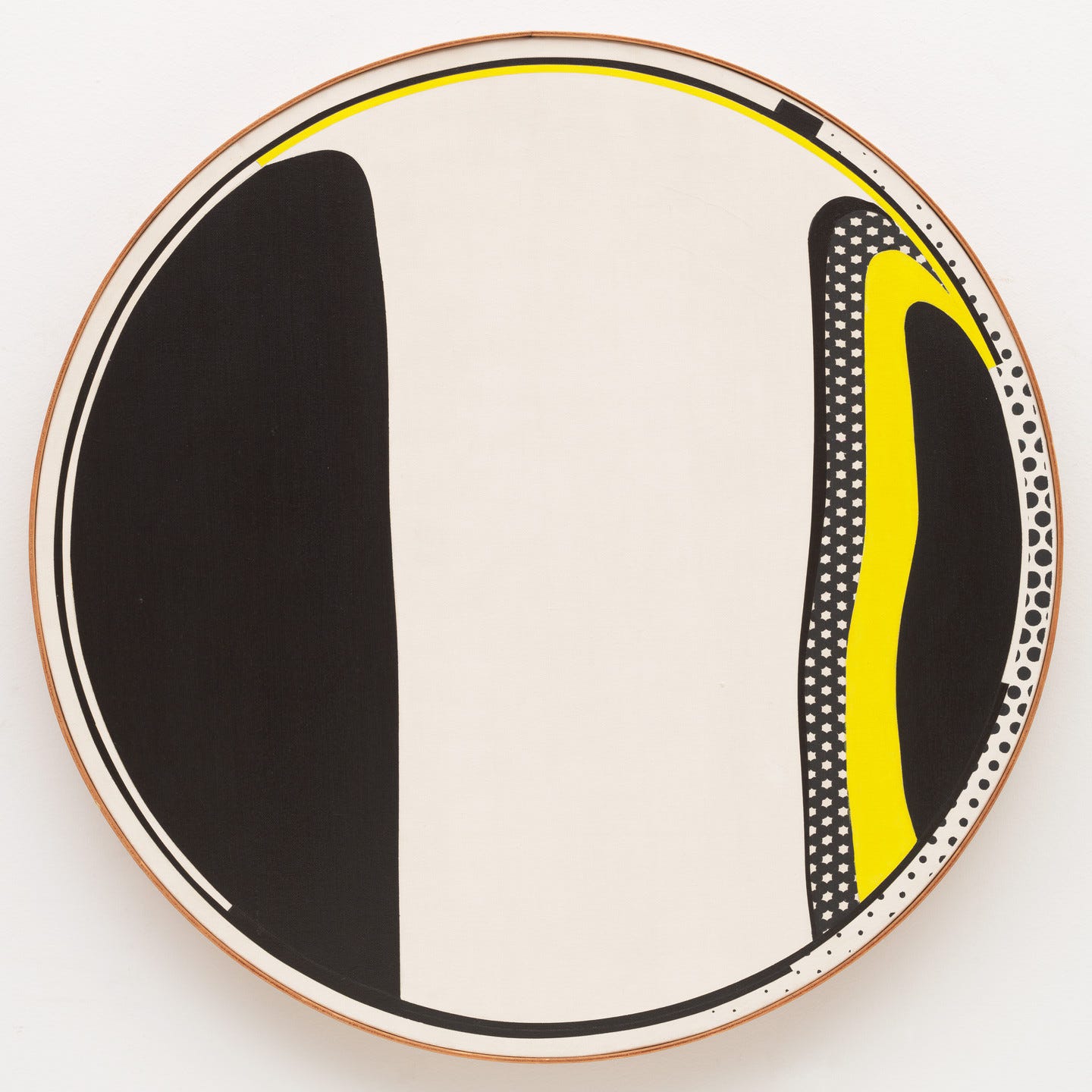
Pioneering US pop artist Roy Lichtenstein has a series of painting whereby he tries to reproduce a mirror (without appearing in it) and so produce a mirror that you can look at and not see yourself.
Some of this visual trickery is evident in the mirror-selfie discussion I commenced in the previous post, however a fuller discussion could lead in many directions. I have suppressed memories of another lockdown project where the combined lack of social connection and an intensification of writing fostered a vastly exaggerated sense of the craft and utility of my writing. I fired off various book proposals, including a pitch to the ‘Object Lessons’ series published by Bloomsbury whereby an everyday thing is approached through oblique tangents in the fields of material culture, visual culture and philosophy. My idea was to write a book on mirrors and to use art and pop culture as a guide. Nothing came of it.
Let’s return to the Lobby of Hamilton. It has a parallel to the famous Las Meninas portrait by Velázquez completed in 1656. I referenced this in the very first SUB>SUMED post as it demonstrated a series of glances both within and without the painting. It was famously dissected by Foucault, with the artwork effectively crashing his thinking like a tripped fuse box, leading him to write The Order of Things. It is also the ne plus ultra of mirror-selfies, since it contains an image of the creator (artist/photographer) in the in-between realms of reflection and pictorial space. It’s even got a dog in it - like the sleeping mutt in the malfunctioning eBay sell-a-mirror pic in the previous post.
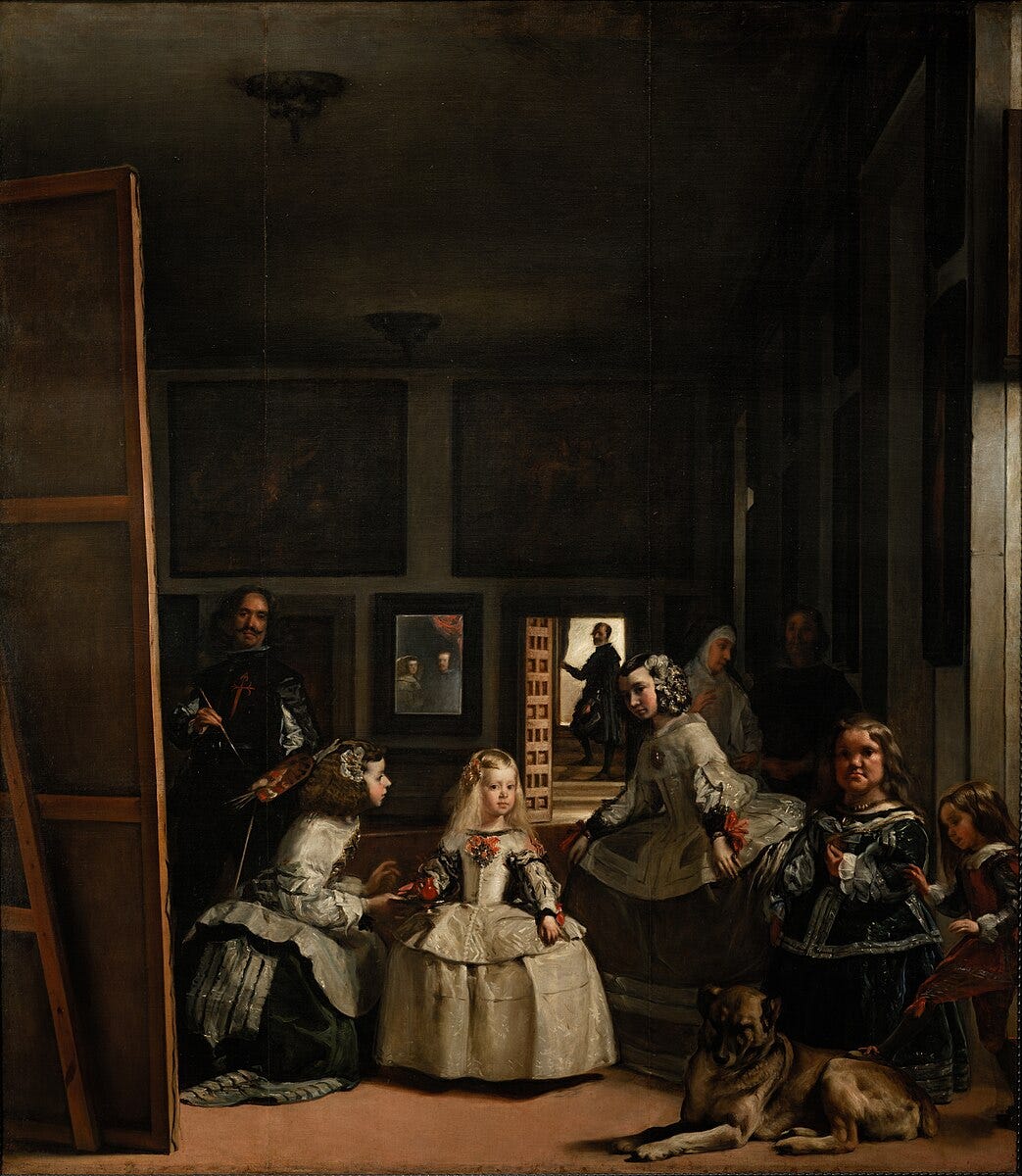
Las Meninas, regardless of all the clever sight-lines, is obviously a privileged space of aristocracy and power… this power function appealed to another facet of Foucault and worked its way into The Order of Things in regard to who is allowed to see what. Hamilton’s Lobby is not necessarily a space of power. It may be corporate or institutional, but it is overridingly banal. Las Meninas displaced to the Holiday Inn.
In Las Meninas we see the principal subjects of the painting – Philip IV and his wife Mariana of Austria – as a blurred mirror image. You view the painting and your eyes meet the mirror on the furthest away point of the composition (actually, we get a glimpse of a further away point beyond the ajar door, leading to a space behind the mirror). This mirror, and the introduction of the subjects, is nearish the dead centre of the painting. We view the painting and look into a mirror for information, but we do not see ourselves.
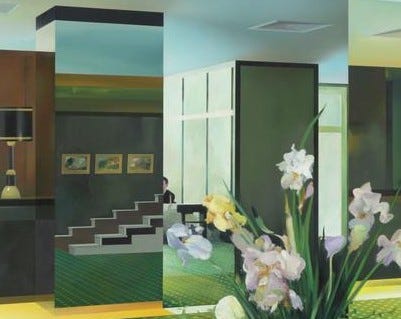
Hamilton produces a similar effect… you can see a ghostly figure more or less at the dead centre of his painting, as a perfect slice. A banal ghost. A corporate ghost. However, Hamilton’s figure is in the ‘real space’, occluded by an arrangement of mirrors. These sit at oblique angles and form part of a pair of mirrored columns. From other views the half figure would be whole and multiple, actual, reflected, and reflected from a reflection (so once again actual in Smithson’s enantiomorphic scheme. Other art reference points, such as the Duchampian/Bauhaus staircase abound, but it is the mangling of spaces (inside and outside, the same but viewed from opposing angles) that give this painting such presence for me. It is a direct precursor to the mirror-selfie, or more so the unavoidable detritus of the mirror-selfie. Speaking of which…
Love that Hamilton painting and had not seen that Lichenstein which is so good.