
Combat Rock
UK subcultures and military surplus (part 1)

Having touched upon anarcho-punk looks and the use of cheap and durable military clothing, this essay sets out a wider background within subcultural scenes. It originally appeared in an early form in the fanzine Subbaculture.
The subject of military fashions crossing over onto music scenes, acts and subcultures is limitless, and it is not possible to cover the whole extent. Writing proliferates on the internet with garment-specific research (such as the iconic M-65 jacket). What I’m doing here is more selective and personal, embarking upon areas that have taken my interest, and looking at areas where a military moment takes hold in a wider subcultural field or fan culture, generally emanating from a particular performer who adopts a certain look or item of clothing. I also attempt to set out a military garment as subcultural statement within a wider play of social and political tensions. I have already covered some of these moments and looks in earlier essays as specific case studies, so I will link these at the end of each section.
We can go further: Timothy Gobold sets out in his lavish book Military Style Invades Fashion the links between the high-end fashion world and military influences, informing styles, colour schemes, and patterning (particularly camouflage). However, we also know that high-end fashion from the 1980s onwards tended to draw from original street-style fashions and subcultures, so it important to explore this original link between the couture of combat and the subcultural survivalist or confrontational expression. Military garb arrived on the catwalk and the avant-garde couture ‘lookbooks’ via the streets as the parade ground of associated subcultures. Though generally in high-end fashion it was stripped of the political and social nuances that a subculture might evoke and prod.
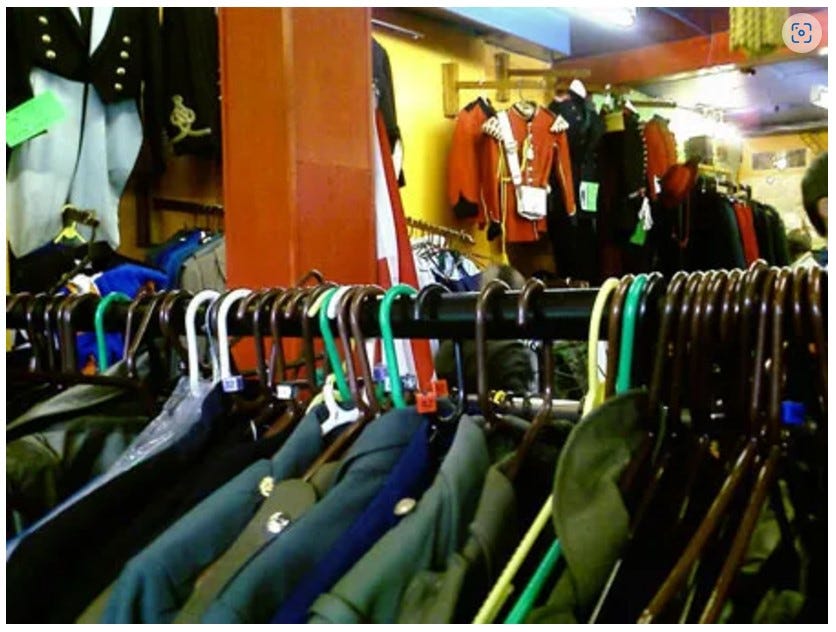
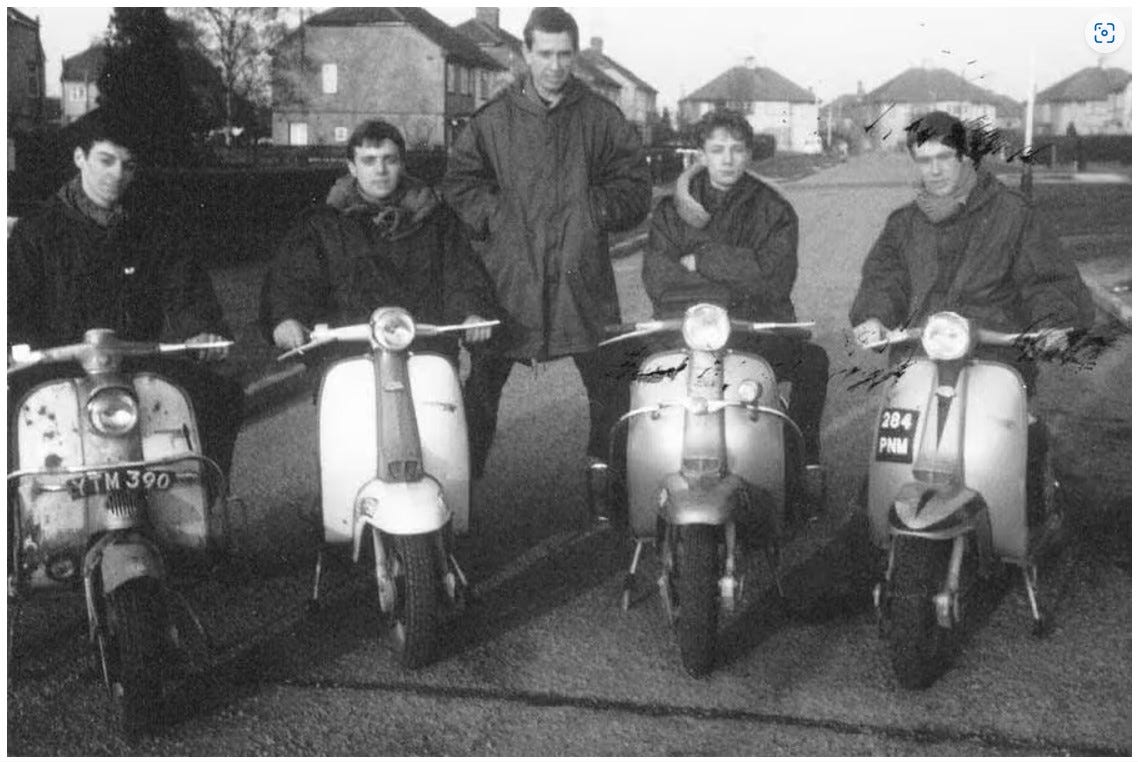
There are copious links and vectors here, going back to British (and American) post-war subcultures. Military surplus has resonated with these subcultures since the 1950s boho military look and the widescale mod adoption of the parka in the early 1960s, with renowned shops such as Laurence Corner of Camden Town supplying the necessary gear. For the mods, this was initially as a way of keeping their smart clothes underneath clean and dry whilst on their scooters, and the original mod parkas (nominally the M-51 and M-65 models) were plain green without all the adornments we now associate with them – they looked like proper army parkas. There is a lot mythology of mods being the first subculture to grow up around the time of national service being ended, and that the use of army clothes was a two-fingered-salute to the work-hard-know-your-place-and-serve-your-country ethos. Maybe so, maybe not.
Another more recent myth persists. The contemporary image we have of the mod parka is adorned with sew-on patches of union jacks, spitfire roundels and big logos advertising ‘The Who’ with a font that runs the letter’s terminal nodes into multi-directional pointing arrows. This has become an eternal image, such that – like many subcultural facets - it projects backwards in time. Don’t be fooled (again)… this image actually stems from the popular film Quadrophenia made by Franc Roddam in 1979, which impressionistically depicts the seaside skirmishes of 1964 between mods and rockers. The film is very evocative and powerful, with poetic licence running on maximum; its release both coinciding with and capturing the moment of entering the 1980s when subcultures simultaneously exploded both backwards and forwards. Quadrophenia changed the way we picture mod history, performing a temporal sleight of hand that would honour even the best magician.
The film is based on the album of the same name by The Who, principally conceived by guitarist and strategist Pete Townshend, and released in 1973 when the band were very much a grizzled post-hippie rock outfit. They had enacted numerous changes since their earlier ‘super-mod’ image. The album is incredibly visual with a photographic supplement reimagining the mods of the mods-vs-rockers seaside conflicts as Who-of-old-fan super-mods with parkas that were bedecked in badges, patches and painted logos. At the time of the beach brawls, in 1964, The Who were not yet fully-fledged mods. They were behind the curve, but quickly got ahead of the curve in 1965 by consulting British pop artist Peter Blake to curate their super-mod image by blending iconography from pop art (including Blake’s own work) and op art (principally the artist Bridget Riley). Ironically, this overblown and authoritative image of mod negated the all-important cultural cachet of the subculture, forcing many of the original scene mods to seek new dress codes after The Who implanted themselves on the scene.
That was the mod military parka, but expressions of other military co-optings soon followed. Shortly after the mods adopted parkas for their scootering, Ian Fisk and former mod Robert Orbach opened the Portobello Road shop I Was Lord Kitchener’s Valet. This 1965 venture, a roaring success and keyed into the morphing of Swinging London to hippie culture, was geared more towards vintage and sometimes exotic militaria, clothing the dandy mod scenes of 1960s London. Before the advent of camouflage as the staple ingredient of combat dress, ostentatious costumes in bright red with excesses of gold braiding (or ‘military spaghetti’) was the norm. I Was Lord Kitchener’s Valet briefly expanded to include outlets in Chelsea and Soho, supplying the famous braided military jacket worn by Jimi Hendrix.
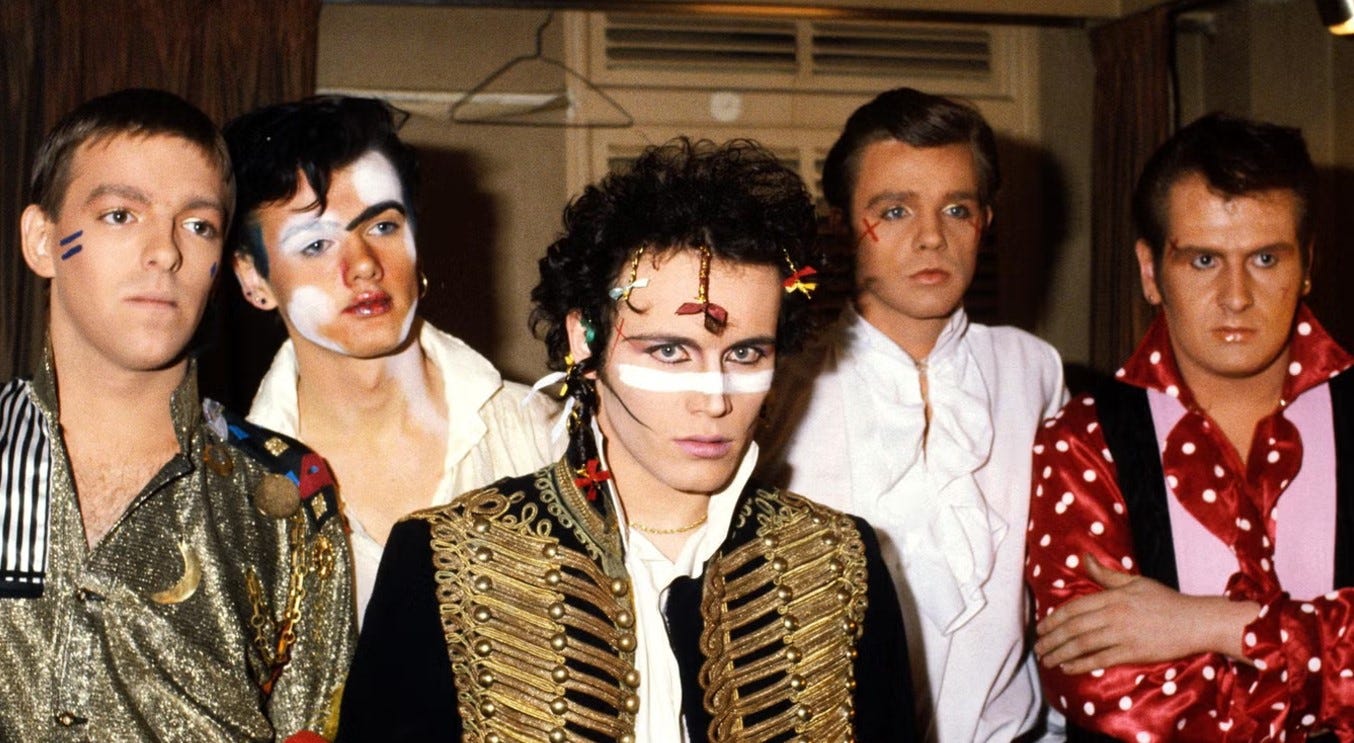
A later incarnation of this look, conceived by Adam Ant as he famously transformed from an avant-garde punk to a new-pop dandy through a hectic 1980, involved a similar military look. I wrote a detailed account of this transformation in an earlier essay with the jacket taking a key role. Other wannabe popstars such as The Cult’s Ian Astbury have given the jacket a go, but Adam had the most success. He sourced his famous cavalry jacket from Berman and Nathan costumiers, a relic from the 1968 film The Charge of the Light Brigade starring David Hemmings.
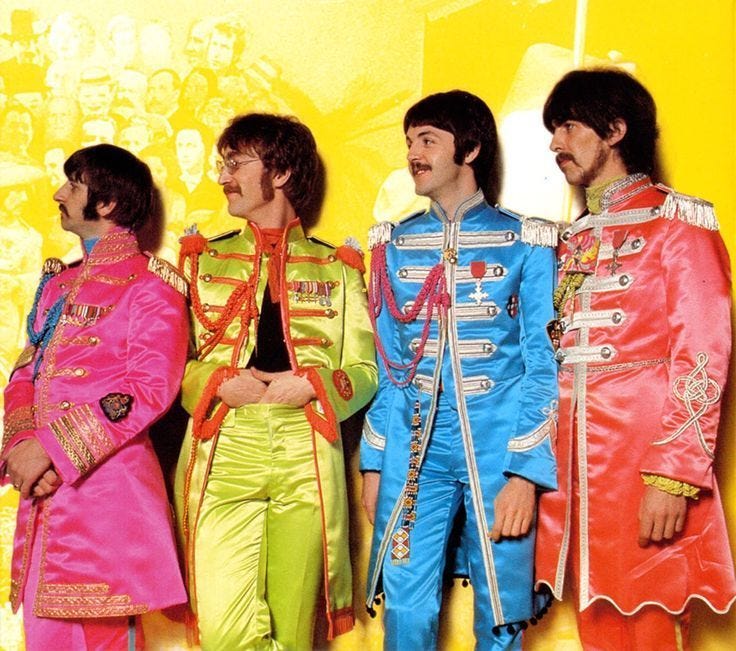
Back in the late 1960s the dandy mod look sourced at I Was Lord Kitchener’s Valet was essentially one route of breaking free from the more commercialised mod look. A signature example of vintage militaria is the sleeve for The Beatles 1967 album Sgt. Pepper’s Lonely Hearts Club Band, also designed by Peter Blake and his partner Jann Haworth. It is said The Beatles were spoofing the trend for this fashion, perhaps explaining their choice of bright, contrasting jackets. I have seen reports saying that they sourced the jackets from Laurence Corner, but the fantasy military look was more than likely specifically designed with Noel Howard said to be the creator during his time at Bermans. The band have fostered an avalanche of speculative and quasi-conspiratorial internet bilge, with this album and its role as an egress into the Summer of Love being subject to particular scrutiny. You can find over-detailed accounts of the stitching, decoration and adornments that each member of the Fab Four sported on these costumes.
As Nik Cohn remarks in his 1971 London fashion survey Today There are No Gentlemen, this exotic military clothing also served a critical and anomic function that appealed to the nascent hippie movement, by mocking the lost glory of the British Empire. The dandy mods that bifurcated from the mid-to-late-60s mods tuned in, turned on, and dropped out. But there was a countermovement as more working-class mods moved towards establishing the skinhead look. Styles on the scene fluctuated wildly around workwear standards, old man coats, and military surplus clothing.
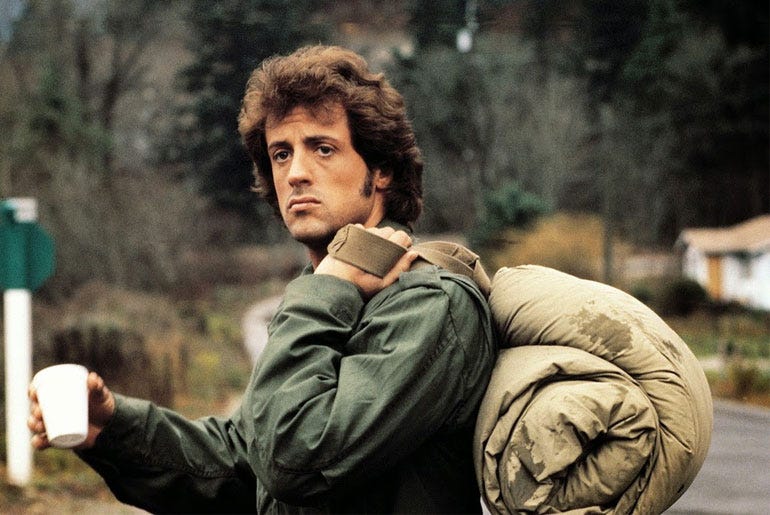
The more workaday uniform of the contemporaneous active soldier engaged in mass combat also took root across different subcultures, often taking on a similar critical allegorical function. Army jackets became a staple of the beatnik protest movement, repurposing the clothing of the war (particularly the M-65 field jacket) against which they protested and further extending it towards campaigns against the massing of nuclear weapons. The M-65 jacket continued to permeate popular culture through the 70s into the 80s, taking on a significance for the disturbed and disaffected military (Vietnam) character now ostracised and disconnected from society. In films such as Serpico (1973), Taxi Driver (1976) and Rambo: First Blood (1982) the jacket resumed its battle purpose, but through a malformed lens. It is a garment that has never really gone away. Again, I wrote about this in my longer piece about the MA-1 jacket resonating through the 1980s, which started with a mention of Theatre of Hate’s Kirk Brandon and Billy Duffy wearing RAF MK3 cold weather jackets. The band, and their fans, looked like a clan of dangerous outsiders.
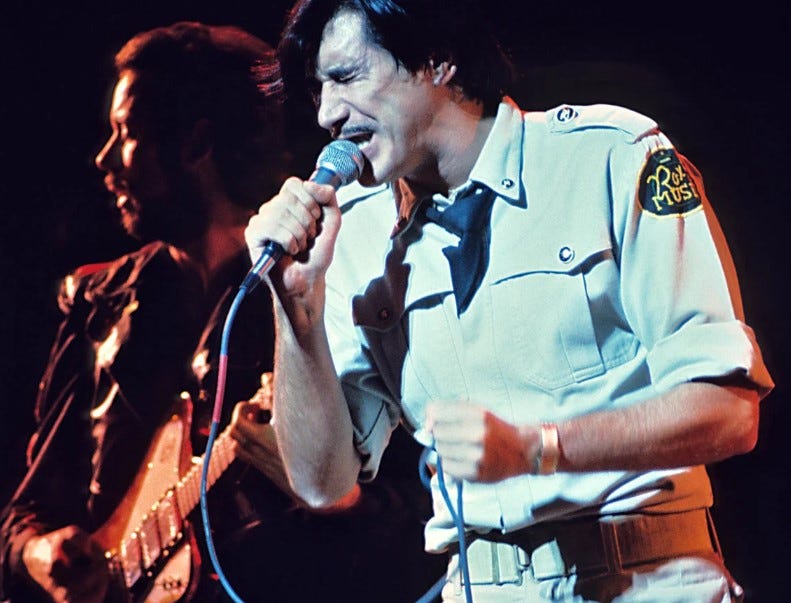
This modern-day active soldier clothing was cheap, durable by default, and (with some imagination) customisable. Inevitably, it spread into pop culture in divergently different ways. For their 1975 tour, the arty glam band Roxy Music were kitted out with a fashionable GI look designed by Antony Price. Roxy Music, and Bryan Ferry in particular, were icons of the semi-obscure ‘southern soul’ subculture, and this scene in turn provided a blueprint for the early arty punk look, with baggy trousers, mohair sweaters and plastic sandals… and copious military surplus worn as customised single items.
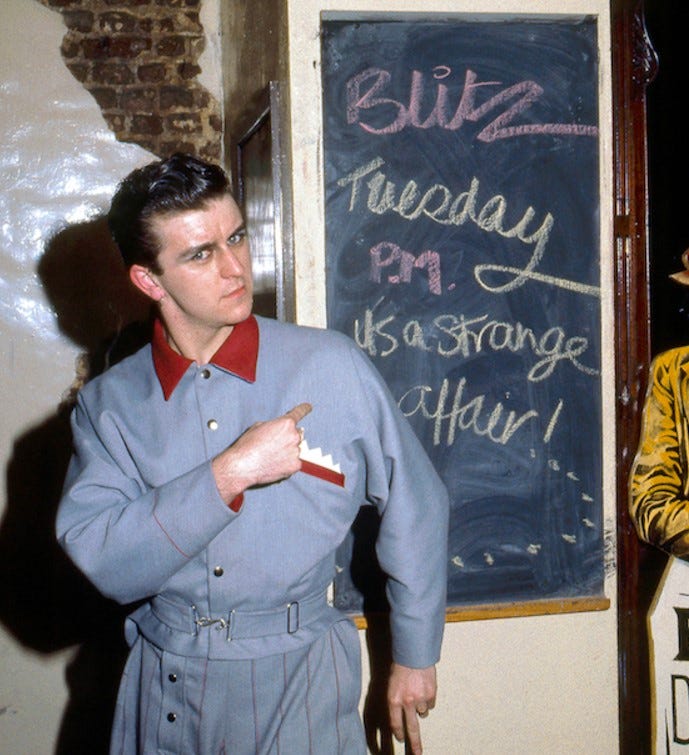
As punk grappled through its crisis of identity, a more street-urchin image prevailed and many of the arty, dressy punks quickly coalesced around the (as then unnamed) new romantic or Blitz Kids movement. Partly influenced by Roxy Music and the dalliances with soul, there was a frenetic phase of dressing up and trying to look different from week to week. It is no surprise that aspects of military uniforms (inevitably purchased at Laurence Corner) were commonly employed by those on the scene. More so, new romantic designers such as PX and Willie Brown (Modern Classics) often made semi-militaristic uniforms resembling 1950s sci-fi flight crews. PX, named after the stores on a military camp, had a military aura, with the myth of the shop being decorated with salvaged MI5 paraphernalia.
The second part of this essay will return to punk and post-punk, and the more bog-standard use of military fatigues, covering the scenes that formed the backdrop to my own youth.
Related SUB>SUMED essays: Theatre of Hate link here / Ants link here