
Combat Rock
UK subcultures and military surplus (part 2)

After concluding the first part of this essay by looking at the quick breakaway of the new romantic scene from a mainstreaming punk, I’m now going to return to the more workaday strand of punk and its gradual transition to post-punk from 1979 onwards. This period, and these scenes, corresponded with my own subcultural youth.
My gig-going, record-buying and attempts to assemble a number of images play out through the late 1970s, dovetailing with the latter days of the first wave of punk as it become more populous in the charts, and expand into the parallel universes of second-wave punk, anarcho-punk and post-punk. These were more-or-less synchronous but demarcated scenes, with second-wave punk responding to first-wave punk becoming more commercial and major label oriented, anarcho-punk taking on a heavy political and ethical carapace, and post-punk using the freeing up offered by punk to developing new musical and thematic directions without gathering under a circumscribed set of rules.
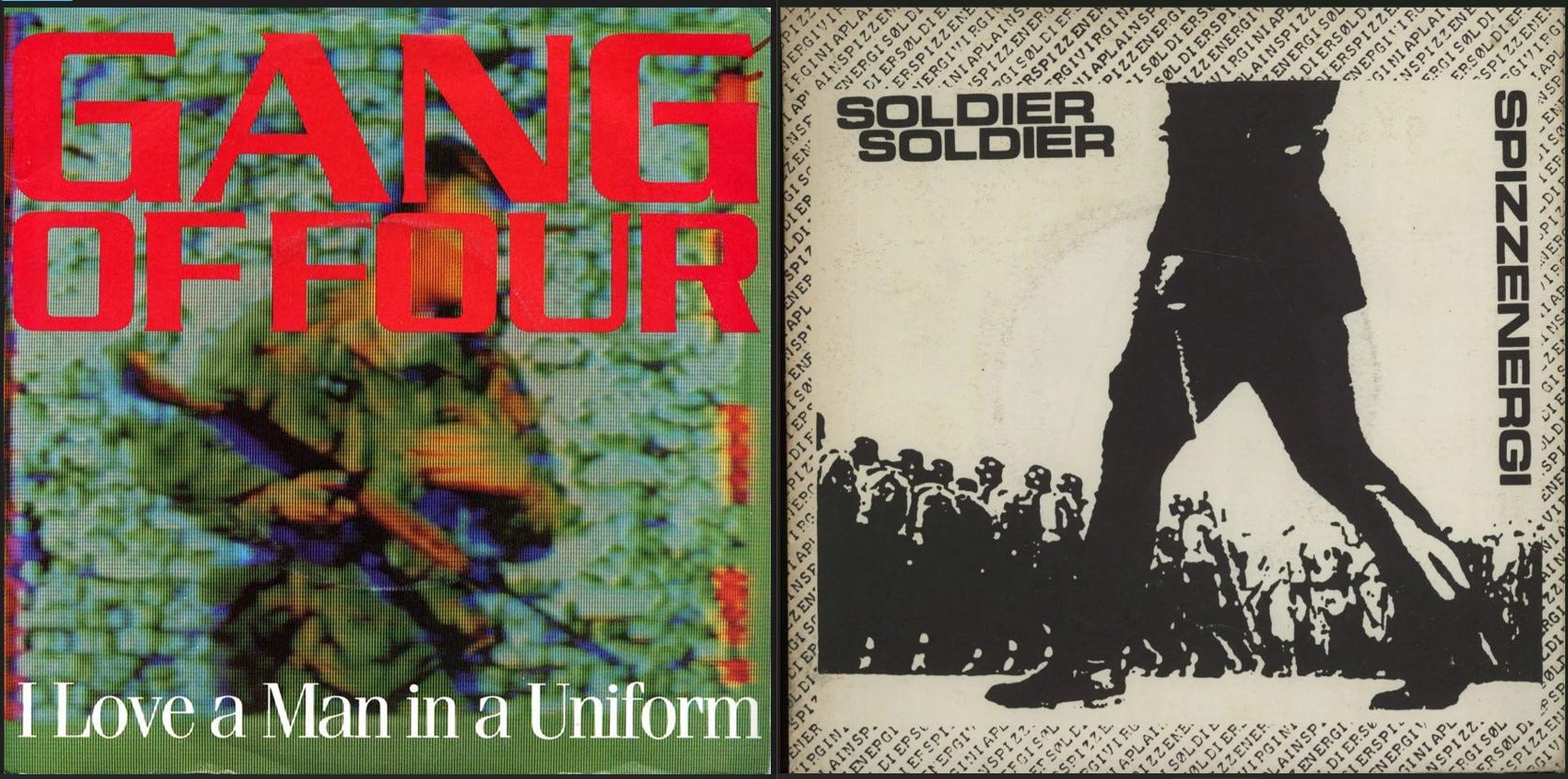
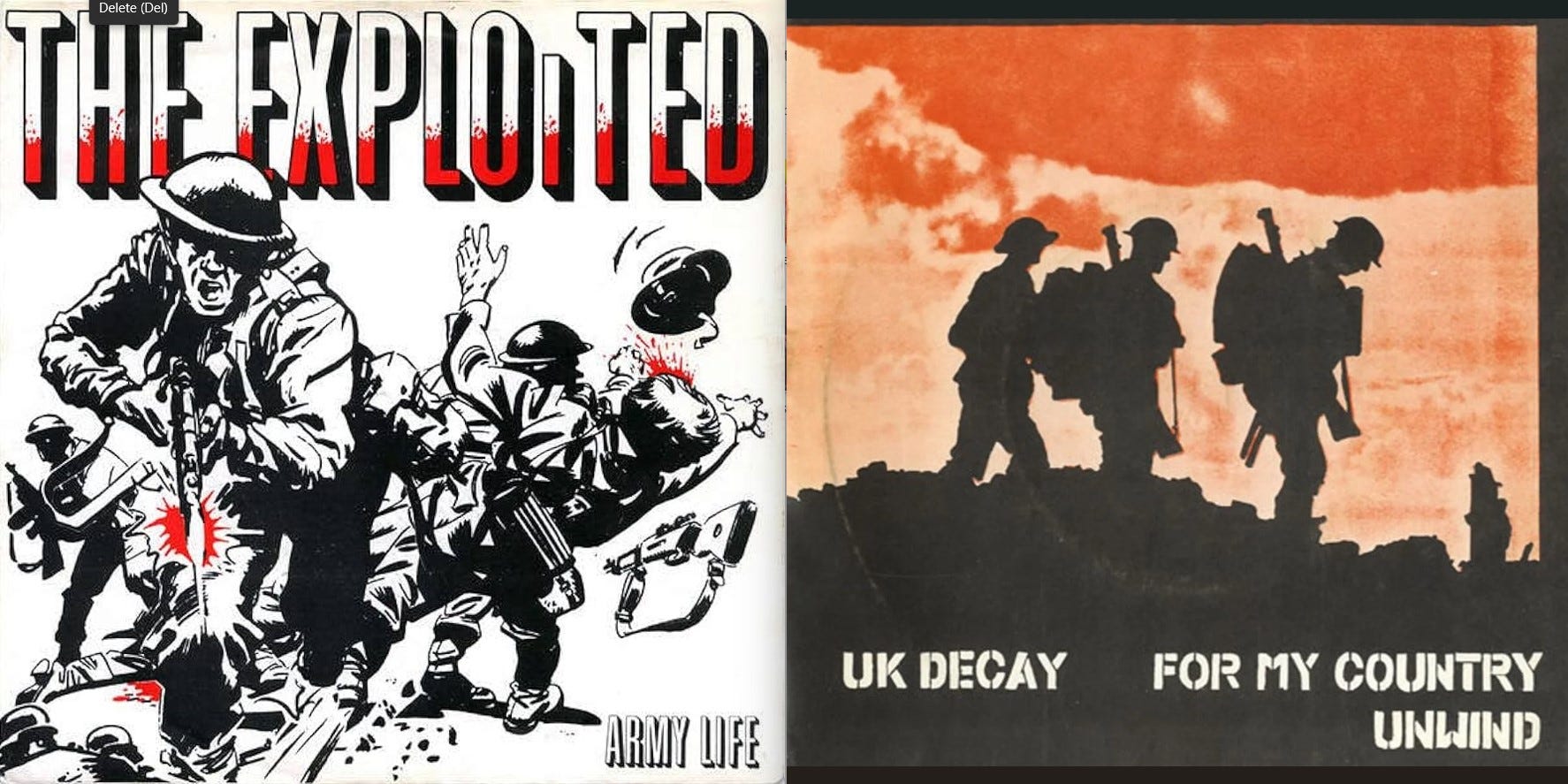
Military-themed and military surplus clothing was common in these scenes, however, punk and post-punk’s relation to militarism is more conflicted, so to speak. Post-punk and second-wave punk in particular had a critical relationship with the armed forces, exemplified through tracks from Gang of Four’s 1982 Marxist-infused single ‘I Love a Man in Uniform’, UK Decay’s gothic 1980 poem “For My Country”, Spizzenergi’s ‘Soldier Solider’ to ex-squaddie Wattie Buchan and the Exploited’s opening shot in 1980 entitled ‘Army Life’ which riffed on the seemingly unstoppable fascination with World War 2 action comics and pulp fiction. Whereas The Exploited offered less critical reflection in favour of a yobbish romp of the apparently disenfranchised, both Spizz and Gang of Four tried to tease out a critique of the militaristic mentality.
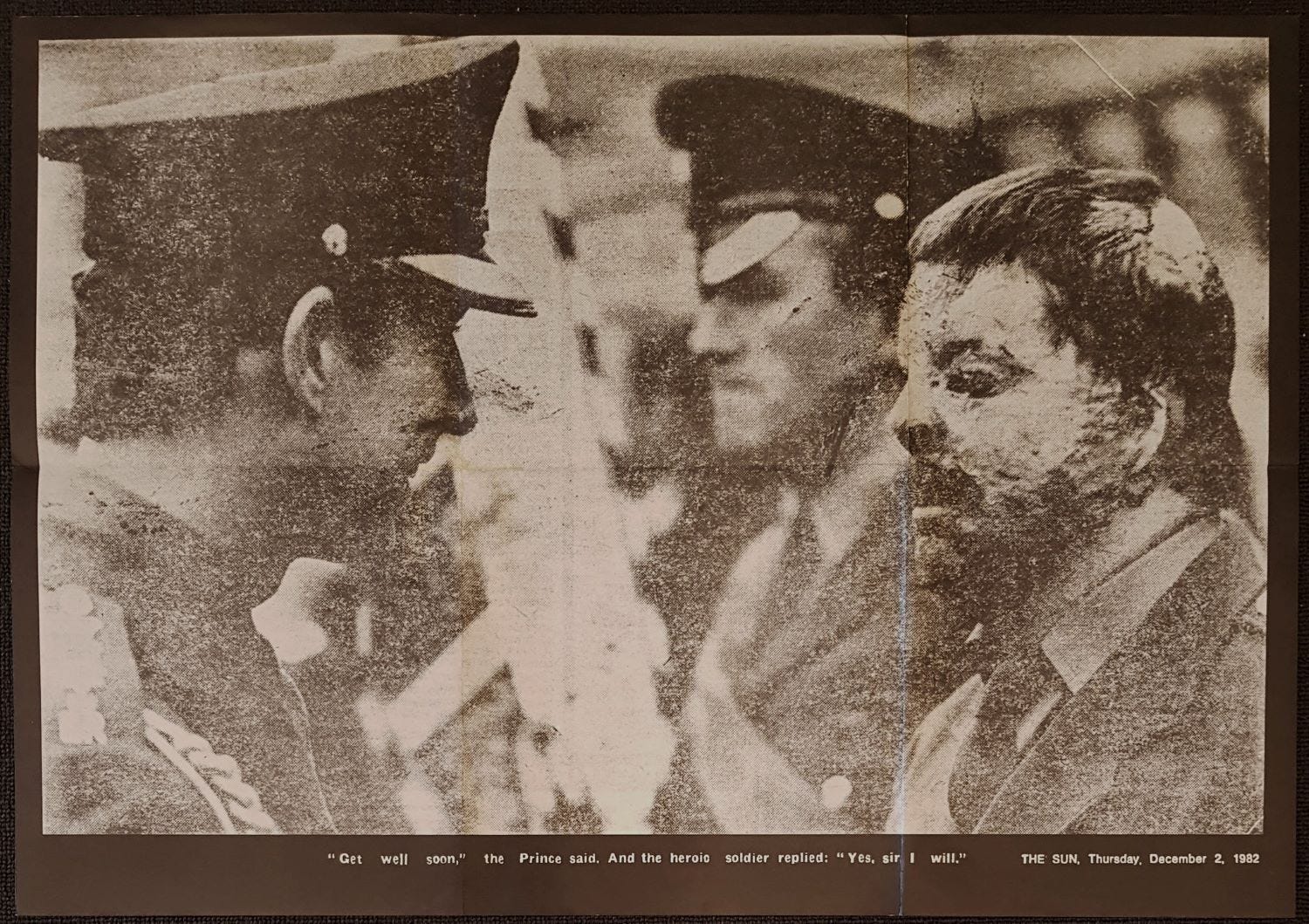
Going further, the overlapping anarcho-punk subculture initially had a resolute pacifist and anti-war strand as part of its wider ethical carapace, with the 1983 Crass album Yes Sir, I Will drawing its title from the discomfiting hospital exchange between HRH Prince Charles and Simon Weston, a soldier from the Welsh Guard who had suffered substantial burns in the Falklands conflict Bluff Cove air attacks (June 1982). Although many people, inside and outside anarcho-punk, saw this conflict as unnecessary and a cynical jingoistic vote-winning tactic to secure Thatcher’s second term, it was still a bold and controversial statement by Crass that skated over a class politics that saw many young adults from underprivileged backgrounds signing up for a forces career.
Crass had previously attempted to critique the conflict with their ‘Sheep Farming…’ single, but by the time of the album their politics (or their approach to ‘doing politics’) had turned itself inside out with anguish. Unelected leader Penny Rimbaud acknowledged both the power and the delicacy of using such a moment as the album’s title – speaking to the Louder Than War website in 2011 he concluded: “That was such an audacious thing to do at the time. Especially given that one had to feel compassion for Simon Weston”.
This anti-war, anti-army and even anti-uniform trope of the various punk subcultures did not always translate into the various looks that punk bands, and fans, adopted. This is understandable, as punk musicians and punk fans who saw the subculture as either politicised or in some sense oppositional (against society or maybe just against other subcultures) adopted an ‘us against them’ mentality and an associated need to express a tribal loyalty of struggle against oppression.
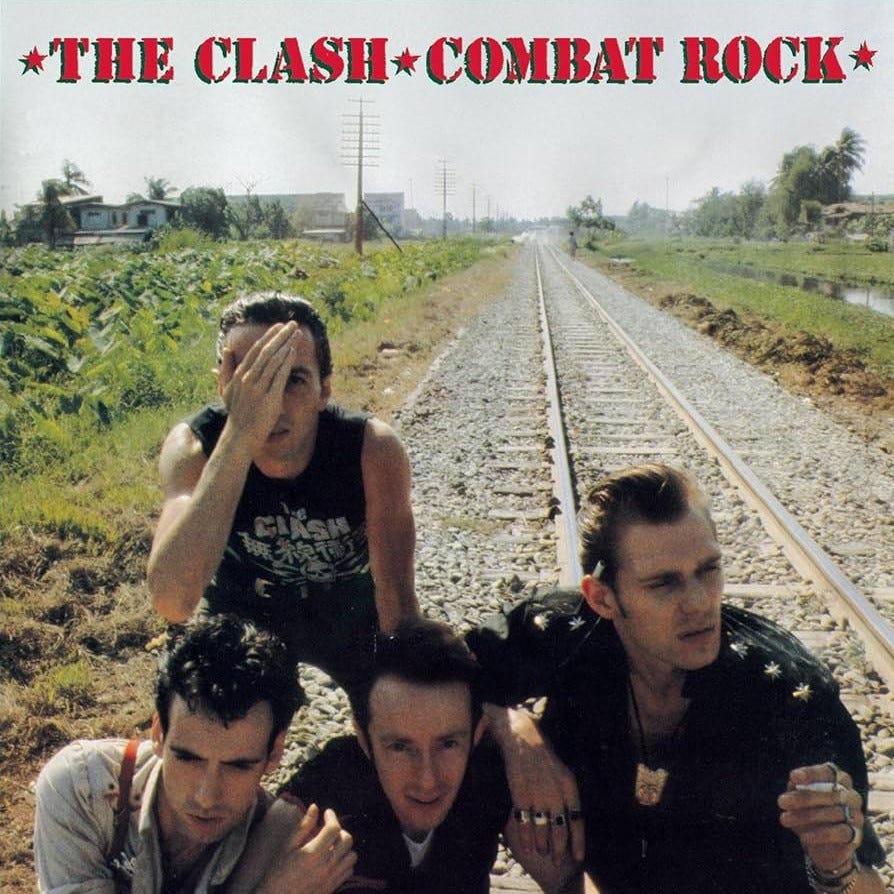
I have already touched upon Theatre of Hate fans and their roadworthy look that adopted utilitarian army clothing as they toured relentlessly through 1981 and early 1982. The Clash’s May 1982 album Combat Rock, whilst being a statement about Vietnam and American society, followed in a similar vein as Theatre of Hate’s rockabilly-meets-military-survivalist look. The band adopted a military punk look with cut-off sleeves – additionally having a bespoke military themed wardrobe created by relatively unknown designer Alex Michon.
Anarcho-punk outfit Crass had no dealings with clothing designers – Antony Price pedigree or Alex Michon underground. Musically, they practised a crude style that hinged on punk but employed a martial drum beat that drove their songs. As the nominal scene leaders of the anarcho-punk movement, gathering momentum from 1980, they adopted a look of dyed-black army clothes – especially the capacious combat trousers - under the guise of it being a ‘non-look’ of subcultural anonymity and cultivated indifference to fashion.
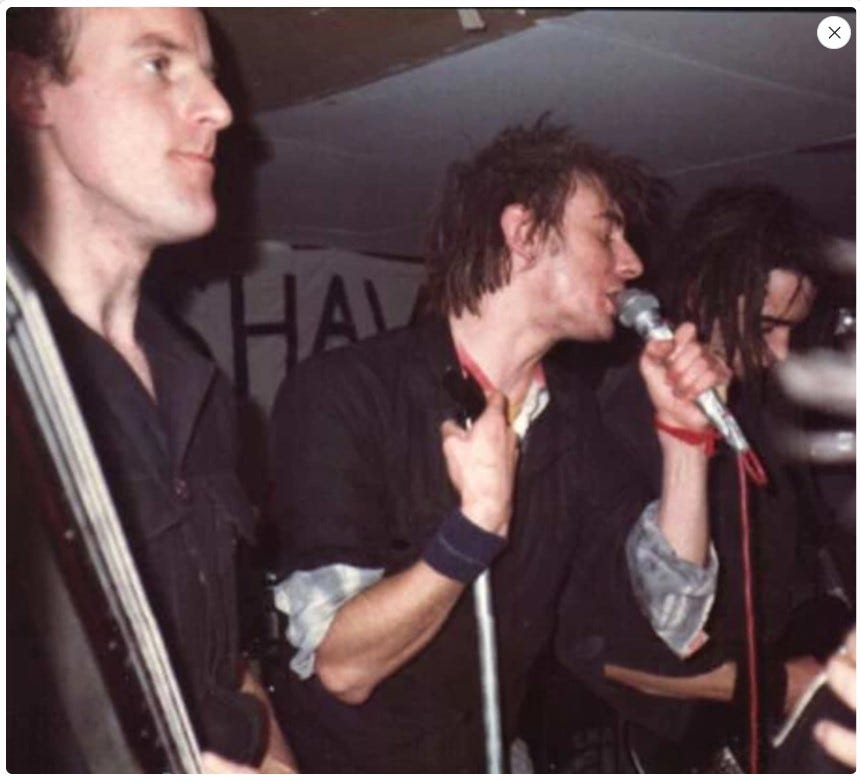
Of course, things don’t work like that and it quickly became the way to look if you were a fan of this scene which required something of an ethical and political commitment. This led to many punks buying army surplus clothing and dying it black en masse. Anarcho-punks resembled modern-day witches, huddled around boiling cauldrons with military garb stewing in a black liquid. The military surplus look of anarcho-punk worked with a mixture of denotations and connotations: a stance of anti-designer-label consumerism and sumptuousness, a streak of survivalist mentality, and a readiness for the battle against the totalising injustices of wider society.
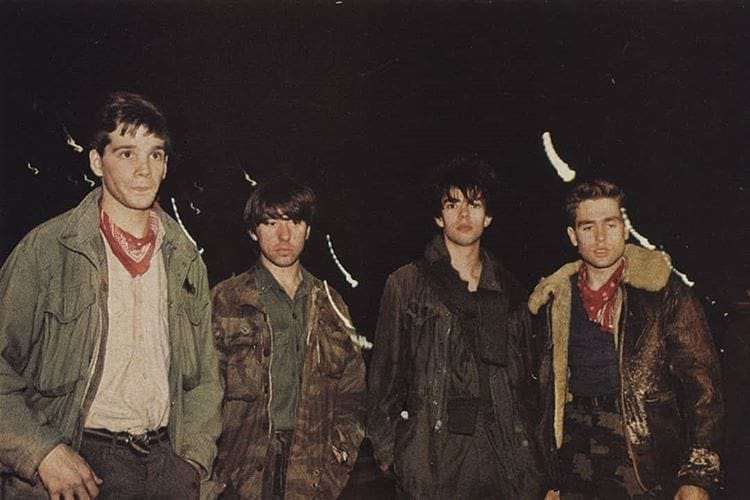
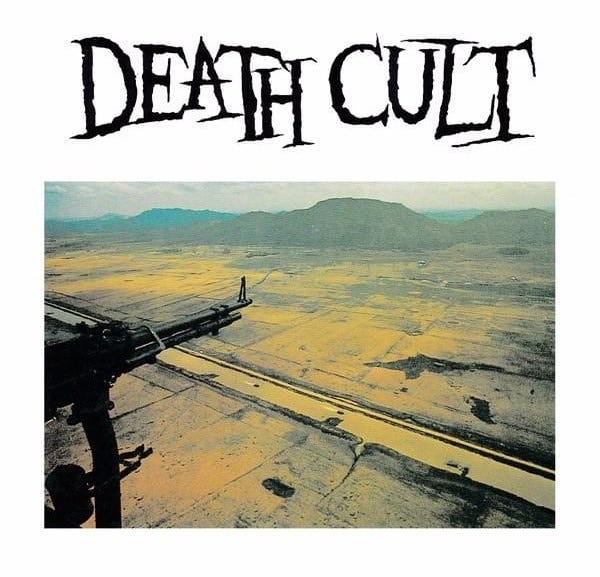
On a wider scale, an assortment of individuals from post-punk bands invested in military garb as part of the spiralling image culture of the early 1980s as every band scrambled for a unique look. A post-punk military moment occurred when Echo and the Bunnymen were kitted out from head-to-toe in advance of their special concert at Buxton Pavilion Gardens in January 1981. The following year there was something of a fixation with Vietnam and the 1979 film Apocalypse Now. Bands like Theatre of Hate and Death Cult drew from this complex and freighted conflict, which was relatively fresh in the memory and obviously revived with Francis Ford Coppola’s arty and epic film. The previously discussed military MA-1 jacket became de-rigueur and Death Cult’s opening 4-track ep from spring 1983 included the haunting imagery from Vietnam photographer Tim Page and lyrics that played on the conflict on tracks like ‘Christians’. Guitarist Billy Duffy sported a beret and military vest for the opening UK tour in September 1983.
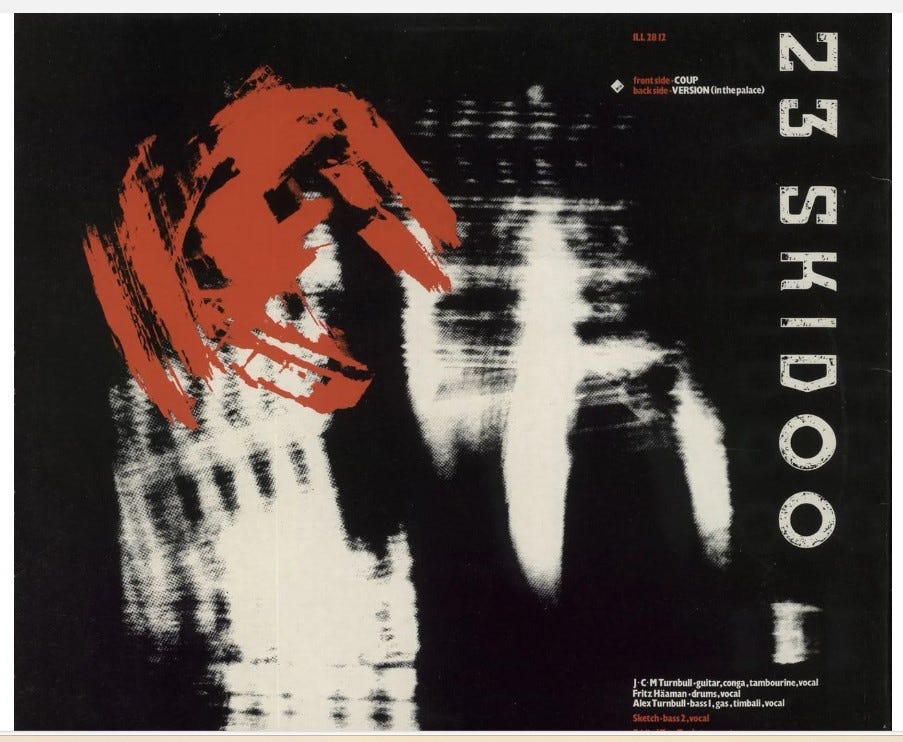
On a different page, following the slimming down of the original membership the experimental band 23 Skidoo were back on track, cutting and mixing from Apocalypse Now and peppering tracks with the shouted sample of ‘Fuck You GI’. The band were now releasing records on the Illuminated label, whose artwork – carrying on from Fetish Records - was created by the seminal designer Neville Brody. The graphic look of the label was experimental, but had a core feeling of contemporary camouflage in the spirit of ‘disruptive pattern’ and concealment (of information), most evident on the reverse of their sleeve for the epic 12” ‘Coup’. When I saw 23 Skidoo undertake one of their infrequent performances in the mid-1980s (supporting Mark Stewart at Leeds), the semi-lit stage set consisted of camouflage nets and smoke generators, with the band stalking about partially obscured bellowing into loudhailers. Incredible.
The final part of this essay will look at my own disastrous attempts to engage military clothing in the various scenes I passed through.