
Driftworks
surplus donkey / 1979 as 1977 / MM outro

6. A reprise
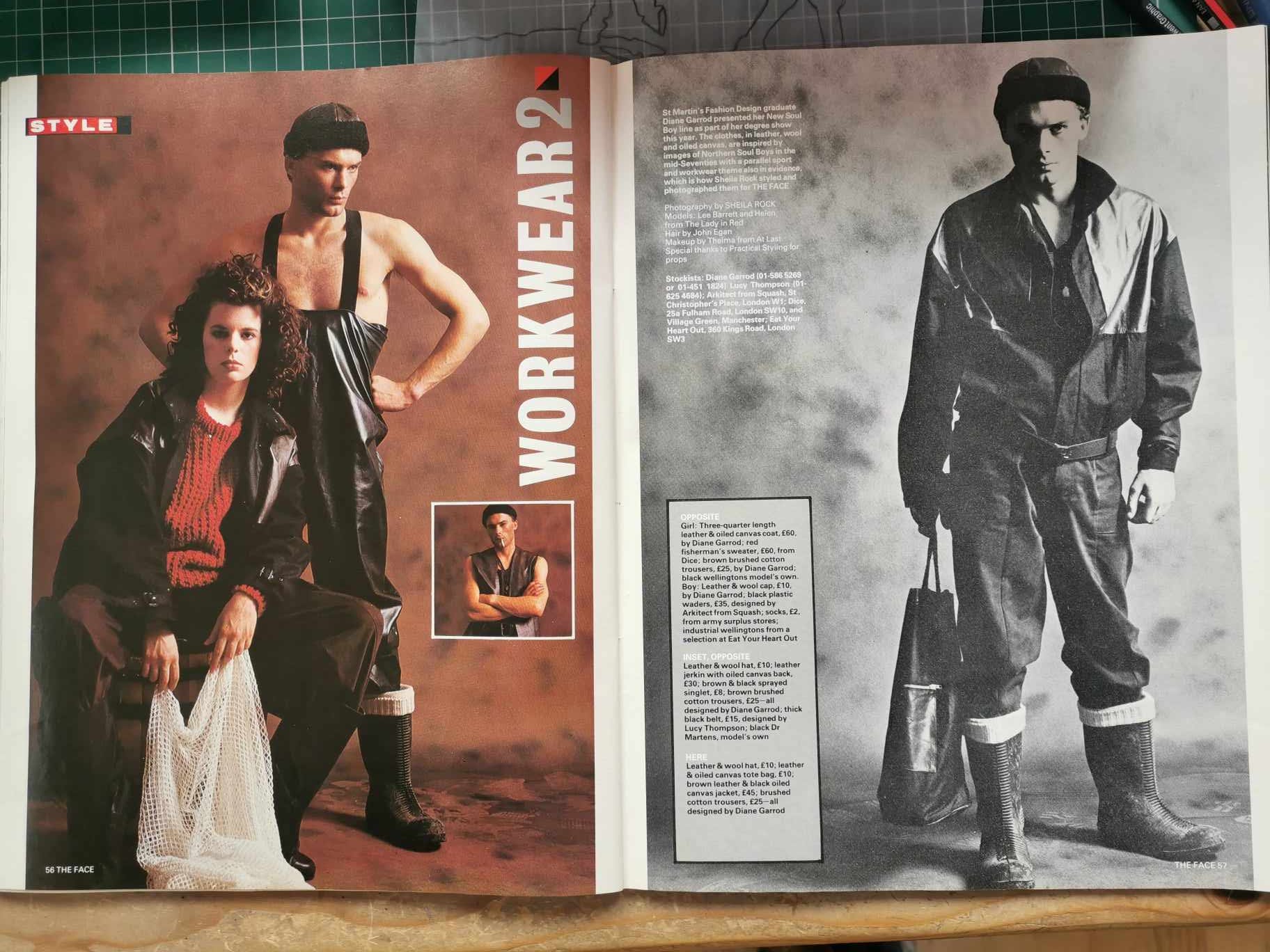
By October 1982 workwear is part of a special feature in The Face, with St Martins designer Diane Garod putting an expensive price tag on leather, wool and oiled canvas creations under a collection titled New Soul Boy – an expensive reworking of the Dexys 1979/1980 look (a follow-up letter in the magazine criticised the collection for such a blatant lift). Workwear fluttered in and out and around the early 80s stylings, with brands like Nottingham’s G-Force offering a unique take on it.
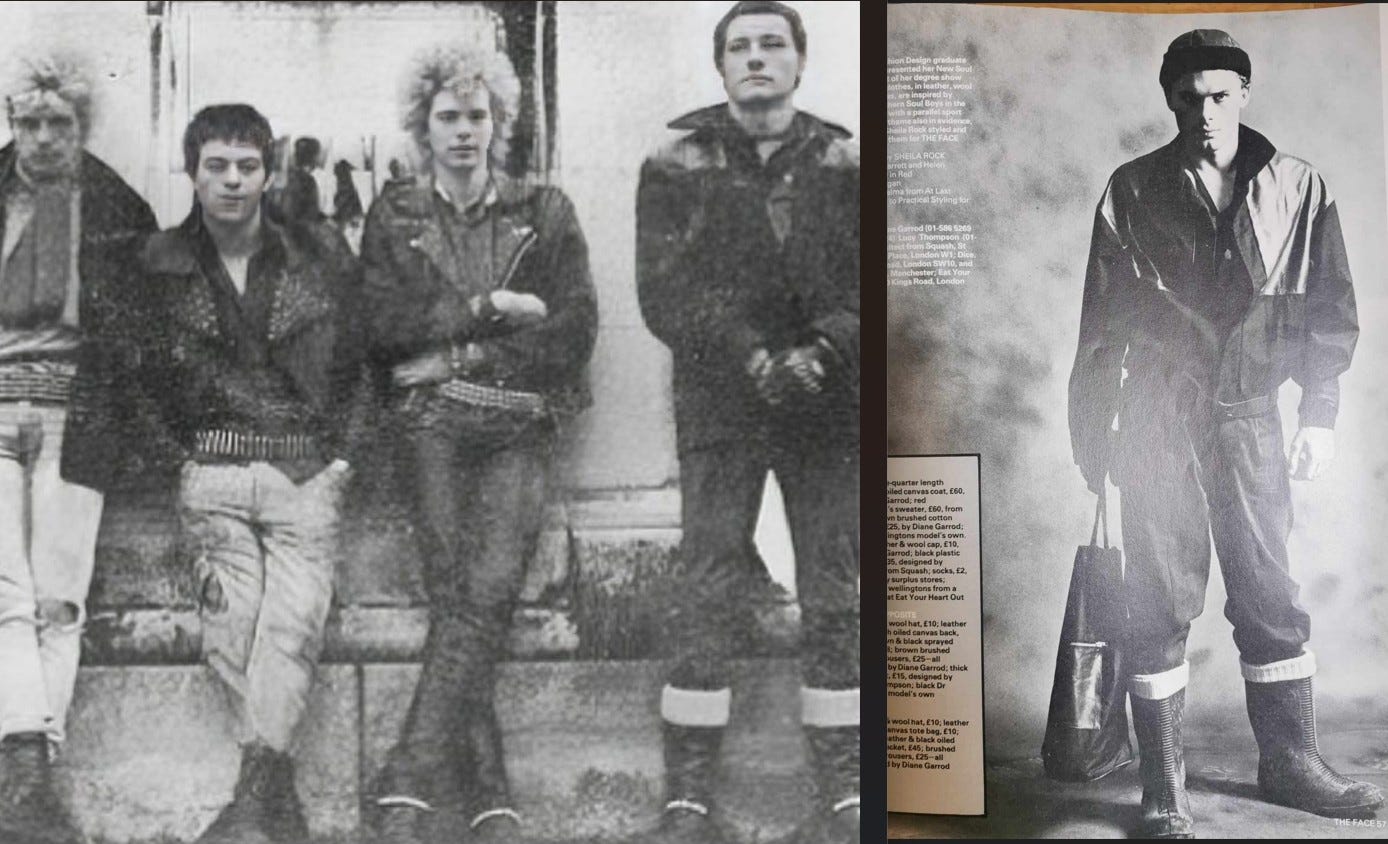
If you squint your eyes you can cast the end wellies character into the UK82 band Dead Wretched, who we saw in the previous feature.
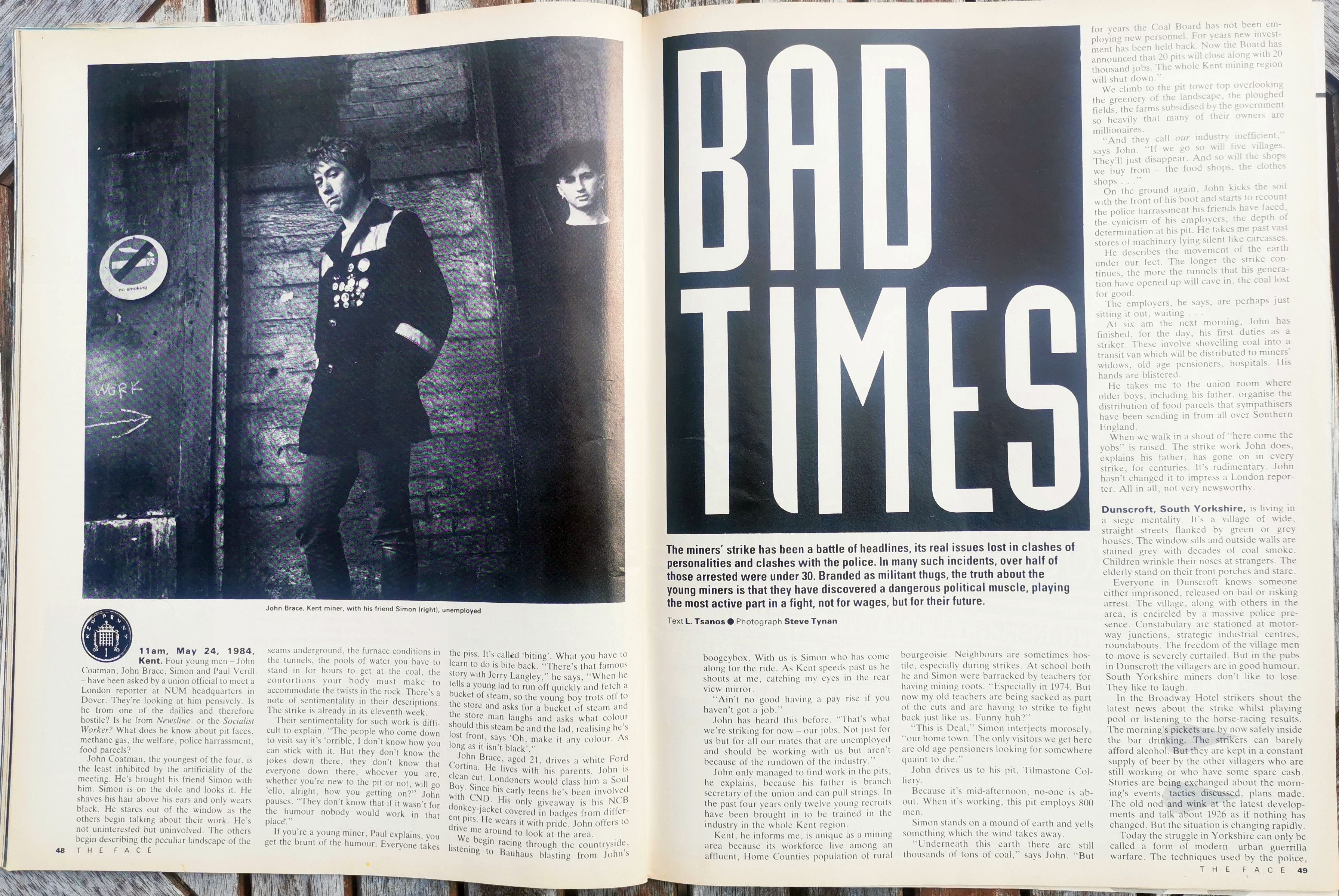
Following the iconic ‘Hard Times’ issue of The Face (September 1982 – the prior issue to the workwear special) we get numerous claimed style themes (wild west, beachcomber, etc). This takes a brief hiatus in issue 51 (July 84) where the magazine offers a divergent ‘Good Times’ and ‘Bad Times’ theme that harks back to ‘Hard Times’. This issue coincides with the miners’ strike and we get another donkey jacket, with a very different connotation…
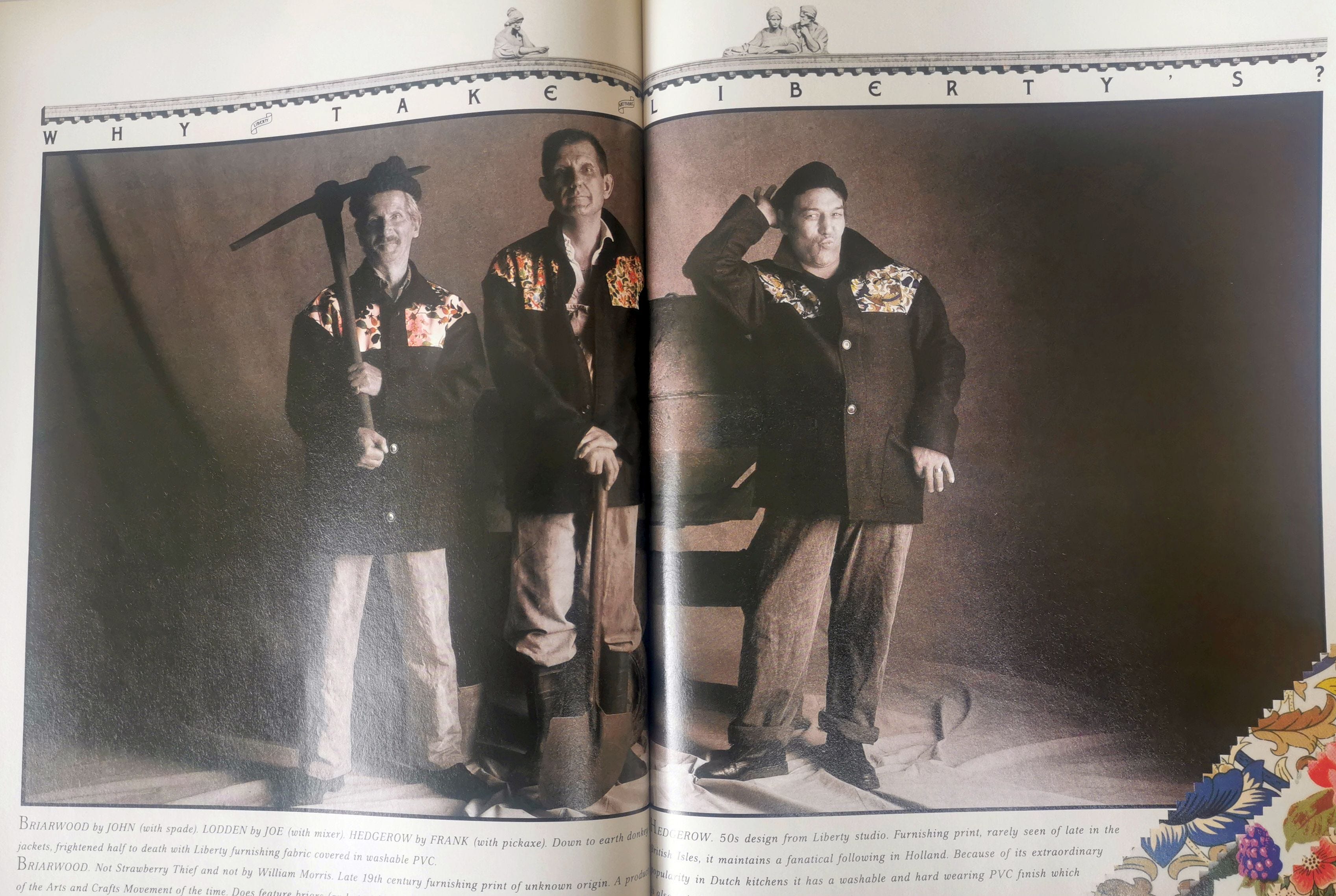
This almost seems to stop the fashion repurposing of something that is clearly a non-fashion item associated with dossing and low-paid grunt work. As a last gasp of 80s fashion, there’s a strange advertisement across various style magazines through 1987 when the high-fashion retailer Liberty features a line up of council workers with donkey jackets embellished with Liberty fabric. It’s an odd one, as one of the characters pulls a deliberately fey and gay pose such as might be seen on a programme like Are You Being Served?
I have seen recent images of both Vic Reeves and Bobby Gillespie wearing modern-day donkey jackets, but I’m not going to go there.
7. A street
Margiela’s imagined 1979 shows how visual concepts, clothing and bands/scenes can re-weave periods of time, jumping back and forth across the decades to re-examine the past through prompts in the here and now. A similar sense of compacted emotion, detail and subcultural poise arose with Ian Walker’s 2017 essay (from the journal Photographies, issue 10:1, January 2017) examining Thomas Struth’s haunting photograph Clinton Road, London, 1977.
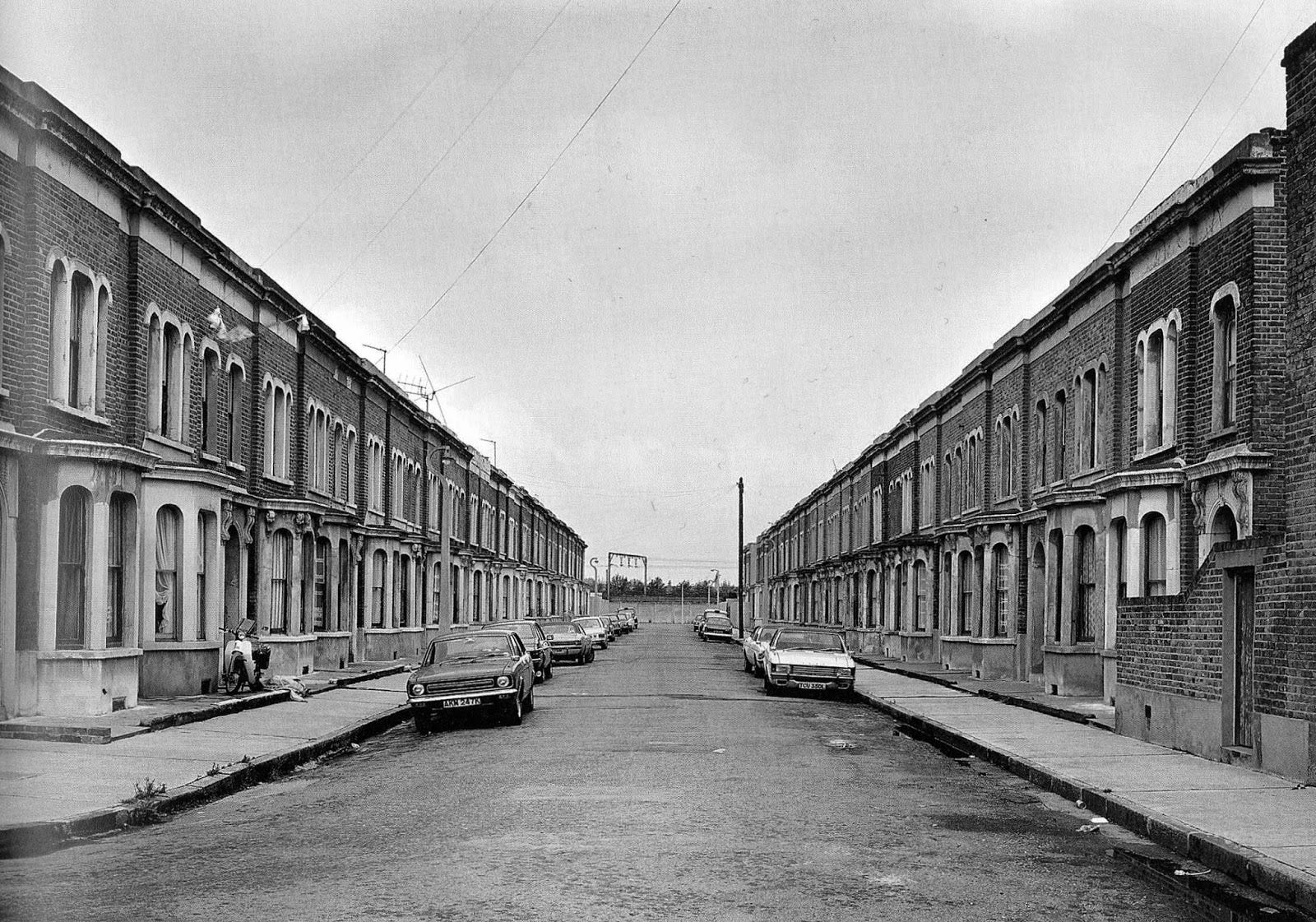
The photograph is part of a wider sequence of images by the artist that capture a deserted vanishing point perspectives of urban streets. They are given name Unconscious Places and have a linkage to Kevin Cummins’ own framing of bands in his home city of Manchester with backgrounds that tail off into accumulations of the same nothingness. Thomas Struth is slightly older than Margiela, and graduated from the acclaimed Düsseldorf Academy under the tuition of the incredibly innovative and perceptive Bernd and Hilla Becher, but his work has a similar haunting feeling of the grey life that underpinned the late 1970s. He is part of three famous Thomases from Germany who have reinvented photography in different ways (Struth, Ruff and Demand – all worth checking out).
Struth spent two months in London during 1977, but we do not know how much he encountered punk rock which would then be in its anarchic ascendency in the city (in a similar situation, another of my favourite artist/photographers Jeff Wall studied in London in 1979, though I can’t link Wall to Margiela at this point in time). However, Clinton Road, London, 1977 is a photograph that functions like a Margiela garment, overbearingly ordinary but bursting with mystery and shrouded in latent possibility. The writer Brandon Taylor, in his 2005 book Art Today, Taylor, lingers on Struth’s image such that the eye is directed to “aspects of the urban scene that to normal, functional perception are invisible: contingent arrangement of parked cars, open and closed windows, architectural perspectives and conjunctions of street furniture”.
In his essay, Walker explicates this in a patient and divergent discussion of the photograph, which by definition freezes time in the instant of the shutter opening and closing. Aside from the technical aspects of Struth’s work (“absolute precision of the perspective … symmetrical and ordered”), Walker invites us to think what goes on behind the doors and windows, and what might have happened before and after the photograph – in its deserted state – was captured. In doing this he summons up and awakens the punk angst and energy of the time and place. In fact, not far from Clinton Road is a similar straight residential street Beck Road, which saw the nurturing of the “wreckers of civilisation” Throbbing Gristle.
I have often thought about the donkey jacket. I am not sure what my thoughts were though. I’d like to know what yours are on Vic and Bobby wearing them though.
I enjoyed this. Thanks.