
Forever Then
It’s post-punk but not as we know it

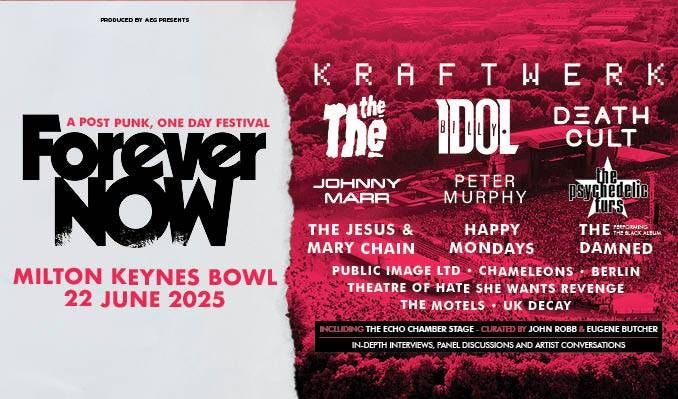
On Sunday I went to the Forever Now one-day festival of post-punk. It took place at Milton Keynes Bowl, or the National Bowl, which opened for entertainment in 1979. It was my first encounter with the venue, and looking at the history I learn it was originally a clay pit that was partially filled and then banked up with earth from the various developments in the growing new town. It possibly passes as a Robert Smithson unnatural natural (non)site, but I don’t want to let this short report get too sidetracked by my art meanderings. I’m still a bit tired from it all, even two days later. I am old. Too old for this.
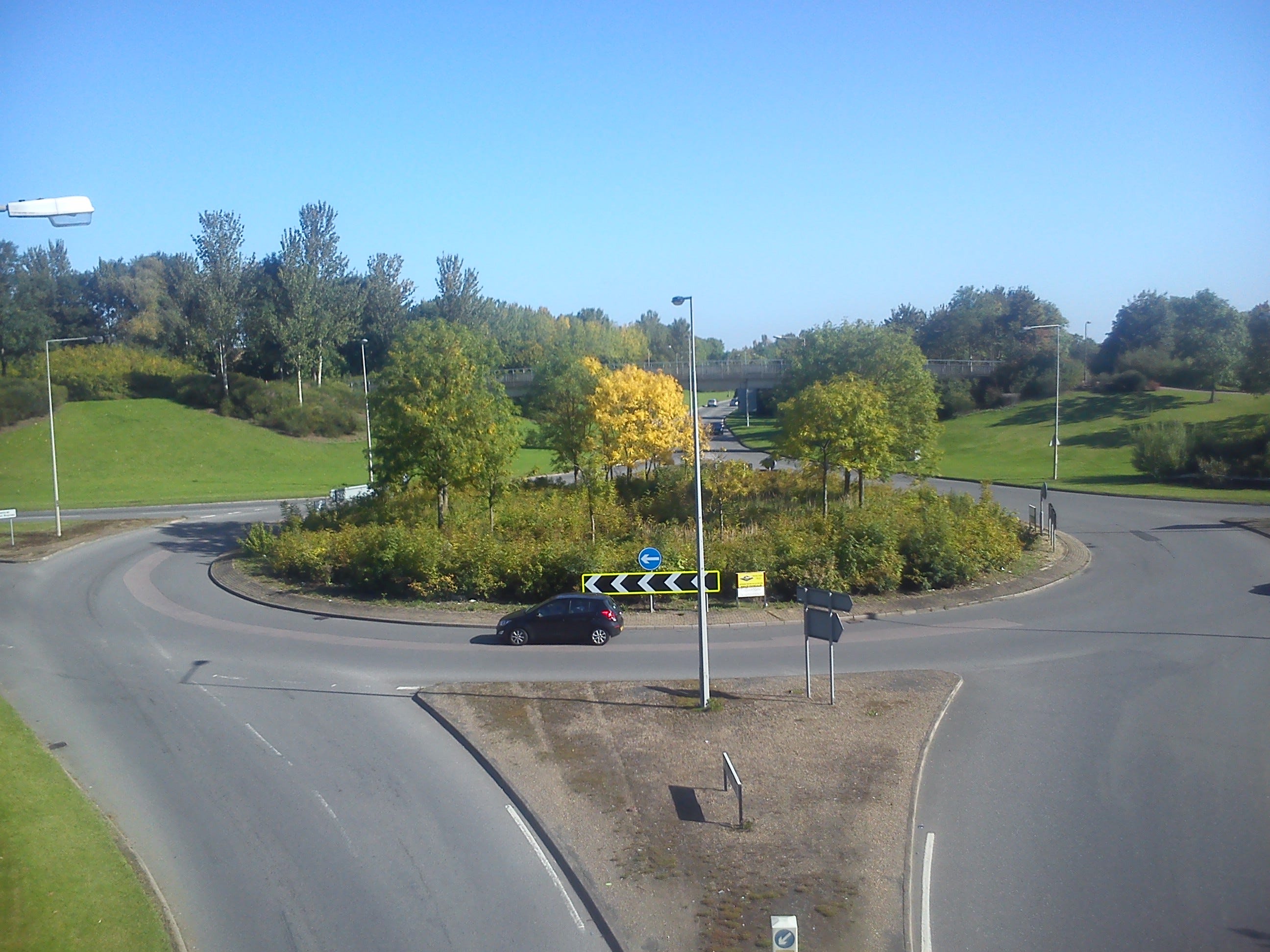
Milton Keynes is an odd, disorienting place. It is built upon grids with partially shielded dual carriageways intersecting on roundabouts. Roads and roundabouts have paired letter-number identifiers and it feels like you are dictating a giant game of Battleships as you try to find your way. My only other visit was back in 2015 for a football match when I went on the train and then walked to the football stadium (in a different sector to the Bowl) and crossed a number of these alphanumeric junctions.
For the trip at the weekend I made the mistake of printing off a partial map in advance of trying to foil the extortionate parking costs and this proved useless as it took me a while to work out when the car that my partner was patiently driving coincided with my tranche of the map print-out. Then as we approached the designated area we realised that our plan to leave the car in a country park adjoining the Bowl was scuppered due to roads being closed off (presumably to catch out the many people looking for cheap/free parking).
Never mind, we found somewhere else. We had time to kill and ate the packed lunch and flasked coffee in advance of the zero-food-and-drink policy at the festival. There were also some nearby toilets which were clean, so we squeezed out as much bodily substance as we could. We were allowed a bag no bigger than A4 and 500ml of water which was upgraded to 1.5l at the last minute. The anticipated continuation of scorching weather did not materialise, and free water refills were on offer, though the taps were stationed about 10 metres downwind of a bank of open urinals which didn’t seem a good idea.
Much of the writing on this SUB>SUMED platform concerns the early 80s post-punk scene, so when this festival was announced it felt both strange and tempting. I have avoided festivals all my life, apart from the indoor Futurama events. Post-punk, in my eyes and ears, did not lend itself to a big outdoor setting. It felt better in cloying, cramped spaces with sweat running down the black painted walls.
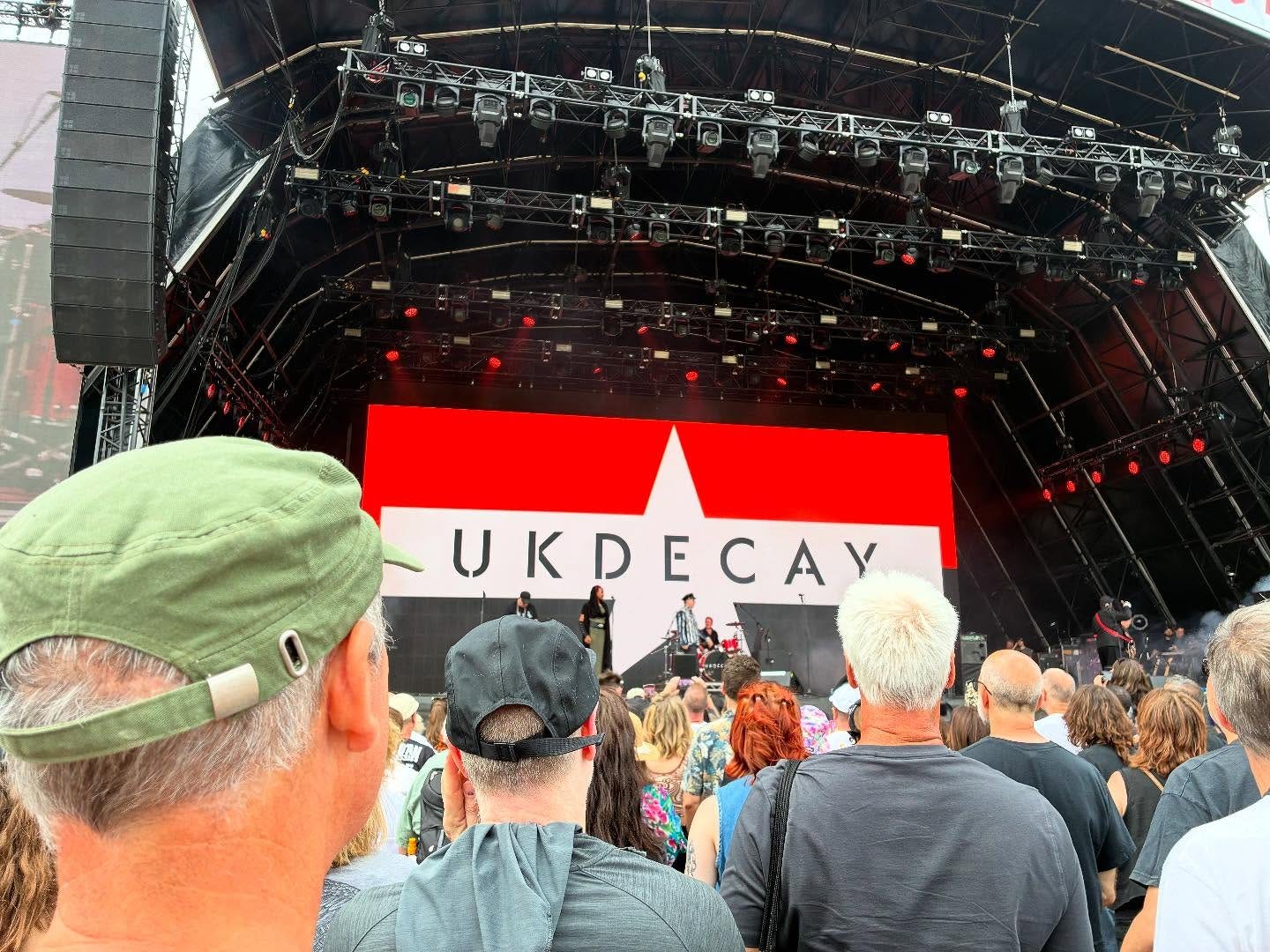
For instance, the opening act on the main stage was UK Decay, tentatively reforming for the event. They played a few weeks ago at a smaller venue in Northampton, and I wish I’d gone. I have not seen them since they split in 1982, and they were part of my early post-punk proto-goth learning curve. Admittedly they still have a certain panache, but it felt so wrong seeing them try to occupy a huge stage with banks of lights to play in an outdoor arena that holds over 60k people.
Forever Now was clearly aimed at the nostalgic market. I wrote a lot about nostalgia theory in my PhD back in the 2010s, and I won’t call on some of complex academic arguments I needed to synthesise to pass that work and become a ‘doctor’. Nostalgia is contested, it has shifted in meaning and context, and it is currently very open to political manipulation (in fact, certain new parties almost depend upon it). My short summary is that nostalgia has greatest recall to a period of (Western) lives when we felt life offered choices and excitements rather than binds and commitments – our teenage years. In this period we (or some of us) chose to explore new music and fashion as part of a subcultural system. We felt it was something we had agency over, but that was part of the pleasant illusion.
And so, looking back to those formative times has a double dissemblance – we forget that (maybe) we didn’t have total agency, and we also bundle in new realities, instances or feelings that were not part of our original experience. These are carefully spoon-fed to us. This is more so a continuation of the lack of agency – back in the day we felt we had a say in what we engaged in but it was mainly from a tightly regulated palette, and this cultural ownership continues to the point where the genre-demarcated nostalgia industry tells us in no uncertain how the past was…
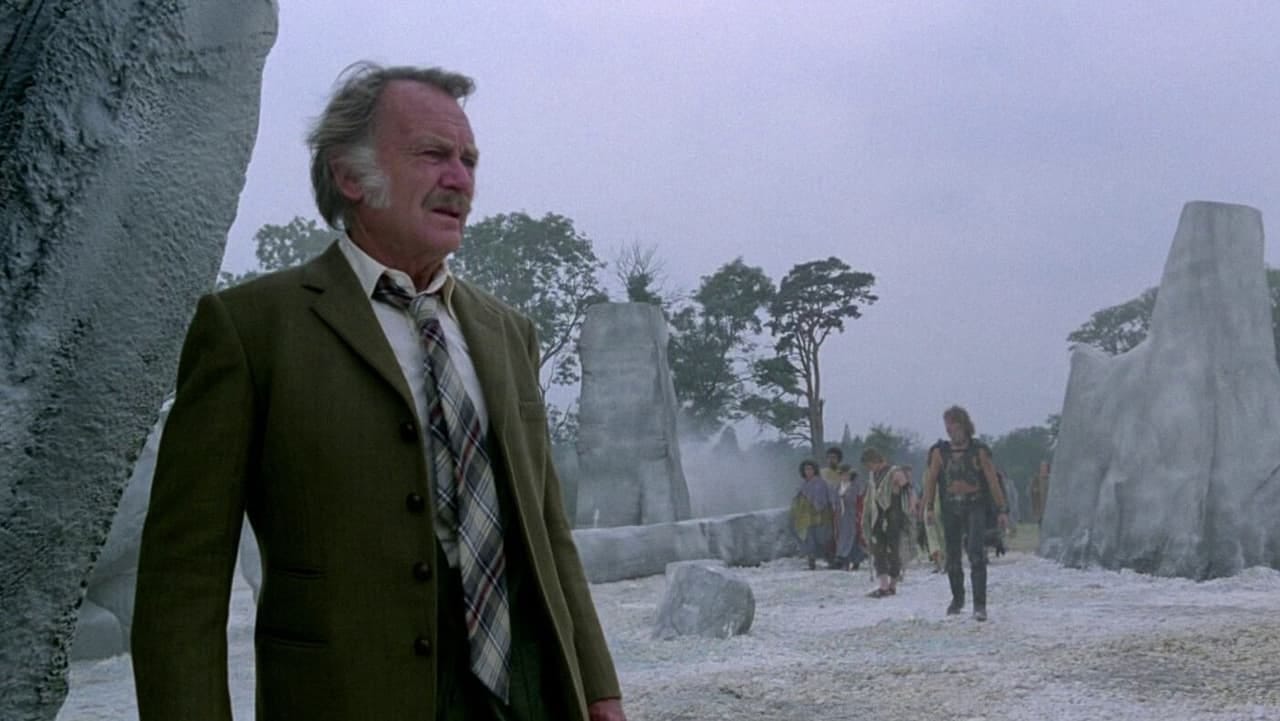
When I did a bit of digging I found out that in the mid-80s some aspects of post-punk did levitate to Bowl status. This must have passed me by. It’s that period in my previous essay of the post-post-punk and pre-rave era when music was strange, heterodox and undecided. A number of seemingly post-punk bands were able to fill the bowl, or collaborate on wider festivals. There also seems to be inclination to line up events with midsummer, which has an air of Quatermass (1979) when a new cult of Planet People gather in ancient sites only to be evaporated and ‘harvested’ by a ray from space. I’ll return to this idea.
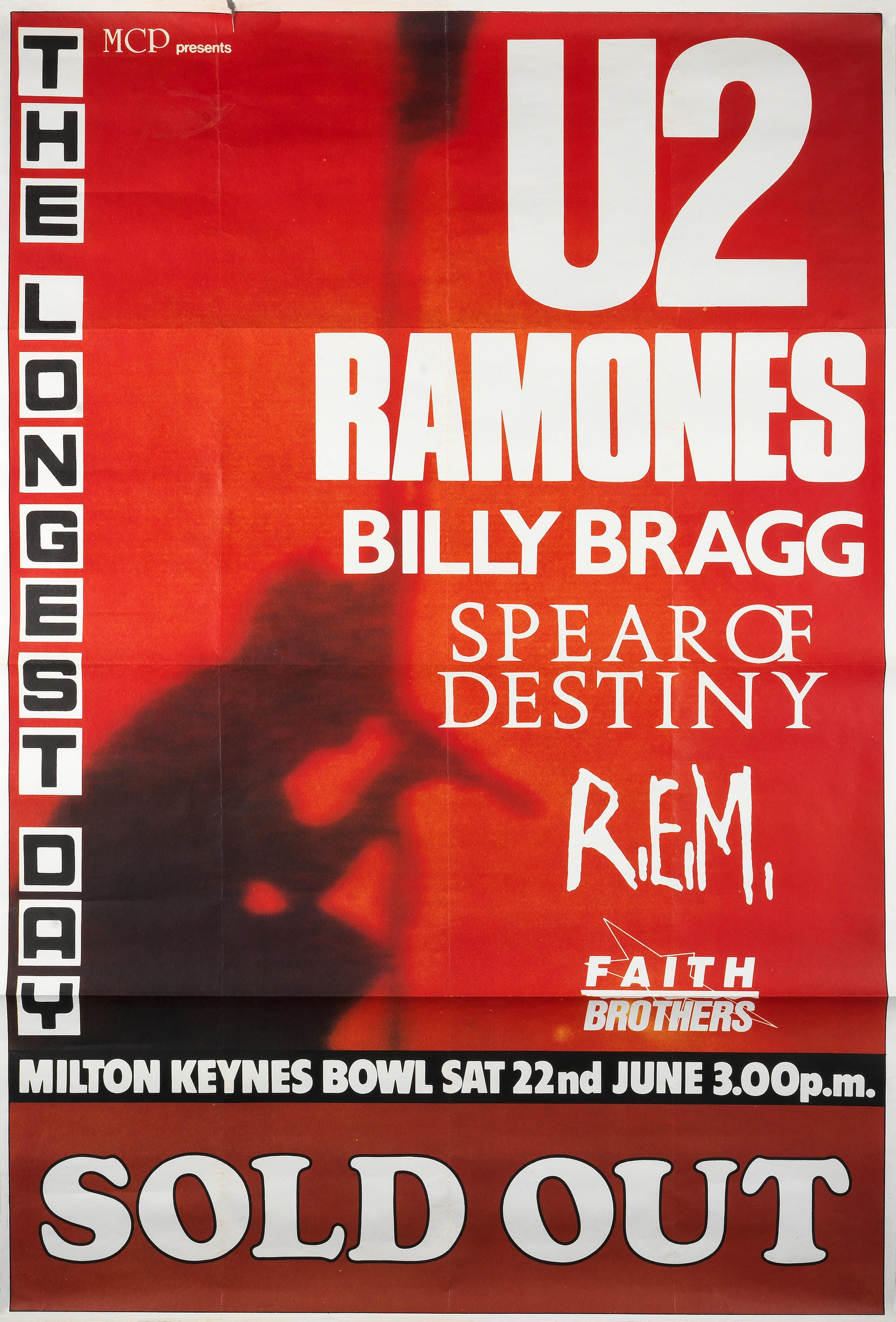
For midsummer 1985, some 40 years ago, we had U2 on their exponential rise to be the identikit stadium rock band. Their post-punk roots were in evidence with support acts such as Ramones, Billy Bragg, Spear of Destiny and REM. Of all of these acts, it is only Kirk Brandon, with his pre-Spear band Theatre of Hate, who played Forever Now.
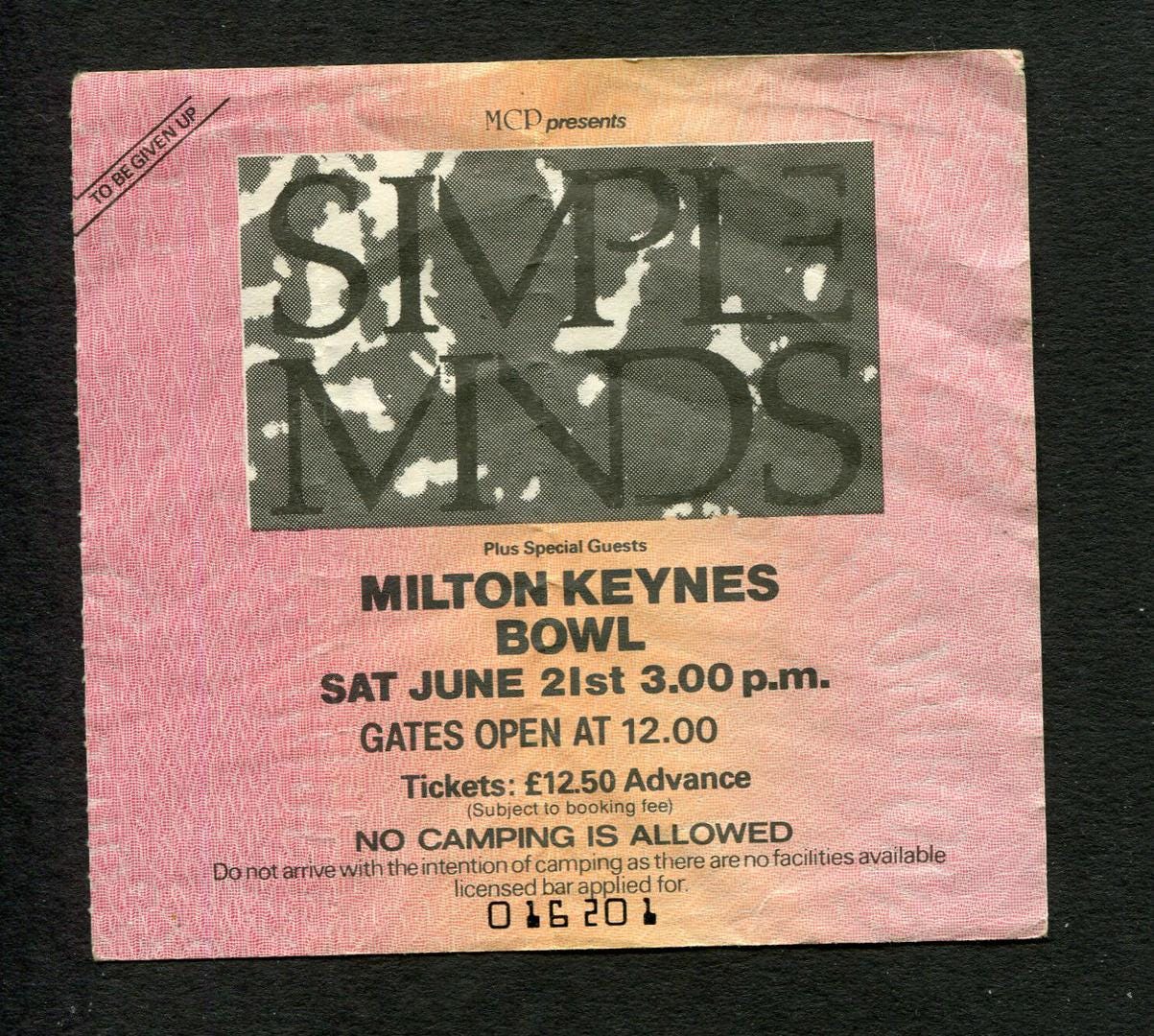
Exactly a year later we had the other band who had evolved from post-punk obscurity to stadium rock: Simple Minds. In support was The Cult, who were eyeing up a stadium rock lifestyle themselves. Ironically, it was the very niche Death Cult (Ian Astbury and Billy Duffy’s precursor) who continued through to the 2025 event.
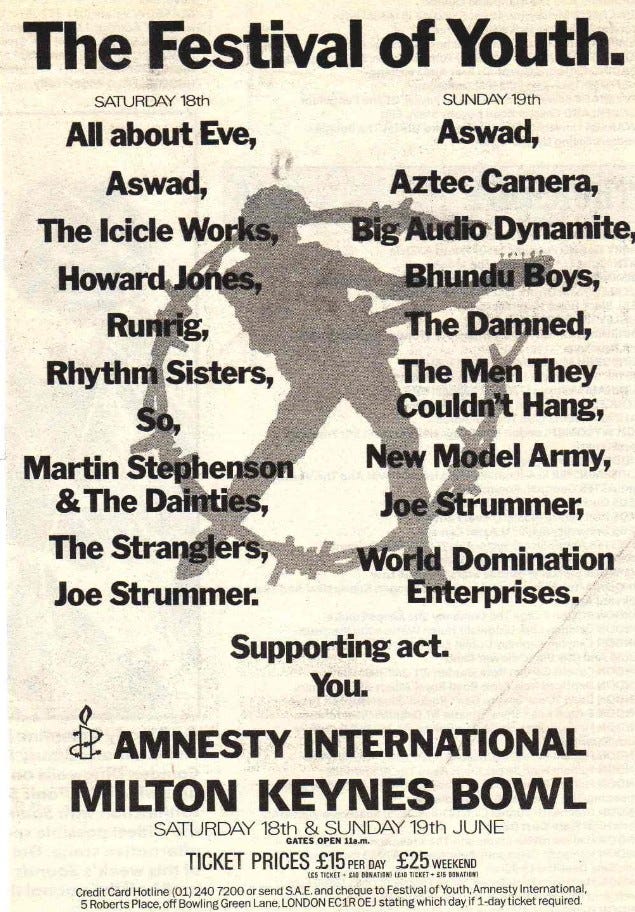
Skipping forward two years to 1988, there is a strange festival for Amnesty International that included a few interesting bands who were trying to keep some form of freshness in the trying years after post-punk. Big Audio Dynamite are a subject I have some future writing about. World Domination Enterprises I mentioned briefly in the previous essay. The Festival of Youth spanned two days and, in a nod to either non-hierarchy or Milton Keynes’ obsession with the alphanumeric, the bands are listed alphabetically. From this line-up it is only The Damned who make it to 2025.
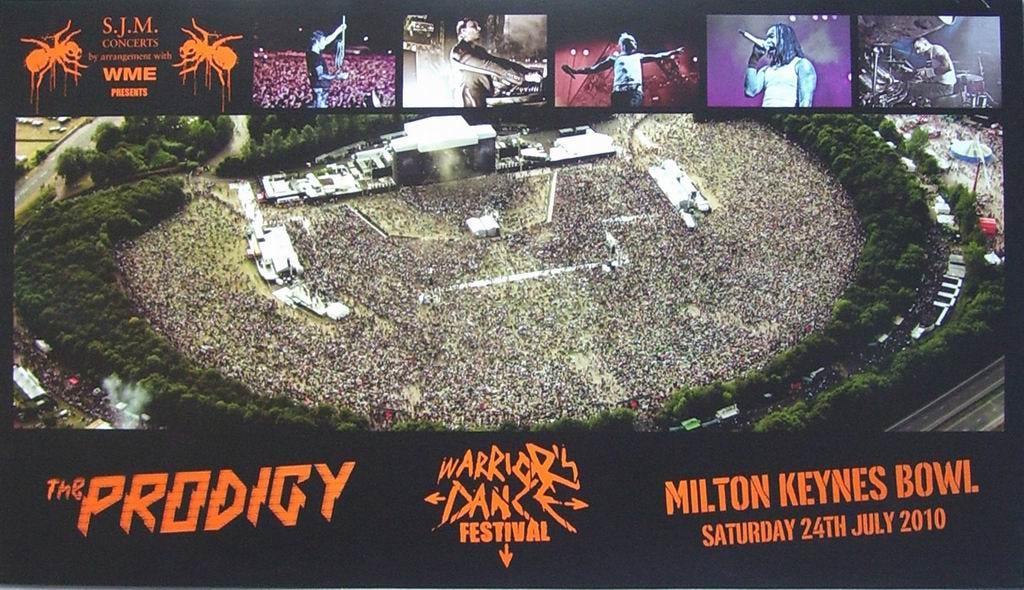
I’ll just mention the later years of stadium-filling acts and giant ‘raves’, with particular focus on The Prodigy in 2010. This was a gig that my younger daughter – then only 14 years old – attended. It looks bloody packed, unlike (thankfully) my experience at the weekend.
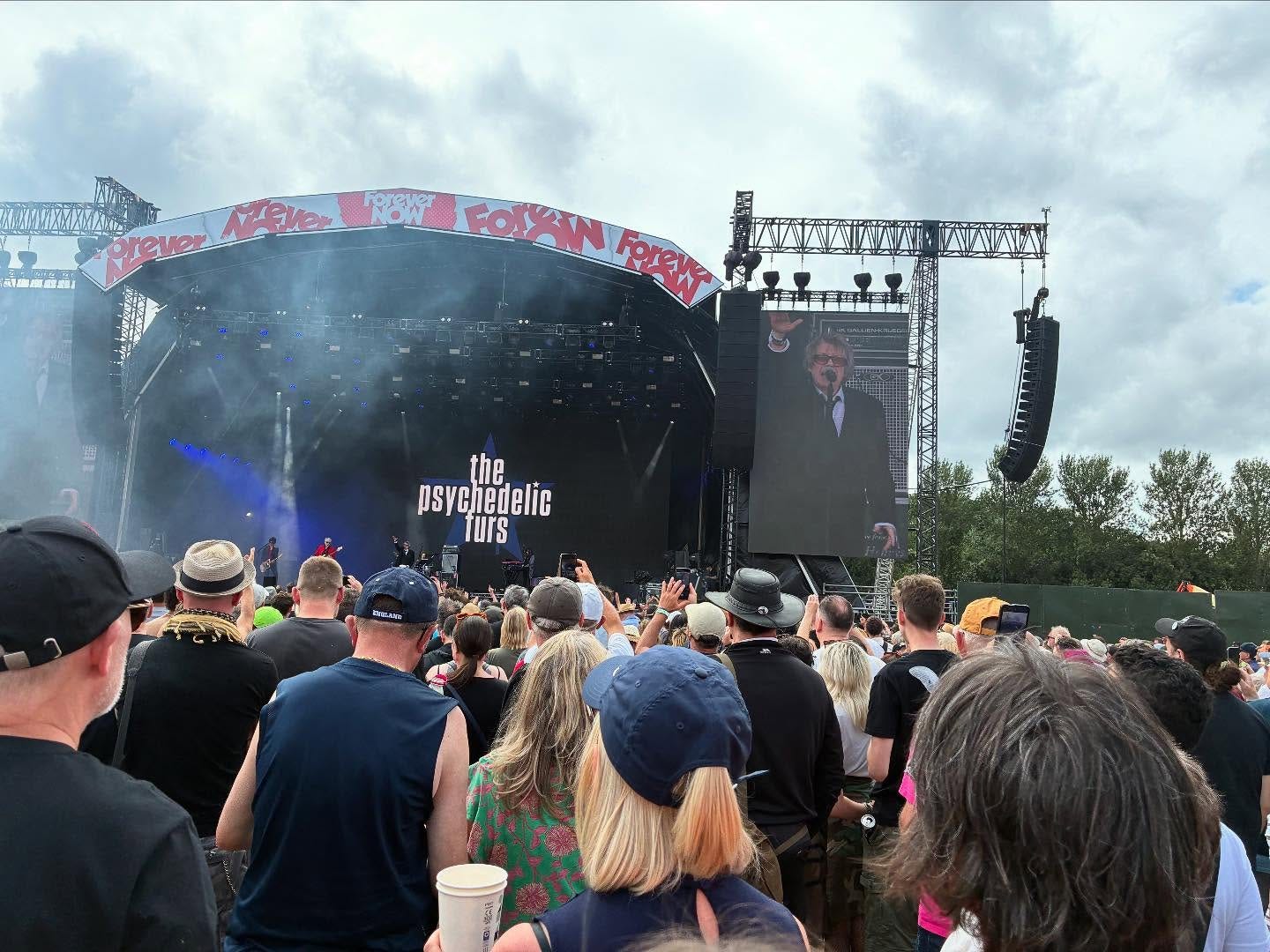
So, in 2025, we were presented with 17 bands split across two stages. The main bowl started with the rather dwarfed UK Decay and led towards the klimax of Kraftwerk who are clearly comfortable filling such an arena with their sound and spectacle. A few other acts managed to rise to the occasion of stadium rawk, with Psychedelic Furs being dab hands at this, Billy Idol living life as if performing on an endless cruise ship, and Johnny Marr fitting in very well (he seems such a good egg).
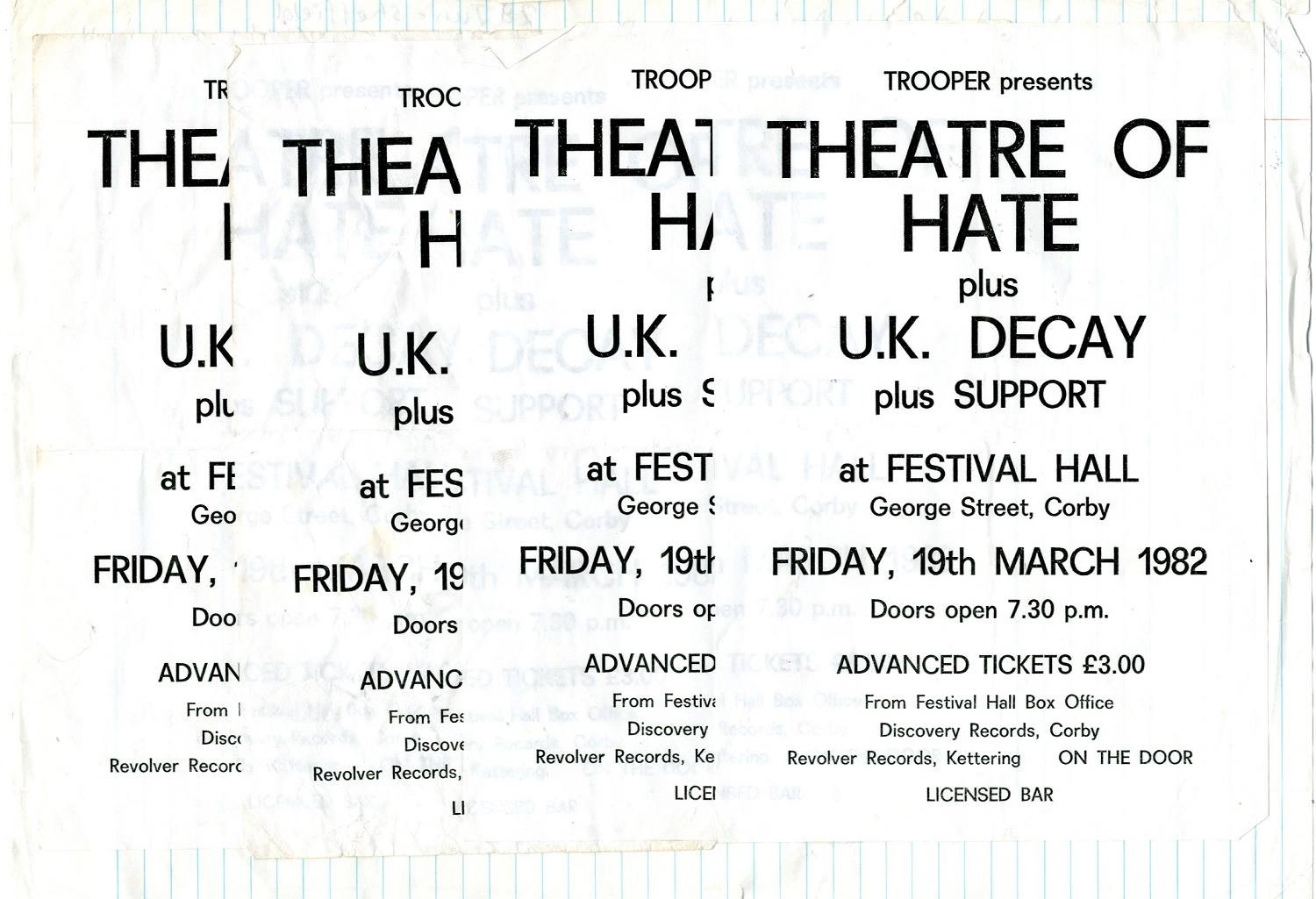
Proceedings commenced on the dot at 13-00 and this meant that UK Decay clashed with Theatre of Hate, which seemed odd as the band have a similar audience. I still have a flyer from 1982 when they both played nearby bowl-less Corby (capacity less than 65k) as part of the Westworld tour. After that, there was some crossover potential, with added slippage and technical problems on the second stage, which meant that you could pretty much catch most of everything you wanted. Transfer time from the main stage to the second stage was about 5 minutes, with avenues of food vendors offering some decent food at reasonable prices. There was also the aforementioned open-air urinals reminiscent of Rotherham’s Millmoor football ground, and some hole-in-the-wall type of arrangement that dispensed instant pints of alcohol.
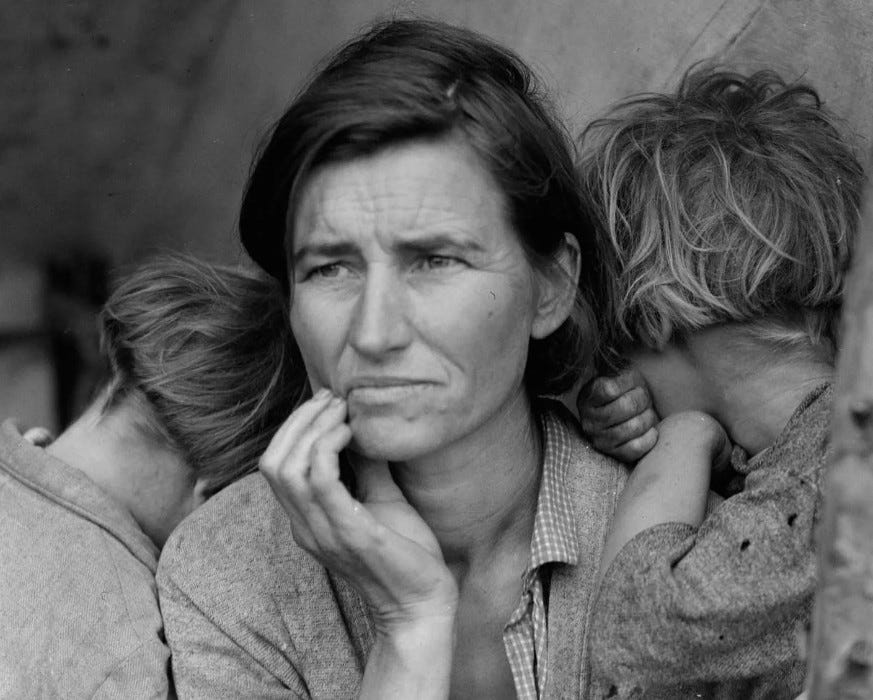
The second stage was perhaps impromptu? It was located on a loose stone and shingle ground which had dried to dust and with the unexpected wind was creating foul dust storms giving visions of a Dorothea Lange migrant poverty image. Most bands were struggling, with ex-Banshee John Mckay’s set in particular being a dead loss of mangled and misfiring sound, and the Jesus and Mary Chain having to cut their set short due to time slipping (and ironically apologising for doing so and stating explicitly it wasn’t part of their ‘nostalgic’ actions when they provoked audiences by playing for a few minutes only).
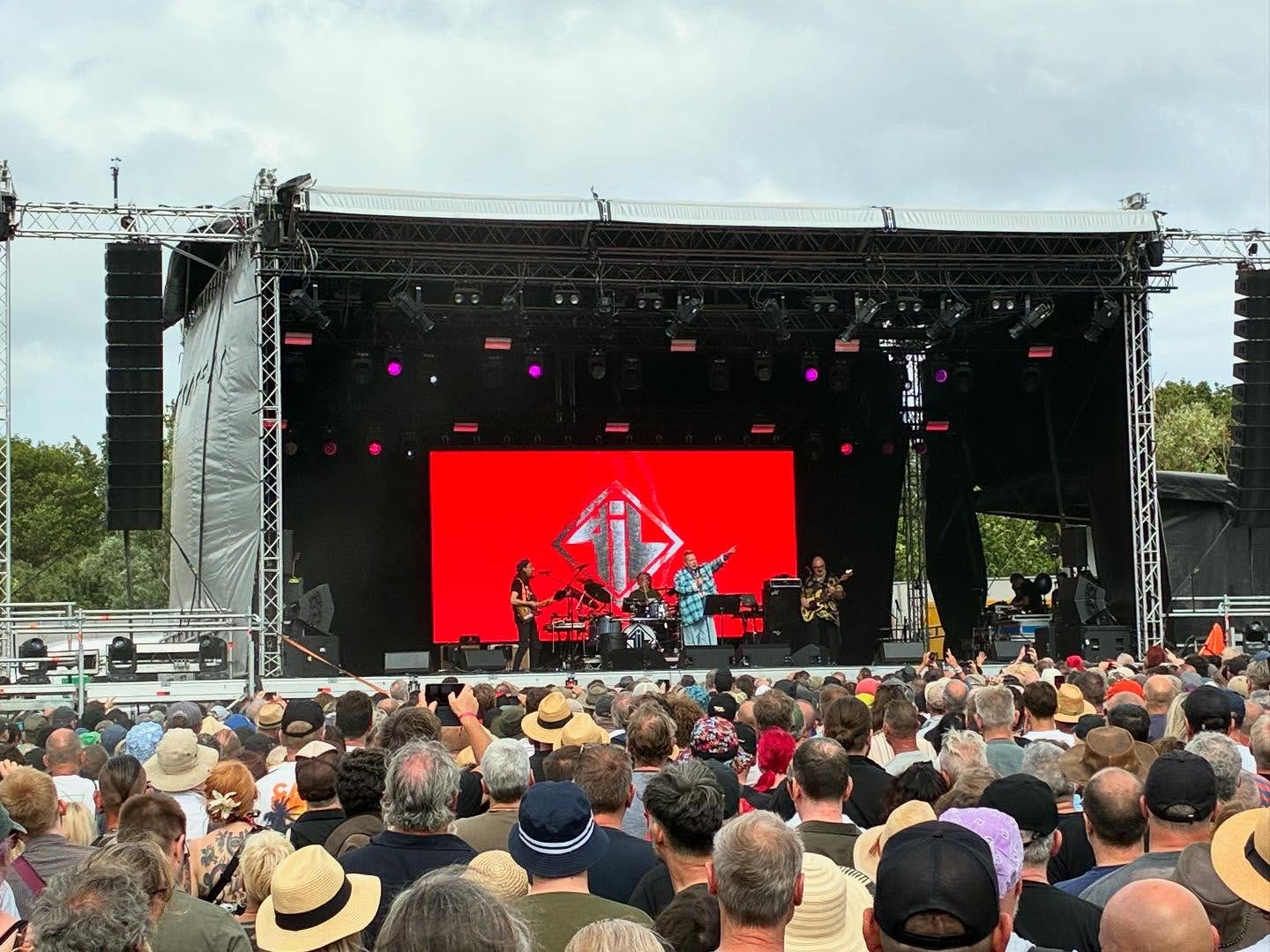
John Lydon and PiL did a typically good set in the circumstances. Lydon ad-libbed about the difficult conditions, though it felt that bands had been instructed to keep between-song dialogue to a minimum and (perhaps) stay away from any political posturing. So, we never got Lydon’s faux-Trumpisms nor the more anticipated leftisms from acts like The The.
The final act, for me, was the continued revival of Death Cult, now in their third year of revisiting their 1983 incarnation. They were, as always, fantastic. They keep that sparse and spacey but HARD sound that eventually gave way to the all out cod-rock of The Cult. It was a brief moment of 1983-4, and it seems weird for it to return and sound so vital. Perhaps it’s the nostalgia drug? You could plot Death Cult’s celebrated return through various tee-shirts sported by the crowd for the 83-23 tour, the follow-up 84-24 events, and finally the here-and-now of 85-25. Marking time.
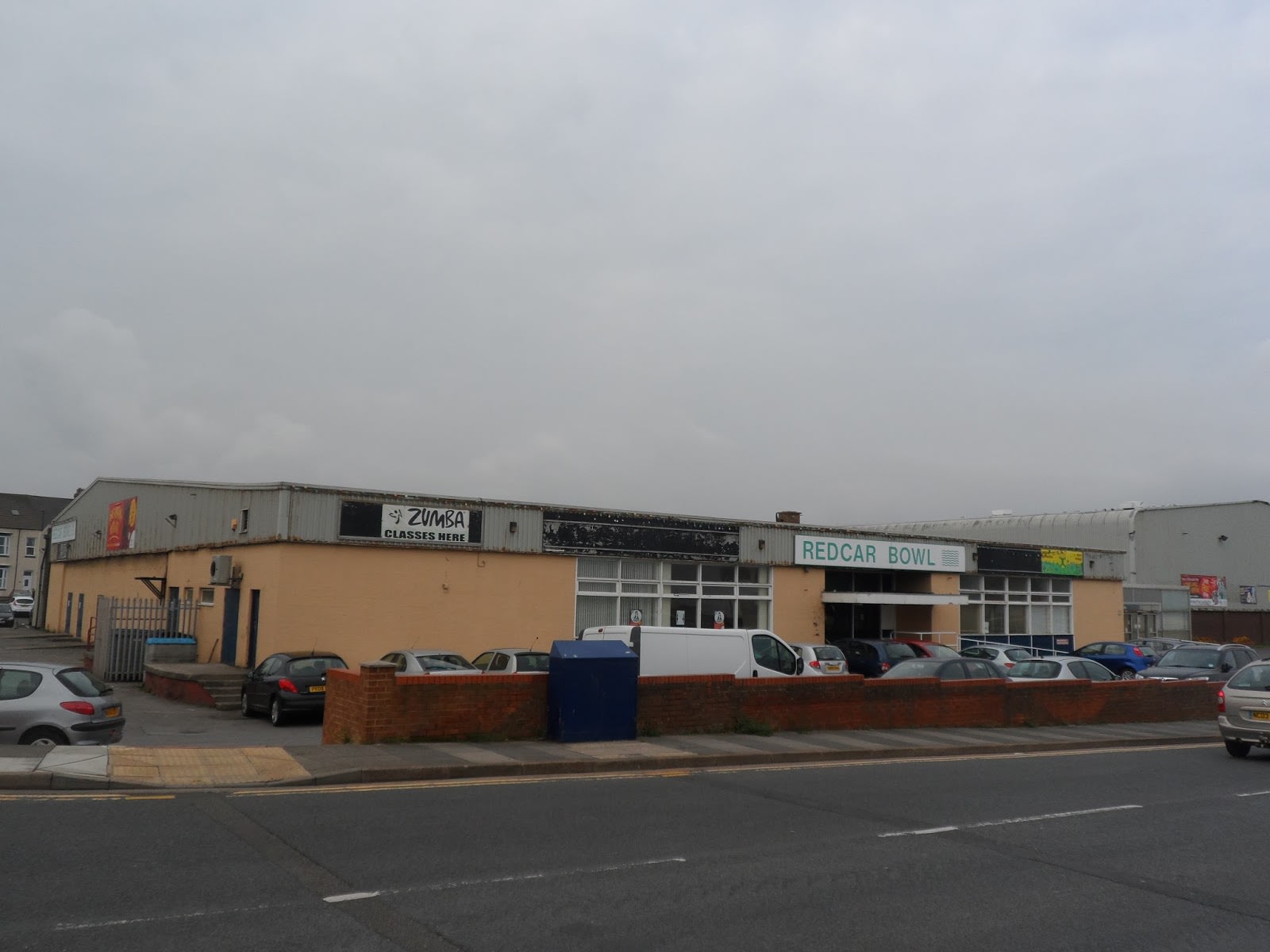
I thought whether we might have an 83-23-63 tee-shirt in 40 years time, when we celebrate the revival of the revival, as each revival seems to have a back-projected intensification and magnification of its source. This mystification and mythification via nostalgia. The reality: Death Cult in 1983 playing a less salubrious bowl at Redcar, in front of a handful of people.
But… in 40 years we will all be dead. Heidegger’s being-towards-death haunted Forever Now by the sheer force of its denial. The stock uniform of band tee-shirts and shorts. Pinning your hopes on your past, clutching for credibility to say “I was there, really, I was”. And… “I want to keep going”. Please. Blogs, like this one, trudging in the past. A few pointed tee-shirt references to the very recently departed – Colin from Conflict, Douglas from Nitzer Ebb – look away now. Going back to Nigel Kneale’s communal death drives of Quatermass 1979, and the recent assisted dying bill, I was figuring a Logan’s Run style “carousel” whereby you can watch your favourite act and then be “renewed” whilst still feeling nostalgically elated…
That took a sudden dark depressing turn. Sorry.
This made me laugh. I went to see Iggy Pop at Crystal Palace a couple of years ago. Similar set up, but not as big. Same toilet/water situation. Billy Idol was a bit excruciating for me, although I have no bad feeling towards him. The cruise ship reference is about right.
Death Cult still amazing though.
Very odd line-up at a very odd venue. I am very partial to the Furs, and it's nice to see the festival named for them. My wife and I met because of the Psychedelic Furs. I was staying with my mother briefly in America, and I had heard on the wireless that the band was playing in Miami. I had no car, so I met a bloke in a record shop and convinced him to drive us across Florida to see the show. The concert was great, and we met a woman there who encouraged us to stop over afterwards and come out to a goth club with her, which we did. At the club, I was absolutely bowled over by the most beautiful and stylish woman I had ever seen, dancing the night away with a fantastic 'Phil Oakey' asymmetrical haircut. 41 years later...