
Grafting / Skiving / Dossing / Protesting
On the subcultural vagaries of the donkey jacket


1. A purchase
In late 2005 I acquired a heavy-duty winter coat from the Martin Margiela ‘10’ (mainline menswear) seasonal collection. It was another knock-down bargain from Pollyanna at Barnsley to go with the Comme and Yohji purchases.
The jacket is finished in a thick bristle cotton and boiled wool mix. It has a scratchy unlined interior, and is minimally embellished with narrow taped collar, cuffs and waist. A bulky and industrial exposed central zip shares space with four front pockets each with further exposed zips aligned as diagonal prompts. The quarter-stitched Margiela 10 label is anchored inside, but does not penetrate to the jacket’s exterior to discreetly exude its knowing cool. And so, this black wool workman jacket from the 1970s, recreated by Margiela, is similar to what we used to call a ‘donkey jacket’ (minus the vinyl shoulders and patches) – a cheap and tough all-purpose working coat.
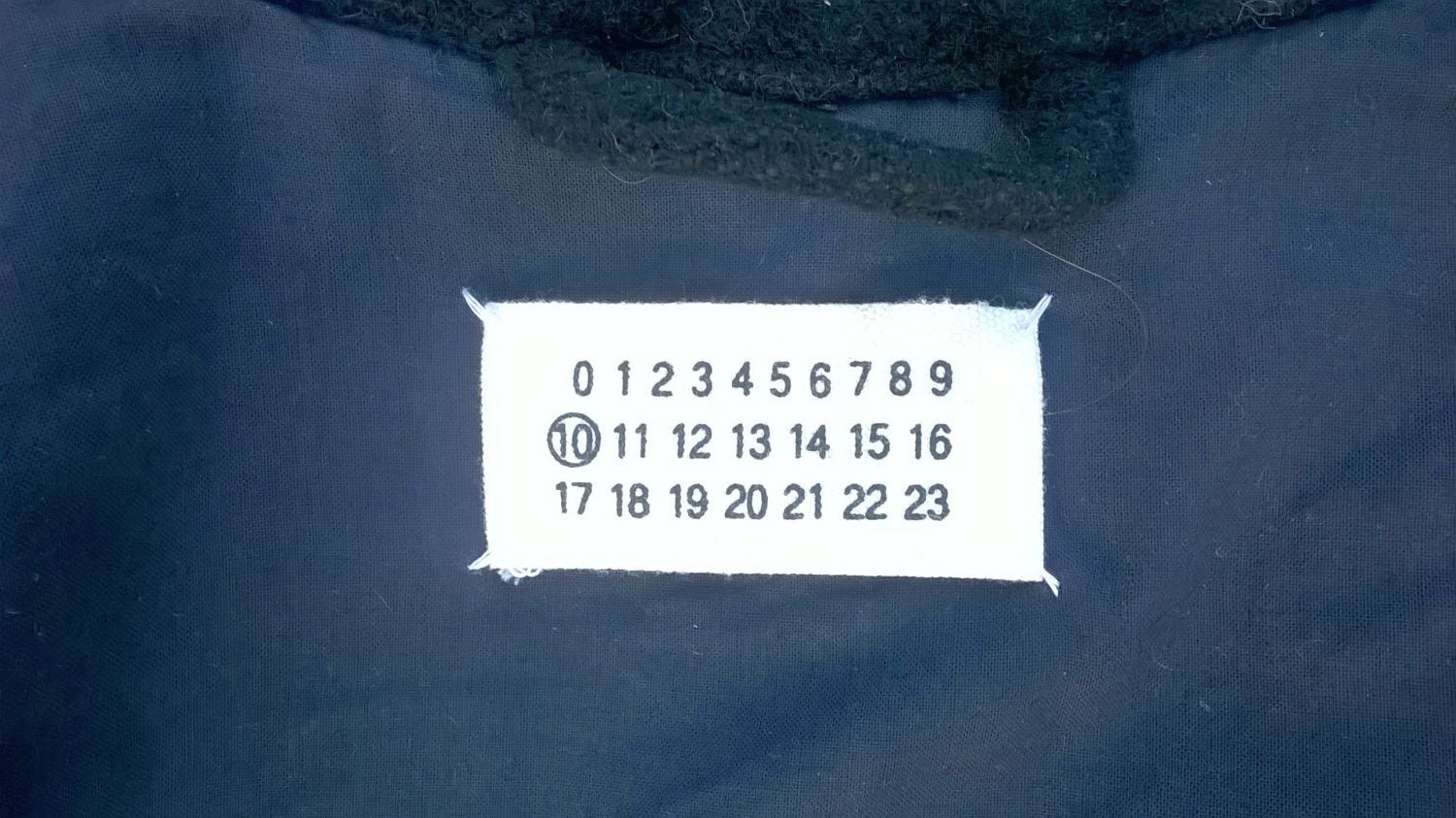
There is an irony here as Barnsley was the stronghold of the National Union of Miners, Arthur Scargill, the great strike of 1984-5, David Peace’s GB84, and all that. The outer garment of choice, perhaps necessity, or destiny, of miners, and of council bin-men, and other manual workers, and scruffs signing on, and scruffs at tech college on day release, and lefties street-selling leftie papers, and campus activists cosplaying being lumpen working-class… the donkey jacket. Not many miners shopped at Pollyanna, or so we like to think.
2. A history
There is disagreement on the history of the donkey jacket. The skinhead/suedehead style website Creases Like Knives acknowledges the donkey jacket as one of the many garments adopted by skinheads as part of an identity that celebrated working-class roots whilst going against the grain of whatever clothing was floating around other subcultures of the time. This is their take on the muddied history of the garment:
“Donkey jackets are said to have been invented in the late 1800s by two or three different people: John Partridge, the owner of the Keystone works who worked on the Manchester ship canal, and George Key, a small bespoke tailor, have both been named. In any case, the donkey jacket was originally created for Manchester dockers, making it a bona fide Northern working-class clothing item. The name donkey jacket is also said to come from ‘donkey work’, as in laborious and gruelling work.
Donkey jackets were then worn by navies, and later by binmen and other manual workers – most famously miners. They were black, navy, and occasionally dark brown. Miners’ donkey jackets often had orange shoulder pads with the letters NCB on the back, standing for National Coal Board, and with reflective strips on the arms and shoulders. The donkey jacket was also worn in prisons.
Donkey Jackets were also said to be worn outside of London around 1970, by Aston Villa and Leicester fans for example. They remained prominent on the terraces of Britain throughout the 1970s, and according to the book Wednesday Rucks and Rock ‘n’ Roll: Tales from the East Bank, the Barnsley Boot Boys of Yorkshire wore NCB donkey jackets in the late 1970s and 1980s.”
There was also a connection to the durable Melton fabric of Melton Mowbray in Leicestershire. Developed as part of fox hunting apparel, the fabric crossed the class divide and was used for donkey jackets or cheap crombies advertised in the back pages of the music newspaper.
We can plot some broad-brush strokes of the donkey jacket appearing around the end of the 70s and start of the 80s within subcultures, flickering in the background The series of photographs below indicate a group of cheap-booze skinheads such as you’d find hassling you at the bus station or shopping precinct, a donkey jacket rockabilly revival from 1979 (with a photograph taken at Caistor by Janette Beckman), and a punk ensemble showing Birmingham ‘UK82’ band Dead Wretched and the all-purpose-punk Charlie Harper (of UK Subs) legging it over a wall in a donkey jacket that looks to be personalised with the band name on the vinyl section and something else roughly applied to the main back fabric. The everydayness of it overwhelms. You stand it outside of these subcultures and it doesn’t link back. Bland, unassuming, approximately practical is what we see instead.
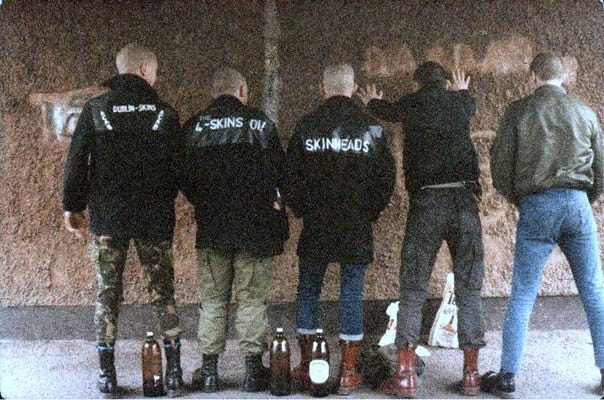
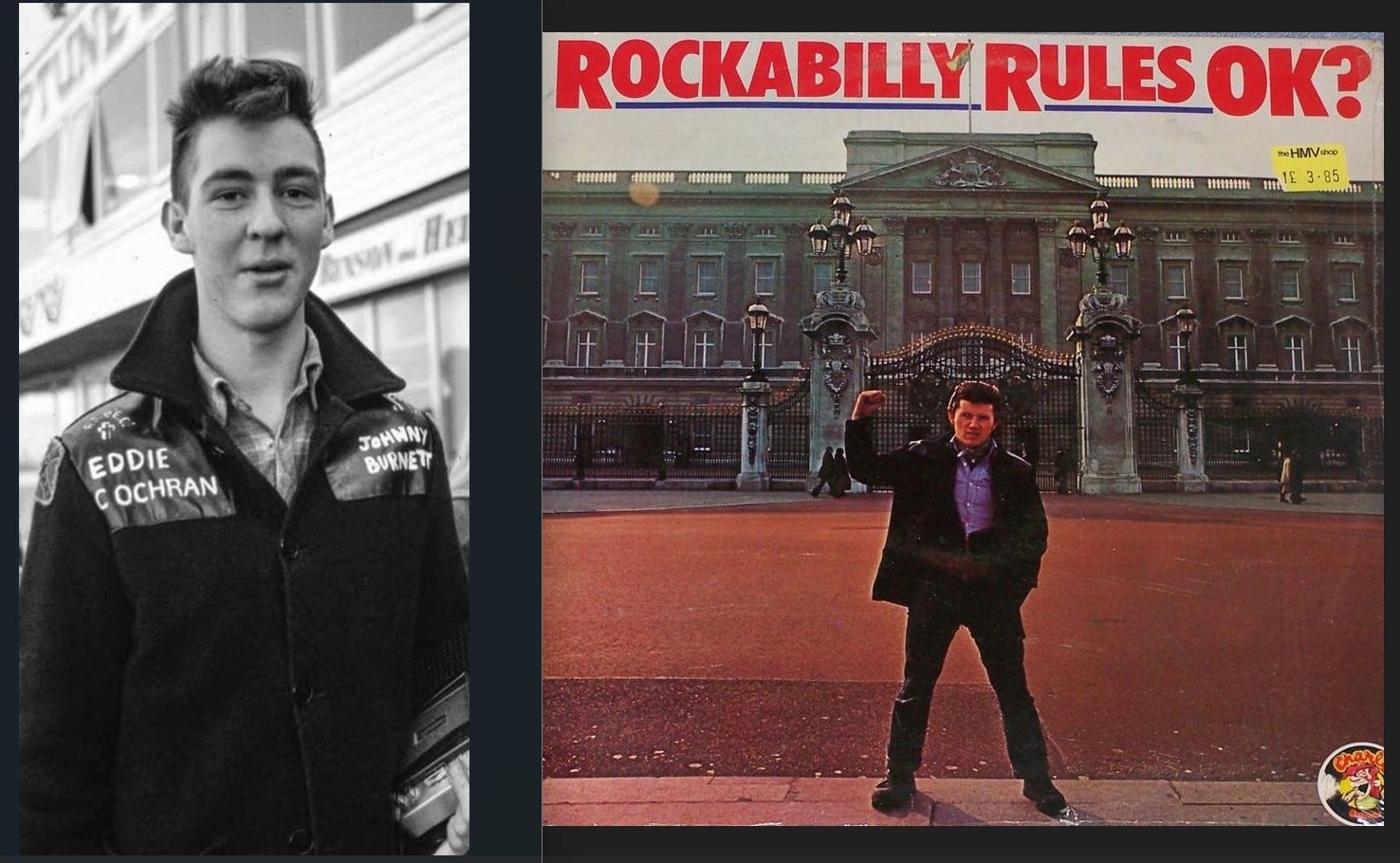
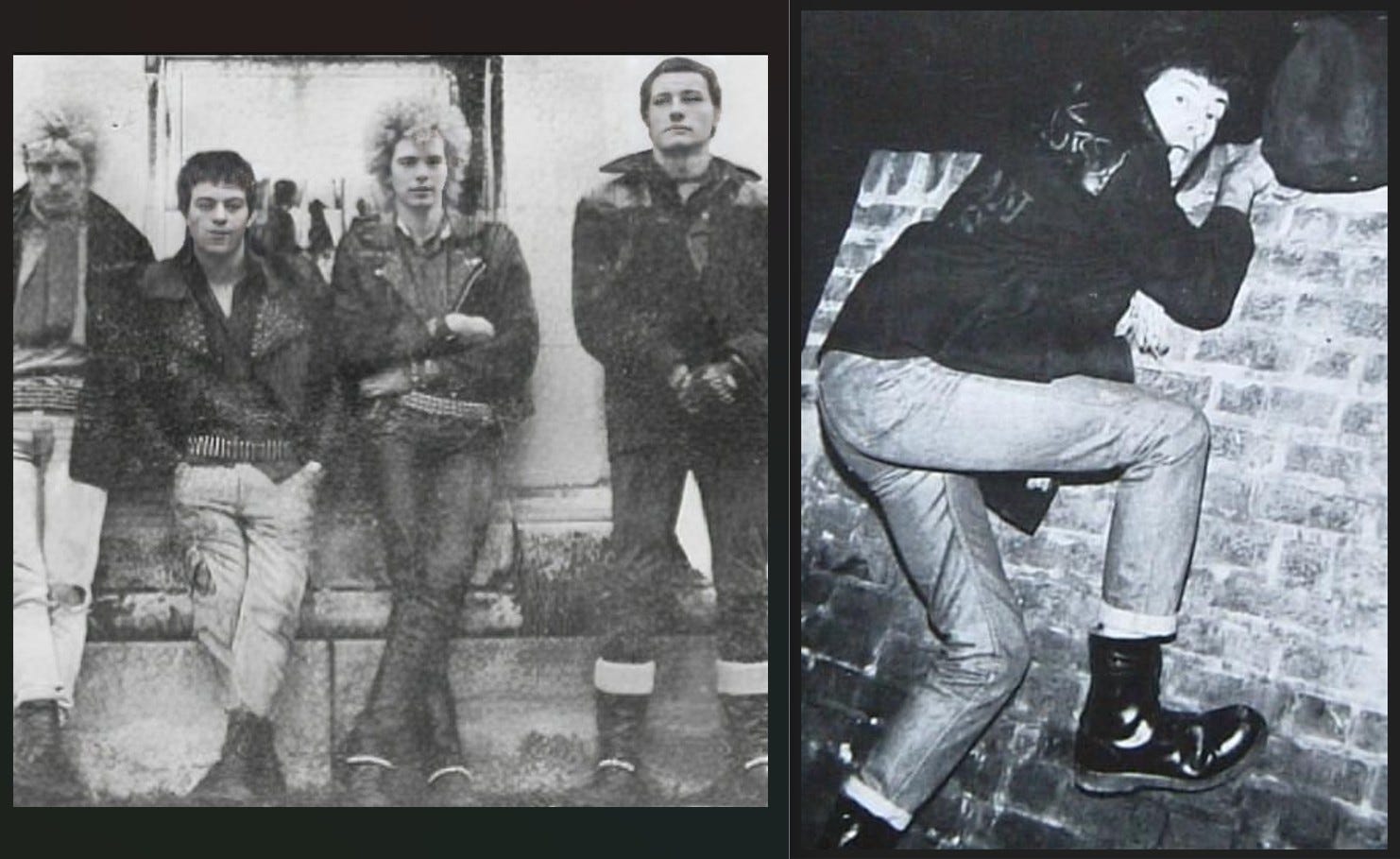
Can we attach some Hebdige style homology between the donkey jacket and the subculture, or is it just circumstantial? Skinheads sought working-class unfavoured outerwear to go against the perceived pomposity of dandy mod styles. UK82 punks were impoverished in the Thatcher climate and beleaguered by the horrors of a nuclear war that advanced rapidly in the imagination, and so their clothing reflected an ‘end of the world already happened’ pessimism and performative bleakness. Dead Wretched are like an archetype, right down to the studded-strap biker boots and chunky bullet belts, standing in the doing nothing pose. The rockabilly 1979 donkey jacket moment is slightly trickier – maybe a reaction against new romantic peacockery, although the immediate wave of rockabilly led by The Polecats would embrace a punkish pop art palette.
3. A myth
If the donkey jacket is a garment that avoided subcultural attachments through the early 1970s, then there is one myth worth mentioning. Joy Division bassist Peter Hook (admittedly the most unreliable but effusive memoirist of the JD and Factory myth-machine) suggests that the black jacket painted with the capitalised word HATE that Ian Curtis wore to the first Sex Pistols gig at Manchester Electric Circus (9 December 1976) was a donkey jacket. It would be this garment that contributed to Joy Division forming as a band, as a kind of vibrant-matter object-with-agency Bruno Latour thing. Of interest to me. this contrived or imagined link, once again, between Joy Division’s formation and look, and Margiela, and the murky gloom of the late 70s.
The jacket is reimagined for the 2007 film Control, directed by photographer Anton Corbijn who obviously knew the band well. In the film it’s a donkey jacket. Only it’s not quite, it is more like my Margiela jacket. But it is spoken about as a donkey jacket. Perhaps this is what Peter Hook is remembering.
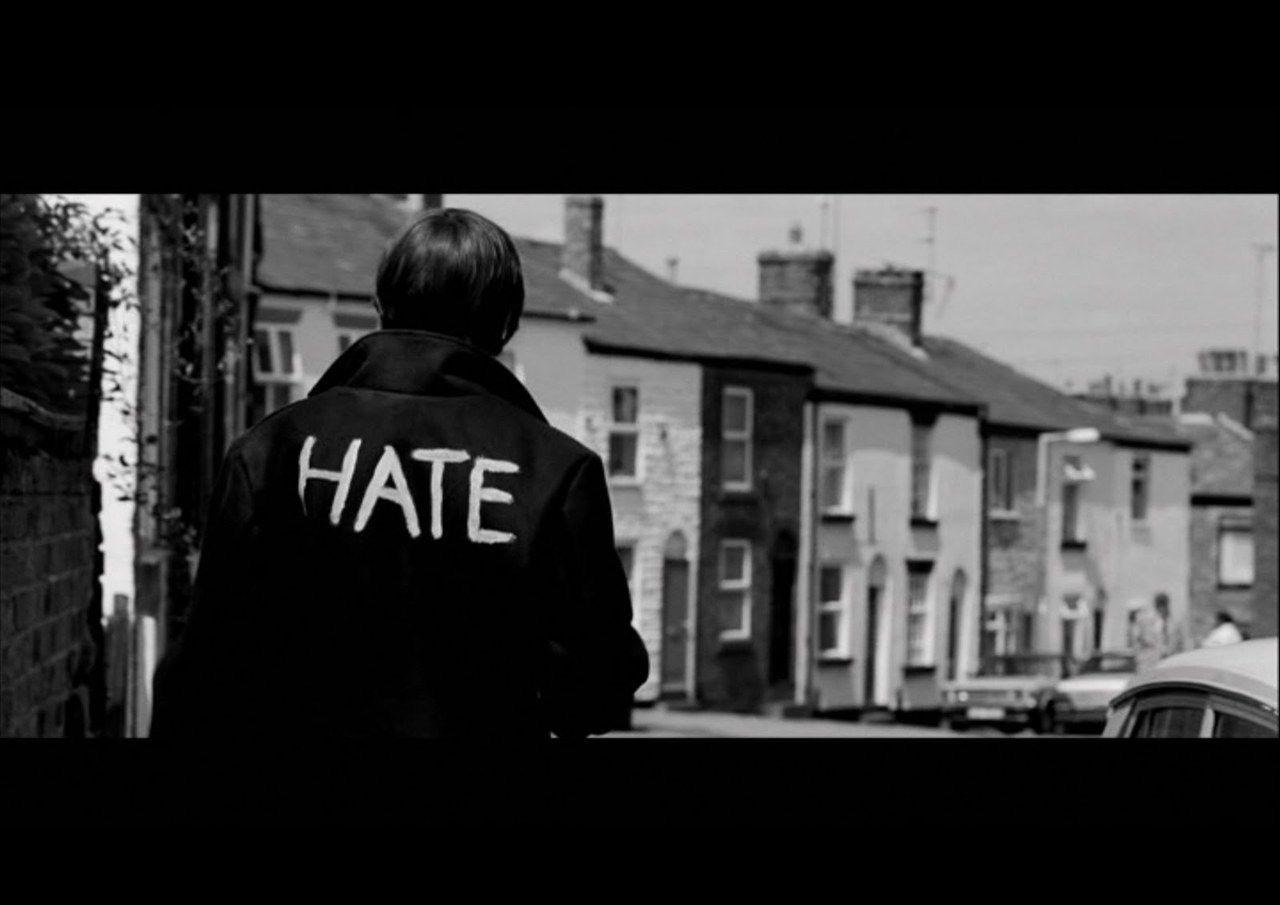
The overcoat (or donkey jacket) worn and customised by Ian Curtis in a more obvious punk manner is another moment that has been blown to gigantic proportions, but it is also a cause to think. Janice Miller in her 2011 book Fashion and Music suggests that there was a tension inherent in Curtis expressed (or suppressed) sartorially: the everyday clothing worn by Curtis and the band almost functions as some kind of obligatory school uniform, and the hate jacket glimpses a desire to escape, express and rebel. I think that Miller has this idea back-to-front – and the everyday wear is a deliberate ploy to suggest that the punk uniform is ultimately more constrictive. Of course, we cannot be certain.
4. A strategy
Here’s something we can be certain of. The donkey jacket would find a further unexpected subcultural niche in late 1979 with the Birmingham post-punk band Dexys Midnight Runners - primed and plunged into the pantomime of the early 1980s as a definite strategy rather than part of some generic subcultural drift. Though singer Kevin Rowland sported a black leather blazer, other bands members donned an array of work jackets, with all of the group topping off the look with a black woolly hat.
In his literary survey of pop-life (and pop history of literary life) England is Mine, the author Michael Bracewell considered Dexys’ debut LP as “a method actor’s manifesto of anger, passion and introspection”. Bracewell is a great writer, and has his own immaculate style seemingly riffing on the smart side parting look of 60s-era Burroughs and Gysin – a dangerous subversive intellectual and wordsmith masquerading as smart-but-uptight everyman.
There is clearly a heavy dose of stylisation and image construction at work within Dexys. Kevin Rowland meticulously and strategically reconfigured their shared image numerous times, creating a look, back-story and often some kind of group ethos or pseudo-babble of a code for living. You were never sure if he was simply playing to win the 1980s game of dressing up, or was trying to undermine and transcend it. So, we are veering away from certainty again as Rowland picks at the seams of pop culture… deconstructing for want of a better word.
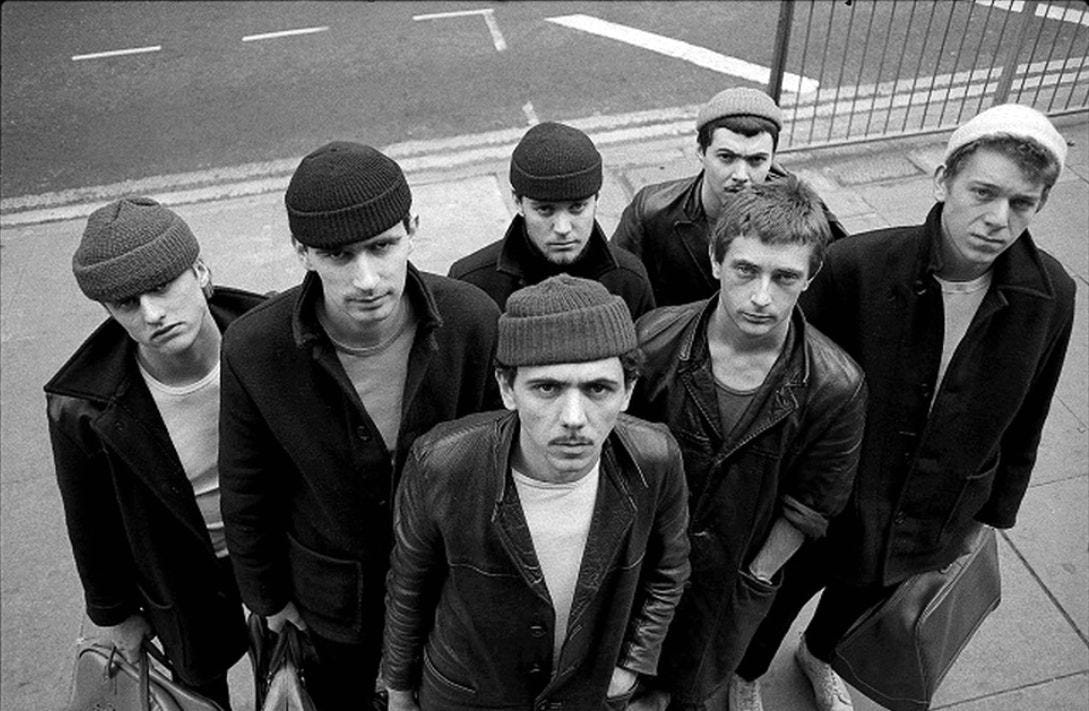
In late 1979 and through 1980, coinciding with their first breakthrough hit ‘Geno’, they were dressed as dockers – or stevedores for the discerning historians of subcultural fashion – but coming across more as generic (British) workmen who might be found propped against a Kango jackhammer drill having a cuppa and fag break in the days before legislative hi-vis ubiquity.
The same workwear look is finessed for the next single ‘There, There, My Dear’ with its astonishing video; a claustrophobic, homosocial imagining of the band exercising the power of their fiercely convergent and honed look. The video – wrongfooting you from the start as Rowland performs a weird semi-goosestepping dance - goes beyond the awkward male bonding exemplified by gender twisting bands such as Japan. We see an extended section depicting a kind of collective love and admiration based around the fine details of the angle of a woolly hat or the micro-arrangements of hairstyles and moustaches. Proximal codes are dispelled as the band are filmed close-up with a seemingly authentic intimacy – bumping up against each other and admiring their smart look, like a simian grooming ceremony in a David Attenborough documentary. What’s going on?
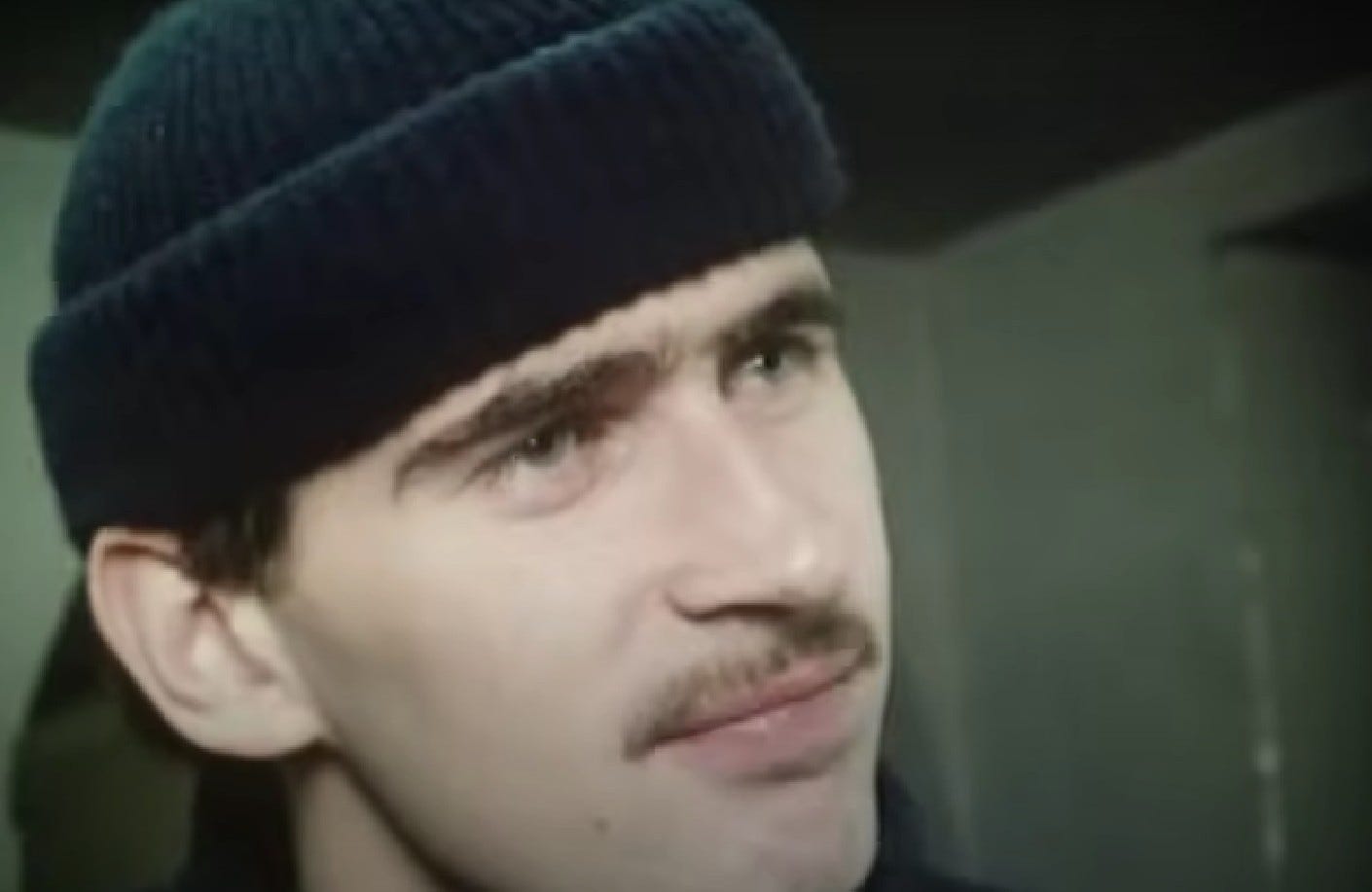
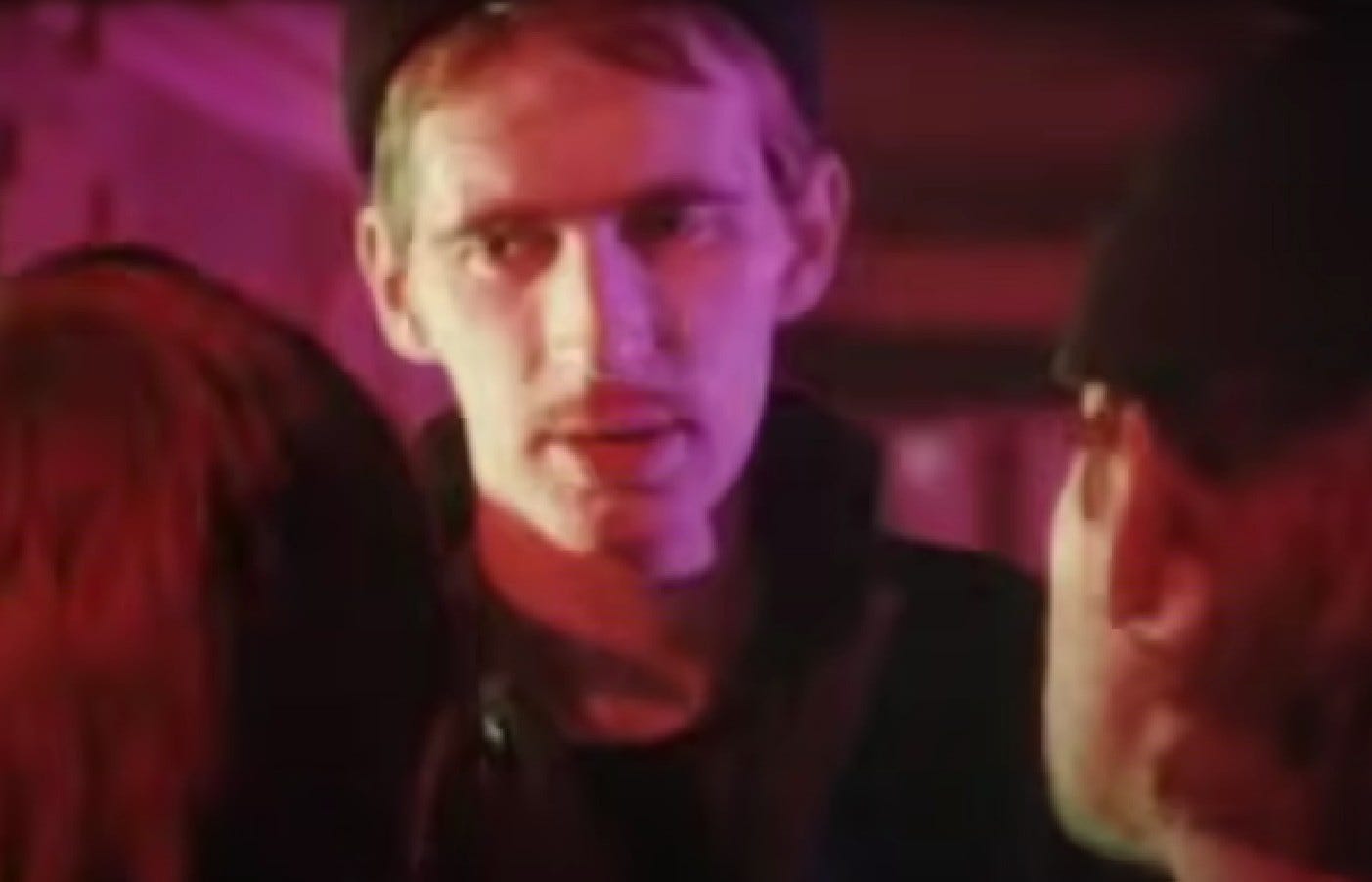
Returning to Bracewell and the 1979/1980 Dexys, he considers this particular image of workers adopted by the band as either “a team of travelling burglars or the characters in the television comedy drama Auf Wiedersehen, Pet”. For the UK subcultural hordes of 1980, entering into a swirling mix of (post-Quadrophenia) mods, ska, rockabilly, punk and new romantic, it was a stroke of genius to see a band adopt what we knew as donkey jackets and ‘benny hats’. This vestimentary ensemble already existed, but in the lower strata of industrial workplaces; work scheme kids with sweeping brushes tasked with making endless brews of tea in engineering workshops and noisy factories, often the butt of jokes in the employee hierarchy. As a subcultural intervention to claim a style tribe it was doomed to fail, dragging an extant anti-fashion or non-fashion into the limelight.
5. A cause
The donkey jacket reappeared briefly as a pop meme a few years later, with the band The Flying Pickets who claimed the coveted Christmas number one spot in December 1983. The band formed through a common bond of picketing activists from the 1970s strikes who had met in the alternative theatre scene. Contrary to my recollection of them, when performing on Top of the Pops the band never wore pickets’ clothing but dressed in odd clothing reminiscent of old rock and rollers or theatrical classic horror pillaging the dressing up box. Memory plays tricks on you, and we tend to go with how we want to remember things rather than what might have actually happened.
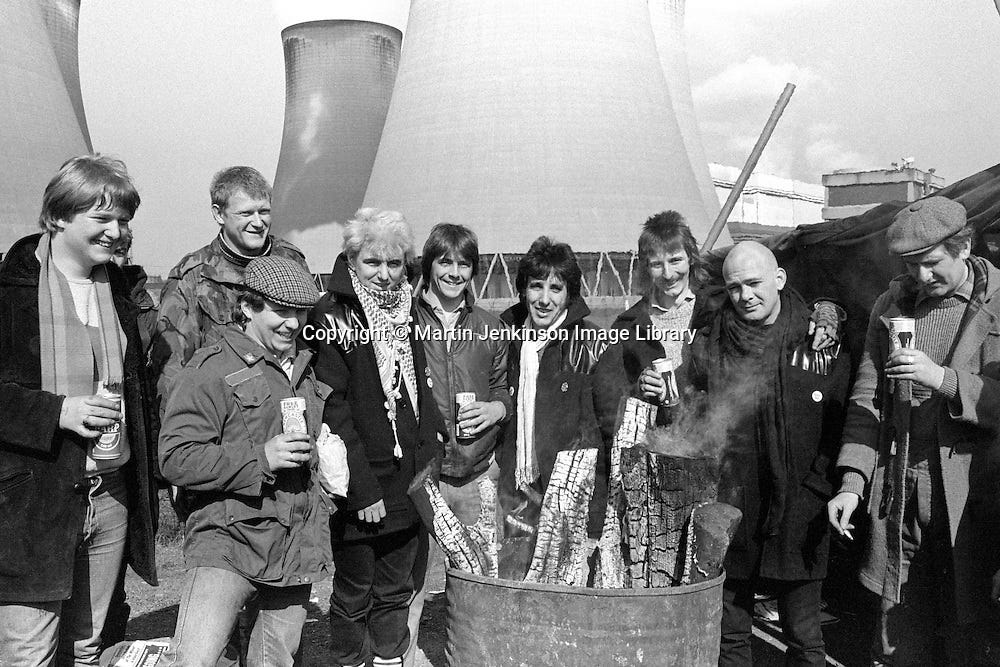
The band were photographed by Martin Jenkinson at Drax Power Station, in April 1984 magnanimously supporting pickets in the 1984-5 miners’ strike, mingling with ‘proper’ donkey jackets and burning braziers. The miners’ strike was Thatcher’s first chance since election (and re-election in 1983) to avenge the power of this union which had toppled the Conservative government in 1972 with the Battle of Saltley Gate. She bore a grudge and enacted a crushing revenge. Jenkinson was an adopted Sheffielder, becoming the key documenter of 1980s trade unionist and peace activism after he was made redundant in 1979. That year again, and another photographer of the time, returning to haunt the work jacket.
Jenkinson sadly died in 2012, Drax power station blazes on, with the East Coast railway line dissecting the domineering power stations at Drax and Eggborough as the line moves between Doncaster and York. Industry, endeavour and donkey jackets – not quite the name of a post-punk album in the age of titles such as Architecture & Morality.

For Kevin Rowland, the resolute anti-fashion of the donkey jacket may well have been the intention, the missing supplement that invokes the Derridean indigestible, choking fashion on its own bile as it gorges on multiple pasts. Back to Bracewell again, who refers to contemporaneous interviews with Rowland, who in turn suggests this working look was also a portal for memory, to go back further from 1979 through totemic subcultural aspects to a sound, feeling and fabric of a city in 1973. The mythical young soul rebels time travelling through the 1970s. Filling in the gaps, Bracewell conjures up the Birmingham of this time as the laughing stock of failed modernism with troubled housing estates, the Bull Ring Centre and Spaghetti Junction: a proto-post-punk. A temporal slew of asynchrony perpetually stalked by Margiela, until all the actors vanish from the timeline.
To be continued.