
Heterotopic shopping
Versions of memory, punk, post-punk and looking for clothes

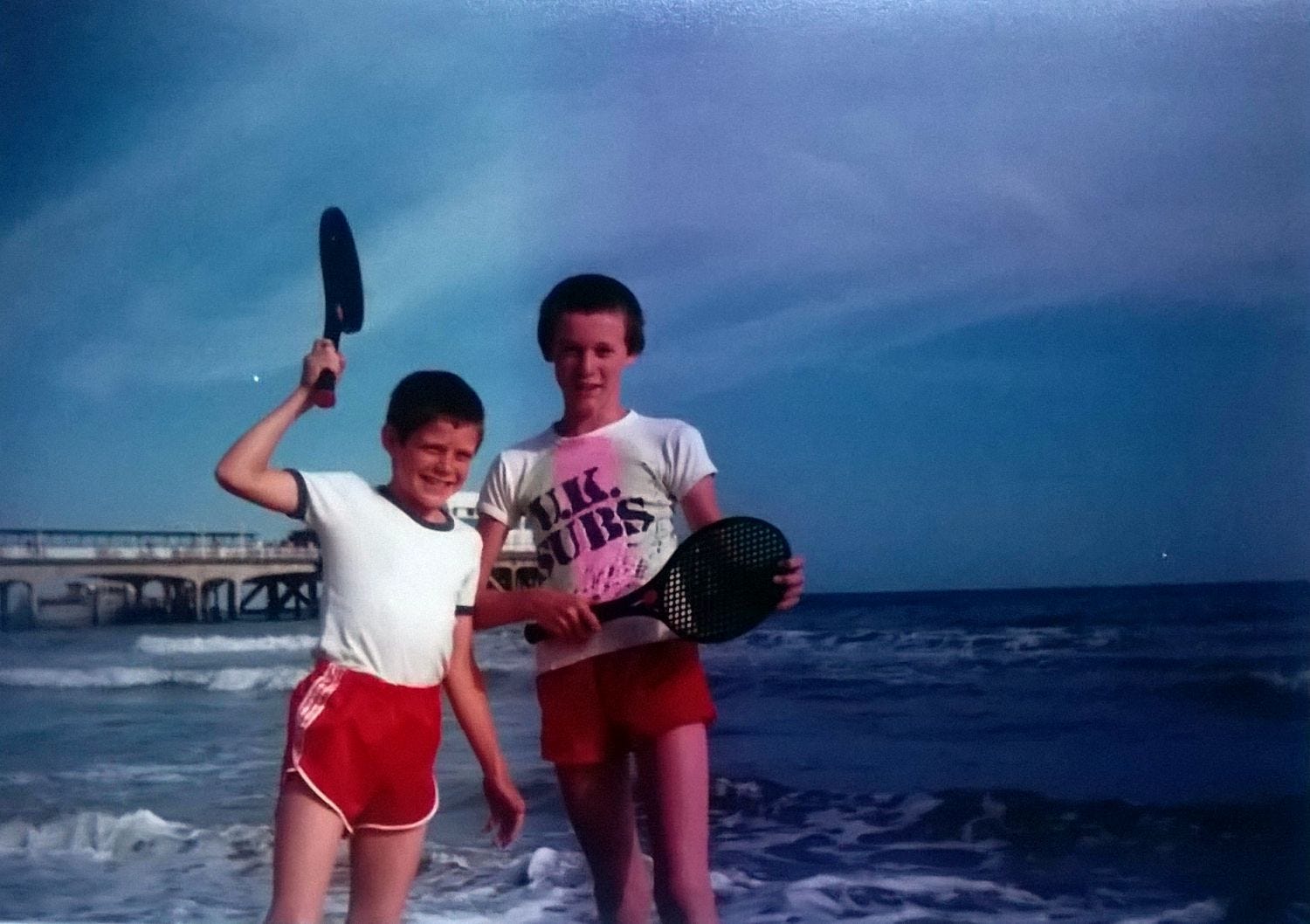
Finding early photographs of my subcultural beginnings is not easy, they simply do not exist in any number or forthright availability - either never taken or long since disregarded. Memories of events, wishful thinking of how I wanted to recall things, and actual photographs of special moments throw the elements of a coherent narrative into an entropic disarray. A single photograph exists of our holiday in Bournemouth, maybe 1978 or 1979. I am in the shallow surf of the retreating tide with my brother Paul, excitedly clutching plastic paddle bats for a beach game. It is about the closest I got to playing sport – my brother was a footballer and cricketer in waiting, playing for the local teams – Dad’s pride and joy. You can see some of his medals glimpsed behind me in that photograph where I’m sat of the settee wearing my new romantic shirt. The Bournemouth photograph is purely a family memento, capturing the tradition of our annual holiday, stored in cheap albums year-on-year. It is also something of a portent – this would be the last trip to Bournemouth as a family unit. I am wearing my fluorescent UK Subs tee-shirt and sporting a home-made haircut - short shorts withstanding, it’s not a great look, but it’s something. And of course, UK Subs were always a people’s punk band, always a band anyone was invited to love.
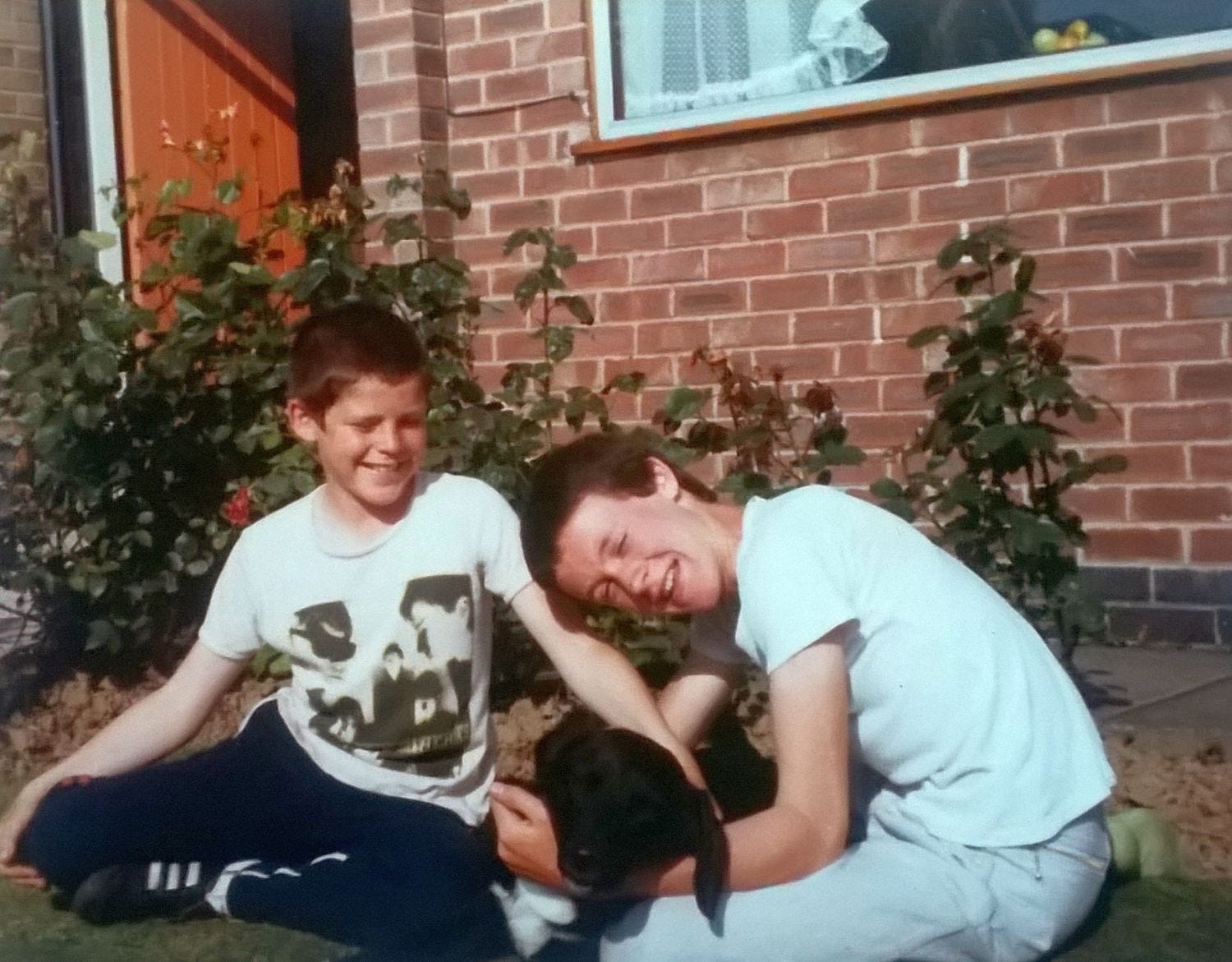
Another photograph shows Paul and me on our small front lawn, lolling on the parched grass with a neighbour’s dog Sam. We never had our own dog but adopted various dogs from nearby to accompany us on our excursions into the back fields. The dogs (and their owners) were grateful. Sam was a proper mongrel mutt, a bit of everything in terms of breed but in sensible proportion and tending towards the big and strong variety. He was incredibly biddable and loyal, but had a strange smell of cigarette smoke. I presume this came from the owners of the house where he lived, but we always imagined Sam had a secret smoking habit and pictured him in a silk dressing gown. In the photograph there are another two of my NME back pages tee-shirts in evidence – my brother has my old Psychedelic Furs tee-shirt on, whilst I have a minimally designed tee-shirt for The Cure (but you can’t see the logo so you’ll have to take my word here). My neighbour always used to ask me for the cure to life’s problems every time I wore this shirt – 1980 post-punk banter. Other clues are minimal – a fluorescent sock, the rear ball-and-chain zip pocket of some pale-blue peg trousers, a bowl of plastic fruit on the window sill. Bits of eternity it seemed.
In early 1980 I purchased a cheap 110 camera. This is the style that had a double spool cartridge that you clicked into the back as film passed from one spool to the other. It meant that it was foolproof, but the quality of pictures was dubious, as the camera never let in much light and everything produced was murky and grainy. I was normally meticulous with retaining and ordering things, but I don’t have any surviving negatives from 1980. There are photographs, but maybe these were taken by my dad – he wasn’t a camera buff and so also had a cheap camera. Photographs of the back garden and the dogs were accumulated – sunny moments without grand context or sense of occasion – just youthful days passing. A recalled photograph of Grandad Fred in which he twists and peers into the viewfinder with 70% of the photograph blocked out as I had my finger over the lens. The 110 camera had a separate viewfinder and lens so there was the double jeopardy of both a parallax error and the danger of you putting your finger over the lens without realising it. Grandad Fred had one eye, after an accident in the war, and he peers into the fraction of the aperture unobscured by my finger as if mastering the hindrance of the cheap equipment in a silent Zen manner. In some ways with his one eye and empty socket he appears like the dysfunctional camera with a single lens and broken viewfinder, his own parallax error to account for.
There are some barely discernible photographs of me proudly displaying my new clothes at the end of 1981 and through 1982. I had a small amount of my own money – pocket money from grandparents, occasional paper rounds, rewards for errands, a black-market economy selling bags of potatoes from the farmer’s fields behind our house. By now I was out of the cookie-cutter punk look and trying to dress in a post-punk fashion – obviously much too late for the trendsetting avant-garde. 1981 was a busy year, with a brief and flawed dalliance with the new romantic look and a hastily attempted UK Decay proto-gothic look. Sadly, neither of these phases survive adequate documentation with photographs, instead persisting as clipped and obscured memories.
In mid-1981 I attempted a short back and sides look inspired by a photograph of the musician Robert Görl, and this seemed to stick as I commenced sixth form to study for A-levels, acquiring the privilege of not having to wear school uniform. Plain tank-tops, short-sleeved black shirts, 1950s baggy zoot trousers – a third-rate Factory Records look gleaned from NME features. On other days, shorts, plastic sandals and print shirts to mimic Edwyn Collins from the punk-pop band Orange Juice. The short back and sides 1950s haircut seemed to traverse both these looks. It doesn’t seem much but at the start of the 1980s it was something, and different.
There were subcultural tribes like grebs easily identified by their dress sense but there was also a predominant casual culture – smoothies, townies, football lads. This was a mix of some of the ska elements from 1979 – tassel loafers and sta-prest or tonik trousers – combined with the ski jumper look and cardigans in burgundy or lemon and grey. If you dressed remotely against the grain you attracted opprobrium and invited a whack – even wearing some pointed rockabilly shoes would single you out for scorn or worse. Outdoor socialising moments were spent forever on tenterhooks.
Making my choice, I eventually discovered alternative clothes shops away from the main streets of the town centres, and learnt to appreciate the efforts of clothing manufacturers whose advertisements I had seen in The Face. In the Midlands we had the G-Force brand, who created clothes similar to Johnsons of London, but at more affordable prices. I’m not sure why, but I went crazy for this stuff, and it became my singular look. This would be the tail end of 1981 and the commencement of 1982. Plotting and planning to save for it, drawing up lists of what I wanted, incremental savings schemes scrimping pocket monies and marking off the weeks until I could make a purchase. My diary became a repository for lists and drawings relating to what I desired.
As purchases were made these were joined by lists of what I had, and ideas for combinations of clothes, or strategic plans of what to wear for gigs and events. G-Force caught that stylish hybrid of punk and rockabilly pioneered by the Clash and later adopted by overt rockabilly bands like The Polecats and more edgy punk-noir bands like Theatre of Hate. The latter were a big influence on me, having seen them through 1981 and been mightily impressed. Chunky knits with skulls and music notes, sleeveless shirts with pearl stud fasteners, boxy suit jackets in lime green and pink, black shirts with decorated shoulder sections, jumpers and cardigans with leather and suede sections and stud patterns. As much as it was a singular look, it was also drawn from numerous subcultural currents.
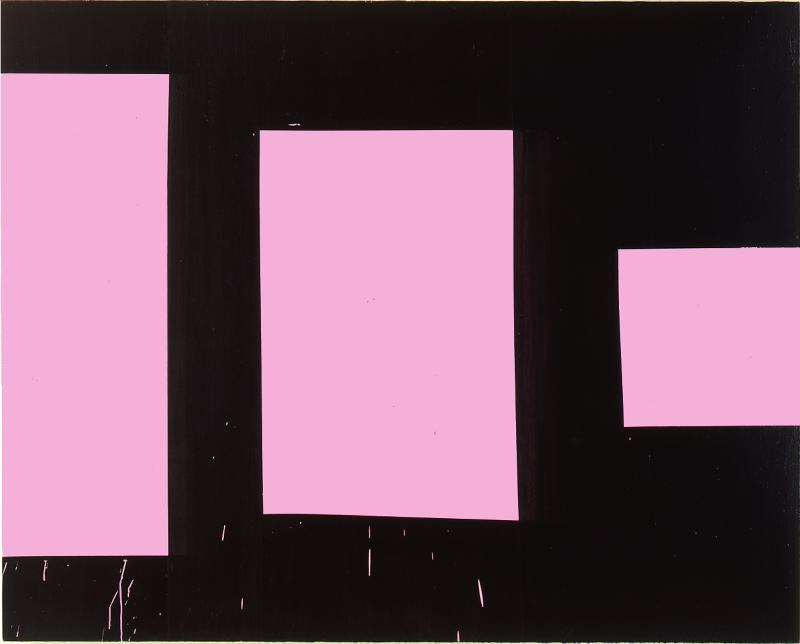
Pink was everywhere in this clothing, part of the new wave imagery at the end of the 1970s. The abstract artist Mary Heilmann created a series of pink on black images such as Save the Last Dance for Me, inspired by the feeling of new wave album sleeves such as Tuxedomoon, and the clothing of G-Force embodied this visual pattern. And of course, if your different clothes didn’t attract negative attention then wearing pink certainly would. Increased tenterhooks.
Purchasing this branded clothing required hunting around in esoteric shops, a practice that thrilled me to the core – it felt like a phase change from the previous arrangements of salvaged clothing or trips to the ubiquitous Eagle Centre Market to get reproduction subcultural clothing. I photographed the acquired garments laid out in my bedroom. Taken indoors, dimly lit, hanging against a plain wall or laid out on a bedspread. The photographs survive without the negatives, following me through life as photographs tend to do before the advent of digital.
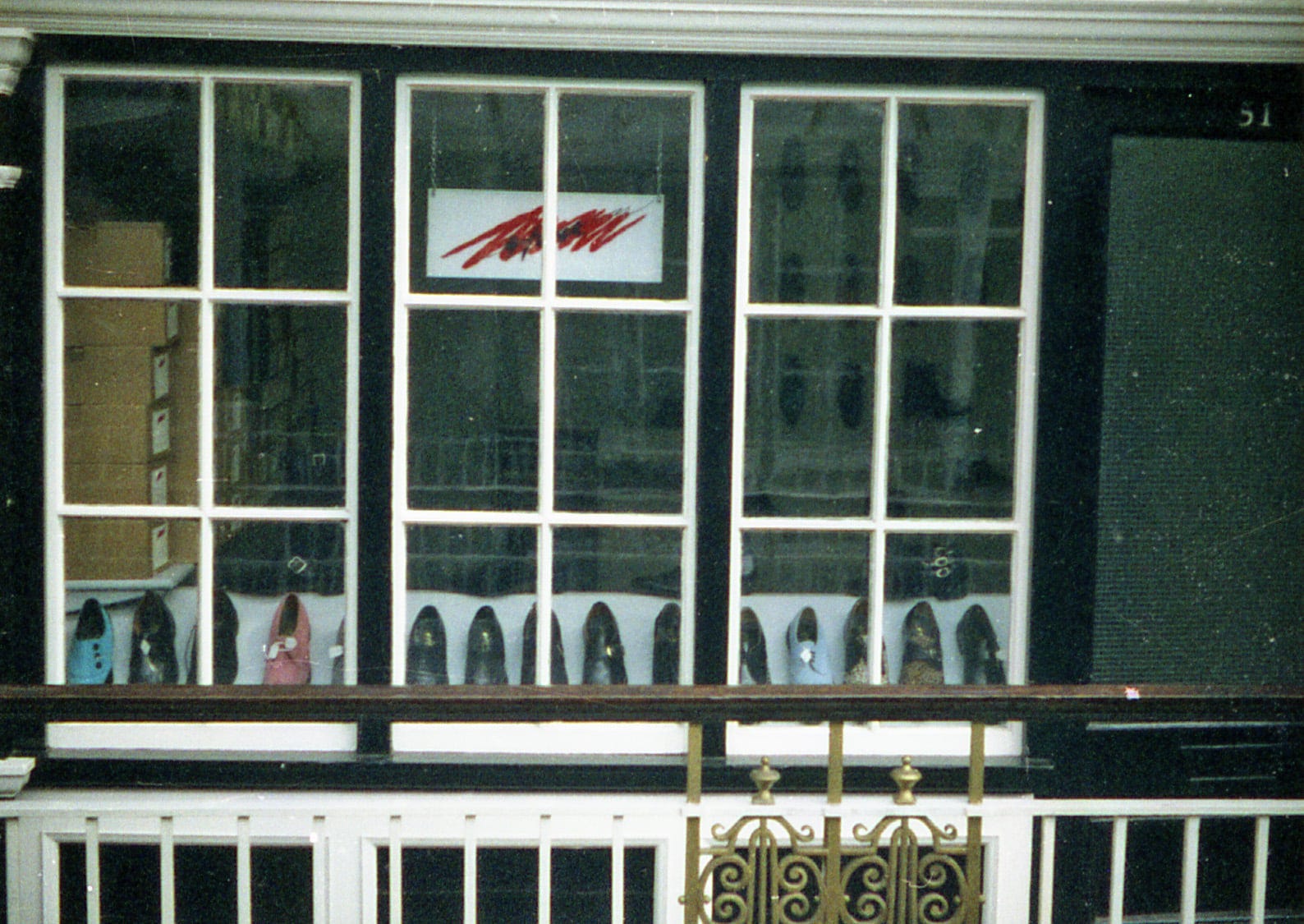
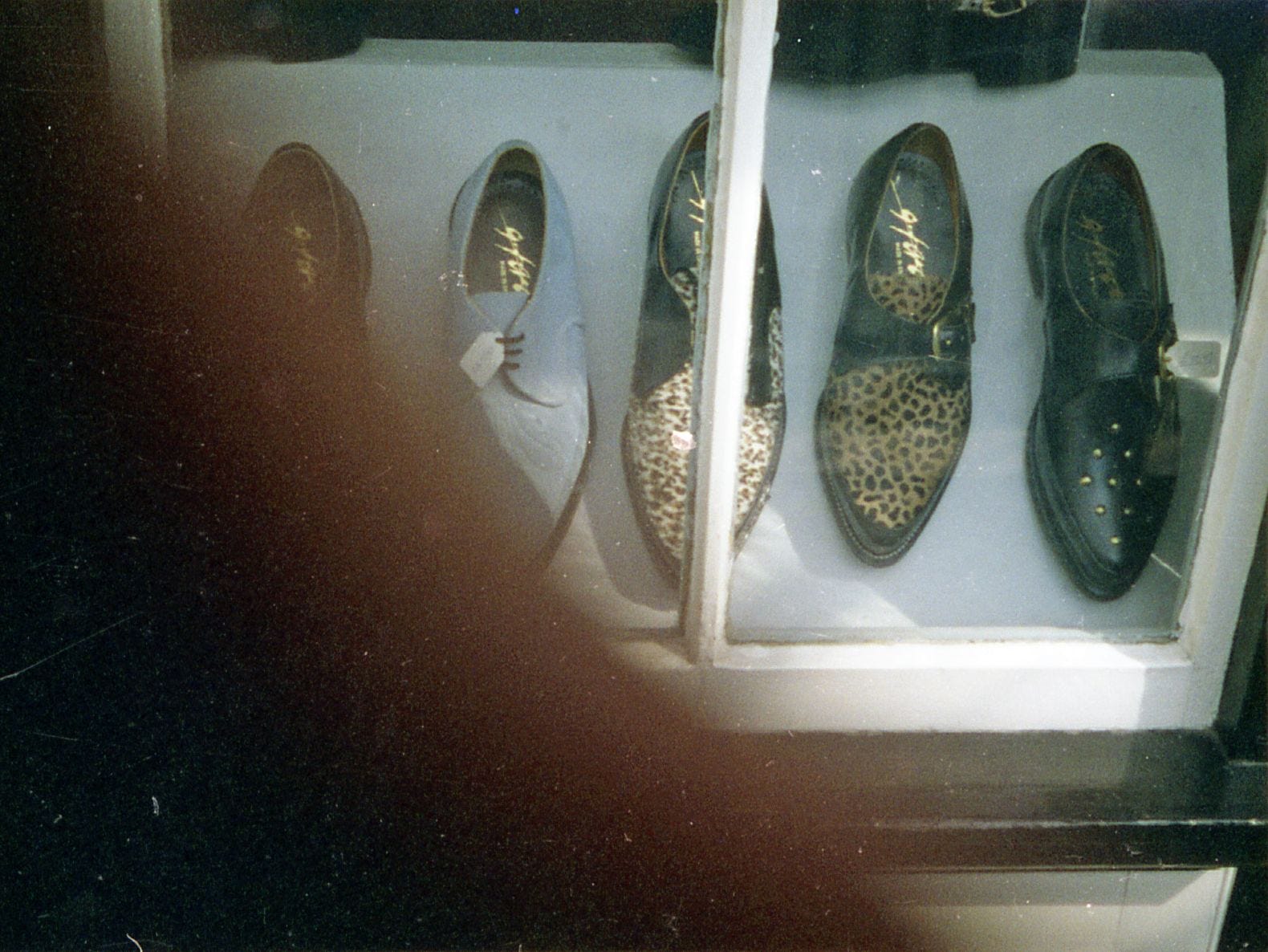
Bizarrely, my earliest surviving negatives are from an April 1982 trip to Leicester to visit the small clothing shop Jive and the G-Force shoe shop in the multi-storey and decorative Silver Arcade. I had been to Leicester the month before to see the juggernaut of a gig at De Montfort Hall featuring Theatre of Hate, UK Decay and The Meteors – a Saturday trip that was combined with clothes shopping before the subcultural trouble kicked off in the evening. I was parsimonious with my photograph taking, but the excitement of encountering the G-Force shop triggered three photographs: a view from the opposite balcony over the interior void of the Silver Arcade, an overhead view of the shoes in the window display taken through the glass (evidently the shop was closed), and a later image when I returned to find the shop open and took a photograph of the shoes displayed on a white vertical peg-board. According to my diary I never made a purchase, so heaven knows what the shop owner thought of me, most likely quizzing him to the point of tedium on different styles of shoes and asking if he knew which bands wore which styles.
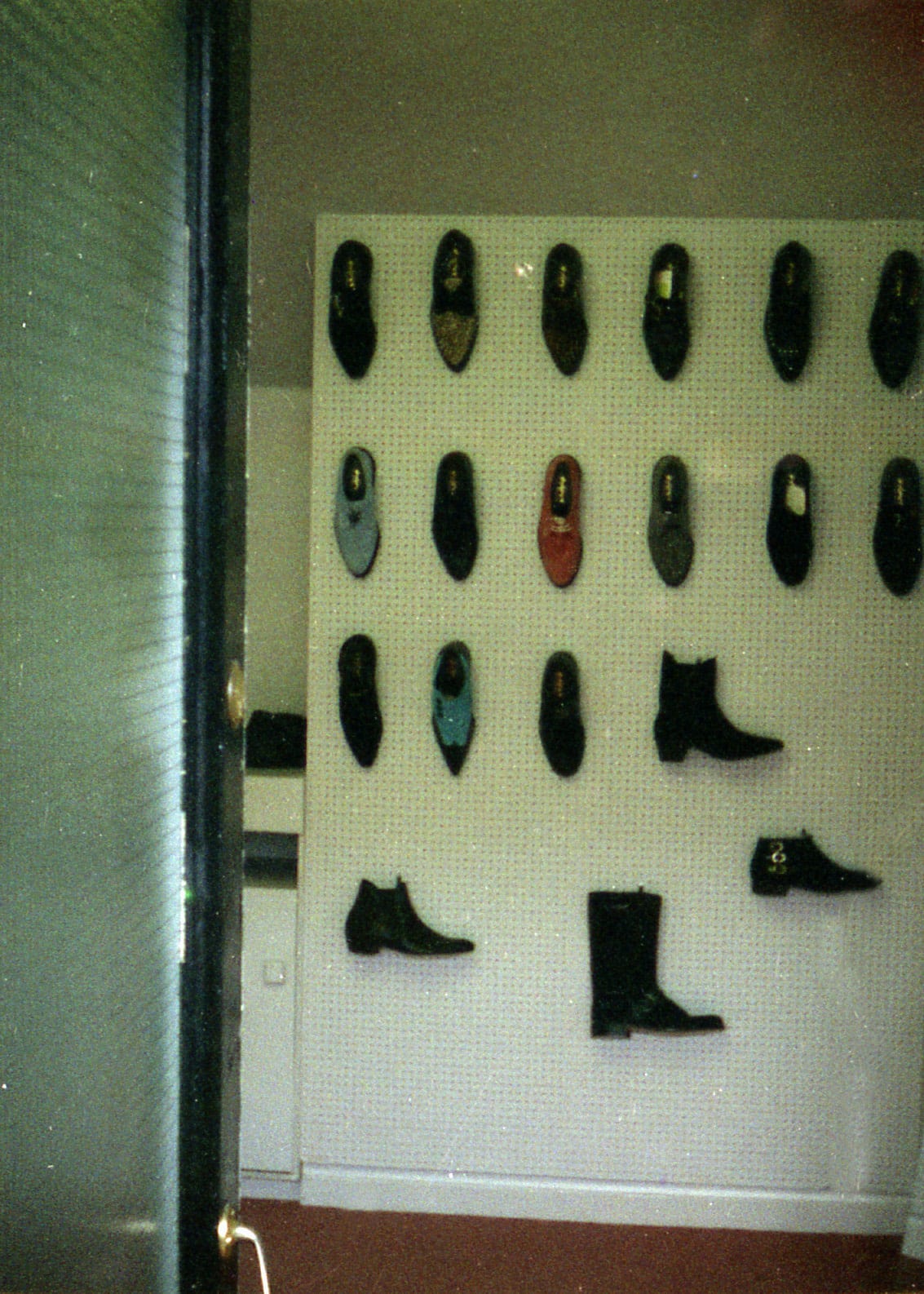
The photographs did not survive, but I had a clear memory of taking them. The rescanning of my surviving 110 negatives recently brought both the pictures and the occasion back to life. The close-up overhead photograph of the shoes is scintillating (even with my finger partially obscuring the view – a tactile index of the sheer excitement which a photograph in itself cannot capture) with detail revealed that evoke both a tactility and olfactory sensation. Four models are evident, all with a pointed toe and visible G-Force logo in gold script: a buckle fastening black shoe with a diamond pattern of nine studs, a similar design with leopard spot upper, a lace fastening animal print upper, and a lace fastening blue suede shoes. The power of these shoes was difficult to describe – a similar feeling attributed to Malcolm McLaren by Paul Gorman in his book The Look. McLaren’s purchase of blue suede shoes from Mr Freedom at the end of the 1960s is said to provoke a “seismic effect”. Hence my odd photograph. It’s my equivalent of Warhol’s 1981 image Diamond Dust Shoes. Warhol’s picture is cropped on all sides to connote a limitless terrain of shoe fetishism, but it shares a similarity with my photograph such that all the labels of brand are artfully displayed. In one of his typical grand and ironic gestures, Warhol sprinkles and bonds diamond dust into the picture to buttress the picture’s role as moving from a record or representation to a desirable thing-in-itself measured purely by money.
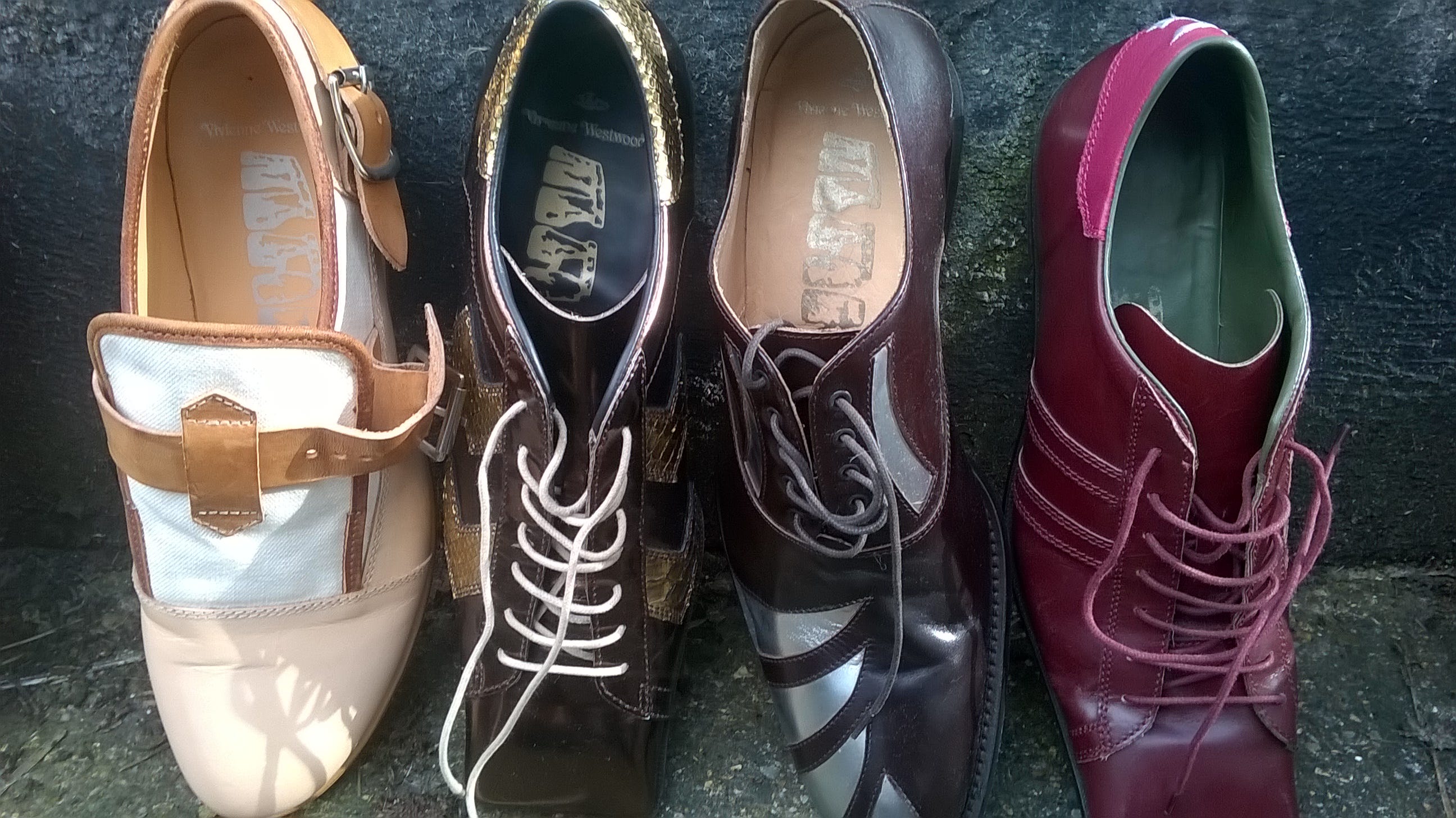
In keeping with this tradition, here’s a more recent photograph of some of my favourite Vivienne Westwood shoes taken during one of the recent Covid lockdowns…
My lack of purchase on the day in April 1982 may well have been a result of having no money. My diary for the start of that year records a frenetic period of travelling to shops to purchase clothing. G-Force shoes on the last weekend of January, two haircuts in two weeks at the start of February (something must have gone wrong), and then more visits to G-Force Nottingham to purchase a black and yellow rockabilly cardigan and baggy trousers. The cardigan was a favourite, though it singled me out for a ferocious beating when we took a few days holiday in Rhyl the following year. The words still rattle around: “what are you, some kind of fucking rockabilly?”, then a fist straight into my face knocked me down in one go. The shopping continued - the end of February sees a trip to Birmingham to hang out in the Oasis Centre, followed by a quiet period where I spent money on gigs (Rip Rig and Panic, New Order, and the aforementioned Theatre of Hate extravaganza). The first week of April – prior to the trip to Leicester – includes a jacket from Neo Duo (Derby), more G-Force trousers, a G-Force shirt, and finally a trip to Leeds X-Clothes where further new shoes were bought.
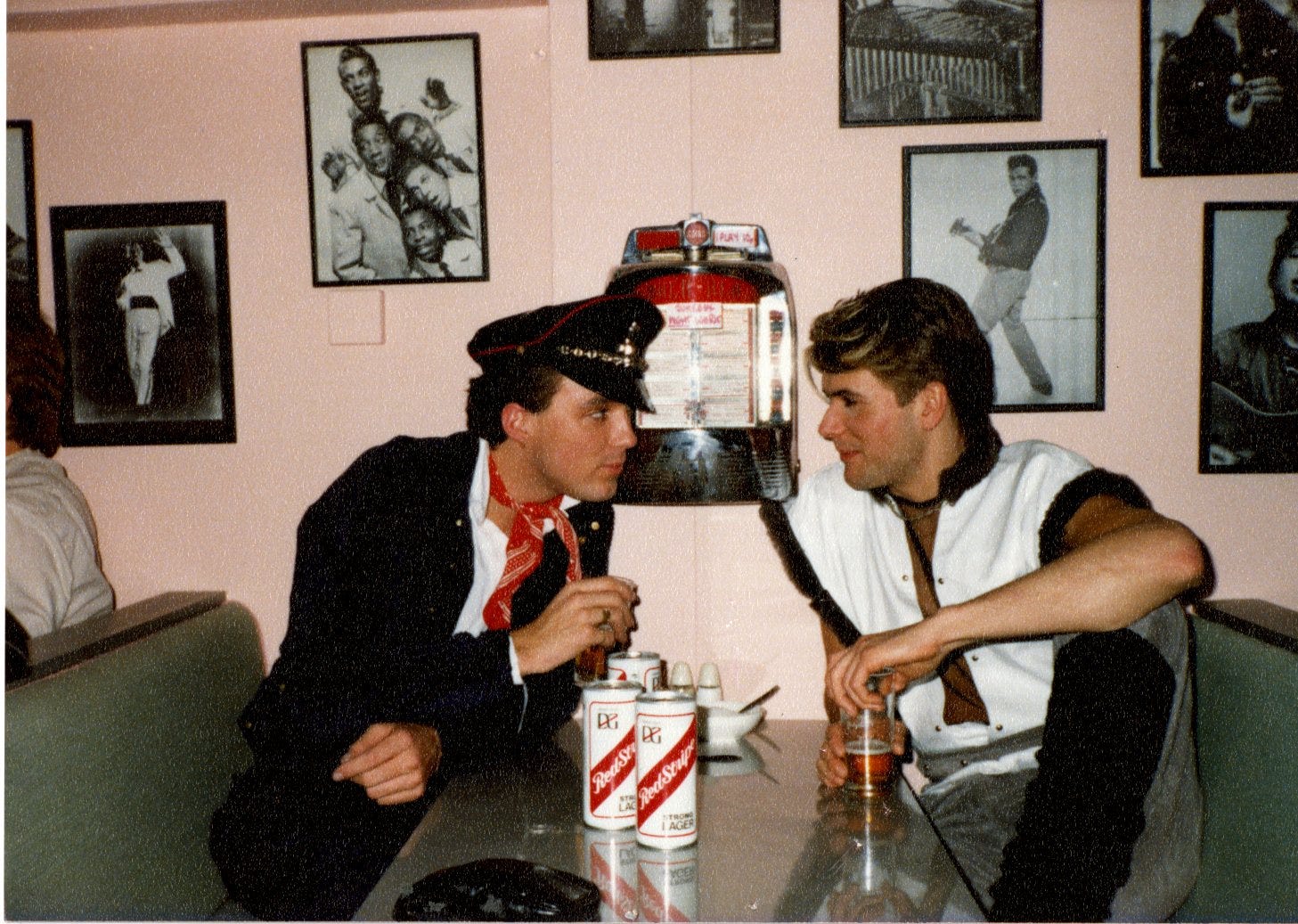
This spending spree coincided with attaining the ability to gain entry into the Blue Note club in Derby, an over-18s nightclub with a fastidious door policy. Since the closure of the Ajanta in late 1980 I had spent 1981 scratching around for interesting gigs – some respite offered through sporadic events at the ramshackle Nottingham Boat Club (Southern Death Cult was a memorable night), but it predominantly meant travelling to more distant places which then involved sleeping out in a park or train station waiting room. The Blue Note was a sleek and discreet venue, entered through a long covered alley and then structured as a labyrinth of white-walled rooms connected by grotto-esque staircases. It had already been earmarked as a select place to visit in the pages of The Face magazine, with Spandau Ballet as visitors and the trendy post-new romantic band Animal Nightlife photographed in the diner for a feature in i-D magazine. Even though the Blue Note functioned as a venue for emerging bands in the 1980s, it had the overwhelming and unshakeable aura of a très fashionable nightclub, and so I felt a natural impetus to dress up to try and get in and fit in.
Seeking out alternative clothes wasn’t entirely a means to an end, and it extended beyond the (later) modern joys of materialistic clothing shopping where people chase the thrill of just buying something new to post unboxing footage on social media channels or model for ‘fits’. Alternative clothes shops existed on the margins of the shopping spaces of towns and cities, often relegated to the fuzzy and scuzzy areas where you had special or marginal interest retail spaces such as sex-shops, second-hand magazine shops, chaotically assembled vernacular model shops, and antiquated fusty-smelling pet shops that included the obligatory mynah bird that would produce expletives on demand. Cultural geographers would call this distribution a cartography of taste, but the French philosopher Michel Foucault coined a more apt concept with the idea of the heterotopic space.
Foucault was part of the post-war Continental philosophy movement (centred on France) in which dominant modes of thought (and the possibility of thought itself) were challenged and uprooted. Neologisms for ungraspable concepts came thick and fast, like bullets from a gun, but Foucault’s heterotopia was very much something that could be felt and applied. It made sense, concerning the feeling attached to a space such that this feeling felt unusual, discomfiting or disconcerting, in turn making the space itself seem topologically impossible or out of joint.
Sudden switches in mood were evoked in places like a cemetery or a travelling fairground on a patch of land, sometimes a more abstract ‘space’ such as your own voice talking into a telephone and moving on to the recipient, or the generated region ‘behind’ a mirror. This was a topological incongruity – two different spaces (as defined by mood) occupying the same space, or a switch between spaces without a discernible border or egress. The map as a sense-making tool becomes derailed. Alternative clothing shops had a strong heterotopic aura, they seemed to exist in a different world that was encountered in the immediate vicinity as opposed to when crossing the threshold (an example of heterotopic threshold space would be entering a smoke-filled betting shop with punters scrambling around between screens and pinned-up newspaper form-sheets).
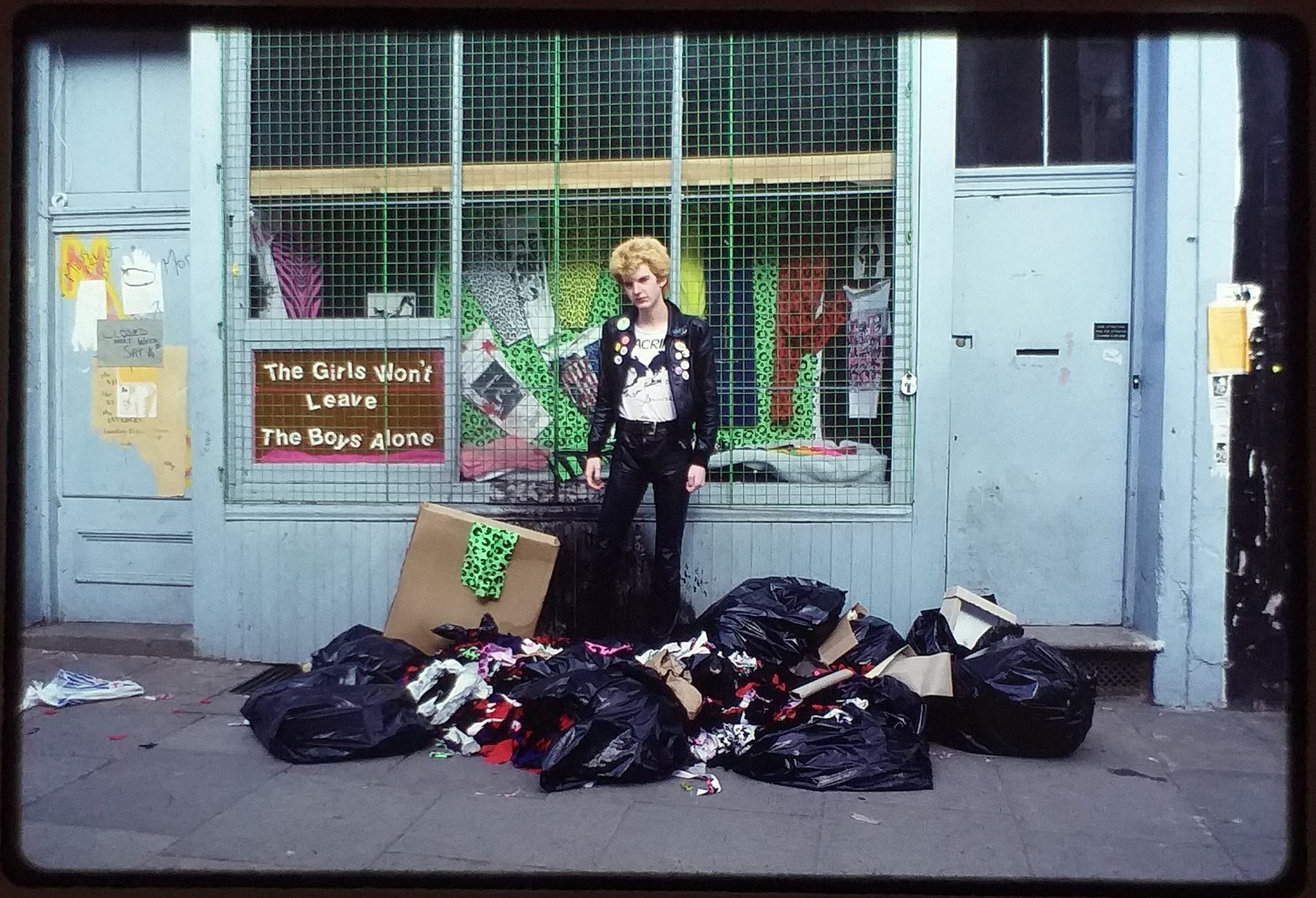
Derby’s first subcultural clothing shops were established by Dave Bonsall. His initial shop Society Styles (said to resemble a front room, much like McLaren and Westwood’s first incarnation of 430 King’s Road) was on the fringe retail area around Abbey Street amidst slum rentals, taxi offices and shut-down premises, operating in the early 1970s. He followed this up with his next venture to coincide with the original wave of punk and going under the name ID. This was an archetypical punk shop, sat in the middle of a crumbling part of the city that was awaiting development, the shop embedded into a dilapidated hotel structure that felt like something left over from the war. It had minimal exterior, no signage or curated window display, and had iron bars covering the windows. These stayed on even if the shop was open, in the same way that many punk clothing shops had permanently fixed rectilinear grilles. Like the punk shop Sex/Seditionaries in London, it was intimidating to venture through the subcultural checkpoint into a different world. Both Society Styles and ID were before my time, but they played a big part in nurturing and facilitating Derby’s nascent punk and post-punk scenes, employing shop assistants who became singers, having backrooms that doubled as rehearsal spaces.
My initial encounter with a shop of this type was heterotopic in a different context. I was undergoing examination for my moles and skin blemishes at the children’s hospital on North Street in early 1981, a regular journey that routinely filled me with dread as we walked northwards from the city centre along Queen Street and King Street and over the flyover that accommodated the inner ring-road. Every marker of the journey – shop fronts, post-boxes, uneven paving slabs – was absorbed and acquired a grim quality of counting down towards imminent unpleasantness. Pokes, prods, needles, conversations about me that I couldn’t understand.
The hospital was not a joyful or welcoming place, an imposing late-Victorian brick building with high ceilings and rooms re-purposed over the years as functions and priorities changed. Misjudged wiring and wallpaper from periods past, cobbled to make do for now. Foucault lists hospitals and asylums as strongly heterotopic, using them as an exemplar of his concept of topological estrangement. My final visit to the hospital is remembered with a sense of horror and relief: I had a potentially malignant mole removed from my lower back that necessitated considerable digging and cutting whilst under a local anaesthetic. On the completion of the removal of the mole it was put into bottle with a suspended solution and the surgeon proudly put the capped bottle in front of me as I lay prone on my stomach on some kind of hospital gurney as the gaping wound was being stitched. The mole was like an alien jellyfish, the solution tinged red with my blood. Many thanks for that everlasting memory.
Heading back into town, feeling giddy and nauseous, I noticed an indiscriminate shop with a royal blue painted front. It was simply called Emporium and had some punk accessories in the window, the interior was dark. I ventured back the next time I was in town, the journey along Queen Street past the Cathedral previously steeped in dread had now been re-routed with anticipation and excitement. I entered the shop and chatted to the owner. He introduced me to G-Force clothes and the opportunity to shop away from the back pages of NME and the cheap punk-replica clothing on the Eagle Centre Market or the experimental misfires (cuts and colours) in jeans at Derby’s legendary Nixons shops. The next time I went, with a plan to purchase, the shop had gone. Never mind heterotopic, this felt more like something from Mr Benn, a shop and its owner that affords a heterotopic portal to other worlds, and appears and disappears at a whim. A new world had opened up.