
Last Words...
A commercial / break (part 1)

He who strikes with meaning is killed by meaning - Jean Baudrillard ‘On Nihilism’ (1981)
There’s no point in asking, you’ll get no reply - Sex Pistols ‘Pretty Vacant’ (1976)
1. Before commencing the as-promised bonanza on leaving the 80s via a slippery subcultural slope I am going to report back from the Louder Than Words 2025 festival which ran over the weekend of 14-16 November. This was held within the confines of the sleek Innside Hotel in Manchester, directly opposite the gentrified apartments within the shell of the Hacienda nightclub (itself within the shell of a yacht salesroom).
My main aim with this post is to report back from and reflect on a mega-session debate on whether we have now had “the last word” on punk. This coincided with the publication of Chris Sullivan and Stephen Colegrave’s new book which is provocatively claiming to be the last word on punk (even though ironically it’s a retread and brief update of their 2001 book Punk: A Life Apart). So I’ll get to that shortly.
First, some courteous explanations of how I got there, and a bit of rambling on the music-related book industry which forms the plentiful fuel for Louder Than Words.
2. I was kindly invited to host a session featuring the writer/academic/researcher Nicolas Ballet and his recent book Shock Factory (published in France in 2023 and just published in translation in the UK). The book is a dense compendium of the visual culture of industrial music, which goes hand-in-hand with the confrontational and agitational nature of the music. Hence it doesn’t pull any punches to include all the bad, uncomfortable, and disconcerting material that seems to define the scene.
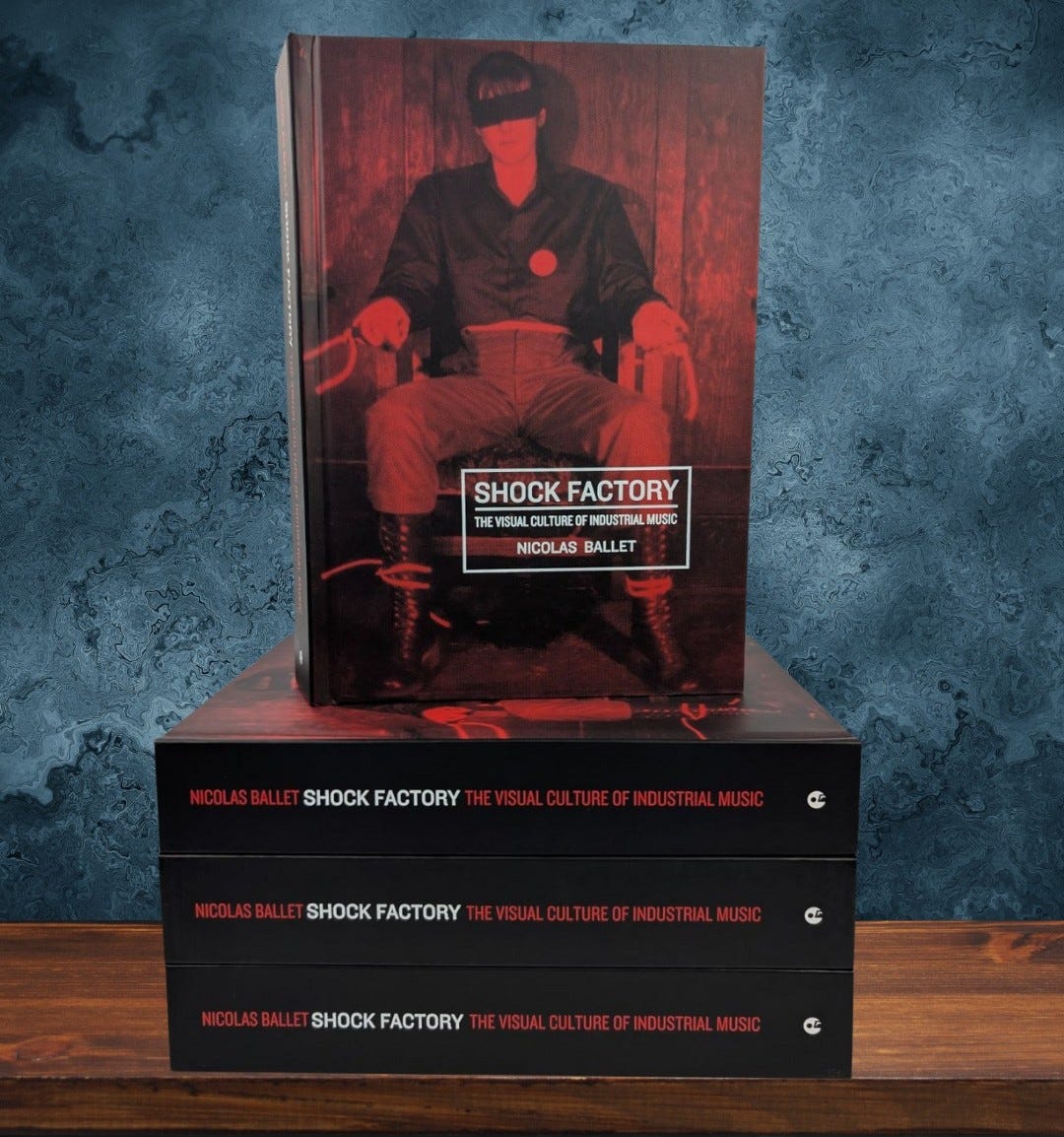
The book is published by Intellect, who also published my own book on Throbbing Gristle two years ago – which was partly why I was invited to host Nicolas at the event with an author talk and audience Q&A. Nicolas is an exciting young academic (with a great sense of style), and the book is an academic treatment of the subject which takes a number of approaches via canonical art movements, avant-gardism, radical thinkers in both the academy (Bernard Stiegler), adopted by the academy (Debord), and outside the academy in the realms of counter-culture and ‘occulture’ (William Burroughs etc).
// of course, Burroughs declared his own academy – The Final Academy – which I could wind into the text here if I was feeling smart enough, but I’m saving that for the post on 23 Skidoo and their own take (possibly via Burroughs) on the concept of a different ‘Last Words’ //
I was very anxious about this event for a number of reasons. Primarily because the material is challenging and you get worn down by it – certainly Ballet’s book is relentless through the nature of its meticulousness. Secondarily because the academic angle of the work is interesting (to me) but is difficult to pitch to a book festival audience such as Louder Than Words who are inundated with the deluge of musicians-turned-authors who turn up and regale a crowd with anecdotes. There were other minor reasons which I wont go into. Anyway, as it turned out, the event went smoothly and we were joined by Jill Westwood (Fistfuck and more) who added some incredible insight from her practitioner position (we could even call it anecdotes if we wanted to go with the LTW flow).
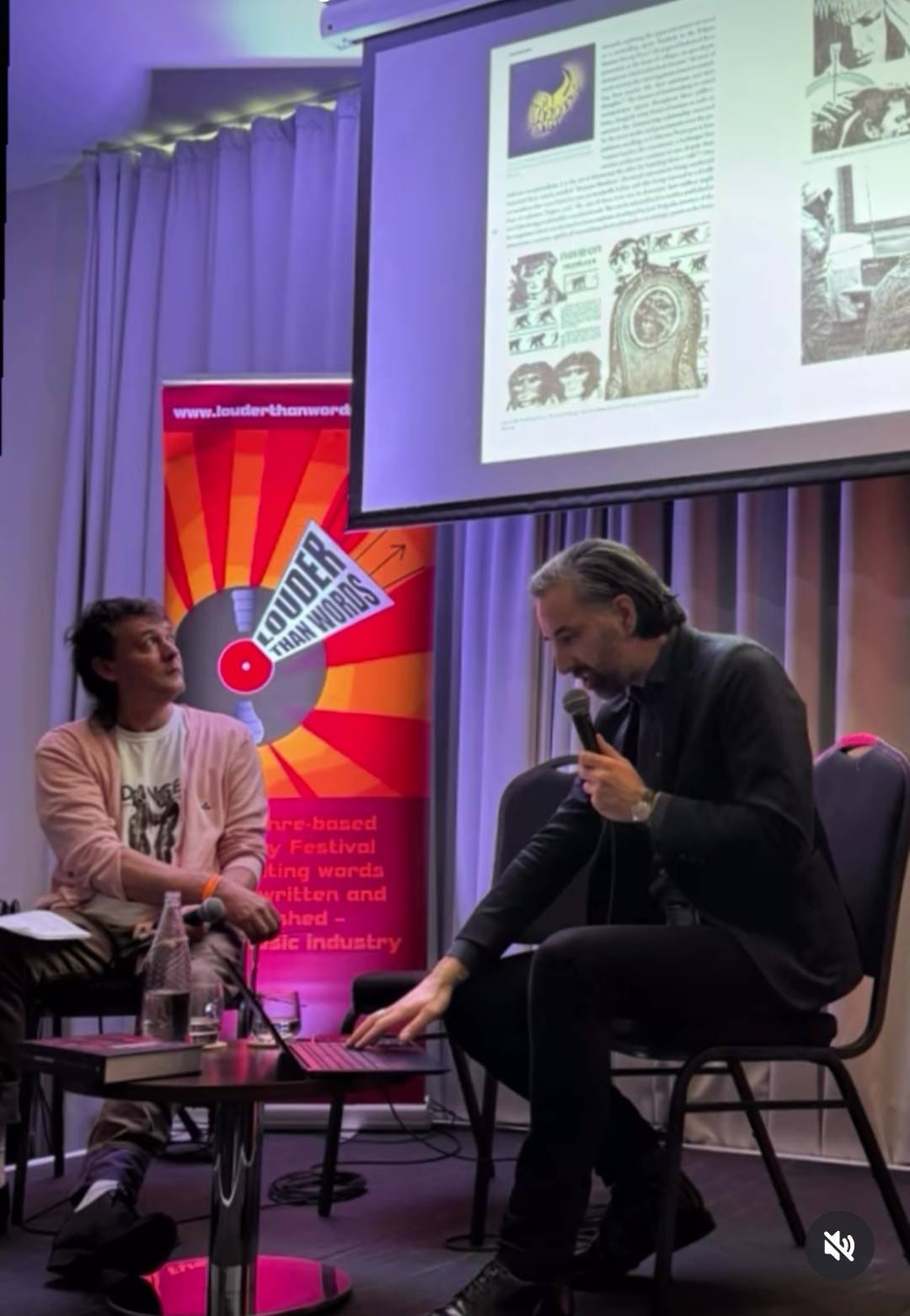
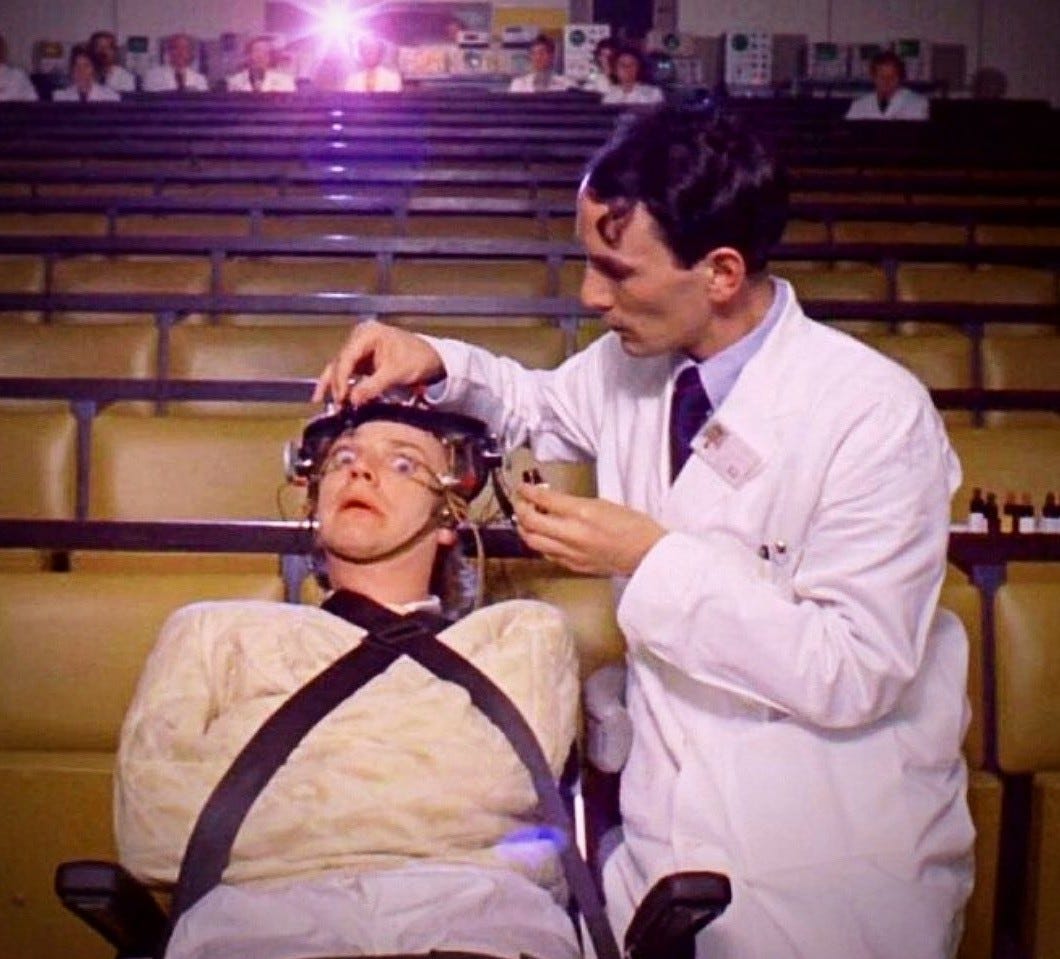
Thankfully Nicolas bought along a selection of visual material from the book which allowed some respite (of sorts) for the audience from a drift into over-academic questioning. This led to a surreal moment when Nicolas frantically scrolled through his PowerPoint in search of a particular image to illustrate a point I had made (about Jeff Wall), and we were treated to a stroboscopic stream of typically gruesome, disconcerting and bewildering images from the industrial scene. Short of having a bit of the “old Ludwig Van” we had replicated the ‘Ludovico Technique’ scene in Kubrick’s adaptation of A Clockwork Orange.
3. I enjoyed the whole weekend and was glad I took part. Even though my session was towards the end of the final day, I had enough time once I had de-stressed to appreciate some kind conversation and greetings from the likes of Rusty Egan, Budgie (Siouxsie and the Banshees) and Ed Tenpole-Tudor. Name dropping on SUB>SUMED, that’s a new one.
The organiser and host John Robb (supported by a very hard-working crew of volunteers and staff) is quite an easy target to be dismissive of. He is an energetic everyman, a prolific writer (and sometimes self-recycler), and carries off the aura and resemblance of a cartoon punk appearance that is strangely updated into something unique and postmodern: pinstripe jacket, drainpipe trousers, big shoes, shaved head with comical quiff, gaunt, gangling and stick-thin (but fit-as-a-fiddle) comportment, etc. He is very good at what he does and also strikes me as someone who is genuinely friendly and supportive.
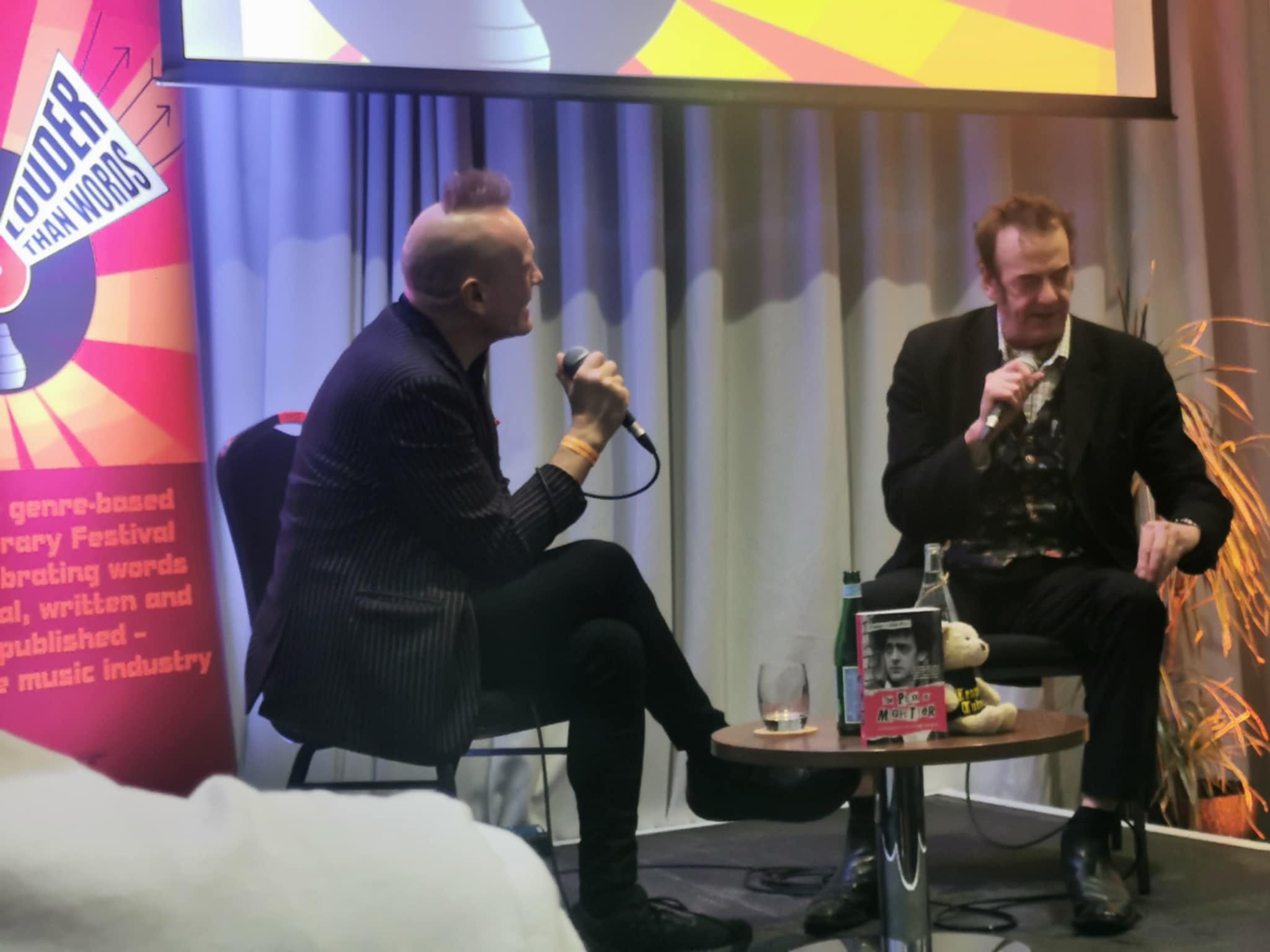
As well as being consummately articulate in front of a camera or microphone, he is a dedicated champion of music scenes from punk onwards. His piece with Tenpole-Tudor was like a frantic skit, giving the impression of a well-rehearsed dialogue shot through with bdum-tish moments. But I understand it was all created on the hoof. That’s a professional skill.
4. Louder Than Words does not need to scrabble around for names to add to their annual programme. Musicians are churning out memoirs, and music scenes are being analysed and interpreted at a fast rate as the nostalgia moment closes in on itself under the rubric of there being nothing much worthy or authentic in the current situation. I honestly wouldn’t know (I’m imprisoned in nostalgia).
And so, when I was writing my Throbbing Gristle book I made a reading detour to explore music writing in more detail. I was conscious of perhaps missing out on an audience who might be dissuaded and disheartened by a purely academic treatise on the group. I had read the various Jon Savage and Simon Reynolds titles more or less at the time of their publication in the 90s, and I was aware that both of these authors had seemingly staked out a ground in between academic and popular. Matt Worley’s 2017 book on punk – No Future - also orbited close to this, with his academic bent being more on robust historiography rather than critical-cultural context and philosophical namedropping. In Worley’s writing there is no pleonastic ramblings about punk forming in the dustbin-laden streets of the Winter of Discontent…
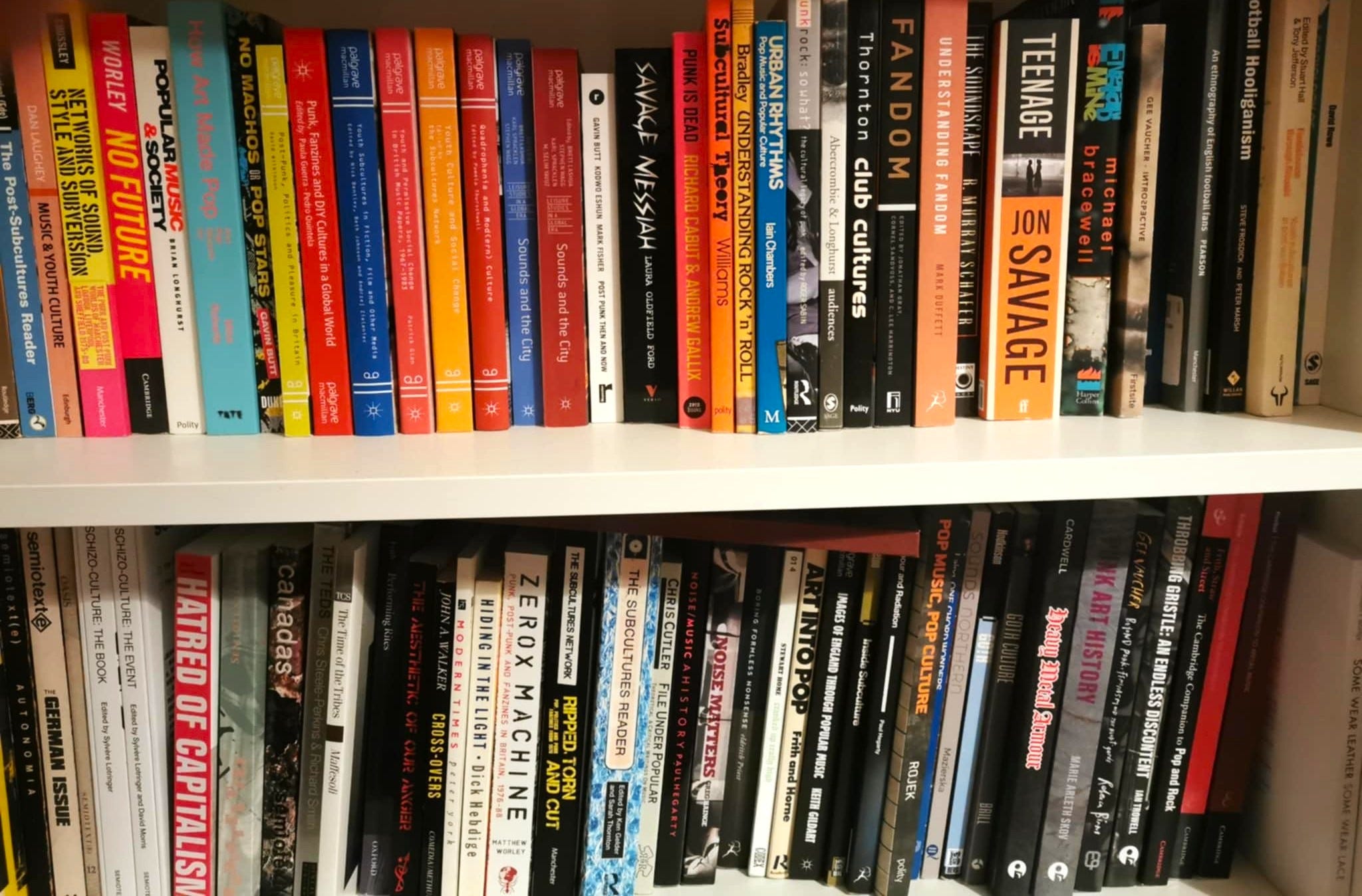
Through the 2010s, partly due to me starting a (very)-late-in-life PhD, I read a lot of academic books on music, mainly around subcultural theory which seemed to be a hot topic. While I was pretending to be an academic the material felt useful, but on reflection (years later, typing in a cold attic for a Substack blog of dubious audience) it now leaves me a little empty. A few academic authors have the gift of producing something brilliant: Paul Hegarty and his explorations of noise-music is a good example, and his chapter on the 1979 Sex Pistols album The Great Rock ’n’ Roll Swindle is (ahem) something else. I’d also mention Russ Bestley’s new book Turning Revolt Into Style: Punk Graphic Design (but more on Bestley in a minute).
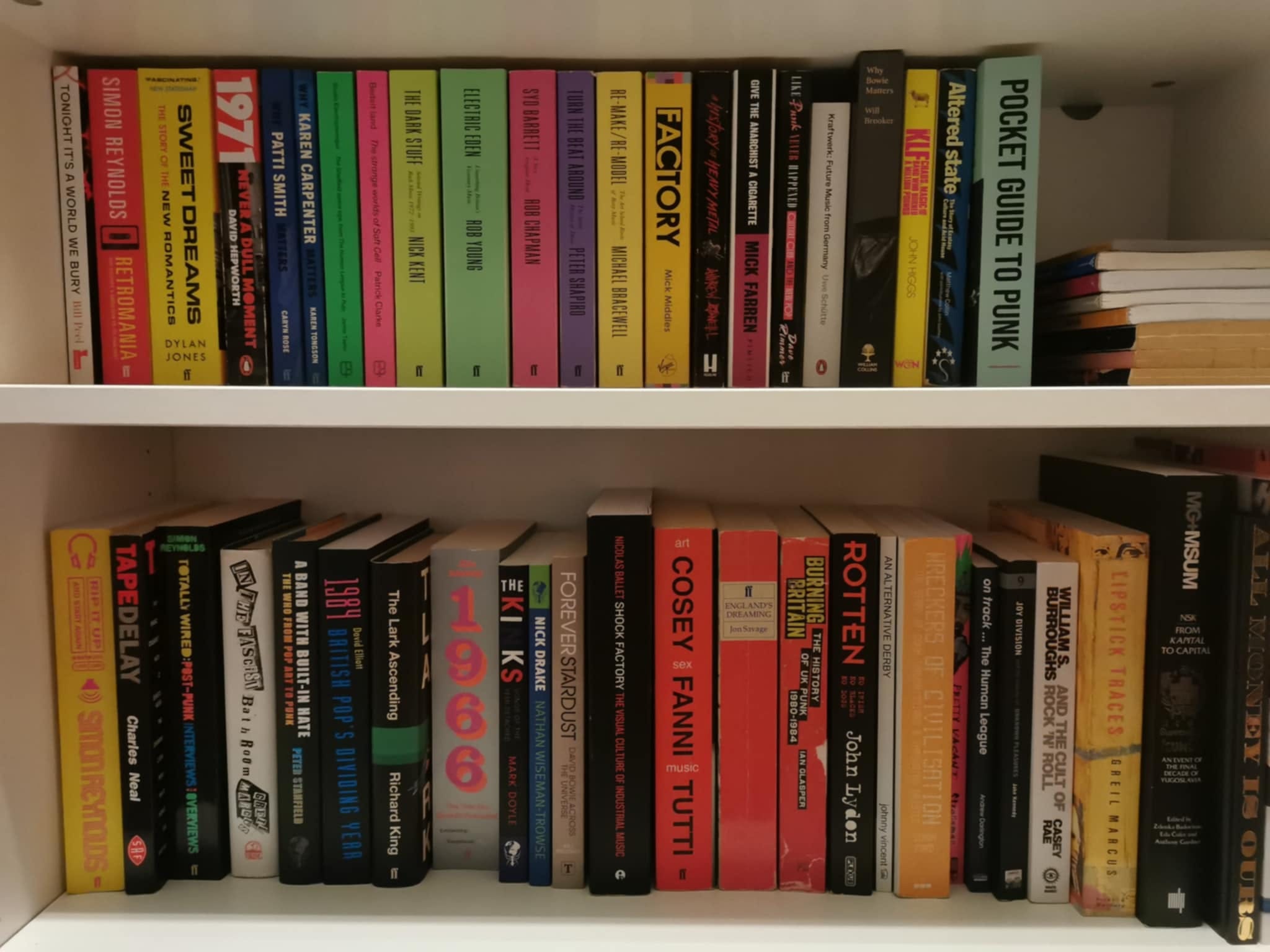
My buying spree of ‘commercial’ or popular music books tended to home in on material by or about artists that I have liked, and books by writers that have a reputation (obviously Reynolds and Savage feature here, in fact they both tick both boxes). Separating these two reasons out approximately gets to the core of what I’m after and why I’m ultimately disappointed on most occasions.
In the first instance I’m searching for some extension, or explanation, of the magic that entranced me from the 7” platters, LPs and explosive gigs of my youth. My assumption, that the artist who created the words and sounds of each track can continue or enhance this magic many years later through the story of their life or the records they made, often falls on barren ground.
Unless the musician-turned-author is a good writer then a simple over-explication of dates-facts-details-anecdotes just leaves me cold. If anything it takes away the magic of the original. It is not so much ‘transmediality’ (bridging between two media – recorded/performed music and printed word), more so a requirement that the author can bring something literary to the table. This might be great prose, or clever context weaving in social and cultural backgrounds that perforated the records and performances of the time.
An example is a couple of Pulp-related books I bought. I’m not a Pulp fan but I was intrigued by Jarvis Cocker’s Good Pop Bad Pop which shows how he can totally shift context and apply some creative writing on top of that. Meanwhile, Nick Banks’ 2023 book So It Started There left me cold. However, I knew Nick well from my time in Sheffield, and we briefly shared a house just at the point he joined Pulp. He was a fantastic character, and still is – down to earth as they come. But his book, for a non-Pulp fan like myself, seldom lifts itself out of a slew of dates and details.
I also tried reading popular books by renowned authors on music scenes that didn’t interest me. This also didn’t work, but was slightly less harsh. I’m assuming this was down to the fact I was reading a book, and so good writing was paramount, and this had a feint edge over reading a poorly written book on something I did like. After moving house recently I’ve now filled a sizable box of popular music books that I’m getting rid of. I can anticipate no recourse to read them again – for fact, for inspiration, or for literary pleasure.
And it’s worth noting that facts get waylaid, which will be explored when I get to the point of this post – which as I stated at the outset is to ponder the debate on whether we have now had “the last word” on punk. Many books from the scene (and punk in particular) revisit or relive an increasingly granular but heavily mythologised subsoil.
Michael Hann’s December 2022 article in The Guardian is worth a read to understand the publishing industry that enables Louder Than Words to go on thriving, and also the nuts and bolts of the readership demographic (it resonates with Alan Partridge’s “WD-40” imagined market slice).
Right – I’m stalling for time as I decided I’d need to read Sullivan and Colegrave’s book on punk’s last word before I give my thoughts on the debate at Louder Than Words. It’s arriving tomorrow and so a week to read it should be ok, and then we can get back on track with late-80s quasi-subcultures and fashion moments.