
Legion
Post-punk miasma, following bands, hitch-hiking attire

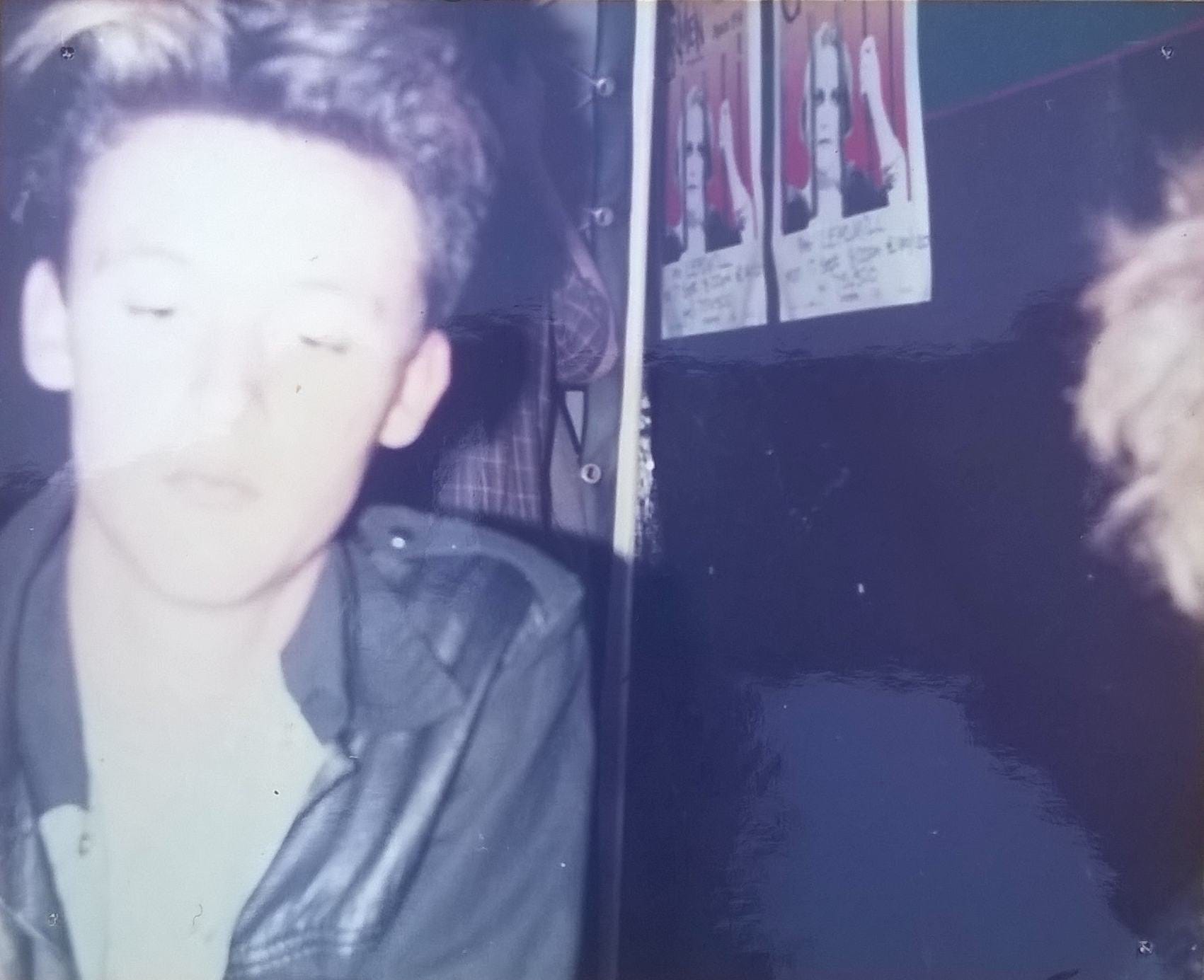
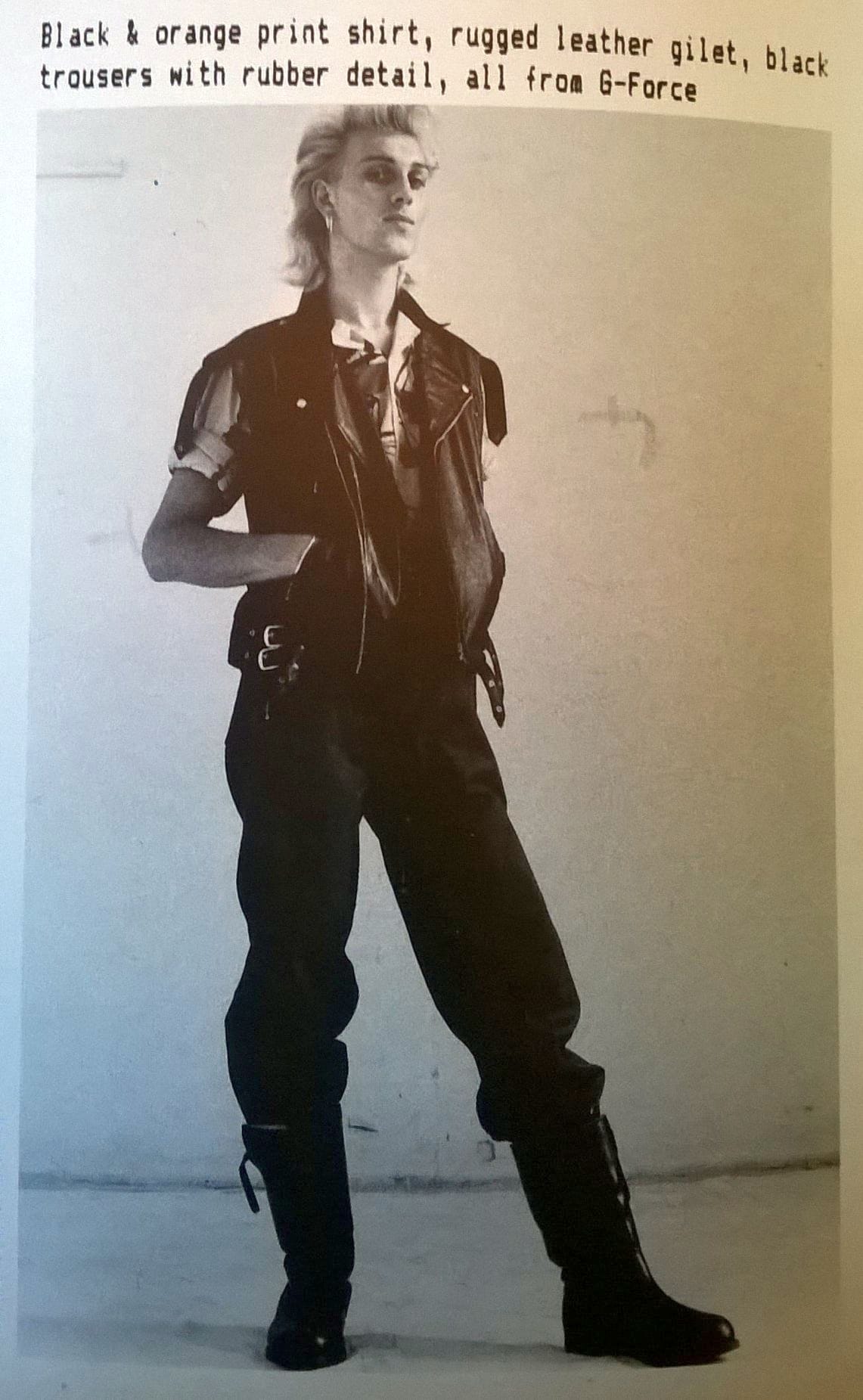
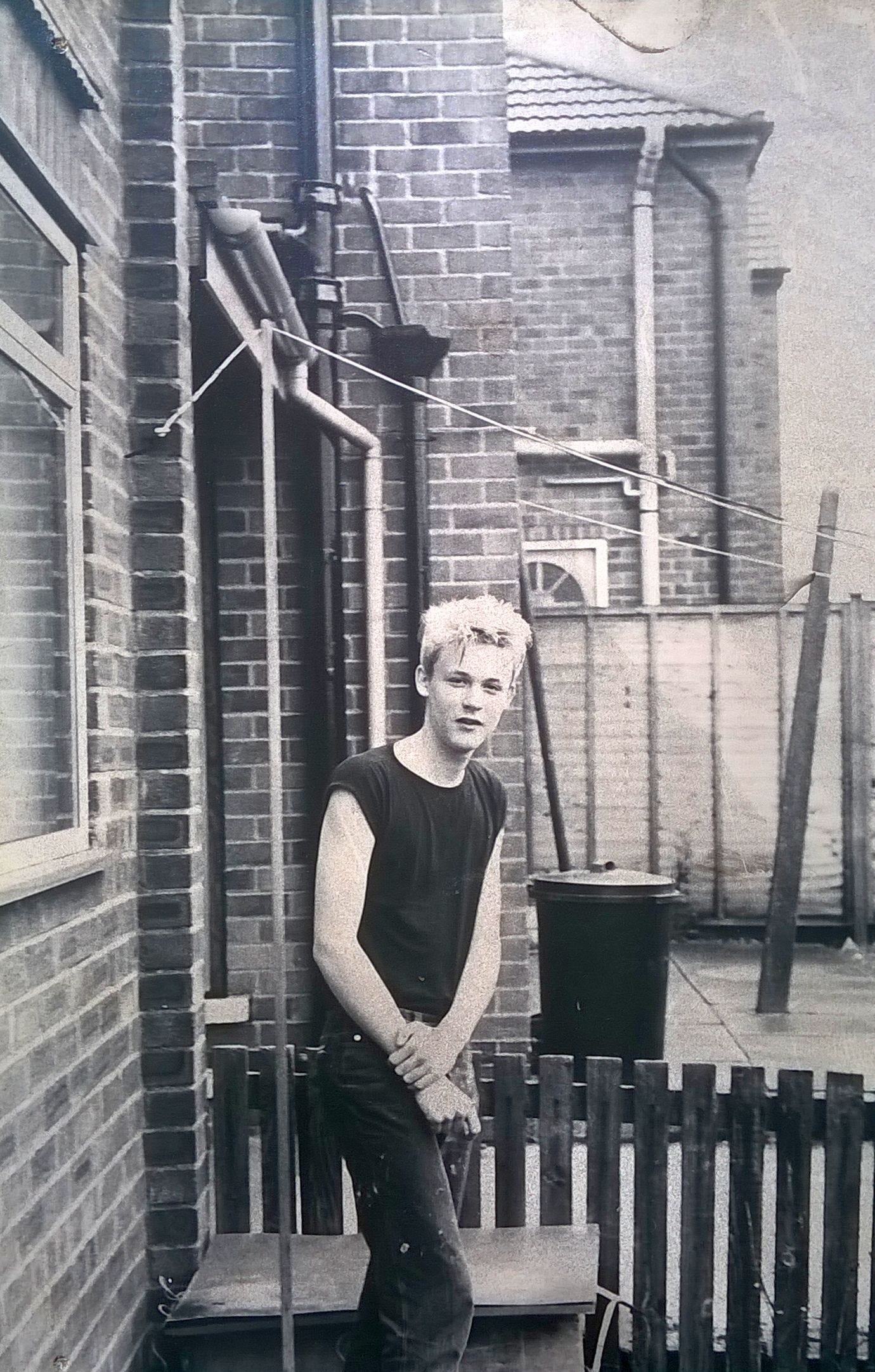
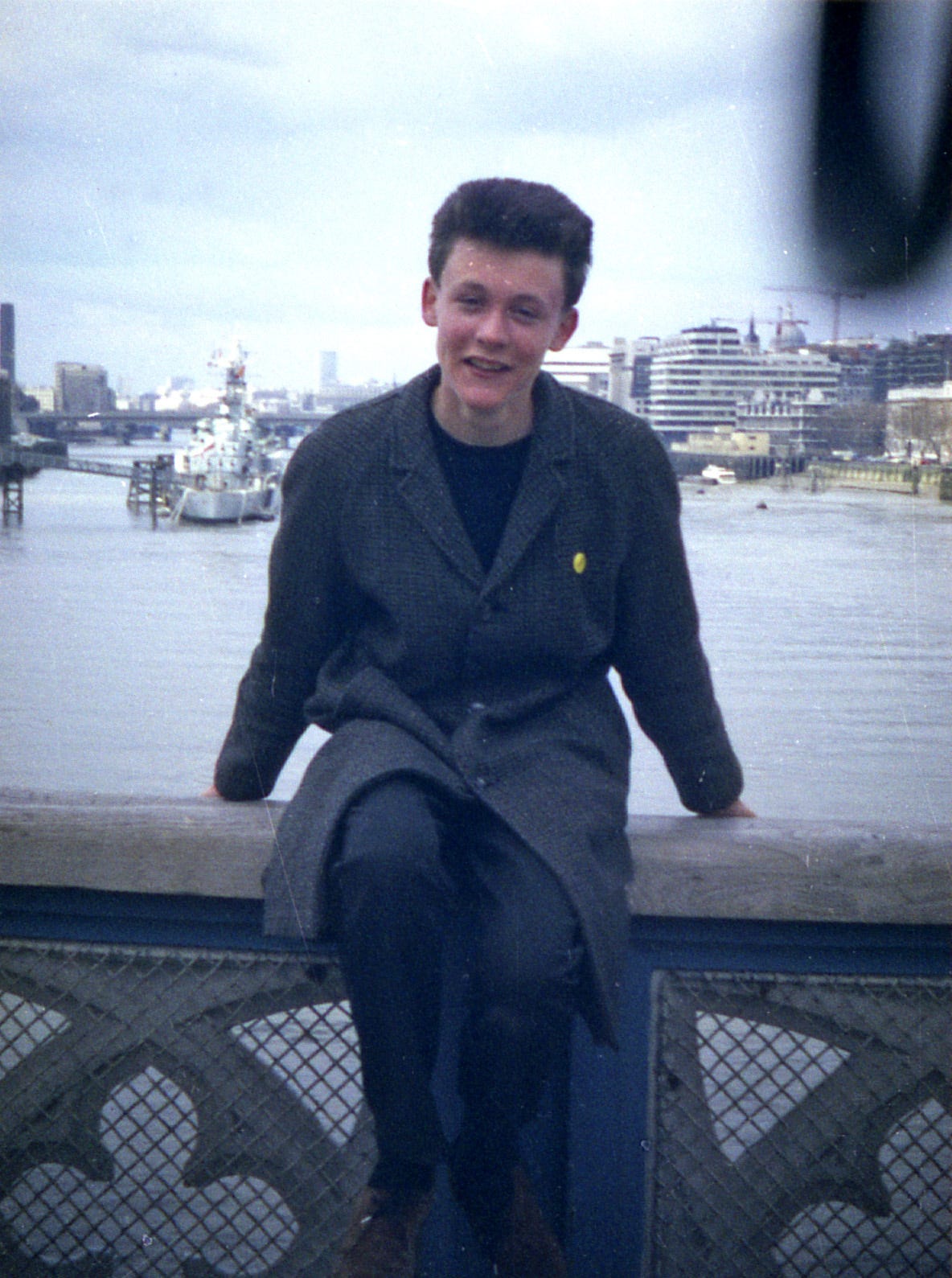
At the start of the 1980s, in sequence with the 1979 film Quadrophenia, various subcultural scenes were fracturing and cross-pollinating in terms of a fashion sense. G-Force (Nottingham) and the more famous Johnsons (London) worked the vein of rockabilly-meets-punk with a nod to the new romantic spirit of dressing up; peg trousers and sleeveless shirts as worn by The Clash as they emerged as winners from the chaotic carnage of early punk and handed over the baton to Theatre of Hate. Magazines that came into existence in 1980 to support and document these vibrant and visual scenes include The Face, i-D and Blitz, though the earlier magazine Smash Hits also had a currency of pop cultural fashion. These magazines nurtured my involvement in music and fashion at the start of the 1980s, and the clothing acquired from G-Force allowed me to feel like a participant. I saved, purchased and collected, and planned and planned – my diaries from the early 1980s include tabulated lists of saving pocket money to buy particular shirts, shoes and jackets. There are hardly any personal pictures of these times as much as we loved our clothes - we never had good cameras - but you can see one of my treasured G-Force coats and blue/black shirt (just) in a drunken picture taken at a 1984 Cult gig. The G-Force feature from i-D shows their look portrayed much better than by me, with the model sporting cool post-punk (positive punk?) mullet hairstyle.
It was a time when people 'followed' bands, going to as many gigs as possible and hitch-hiking along the motorway network. This band following culture, an equivalent to football’s ultras, is hard to pin down in terms of origins – there is a lacuna in research. It may well have pre-dated punk, but it was certainly encouraged by The Clash who combined a missionary zeal and activist look to foster the mentality of a gang that extended from the band itself to their followers. An early article in The Face has a feature by soon-to-be-musician Vaughn Toulouse sharing his diary of following The Clash on an early tour. Adam and the Ants would take on this mantle, encouraging their own ‘Ant People’ to embody a specific fanaticism.
As post-punk established itself in the second half of 1979, it was quickly defined through a discourse laid down by a select band of journalists at NME. They were interested in a discernible shift in sound and influence, ascribing and plotting numerous lines of flight that contributed to the bulk of the newspaper. A defined post-punk (post-Ants) strand emerged with bands such as Bauhaus, Killing Joke, Theatre of Hate and Southern Death Cult – this was less fashionable in terms of erudite newspaper coverage, but certainly more fashionable in terms of a sense of style. It was not yet goth in terms of that prescriptive look to come, though the term ‘Gothic’ (and bleak) was applied to (negatively) describe the grandiose gloominess of the lyrical themes and sounds of these bands, appearing in early 1981 with NME’s review of a Theatre of Hate gig and applied here and there to Bauhaus with their cultivated look.
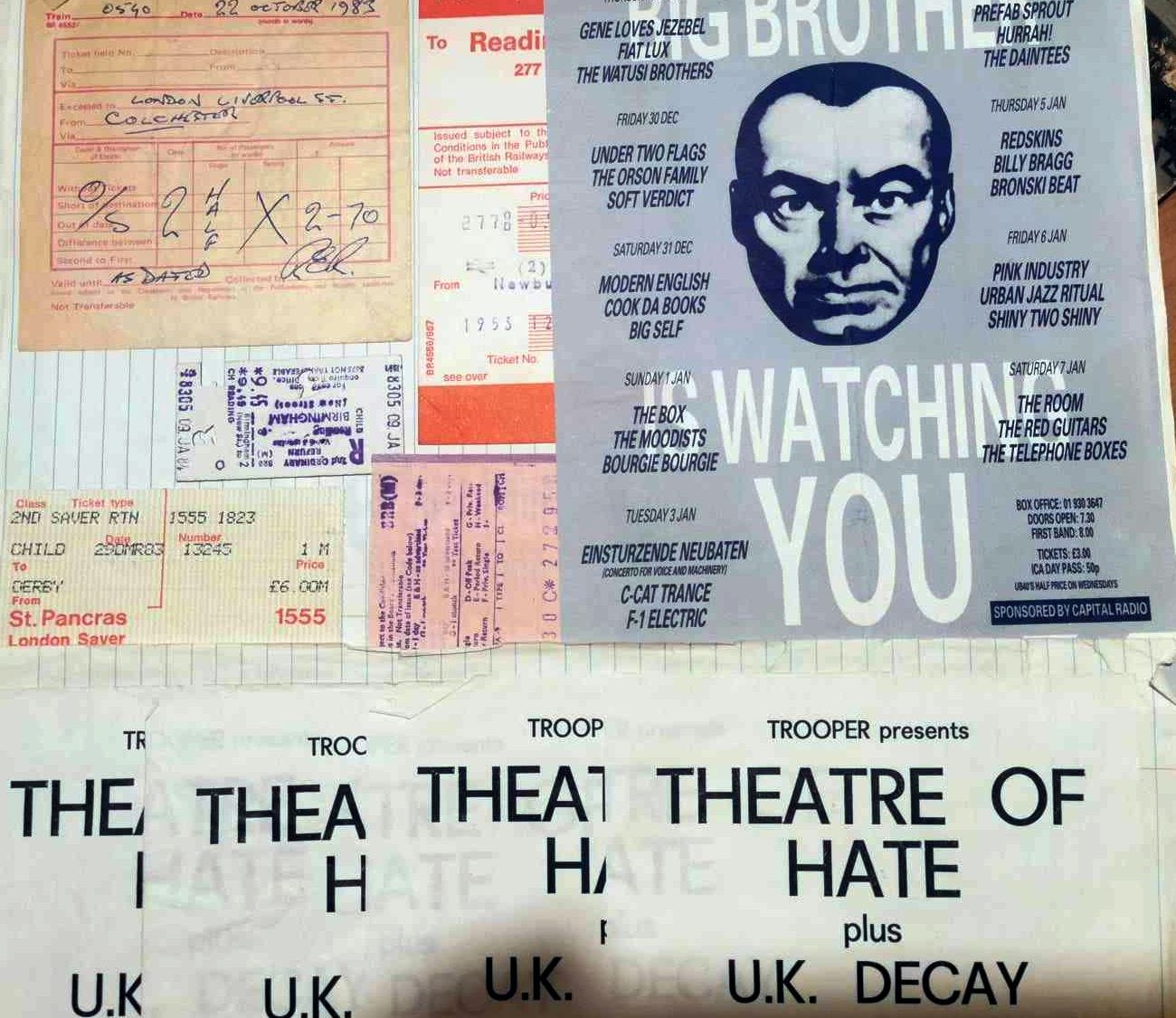
However, it was subcultural in the more traditional sense – it had the feeling of a semi-formed coherent look and set of beliefs and practices amongst the fans. Here there was an emphasis to get out on the road and see the bands with an almost ritualistic devotion. Theatre of Hate even had a song – ‘Legion’ – which seemed to address this sense of belonging. Kirk Brandon’s band in particular put in a punishing regime of endless gigging, each barely demarcated tour merging into the next one. Fans prided themselves by notching up a gig count, relaying tales of getting from one end of the country to the other by hitching through the night to fulfil dates at venues set hundreds of miles apart. There were other methods such as the risky bunking of trains or collecting and using Persil vouchers for discounted train and coach travel. By any means necessary.
The early issues of Vague fanzine set out in meticulous detail this culture of following bands, starting with Adam and the Ants for editor Tom Vague, ironically at the point when the band were about to re-gear for teenybopper success. Vague set a new trend in fanzine discourse – a diaristic approach, more like a survival log detailing the scraping together of survival techniques. Passages recalled penniless desperation to get from city to city as a tour zig-zagged across the UK in a sometimes haphazard manner. It meant bunking trains, hitch-hiking, using those Persil vouchers for cheap travel, long routes on National Express coaches. Getting on the guest list both saved money and accumulated kudos, food was scrounged here and there, finding a place to stay was paramount but never guaranteed. Alternatives like carpark stairwells, train station forecourts or waiting rooms sometimes sufficed. Gigs were often violent or fraught with potential violent outbreaks between subcultures or regional skirmishes (or a combination of both). Sleeping rough bought similar invitations to a kicking, or having your gear trashed or ripped off. Tom’s notes in Vague recorded these scrapes, it was a central part of the experience.
Gigs around this time tended to have a mixed bill of artists from different subcultural niches and nuances, all with their own fashion codes, and trouble was ever-near. Never being a natural fighter, I was always wary of trouble at gigs and tended to be able to sniff it out and withdraw from the scene, even if it meant missing a bit of the gig. Quite often an evening spent watching a band like Theatre of Hate necessitated a heightened sense of awareness akin to a Special Forces operative on a mission in enemy territory. Your eyes were fine-tuned to spotting different haircuts and markers of clothing, (particularly casuals who would be in attendance just for a scrap). and your ears attuned to sounds of raised voices, regional accents antagonistic to your own, chanting, goading, breaking glass, etc.
Stranded in the provinces (Derby), we were dependent upon the music newspapers to see tour announcements and gig advertisements. Then it was a question of fitting them in around school hours, and working out how to get there and back. Without your own transport, cheap trains (or bunking trains) was always an option, and I became relatively skilled at this. We knew stations where ticket collecting was scant so honed in on in these places when going from A-to-B, instead going from A-to-nearly-B and taking a cheap bus ride to complete the journey. We also had more devious tactics, such as regular late-night calls to Loughborough (the stop before Derby) when travelling home, nipping off the train to frantically pull tickets out of the honesty box that was positioned for travellers to deposit their tickets in when no inspector was present at the out gate during the evening hours. Back on the train we’d surreptitiously rifle through this cardboard and paper booty, selecting unstamped return tickets or travel passes that had an extended date that could be used for later journeys to or from London. There was nothing better than returning from an all-day Sunday punk gig at the Lyceum and having a first-class business ticket from St. Pancras. This came to an end for me in 1983 at Bath, when I was caught bunking the train and the British Rail police found my stash of open-ended tickets that I’d clearly not purchased (but couldn’t be proved).
And so, hitch-hiking became the sole new standard way of getting to, from and between gigs. You learnt the roads and their junctions gaining an involuted intimacy. You carried a map, and marker-penned your presence on each road sign you were stranded – often detailing the particular tour you were on, leaving messages for other fans on the road. More so, you had to have a semi-utilitarian look, to get lifts and cope with the conditions. It made sense to hide particularly outrageous hairstyles – if that was your thing - under a wool hat. A kit bag, sleeping bag and stash of signs was de rigueur. These were generally stowed behind the merchandise stall once you arrived at the gig. It was all very much a ritual or performance, a material extension of the subculture itself. The look acquired by fans of bands such as Theatre of Hate slowly evolved and merged into a practical style – utilitarian, semi-military, and always road-ready or good for dossing down in during a cold night.
The motorways of 1980 had bountiful slip roads and lay-by spaces. As stated, we lived in Derby, nearby to junction 25 of the M1, so hitch-hiking seemed a natural inclination. The proximity to this busy motorway junction with nice visible approach lines and spacious slip roads meant that we evolved to hitch, as if growing Darwinian large thumbs. The first time I hitch-hiked to London, around 1980, my friend had seen a television documentary on the charity Centrepoint which took in rough sleepers. We misunderstood its purpose and re-imagined it as a free hotel for waifs and strays drawn from the various subcultures, turning up penniless in the early evening after a day of gawping and sightseeing around the capital, taking in all the punk tourist venues.
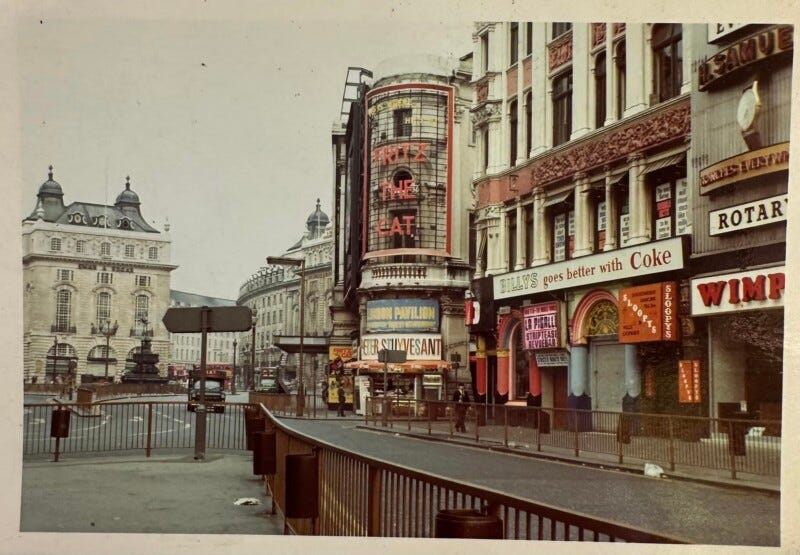
As darkness drew in we made our way to Tottenham Court Road and stood in the queue with a mob of seriously worse for wear rough sleepers. The volunteer staff were unsure what to do, suggesting we high-tail it back to St. Pancras station and get a train to Derby. But we had no money. More rough sleepers were arriving, even worse for wear, and taking their places on the metal bunk beds in the basement. Many were evidently regulars, and had claims to certain beds. It was a whole new world to me, scarily feeling like a scene from Scum. The staff kindly let us in and we claimed a top-and-bottom bunk, unrolled our sleeping bags, and slept clinging on to our holdalls. It was not a good night; there was perpetual noise, drunken singing, garbled moaning, arguments and sporadic fighting. Lots of sporadic fighting. In the morning we were given Luncheon Vouchers, which were quickly redeemed at the Wimpy Bar at Piccadilly Circus. The efforts by these volunteer staff opened my eyes, even if we had mistakenly abused their intentions.
To get out of London in a northwards direction you took a tube to Brent Cross and walked along an intricate footpath of brutalist concrete bridges and tunnels to Staples Corner, the start of the M1, or possibly the end if you came from the north. It was a complex junction designed to facilitate fast moving traffic flows spilling into (and out of) London, its domineering structure buttressed by also incorporating a major railway line. I was never sure what the 'staples' was, and lazily assumed in later years it was named after the ubiquitous office supplies store. It is in fact named after the Staples Mattress factory which was, up until 1986, sited alongside the junction. I did take a photograph of this environment in the early 1980s as I was always excited at stepping off the tube and encountering this structure, the gateway to (eventually) home and a warm bed.
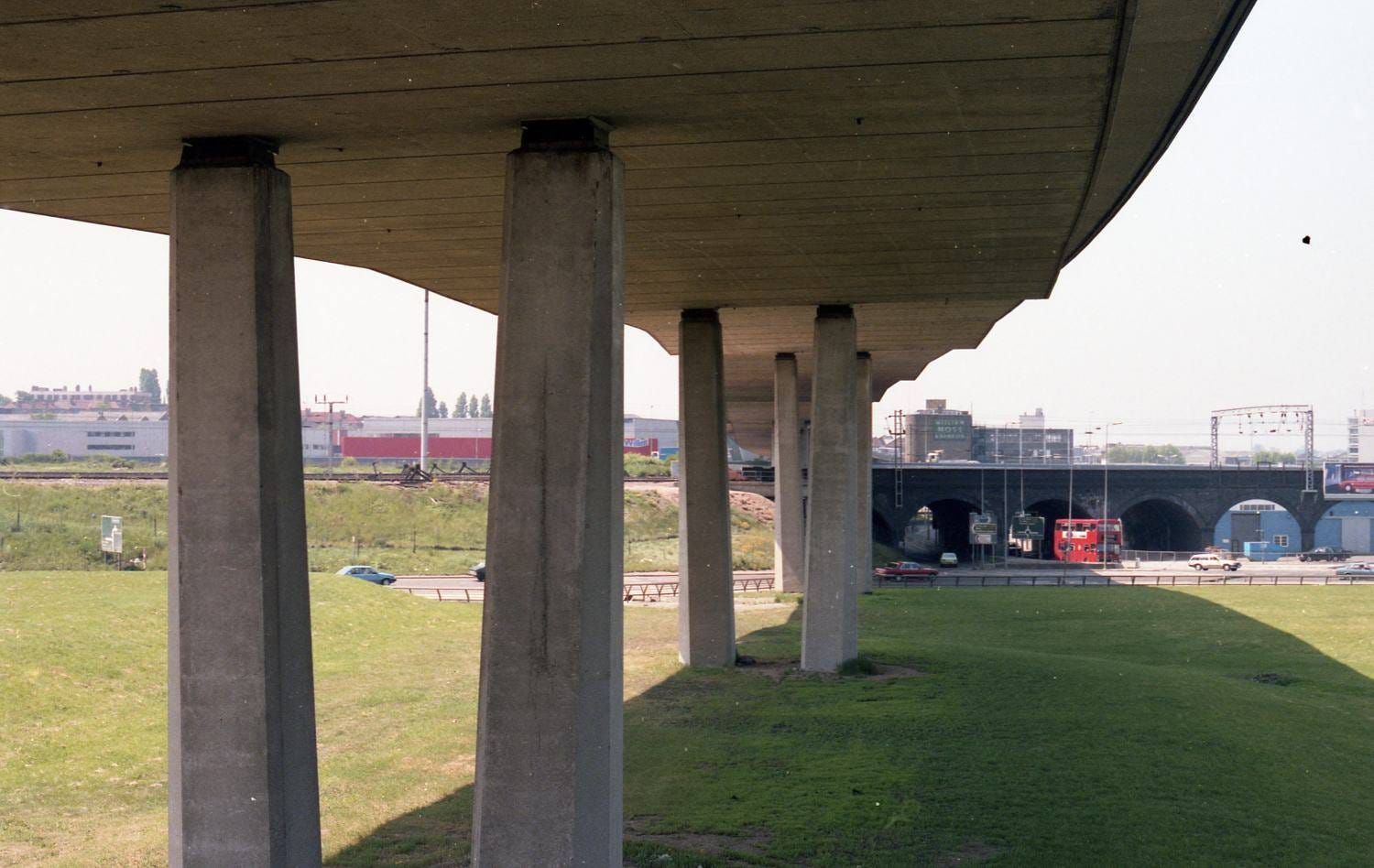
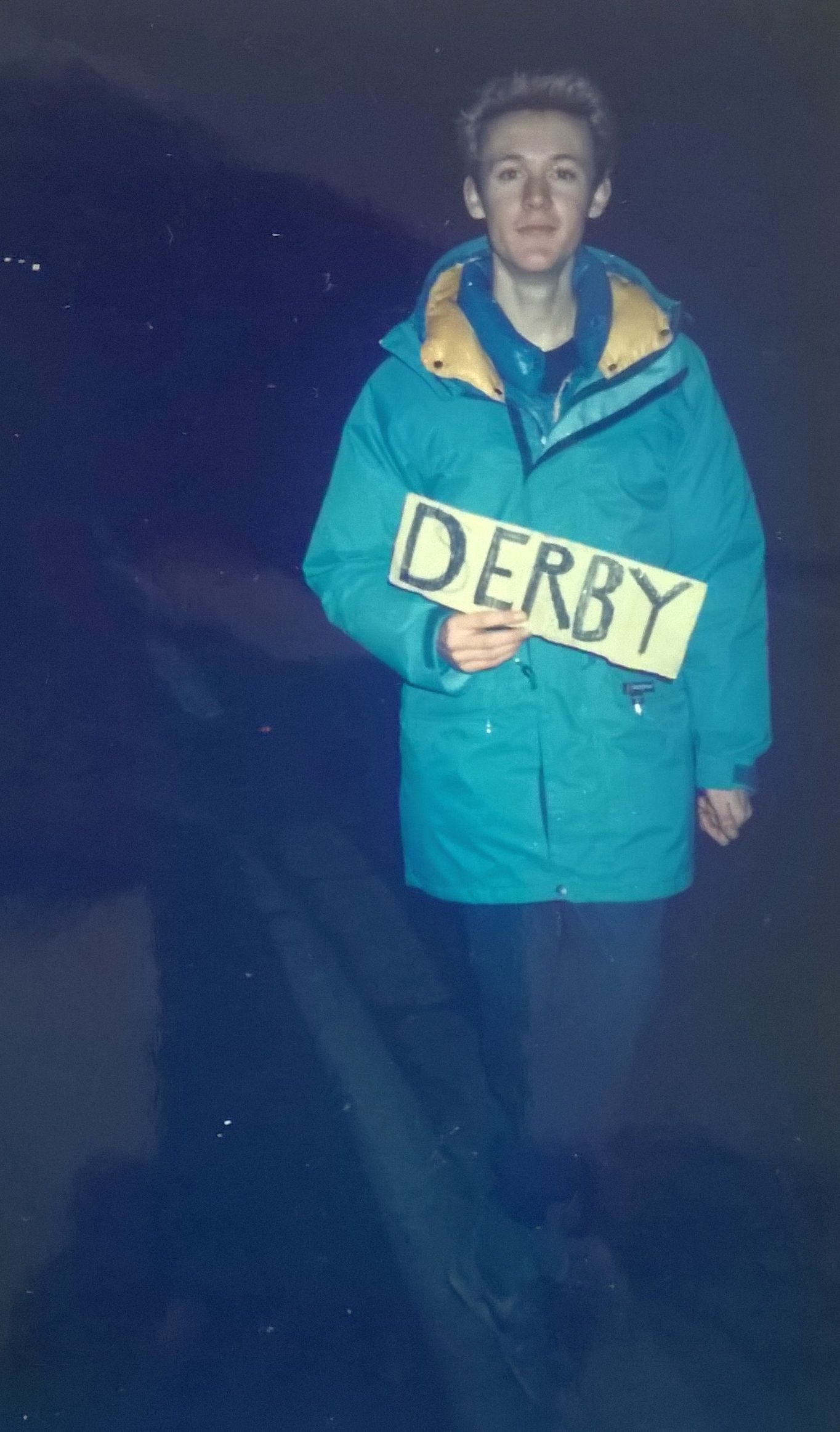
Shortly after our first foray into London we were hitch-hiking most weekends and all through the school holidays, chasing bands up and down the country. Staples Corner became a regular occurrence. There was a wide roundabout that pulled onto the start of the M1, with a vast hard shoulder that allowed the serried ranks of hopefuls an opportunity to arrange themselves. Loose rules were in place such as if a car stops you offer it to the people who were hitch-hiking before you. It was possible to politely circumvent this by creating signs to specific places – like Derby – which often resulted in a car pulling up just for you. You then had to be prepared for a rush from other hitchers who felt more entitled to the lift by virtue of being there before you. Up until the 1980s Staples Corner was defined by this line of people with signs. Sometimes you would get drunks or nutcases who would seemingly be there all day, terrifying potential drivers open to offering a lift by marauding up and down the slip road in bare feet or a bare chest, clutching a bottle of cider. The slip road was long enough for you to put some distance between yourselves and any unhinged hitchers, allowing drivers offering a potential lift a few seconds to calm down and not be in danger of having their vehicle charged at like a scene from George Romero’s Crazies. In later years the junction was craftily redesigned to facilitate better traffic flow and at the same time obliterate hitch-hiking. This seemed to be a precedent, as hitch-hiking started to be designed out of existence, like those park benches designed so they aren’t comfortable (or sometimes even possible) to sleep on.
Hitch-hiking was second nature through the 1980s. Sometimes it was sublime, getting great lifts with interesting people, sometimes it was harum-scarum, getting in to cars with psychotics and perverts. There are stories I’ve pushed to the back of my mind. When I moved to Sheffield and had stopped following bands it was the quickest way of popping to and from Derby to see friends and family. I stopped when I had children, in 1992. Through the 1990s the picture changed. We drove up and down with our two small children but saw less and less hitch-hikers. In 2001 I travelled to visit friends in the West Country, and needed to cross from North Devon into Somerset – a relatively straight route. I tried hitch-hiking for the first time in over ten years, but felt like one of the occasional deranged freaks I’d seen at Staples Corner 20 years earlier. Nothing stopped, all day. It was pleasant, on the edge of the moors near Ilfracombe, but in the end I flagged down the local bus that ran two services in the day. I genuinely felt that I’d never get the journey completed in the old-fashioned way. It was over, and perhaps had been over for a good deal longer.
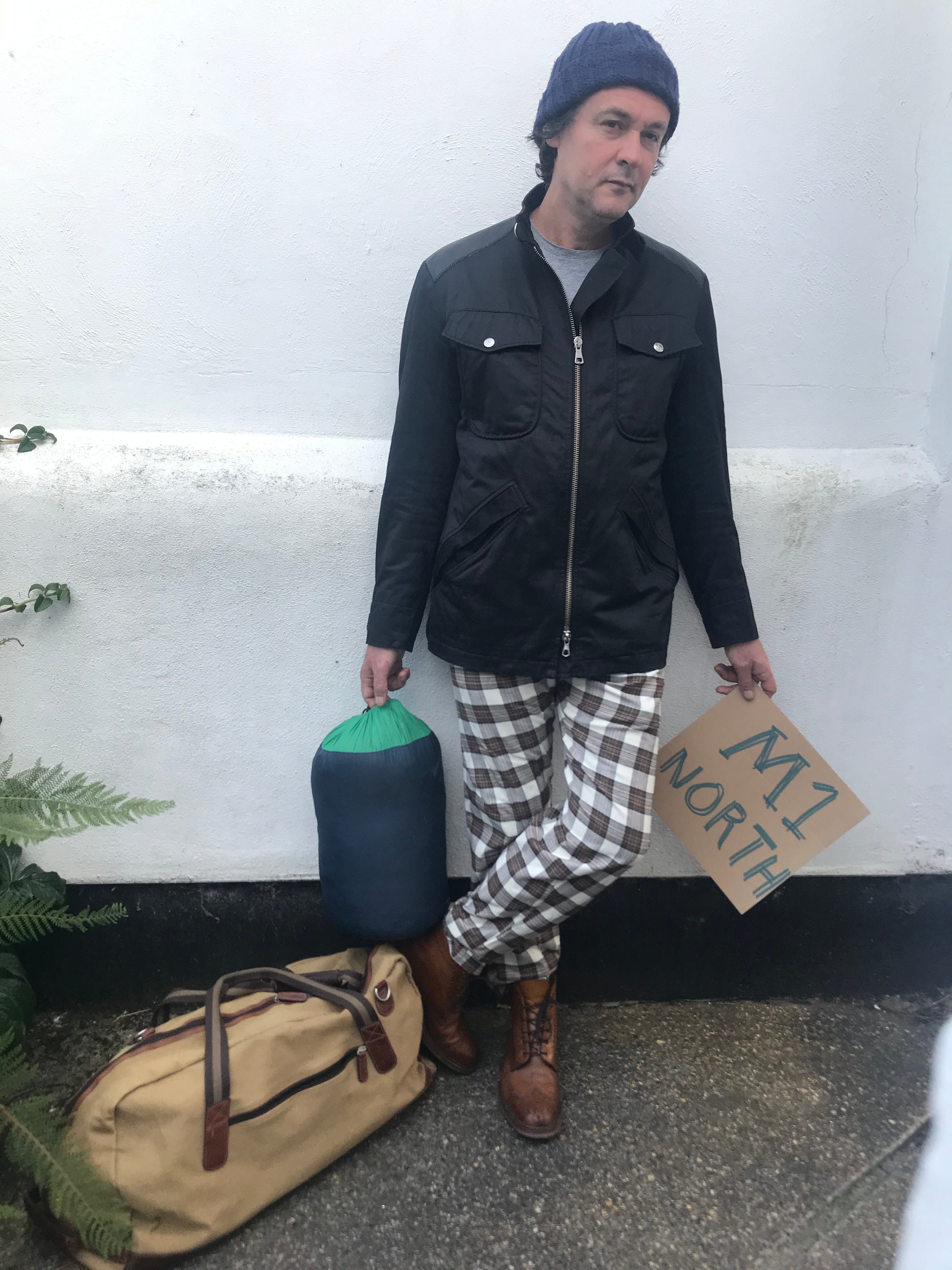
Fast-forward another 20 years to lockdown. We were stuck at home, trying to do a job (impossible), and thinking of things to amuse ourselves. We staged a series of subcultural tableaux in the space between our house and the next door. One of these was a tribute to the days of hitch-hiking, finding some clothes that might have resembled an outfit for heading out on a 20-date tour between bouts of signing on. I even found a contemporary-ish version of my G-Force jacket that opened this essay.
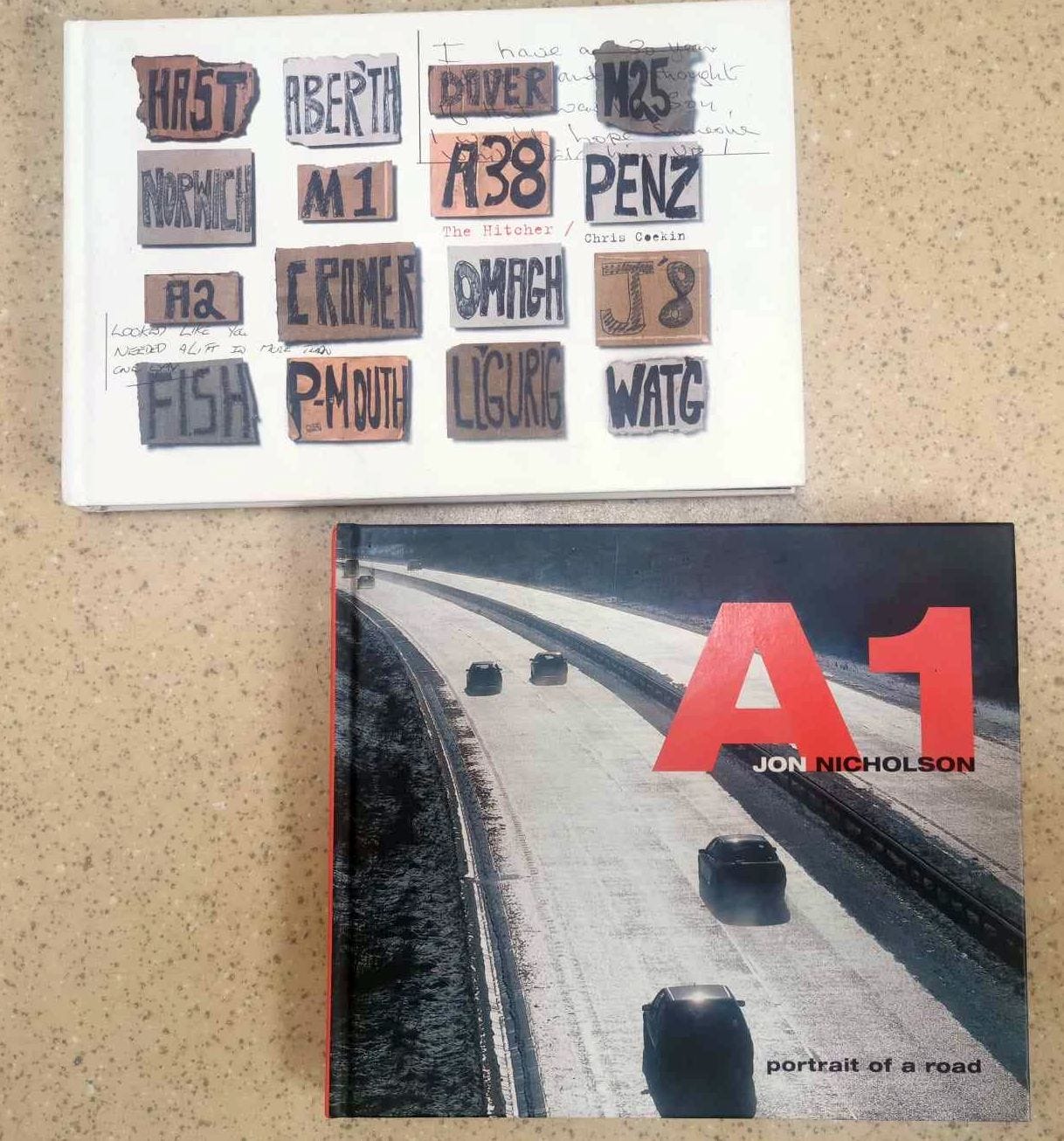
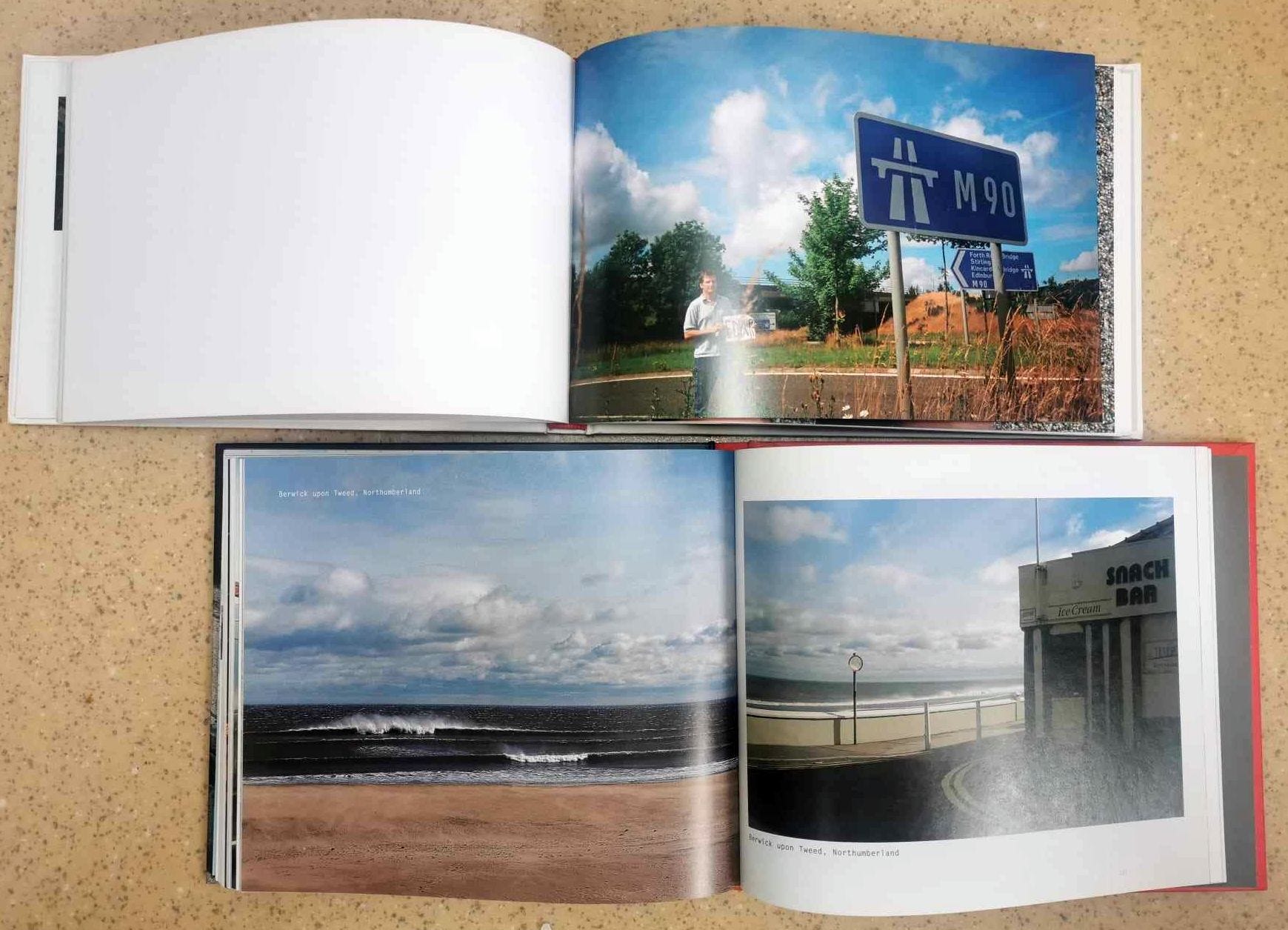
Here are two books I have collected that kind of document this intimacy I developed of the road network. Chris Coekin’s The Hitcher was published in 2007, as an artist documentary project recording his hitch-hiking. I’m sceptical, as by the 2000s hitch-hiking was pretty much extinct. Jon Nicholson’s 2000 book A1 is better – no hitching, but a blow-by-blow photo-documentary project of a love affair with a road.
Finally, the classic Vague fanzine has been collated into a new book, available from PC Press. It’s an essential piece of history, not just for the music but for a way of life (or survival) attached to the music.