
Memory Churn

1. Slippage
My engagement with social media (and the Substack platform) has never been geared towards a self-gratifying replication of memories. I understand them as personal and specific, preferring to keep them that way. Utilising memory as a theme is more about understanding it as mechanism, as a way towards underpinning subcultural formations, and also as an enquiry into how memory malfunctions (individually and collectively) and mutates into myth.
Social media is powerful, exerting a pull to draw you towards embodying its purpose. What is that purpose? Well, that is open to dispute, but I see it as fulfilling a need to be seen and praised, to turn trivia into adornment, and to turn memory into ammunition for fulfilling illusory expectations. That is a simplification, but it offers some further considerations.
My social media, albeit engaged minimally, gives me prompts about my memories. It says to me have a look at this post you shared 1/2/3/4/5/etc years ago… wouldn’t it be fun to post it again? If my argument that the majority of such posting is a grasp for self-gratification rather than conveying information about a thing or instance, then these memory prompts follow the same pattern. They tug on your memory bank for you to recall the feeling of posting at the time, rather than a simple recollection of the event/instance. Not a memory of a memory, but a memory of a feeling geared towards repeating the feeling from the there and then in the here and now. A remediation of a feeling.
Around 10 years ago I was drawn to the writing of French theorist Bernard Stiegler. I was midway through a drifting change, moving from a period of a rebirthed interest in clothes and music towards something more fine-grained, a re-immersion in theoretical writing (and thinking). Stiegler was an interesting character, having a background in activist leftism, a spell incarcerated for armed robbery, and then becoming a post-structuralist professor rubbing shoulders with Derrida etc.
His output was prolific, and oftentimes difficult and/or tedious. What piqued my interest was his sequencing of work, in that he wrote temporally overlapping series on broad themes like ‘Technics and Time’, ‘Symbolic Misery’, and ‘Disbelief and Discredit’. Each series had significant overlap within a series and across to other series, such that volume 2 of a series would start with a revisiting of volume 1 – not necessarily to recap but sometimes to rethink and reorientate. Similarly, volume 1 of a new series would draw on various points of other series, but often in obtuse or destabilising ways. It was a tremendously shaky structure.
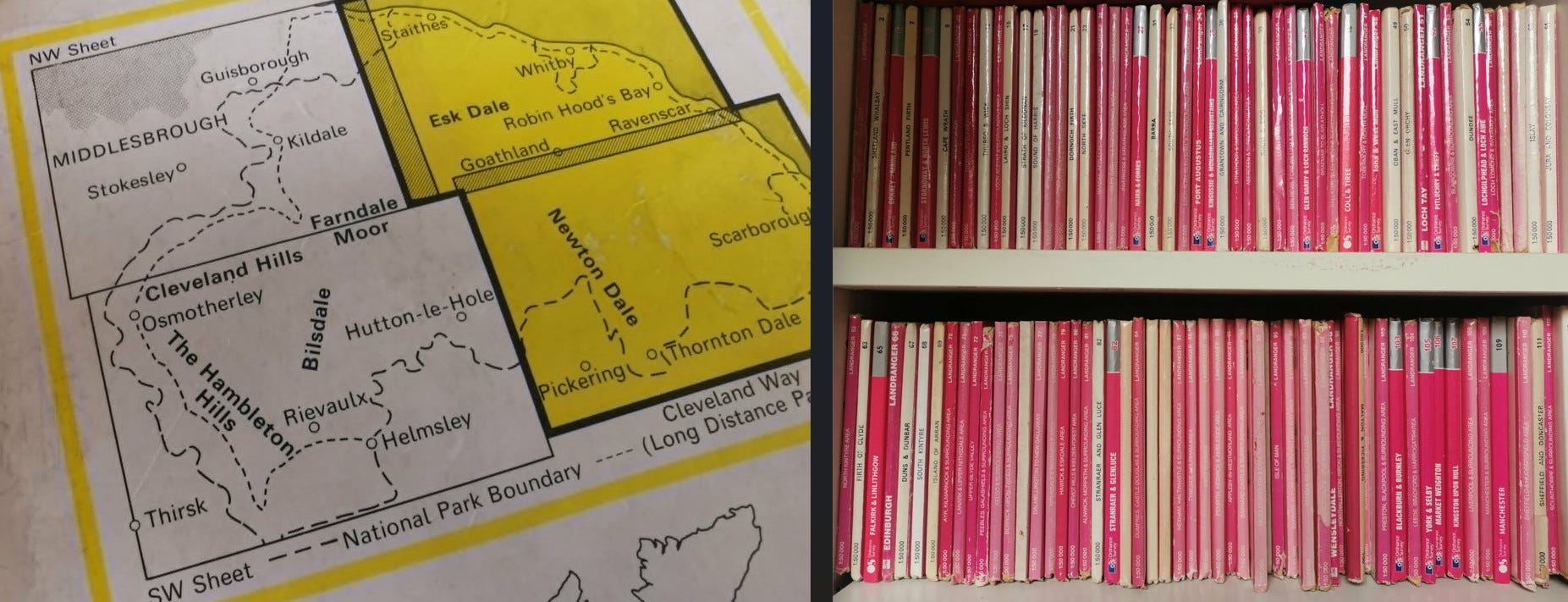
In some ways it reminded me of the Ordnance Survey maps which overlapped in their cartographic extent. This can be translated as a latitudinal overlap where adjacent maps correspond to a Stiegler series, and longitudinal overlap where adjacent maps correspond to the links between Stiegler series. My own OS maps are stored in a numbered sequence, in the way I’d store books (more on that later), with the overlap hidden. It feels like a neat sequent of coherent and homogenous information. It’s worth considering that Stiegler’s works are not necessarily comparable to maps, as each series tends to question itself and so it’s like a map evolving to include new measurables and objects, or perhaps even a totally new ontology or purpose as they go from adjacent sheet to adjacent sheet.
Anyway, Stiegler’s theories on mnemotechnics come to mind here, as he writes on how computers and networks become and replace (and eventually reprogramme) the functionality of memory. It is the ‘pharmakon’ theory of how something can be both good and bad for us at the same time. “Do not like or share this” was the headline of an article about him shortly after his death. Stiegler took his own life in 2020, a period when a few thinkers I liked (or used to like before I drifted again away from thinking and towards something else) expired – people like Bruno Latour for example.
2. Sloppage
Here’s the memory Facebook prompted me with last week: photographs of a trip to Great Yarmouth in 2018 for a bank holiday excursion. I would have just moved into the Eastern Counties, finishing my PhD (corrections completed spring 2018) and thinking what to do next. I had buoyant hopes of a career in academia but little did I know that 12 months later, after endless job applications for early career research posts and a post-doc funding proposal that trundled on for 12 months and then came to an undignified halt, I’d be back doing low-level shit-work in Cambridge libraries.
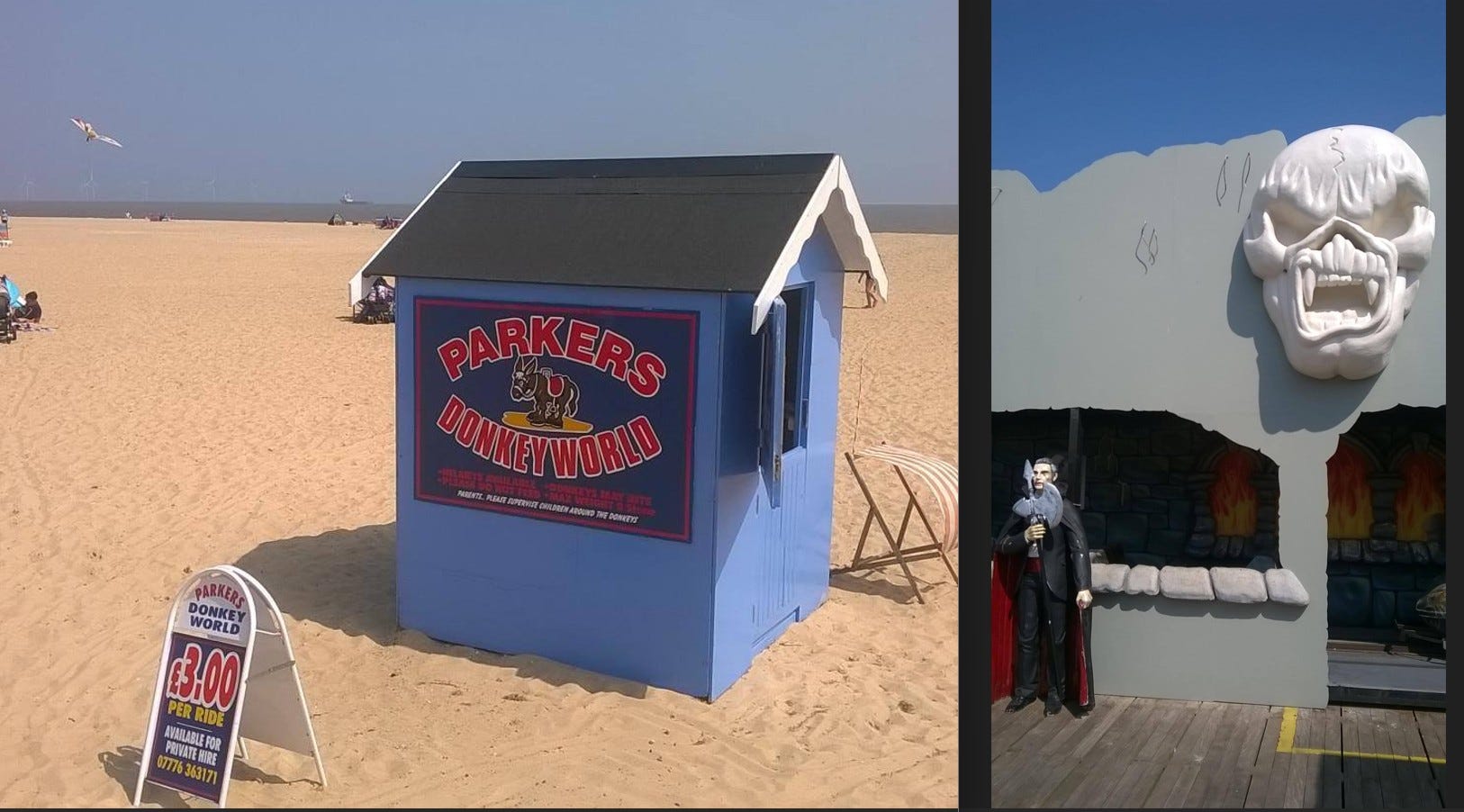
In May 2018 the sun was shining and I got the train from Cambridge to Norwich and then changed for the Great Yarmouth Wherry Line. I know Great Yarmouth has a bad reputation, and at times you can’t help think it deserves it and more recently revels in it (with the rise of Rupert Lowe and his abhorrent Restore party). However, my spiritual guide here was WG Sebald, whose work on memory and the Eastern Counties I have flagged in previous essays (‘Nullscapes’ and so on). Sebald had tangentially touched my PhD so I was feeling smug with intellectual bravado as I followed his arrival into the resort.
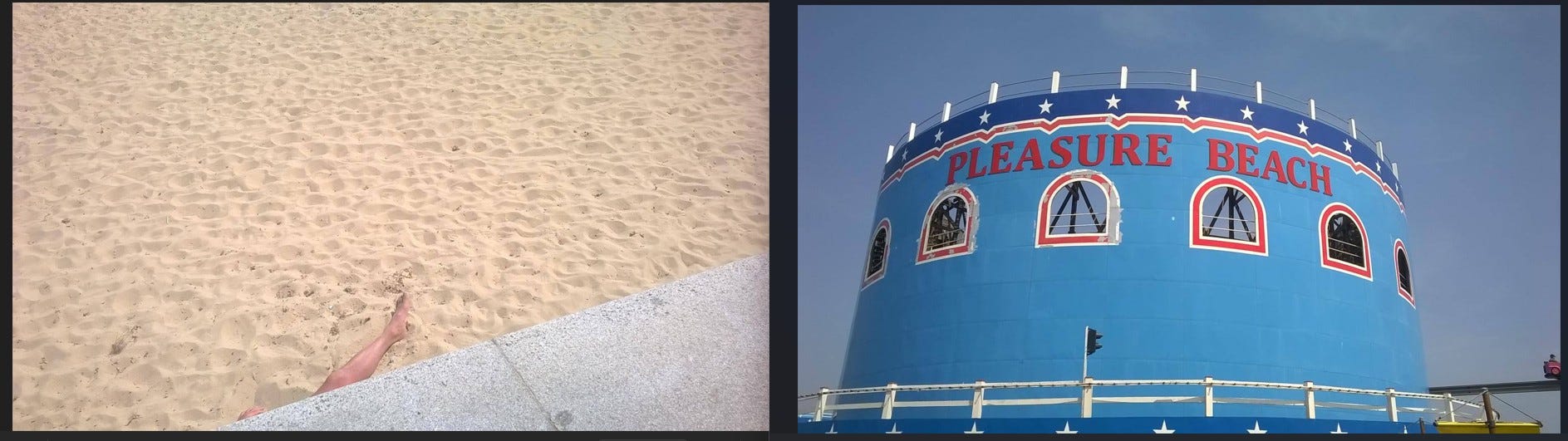
I got off the train, walked to the seafront, and admired the extent of sandy beach. Standing on the same spot for a while, I realised there was a leg just at the lower limit of my sightline, and so this formed the first photograph, trying to capture that ‘Oh, there’s a leg’ feeling. The Ghost Train at the end of the pier was (I presume) undergoing a change, and so was primed in white like a Martin Margiela retail outpost or exhibition. It felt like a merging of past interests – clothes and fairgrounds.
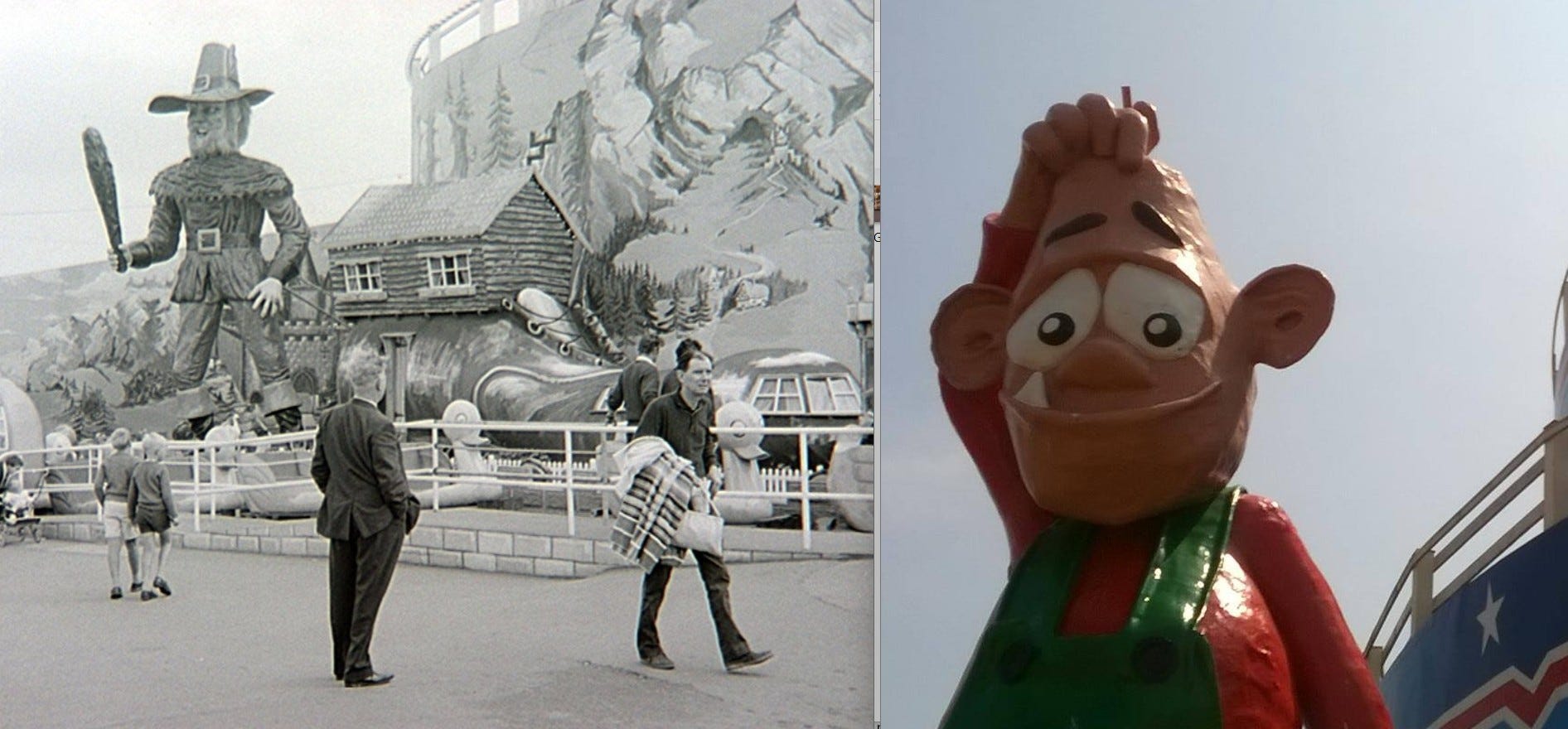
I’d been to Great Yarmouth before as a child and recall being terrified by the plastic giant in the Pleasure Beach. He had a mechanical cudgel that beat up and down monotonously. Apparently, I couldn’t sleep all week. Facing my fears I sought out the giant, only to discover he (it) had been made a little more child-friendly by adopting a cartoonish character.
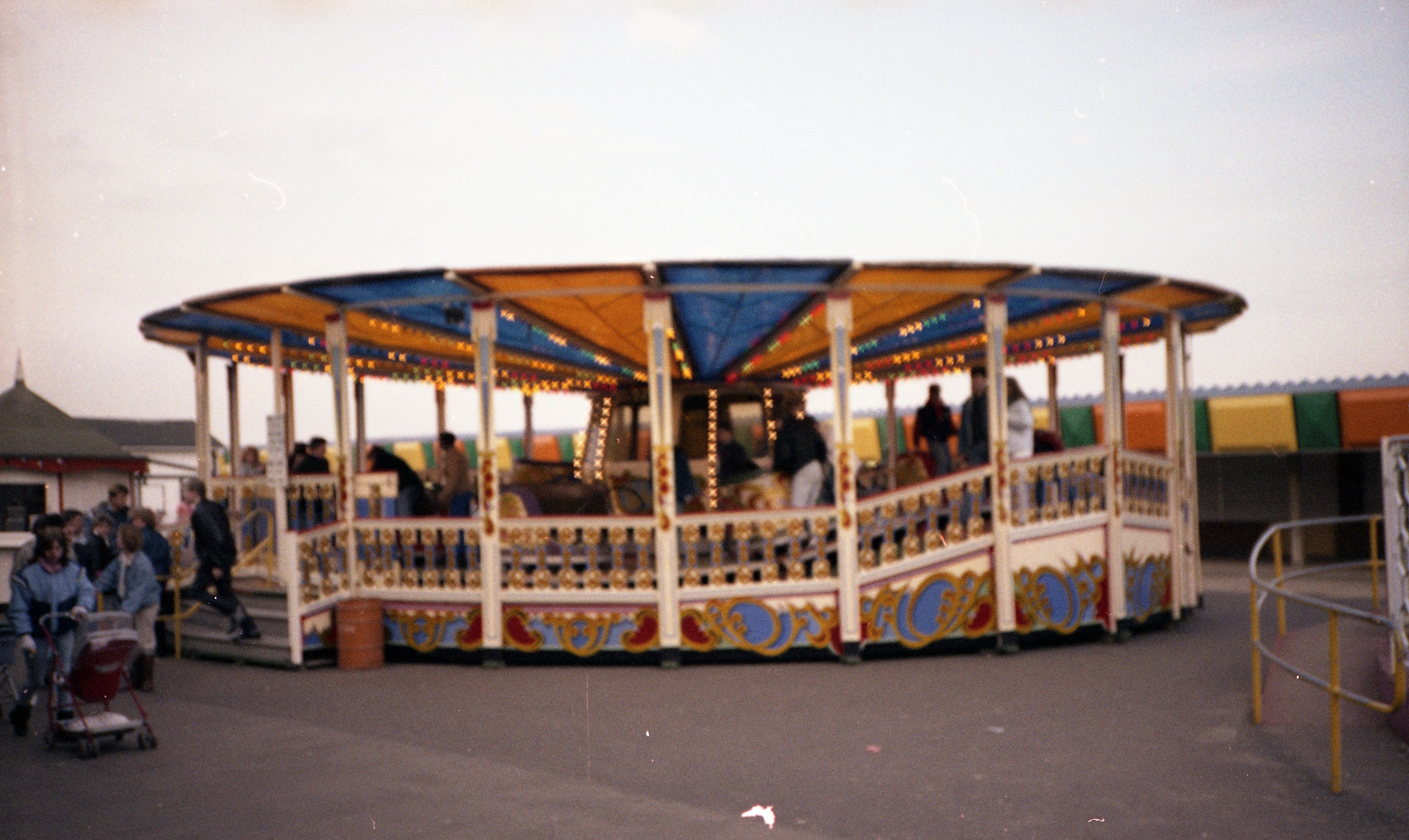
Going further back again, I had a flying visit in the 1980s on a fairground photographing trip (annoyingly my camera jammed the film resulting in a single image with a glowing double exposure blur). More strangely, I had a visit there in summer 2014 just before starting my PhD as I agreed to share a ‘coach holiday’ with my elderly parents – we were based at a conference centre in Bungay and did 4 days of frantic coachtripping (it was an experience, the type of thing that might make a good memory-based Substack post if that was my thing).
3. Stoppage
Like a mediatic revenant my record player returned last month after spending around a decade and a half with my younger daughter. Various circumstances contrived for the turntable (and amp) to leave my vicinity and find a new home with my daughter and her then partner. More circumstances have meant that it is now no longer required and has made its way north to my new home.
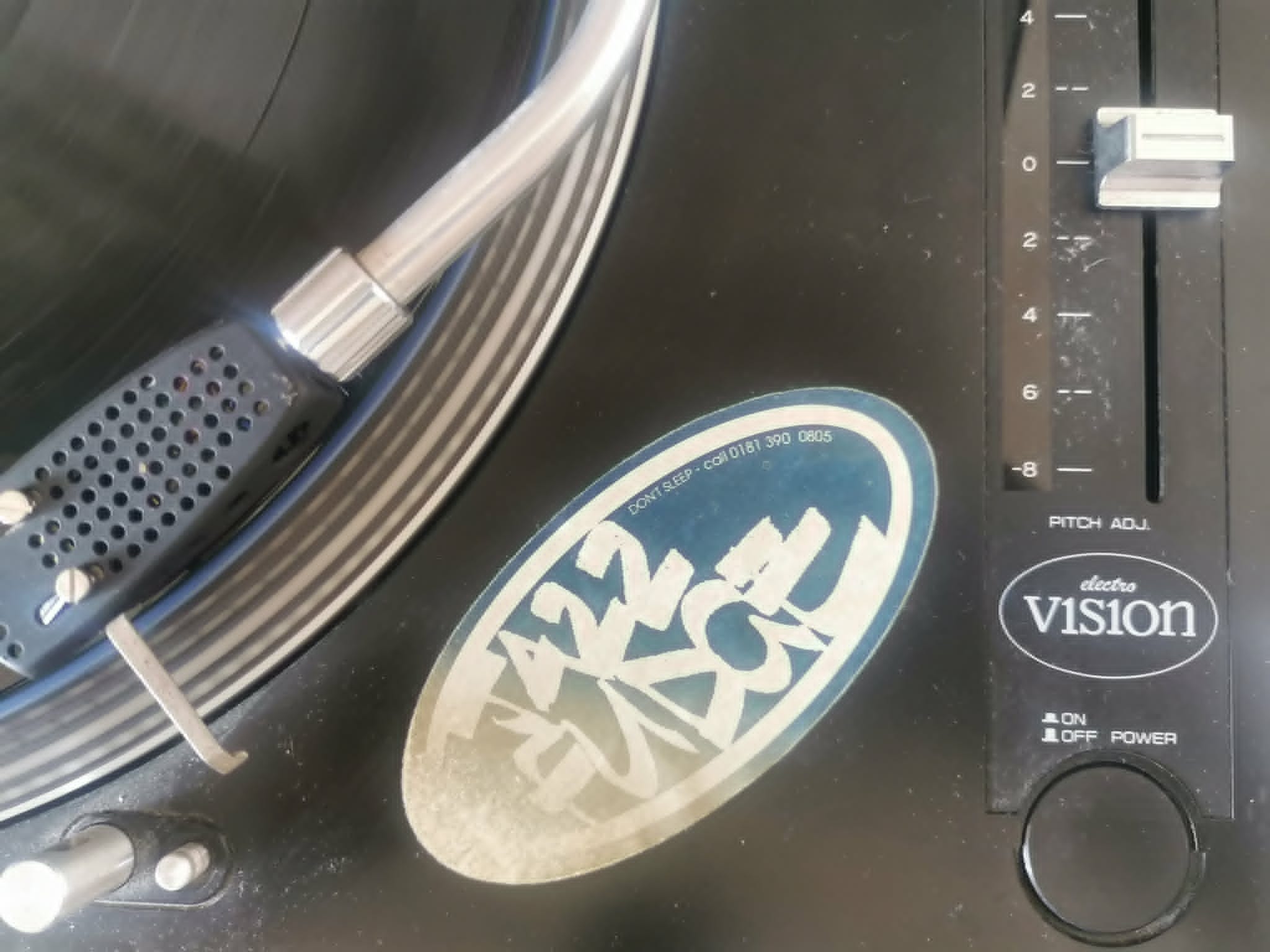
This is a good thing. I’ve had a stand-in record player for the last 15 years which is frankly a pile of crap, little more than a toy. It’s meant that my record collection has sat unutilised during the past decade and a half. This has also meant my period of no longer having an interest in new music has crept onwards over two decades.
The returning record player isn’t a great one, but it is much better than the outgoing one. The deck was actually part of a mismatched pair of pitch-adjustable belt-driven turntables twinned with a cheapo crossfader, the whole kit assembled around 1996. I was having another life change, this time partly imposed by a serious climbing accident when I bust up my leg and foot. My regime of the 1990s had been around combinations of keeping fit, rock climbing, skateboarding, touring-cycling and long-distance running. All of these were now forcefully curtailed.
In place I did a number of things. I was already going through a phase of writing and self-publishing (which will be the subject of a later post) and I had the idea to start a new publication that discussed and dissected music and other art forms. This meant I re-engaged with music after a hiatus of around a decade. I spoke about this blank period, and how such blank periods sit like a blind spot in your memory, in an earlier post on ‘rediscovering’ Einstürzende Neubauten.
Re-engaging with, and writing about, music meant that I suddenly fancied myself as a DJ and so started doing a couple of stints at a pirate radio station and also having a few ‘spots’ at pub and club nights. It didn’t amount to much as I tended to play awkward music, and I was terribly incompetent at mixing and so on.
One of the decks was scrapped, the crossfader went on eBay, and the better deck and amp went to my daughter. Now returning in 2026, it reveals tactile signs of my ambitions in 1996. A Jazz Fudge sticker from when I was pushing for freebies to review. The substantial wear on the sticker is because it is positioned where I rest my hand to manipulate the stylus and catch a beat (in theory). The side of my hand shuffles, and the general heat and nervy atmosphere of ‘playing live’ produces perspiration which slowly defaces the sticker.
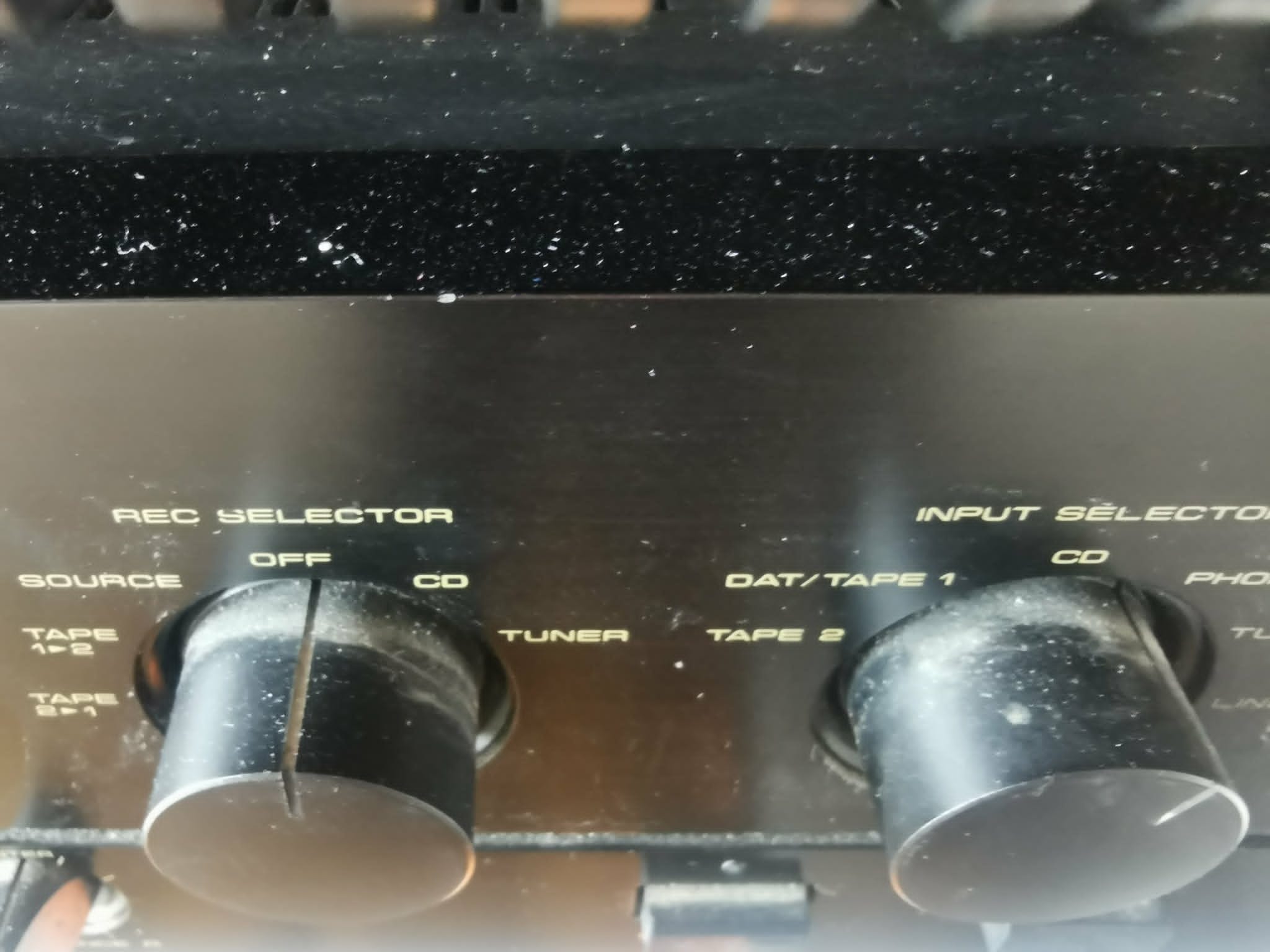
The amplifier is thick with dust and paint splatter from when the upstairs room at my old house was redecorated. The DJ set up – on a cheap pasting table – was sheeted over but somehow paint got in. It always does.
My vinyl has always been neatly stored, even though it has spent 15 years unused. It has been slimmed down as various sprees of music engagement have been funded by selling material from earlier sprees. On reflection, I wish I’d not done this. I’ve half a mind to draw up some kind of genre-structured flow chart that maps when I had periods of buying records, when I had periods of inactivity, and when I re-engaged purchasing and whether I used previous tranches to fund new tranches. If I was someone like Mark Leckey or Jeremy Deller I could probably turn that into an art exhibit. Other than that it would serve little purpose, but I have a habit of doing such things.
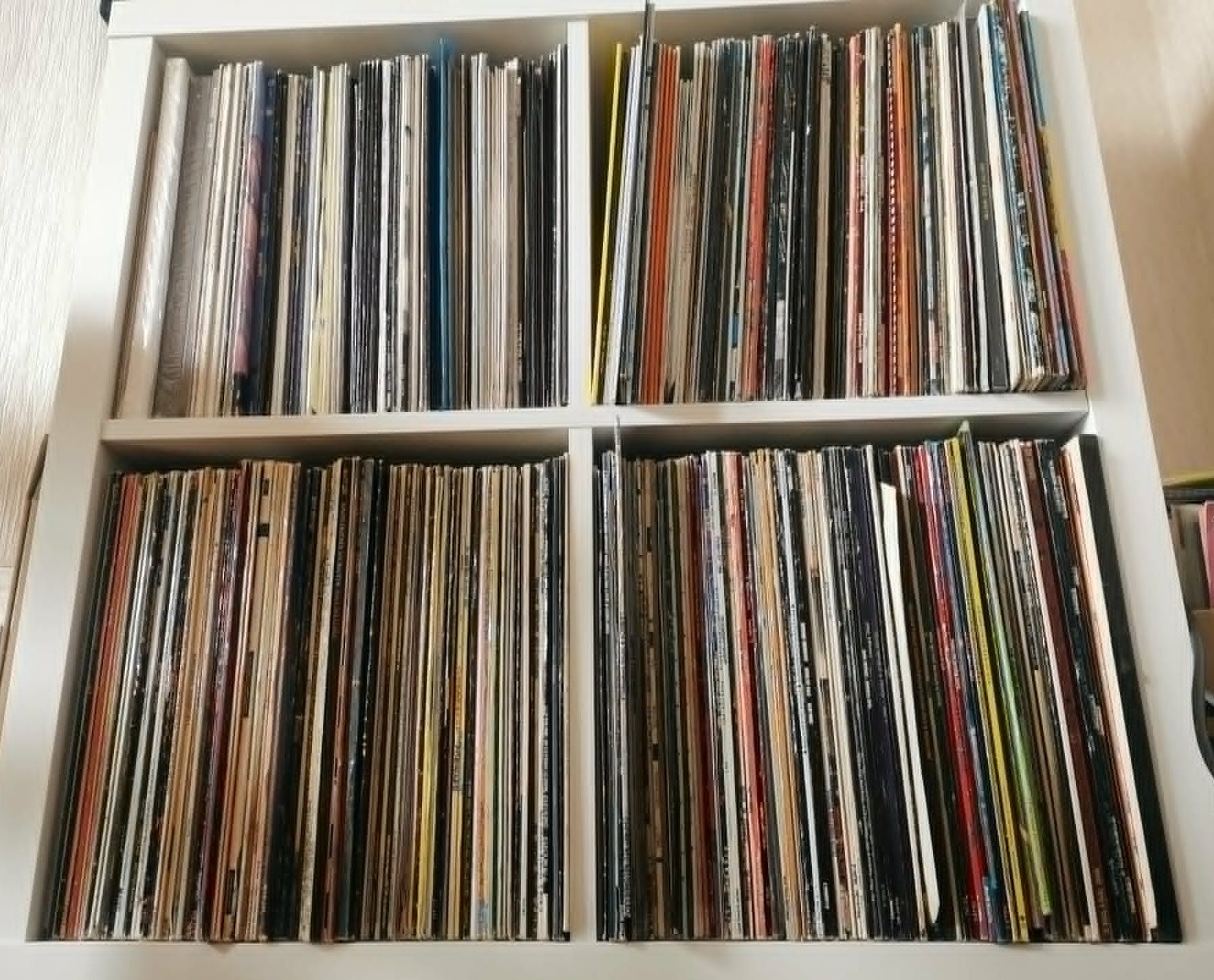
When we moved last year we bought an IKEA storage piece for the unused record collection. Previously records had been in plastic crates which one by one got cracked, and then during my time in Cambridgeshire they were relegated to a cupboard with sliding doors that frequently jammed – discouraging any potential revisiting of vinyl on a bored whim. The 4x4 grid unit works in that the top two rows have post 1996 purchases, and the bottom two rows have my remaining 1980s records.
Whereas the 1980s records I arranged alphabetical by author, the later records are filed by micro-genre and label. This was how vinyl worked in the post-rave era. Once the old deck and amp was returned I grabbed something off the top (late 1990s) shelf to test the sound. This was the double 12” LP Carrera by Sluts’n’Strings & 909, on Cheap Records. Released in 1997, it gave me a memory rush on various levels – the plain gold sleeve, the inner label with hip cartoon character, and the tracks themselves which (in my review) seemed to explore a lost era of 1980s punk-funk by the likes of 400 Blows.
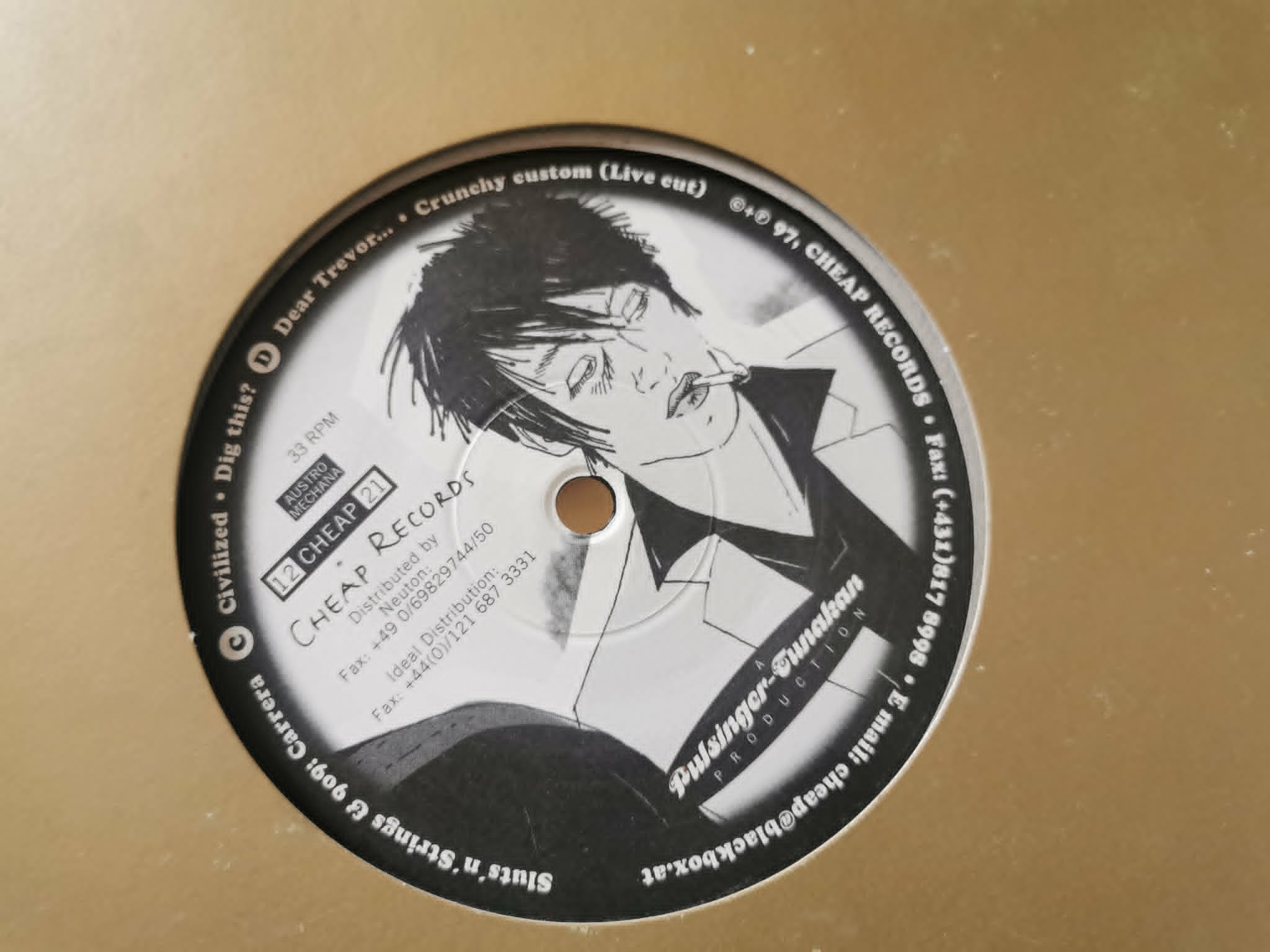
It struck me… the record is nearly 30 years old. Because this music buying in the late 1990s supplanted by early 1980s music buying, it still feels ‘modern’. But the time lapses between the two periods of music buying and the present are tripled from 10 to 30 years. The tracks still sounded (more or less) good. Somewhere in my zine of the time (which I will dig out for another post) there is a review of it. I got my materials from Jill Mingo of Mingo PR in Glasgow – an incredible force of life and entertainment. From around 1996 to maybe 2005 I was engrossed in this world of begging, getting, reviewing and publishing – in my own zine, in Magic Feet, in Datacide. I then I stopped.
One final observation. There are small spittle marks on all of my vinyl from this era, a Derridean trace of my leaning over the set-up, listening through one half of the headphone to the vinyl to be cued up while my unhindered ear listens to the track currently being played. I’m trying to beat match, but – through lacking confidence to make a simple aural judgement - this becomes a bodily process as I mouth a “ch-ch-ch” of the bpm and unbeknownst at the time small flecks of spittle fly out and settle on the platter.
4. (This is) Memorial Device
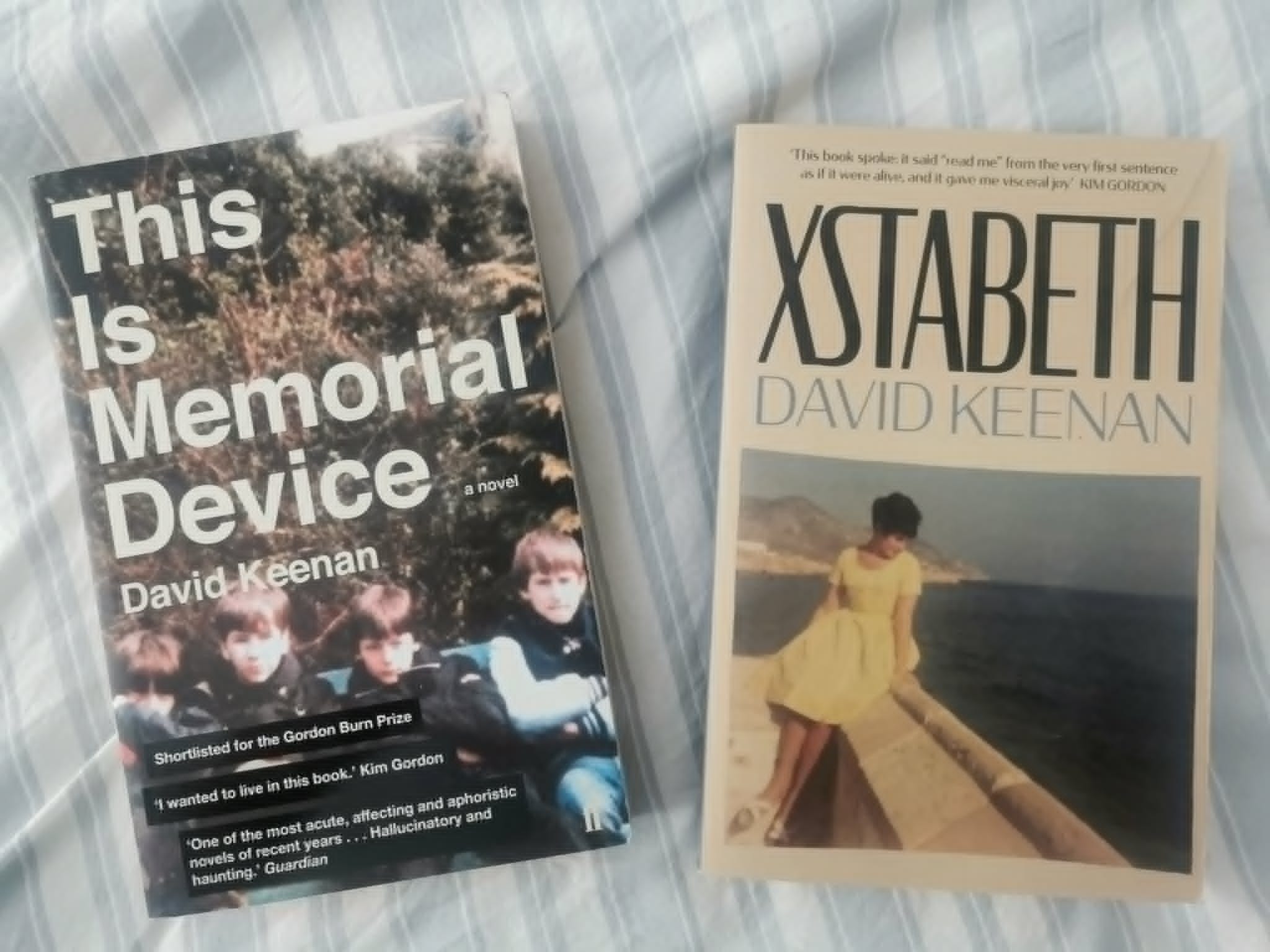
This post is not meant to be about memories, more so how objects come back into view and create memorial avenues, diversions and bifurcations. Changes in life, forced or otherwise, considerations of different futures developed by different changes or even absences of changes. Here are two of my favourite books in this regard by David Keenan, whose work is very much an inspiration to my methods of enquiry – to think about irregular flows of memory time, backwards and forwards, rechannelling and rerouting as they encounter prompts and barriers.
Wonderful stuff Ian - loved this piece