
Nullscapes
Part 2 - Boundaries

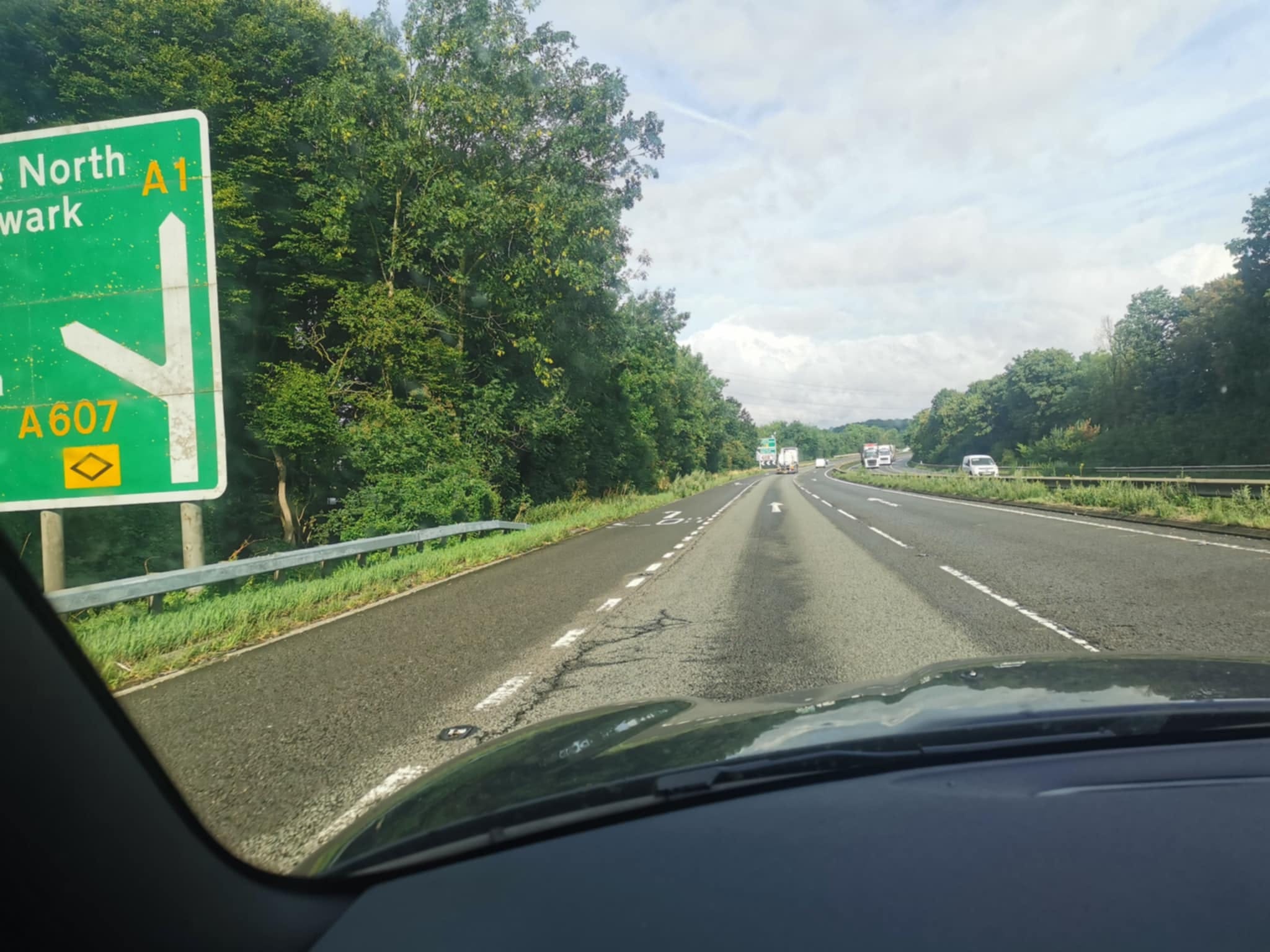
I’ve drifted away from documenting my time in the Eastern Counties, as the end of this period in my life now descends upon me with speed and intensity. My free time for writing etc was hijacked with the stress of moving – selling a house, buying a house, arranging the move itself – until I’m in the car on the actual road that has formed the fulcrum between different phases and landscapes. I only thought to grab a photograph as we passed the last boundary point to the east proper – the turn off for Newark (so bad they named it once).
Nullscapes are by definition…. null, and so finding a thread of interest to hold over a string of posts is testing; it is always tempting to prevaricate with other bits of writing (festival reports, obituaries, funfairs). I left this subject a couple of months looking at vanishing points on flat landscape roads of Lincolnshire, diverting slightly to the canon of American photography. But now we are back, starting with a road that potentially offers many insights, but seems to struggle to gain a literary or artistic foothold: the A1 or Great North Road.
The Eastern Counties are roughly delineated from the rump of the UK by the original A1 road, though this road itself has a history that sees it almost merge into the esoteric character of the region it sets out to demarcate. The road initially formed one of the spines of the country, running out of North London through Hertfordshire, Cambridgeshire and then skirting the Nottinghamshire and Lincolnshire border before heading up to the North proper. There’s a lot of road, all the way to Scotland, and so a lot of mythology around things like Black Bess and tales of the old coaching road which the route approximately follows.
In his 2009 book On Roads, Joe Moran notes (but is unable to explain why) how the A1, and other motorways in general, signpost a generic north, south and west but never an east. With the opening of the M1 through the 1960s the A1 became semi-discarded in its lower regions, and subsequently a string of small businesses, rest stops, guest houses converted from old coaching inns and food outlets quickly withered and went into decline. These no longer functioning buildings and services marked out much of the road as it bordered the Eastern Counties, such that the road itself feels slightly alien and forsaken. The southernmost stretch of the A1 remains busy and has an appearance of functionality, serving the commuter zones of St Neots and Hitchin where relatively easy journeys to London can be undertaken on a daily grind.
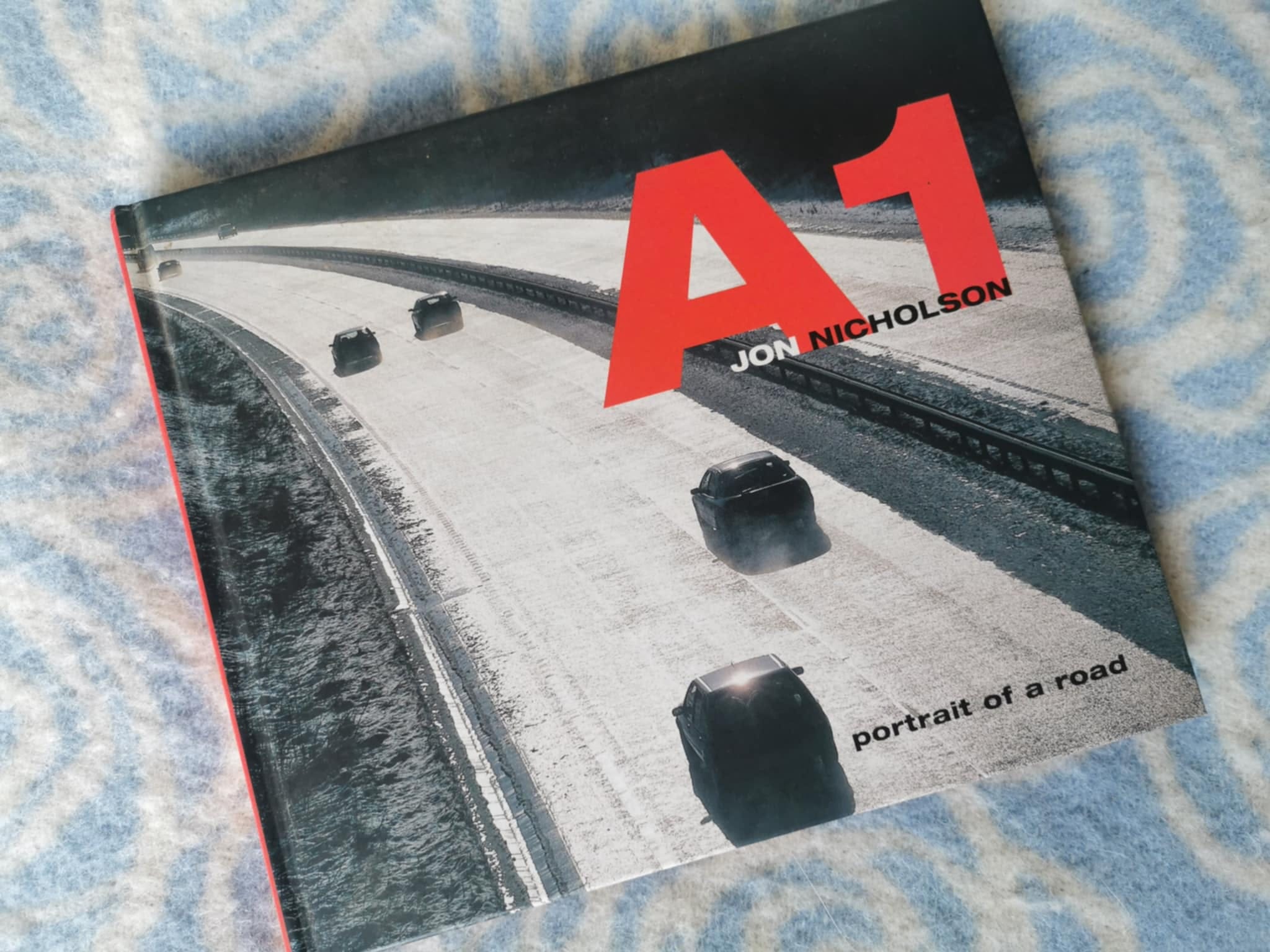
Jon Nicholson produced a photo-book in 2000 intending to document the road from the vantage point of a driver. It is not a sight-seeing road and is generally engaged as either a quick commute or as a long haul. Nicholson tried to capture something in between, this idea of pausing to record the overlooked (in the vein of writer-geographers like Georges Perec).
For those interested in the lower section of the road that bounds the neglected Eastern Counties there is little to cherish. Nicholson prioritises the mundane as a project brief, but then fails to engage the more mundane sections of the road itself on a granular level. Maybe that’s harsh, and I have a particular bias here. There is an awful lot of mundanity and dereliction to go at along the road as a whole. However, for example, the first 50 pages (of a total 160) are taken up with the road nominally starting at St Pauls Cathedral and winding along Hollway Road and Archway Road before breaching the boundary of London at the intersection with the M25 orbital and South Mimms Services. It’s not really the A1 though.
The lower sections of the A1 that guard the rump of the UK from its backward-leaning eastern parts are brushed over, except for welcome features on Kate’s Cabin (KC’s Diner) at the Peterborough junction and a few lingering snaps from Alconbury truck stop. There are also three mundane on-the-road views as the A1 works its way through the flat landscapes of Lincolnshire.
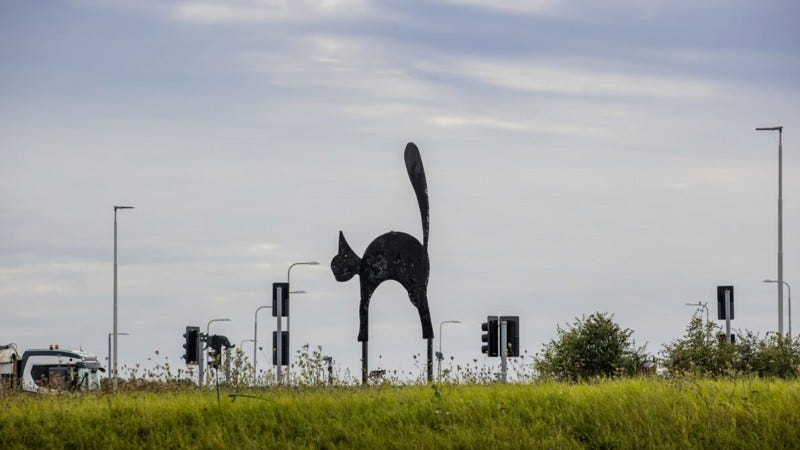
We don’t get anything on the famous Black Cat roundabout in Bedfordshire with its sinister feline silhouette that can invoke shock when encountered in the sudden glare of headlights during a night drive. The roundabout forms a junction between the A1 and the busy cross country A428 between Cambridge and the South Midlands and has been subject to regular traffic delays and so immortalised in traffic bulletins. There are plans to revive a train line along this route that links the dreaming spires of the University towns Oxford and Cambridge.
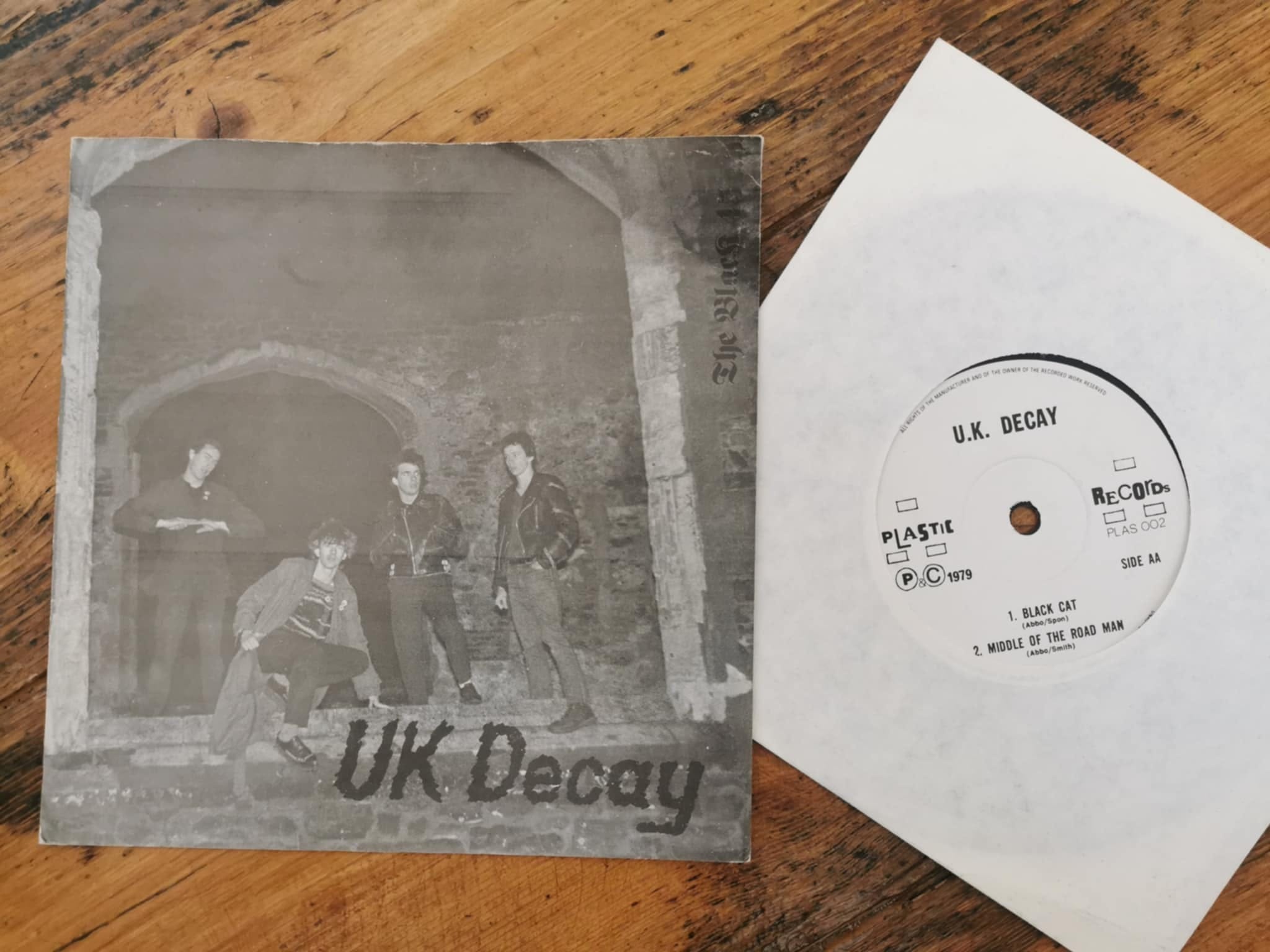
My last encounter with the roundabout (currently under huge roadworks and the cat temporarily absent) was on the way to the Forever Now festival which opened with local band UK Decay who had a goth-punk classic in 1979 about Edgar Allan Poe’s Black Cat – so a suitably gothic goodbye. Poe and goth legends aside, the roundabout is apparently named after a garage, which became a disco, and then a hotel. Various cats have been mounted on the roundabout since 2004 (which might explain Nicholson’s omission as he published his book prior to the placement of the sinister cats).
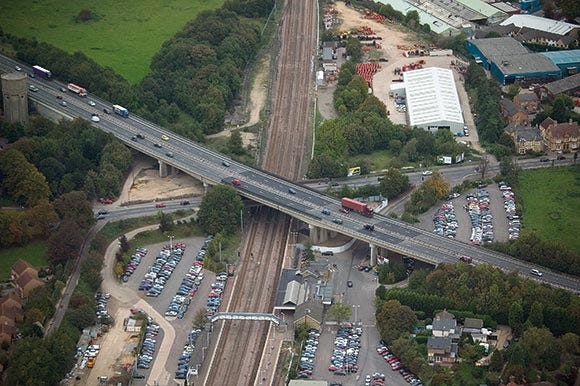
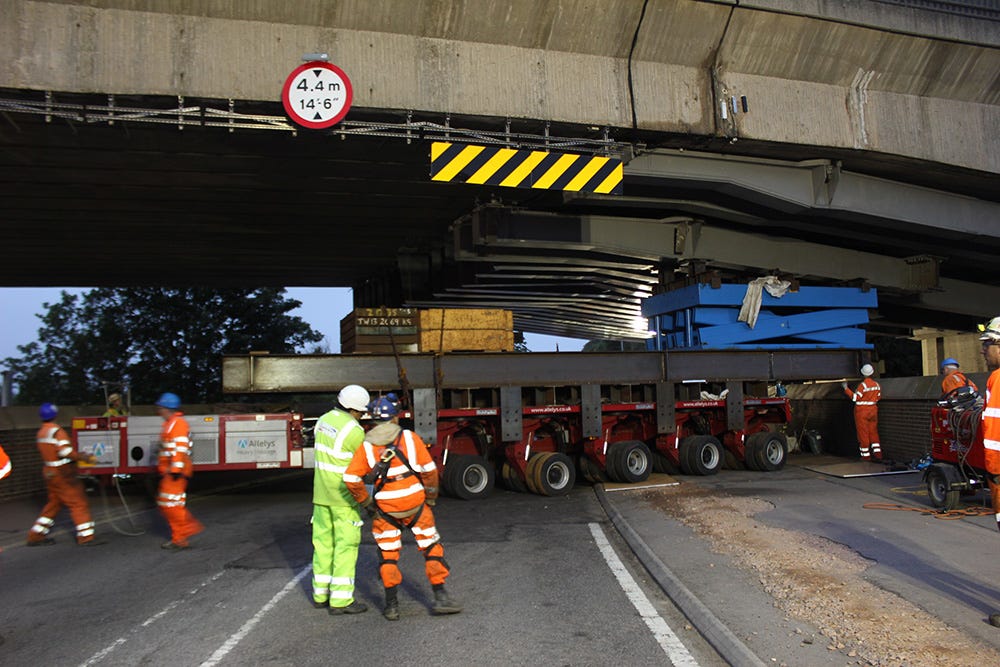
In Huntingdon the A1 crosses the A14 in a dance of roundabouts and junctions. This new cross country road was immediately overused as it hauled masses of traffic towards the eastern container ports of Felixstowe and Harwich whilst also serving as a way in to the busy city of Cambridge for the large population who work in Cambridge but are forced to live to the west of the city due to extortionate housing prices.
Up until recently, and during my first five years of living down here, the A14 passed smack bang through the centre of Huntingdon. It audibly groaned as it crossed the triple layer bridge that arranged the major road, a smaller local road, and the East Coast railway line like a Brutalist haiku. The volume of lorries was such that it necessitated a reinforcement strategy and bank of sensory monitors detecting sounds of fissures forming in the concrete. You could imagine this being released as an avant-garde sound recording on a 1990s label like Mille Plateaux. Clicks and Cuts becomes Cracks and Crumblings.
After its encounter with the A14 at the evocatively named Brampton Hut interchange, the northbound A1 enters into a desolate landscape. Businesses and eateries are closed down permanently or in flux, with ghost signs populating the roadsides. Various experiments come and go with a recent craze for Chinese and Indian buffets now seemingly expired, and currently replaced by a string of roadside sex-shops.
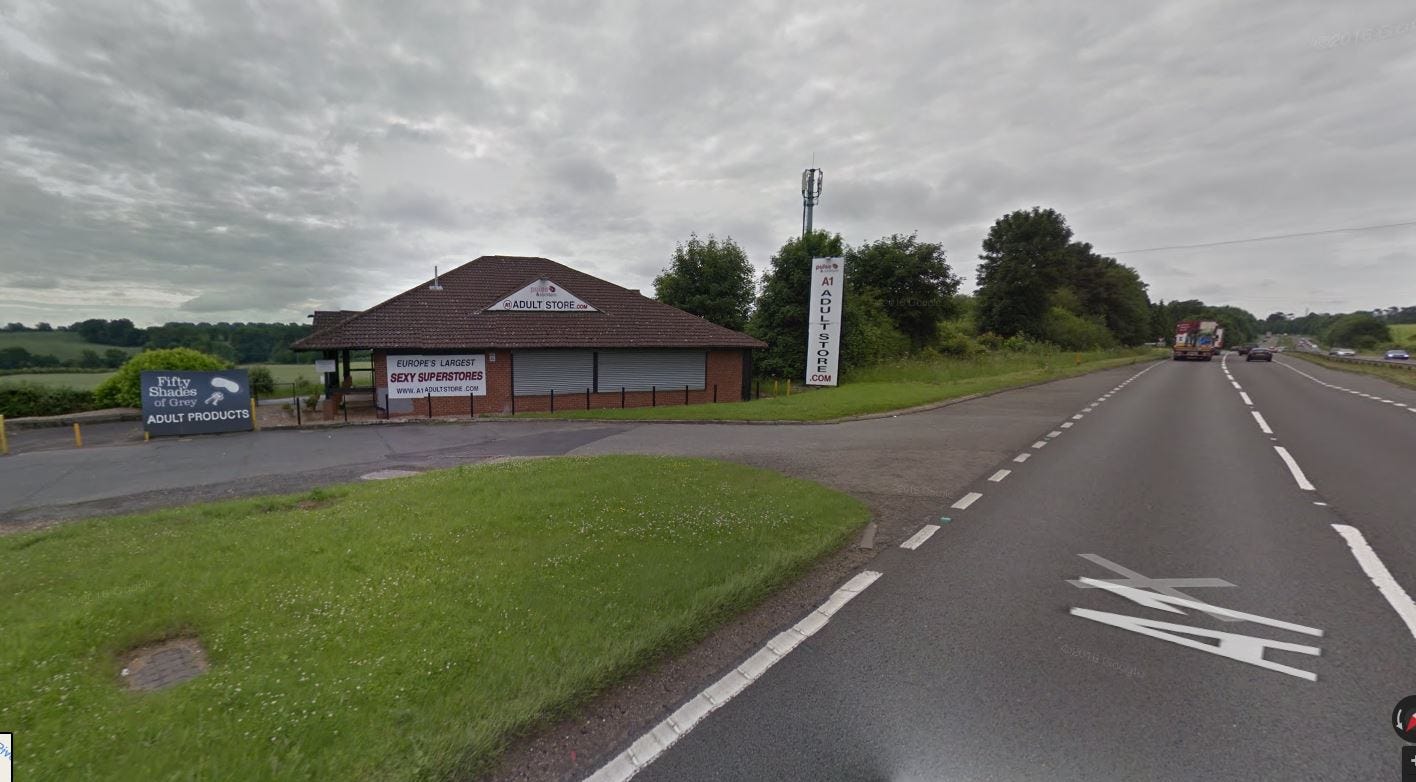
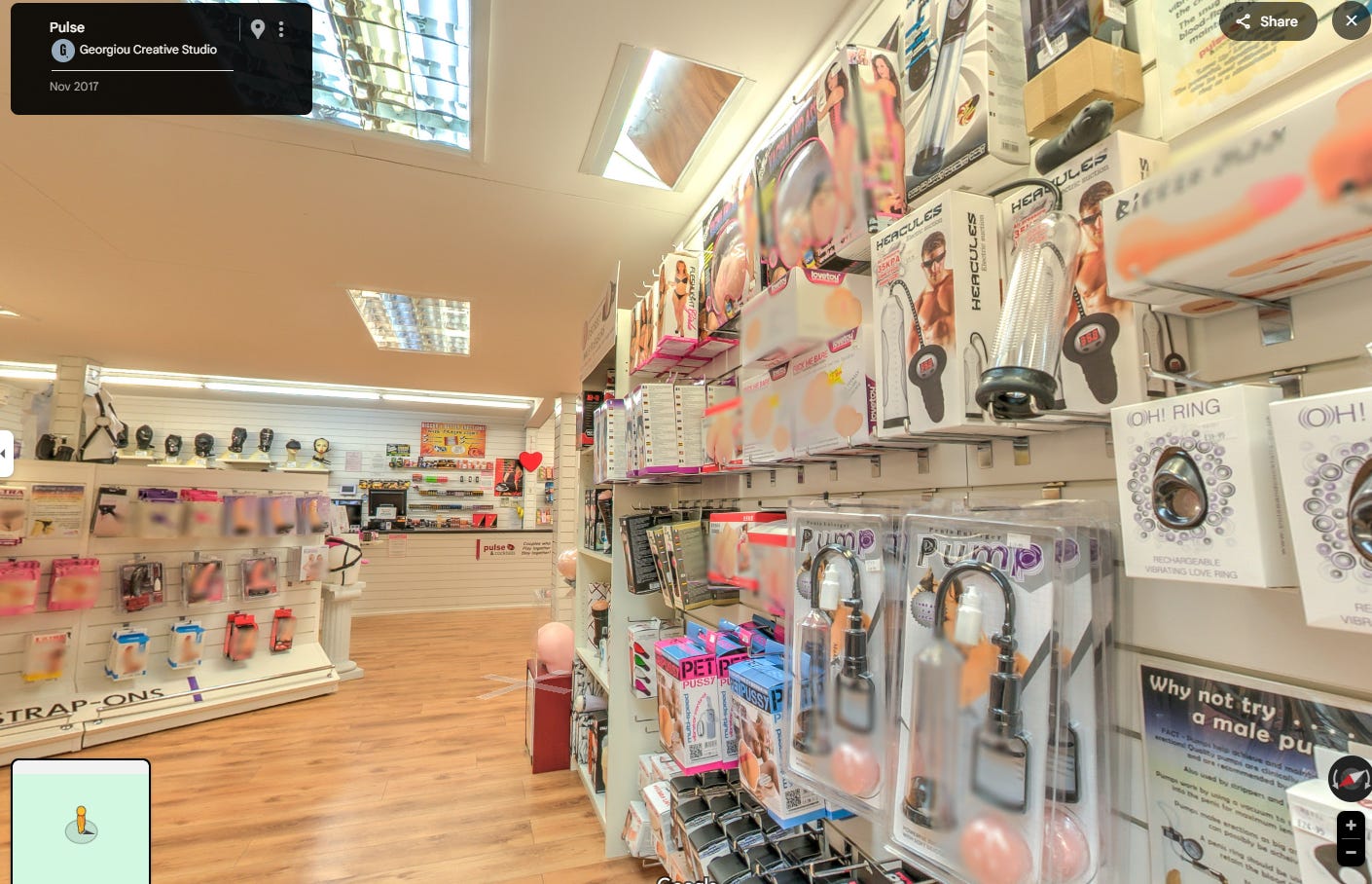
The sex shops are now also closing down, though the southbound ‘superstore’ remains in place near Stoke Rochford and Burton Coggles in a long straight section. I guess the idea is that you can pull in discreetly and peruse the stock of DVDs, magazines and kinky aids. In the early days of Google Streetview there was a walkthrough photo-blitz of the store which seemingly confused the censor-filter bots. As you digitally passed the large range of blow-up dolls the faces (mainly doe-eyes and circular aperture mouths ringed in a red dye to resemble lipstick) were blurred out, whilst the explicit aspects remained on view. It resembled a work by the artist-geographer activist Trevor Paglen (such as his ‘Adversarially Evolved Hallucinations’ project). As I write this the walkthrough images have changed and you now seem to get stuck in the penis enlargement pump section like a recursive Freudian nightmare.
The A1 runs parallel to the East Coast mainline, with the two arteries switching places like a twisted strand of DNA. Around 2017 my partner was lodging with her family in Huntingdon and I was trying to sell our house in Sheffield, which was delayed by a cracked water pipe and collapsed ceiling. This meant most weekends I was up and down the train line (I don’t drive).
Laterally close to the sex shop and sharing a sense of vicarious climax is the Mallard speed marker, celebrating the point where the engine attained the world record speed of 126mph in the summer of 1938 as it descended Stoke Bank south of Grantham. My aim was to photograph the sign, but it took me 10 years to do it as generally the train I was on was hurtling along and I never could quite remember the landscape markers to let me know the sign was imminent (that nullscape factor again).
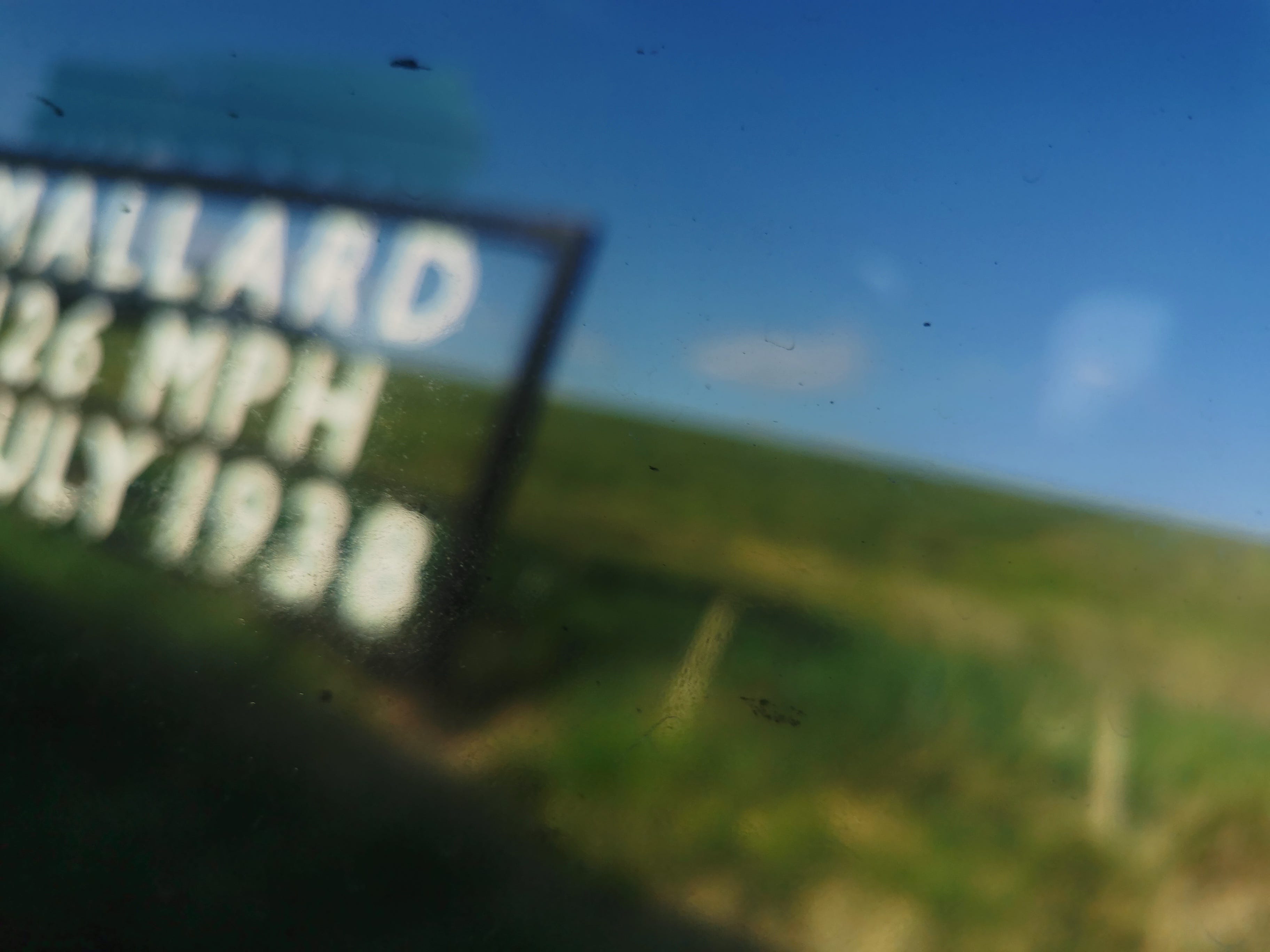
I got the partial shot on my phone this summer, travelling back from a day at Boston May Fair. As well as a huge personal victory (yes, I know that sounds very sad) it also felt like a portent to signal my time down here being over. It also brought back my affection for the British artist Richard Hamilton who has entered my SUB>SUMED writing already at numerous points with his always provocative artworks. During the 1950s Hamilton was travelling up and down the line, teaching at Newcastle Uni (with the obvious connection to Bryan Ferry who he tutored) and spending time in London as various nascent art and thinking groups were thriving in the post-war atmosphere with Hamilton a star in ascendence.
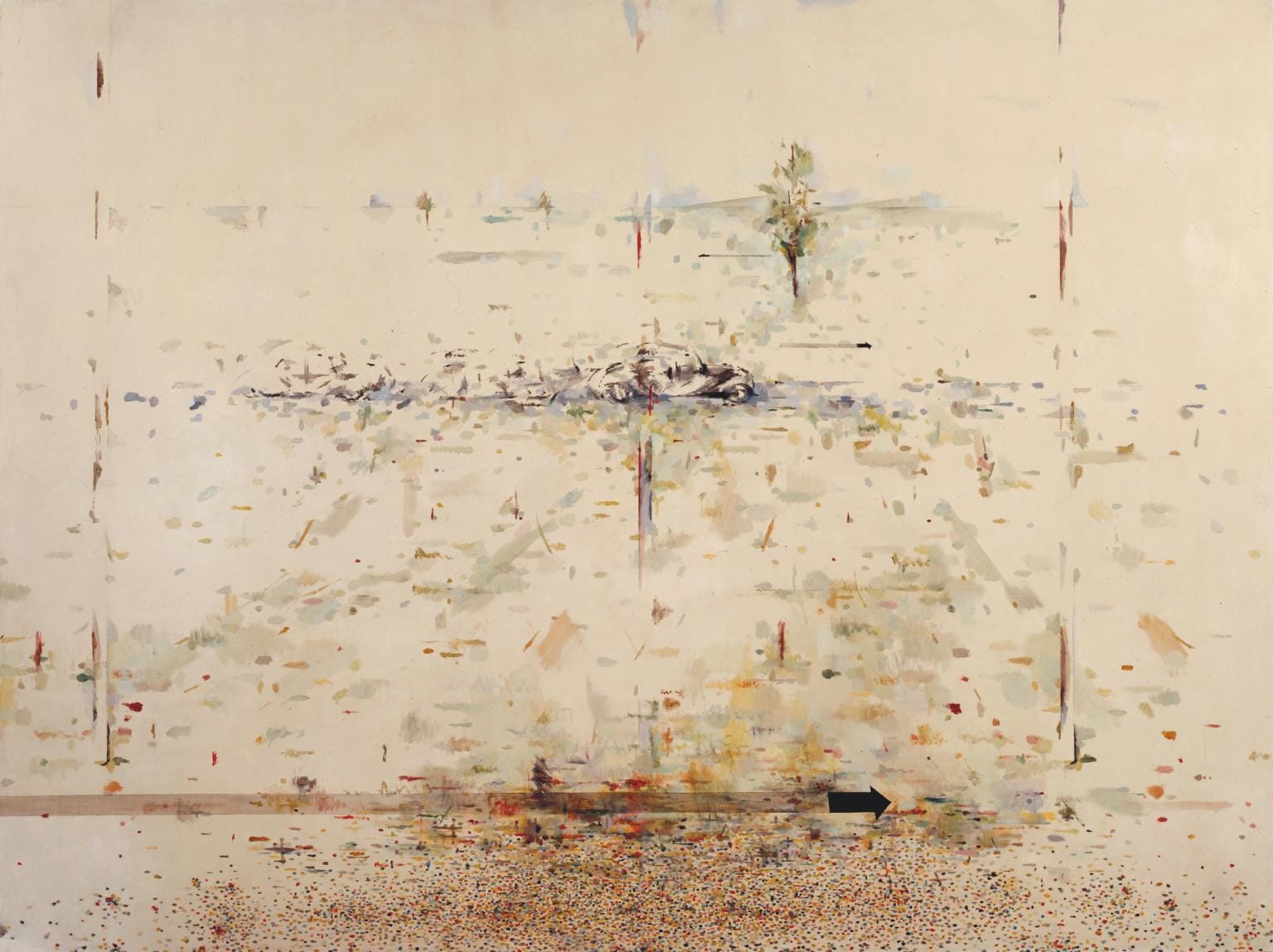
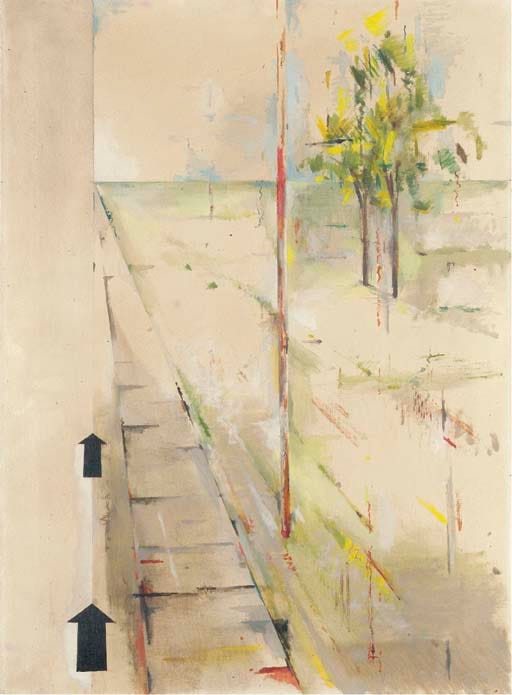
Drawing on Vision in Motion by Moholy Nagy, Hamilton produced a series of works entitled Trainsition (also read as Train-Sit-I-On) in which he tried to convey the sense of movement and switch of focus when a moving observer tries to register a landscape of objects. For this he looked out of the train window and tried to record the moving landscape. It is generally flat, and so a good guess would be section around the Mallard marker, though we never ses mention of that. The works, and their instigation, concern not so much what is seen, rather the act of seeing and its dissolving/fracturing. It is possible to read into this a playful destruction of canonical landscape painting.
I’m going to quote a lengthy chunk from James Craig Tracey’s article ‘The Parallax Gap’ to get another perspective:
Hamilton’s painting depicts the view from a train window as he looks out at 90 degrees to it. In the piece, the focus is on a tree –drawn towards the upper right of the painting. The visual apex isfocused on this object while the landscape appears to be shifting in two opposite directions both in front of it and behind it. Each mark on the painting beyond the tree appears to be duplicated at a given distance along a notional parallel, one example being the single telegraph pole of which the motion is apparent (it is seen three times in the short space of time represented, with particular clarity when it intersects the point of attention).It is the representation of other phenomena entering the scene which creates further disruption: the accelerating car that blurs across the landscape leaves a disintegrating trace and, similarly, the fracturing of the foreground is a measure of how the objects that are closer to the eye appear to move faster due to the speed at which their image hits the retina. These smears and blurs in the painting are an attempt by Hamilton to ‘make-real’ the experience of viewing external reality that goes some way to challenging perspectival hegemonies.
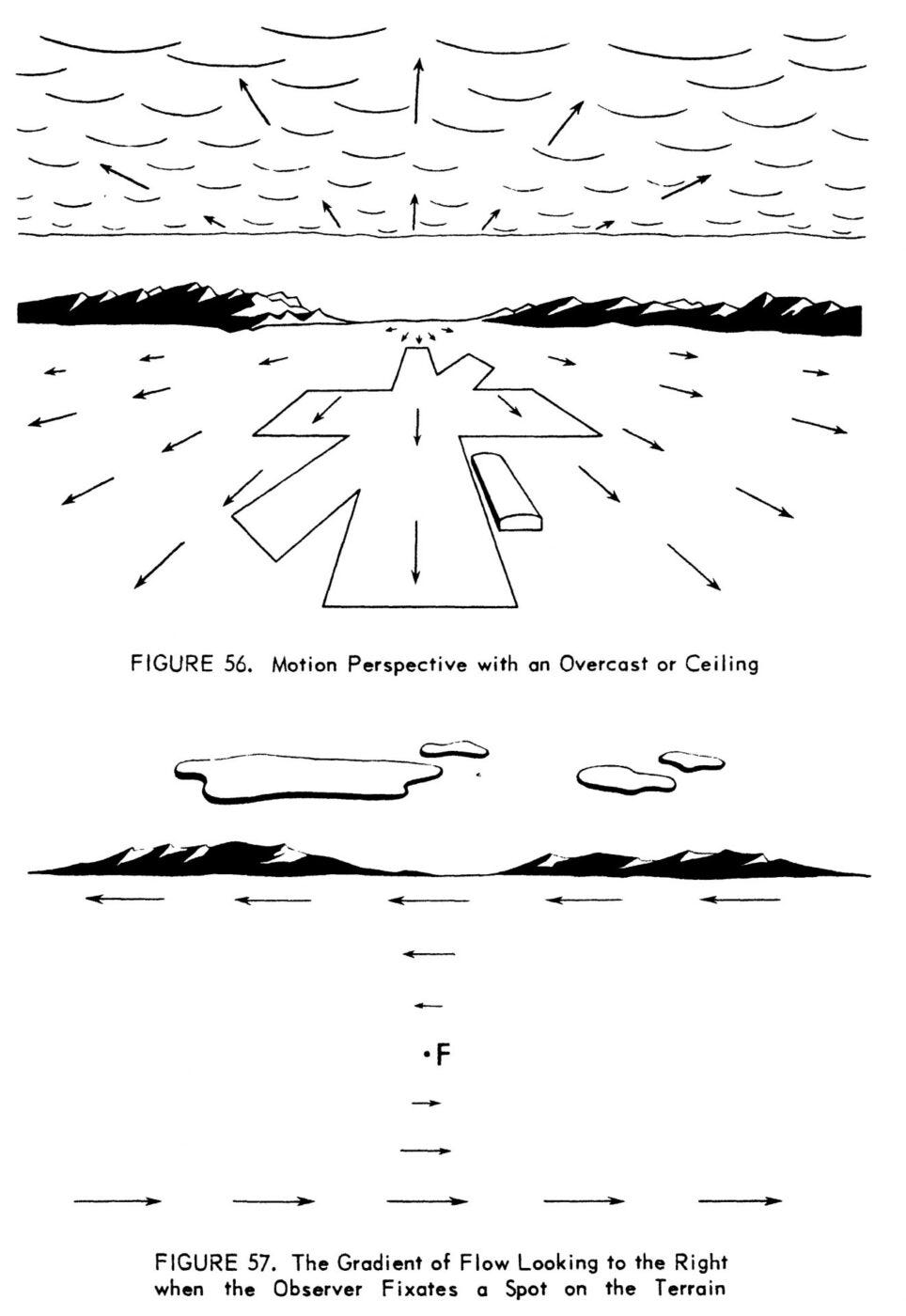
In an article for the Immediations journal from 2019, Giovanni Casini roots the work across various sources – Hamilton’s interest in the now of fashion and photography cross-pollinated with the ever-present Duchamp and early Cubism updated to the age when we can see the whole world at once. Casini and the art writer David Joselit also bring in the role of James Gibson’s work on motion perspective which was funded through an investigation into landing combat aircraft on boats. Paul Rennie goes further and uses Hamilton as a justifier for Heisenberg’s Uncertainty Principle, and the wider field of Quantum Mechanics; that science cannot measure two things at once – we cannot know speed and position for example, and that the same is true of our own perceptions.
For what it’s worth, I find Hamilton’s Trainsition pictures intriguing - not least because they have an aesthetic quality of ambient abstractness that appeals to me. That’s not a very ‘Hamilton’ thing to say, but there you go. The swathes of objects seen from a moving vantage point come across with a pleasing affect on the eye, plus Hamilton drops in little arrows like a technical drawing on LSD. And, for me, the Mallard sign fits in here. It is a static and permanent statement of a past moment of movement, that is inevitably glimpsed (if that) via extreme movement.
With uncertainty looming large, I will call time on this chunk of Nullscapes for now, on the east-lying spine of the country, dancing between the A1 and East Coast mainline, with a few artists and geographers thrown into the mix if you feel inclined to do further research. I will pick up the thread again as the A17 crosses the A1 and heads truly into the east.
I go up and down the A1/A14 from Leeds on route to Kent regularly - I think preferable to M1, and up to the NE sometimes. The slip roads from the roadside chefs are a bit scary - I struggle to know whether to slow down to let people on or not - not knowing if they're a knobhead who will just drive on anyway.
I also walk around Aberford regularly - unbelievable that the little road through the village used to be the A1 - which is now full on 3-lane motorway just about 100m to one side.