
Pivot
Street semantics, subcultures under erasure and the death of the 80s (extensions)

First extension
If the two parts to ‘Pivot’ represented me trying to unscramble and organise/legitimise my subcultural late-1980s, with skateboarding and outdoor wear, and ultimately a reflective look back at what I decided was a meta-narrative on the end of street style and its replacement with street wear, then this final short burst is a revisiting without any conclusion.
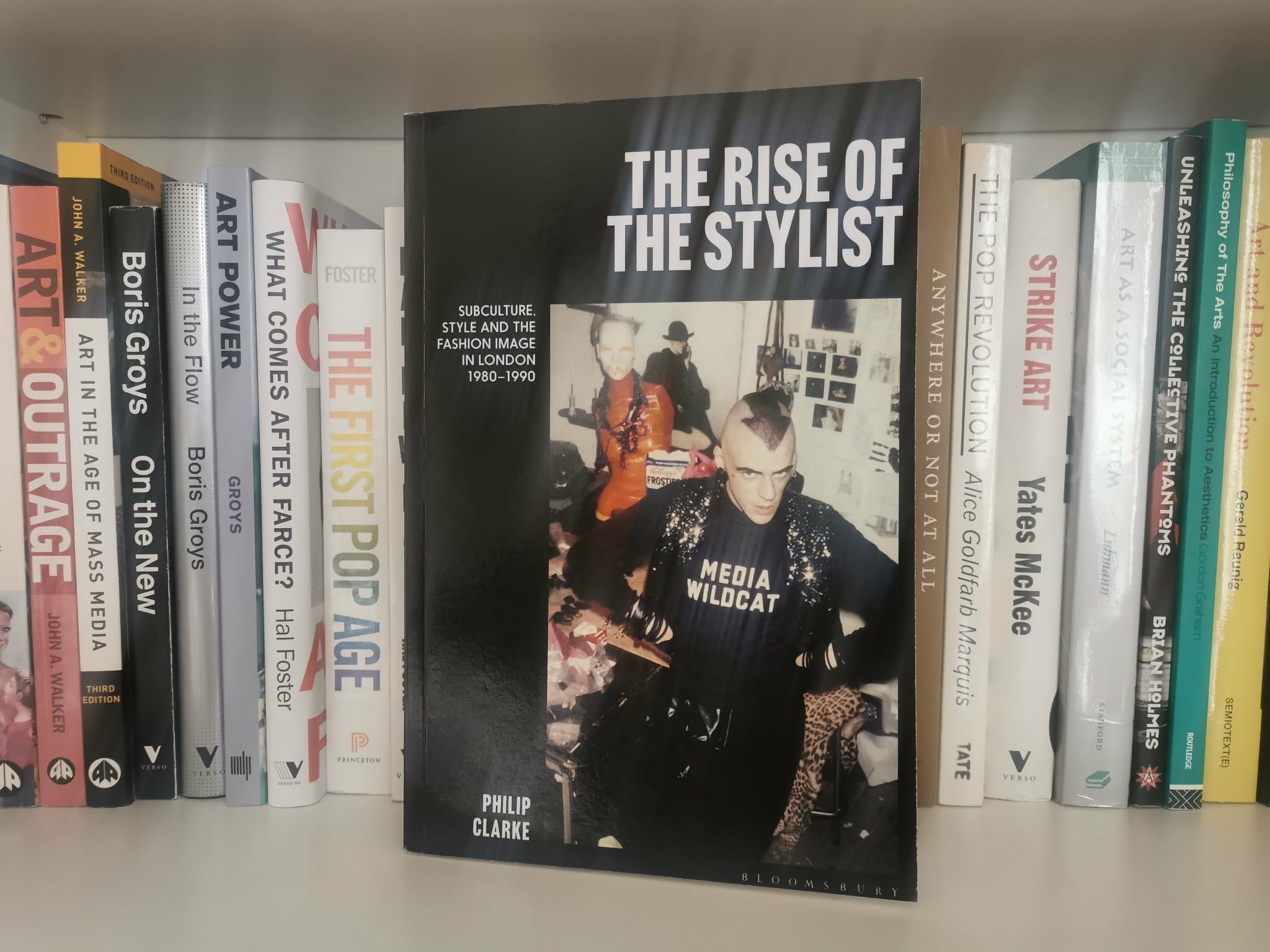
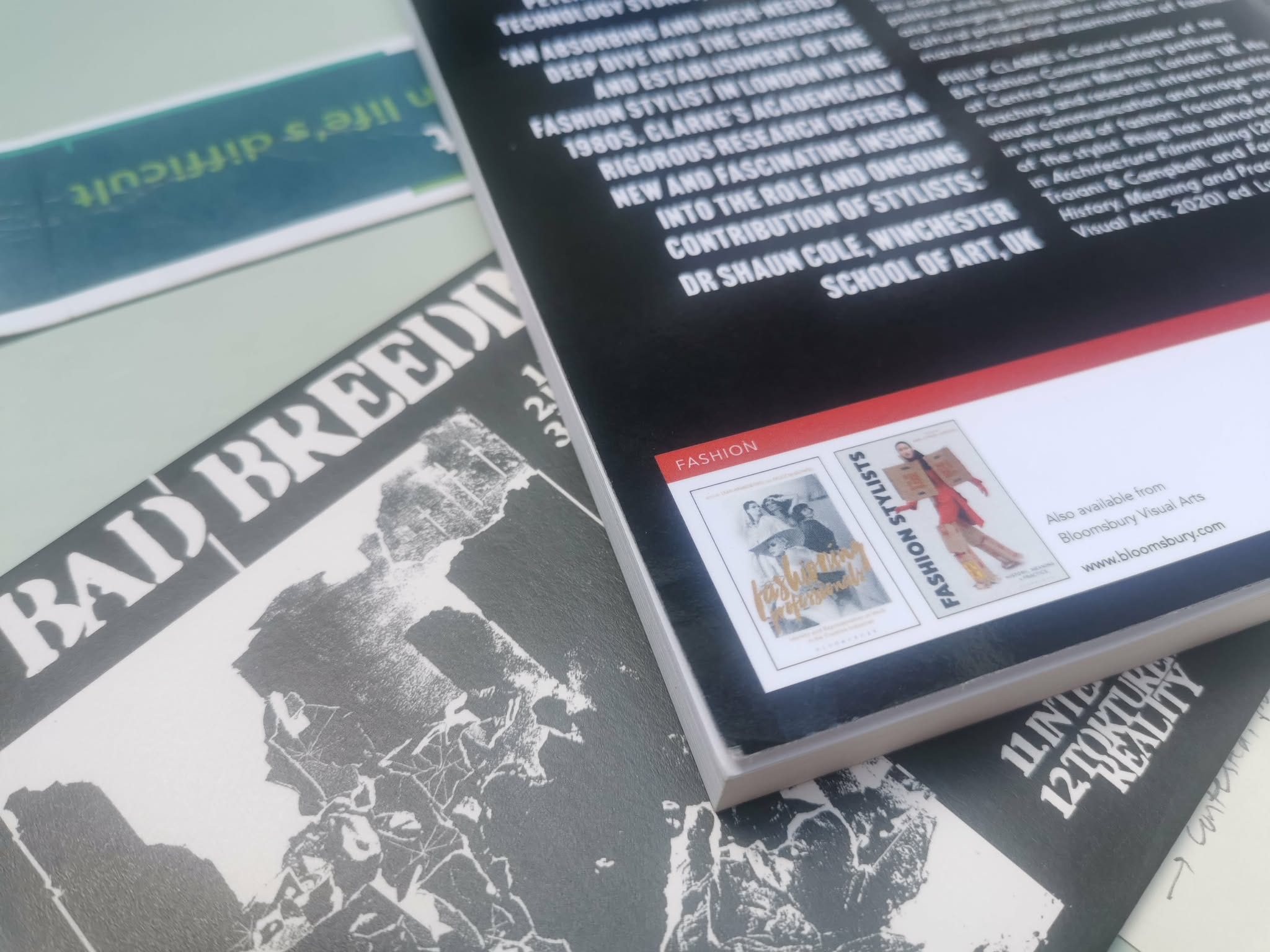
It was prompted by the book The Rise of the Stylist: Subculture, Style and the Fashion Image in London 1980-1990 (2024/2026) by Philip Clarke, a title that felt in line with what I was trying to articulate. The book is published on Bloomsbury who seem to churn out an inordinate amount of material on fashion, style and clothing cultures (as well as many other streams in cultural studies or whatever it is called now). I’ve got quite a few of the Bloomsbury fashion series books and my general observations are as follows: they can be expensive (unless you drop upon a bargain on one of the big platforms), they feel shoddily assembled in that it comes across as a print-on-demand file, and they feel shoddily edited in that they give the impression of being made straight into a book from a thesis. A thesis and a book are two separate beasts. Finally, you always get a glimpse of two other books in the lower left corner of the back cover to keep you hooked like a literary sequence obsessive narcotic. The Fashion Stylists edited collection glimpsed here with the cardboard box stomp cover looks enticing, but is way too expensive for me.
The Rise of the Stylist is an interesting book, and it more or less perfectly overlaps with the period and area of my concern in the pivot essays, even if it has a 100% London focus (as indicated in the title). Clarke tries, but ultimately steps back, from reaching a conclusion of either explaining the rationale of a dynamic or, at times, grasping the dynamic itself. It is slippery and muddy, fraught and freighted.
The stylist under investigation emerged as a dedicated role through the 1980s. These people were previously unacknowledged but crucial to the early 1980s shaping of street style magazines like i-D and The Face. It is these magazines, in their marking out of a fresh approach to documenting the convergence of subcultures and fashion, that change the dynamics of subcultures and how the ‘luxury’ style press and fashion ecosystem functions. In Clarke’s words: “shifting practices in fashion and subcultures”. As I discussed a few essays ago in regard to Caroline Baker – who takes a major role in Clarke’s study – the stylist simultaneously takes on the roles of “connoisseur, consumption engineer and subcultural stylist”.
Stylists were initially wedded to the independent magazines and operated adrift from the fashion companies, just grabbing clothes and customising them in a wider melange of visual cues and ideas. In this regard they were often unattributed in the features they created, with models, photographers and tick lists of clothing preferring to be recorded. Clarke attempts to locate a shift in The Face issue 27 (July 1982) when Sheila Rock is listed as both photographer and stylist as she works with Heaven 17’s Glenn Gregory and Scritti’s Green in a rather cringey wild-west special. The previous issue has Gregory doing a business fashion spread with Rock, and there’s no mention of a stylist. Actually, Gregory is also in the previous issue, doing something similar but with a business theme and shot by Rock – but there’s no stylist credit.
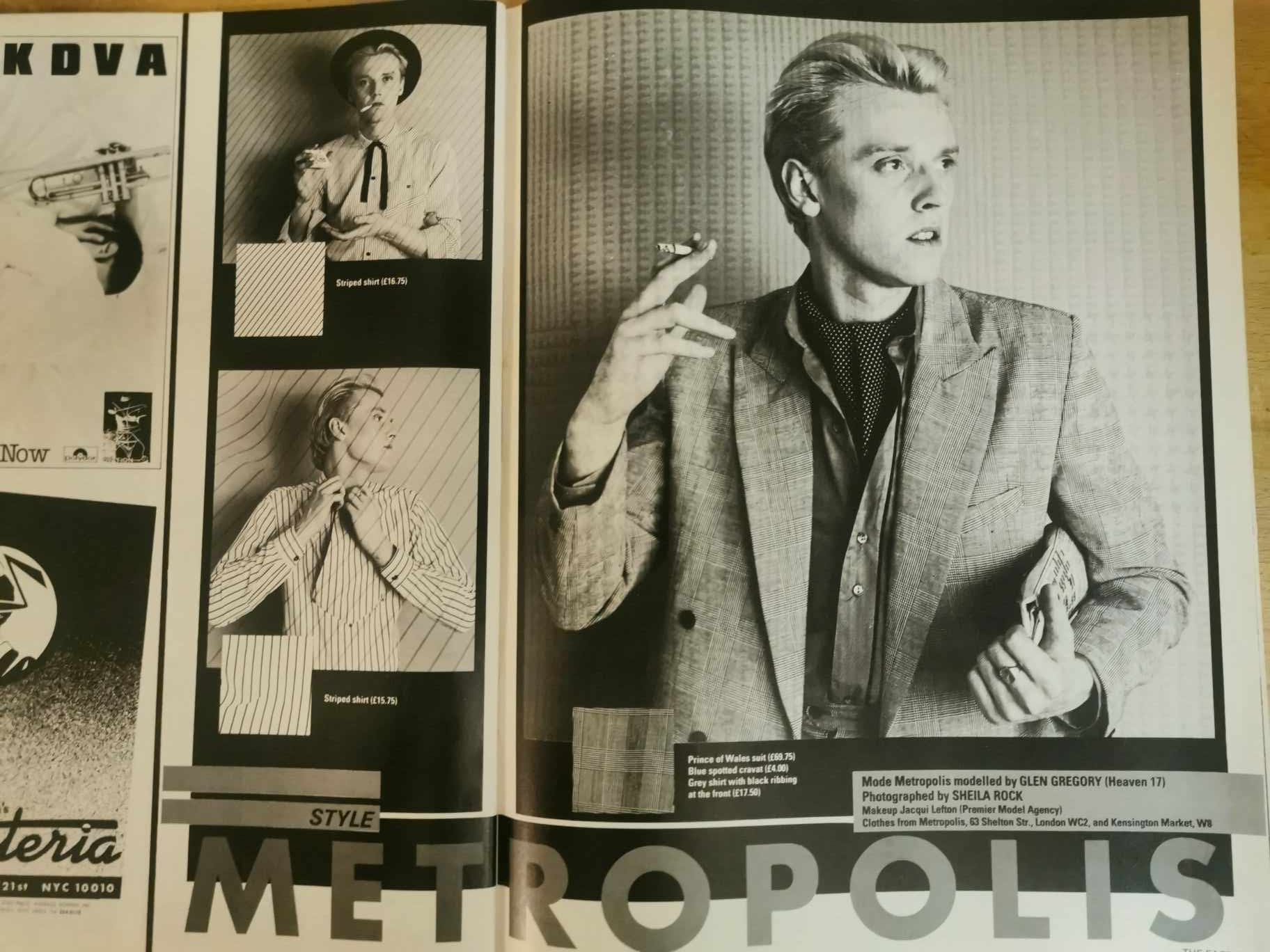
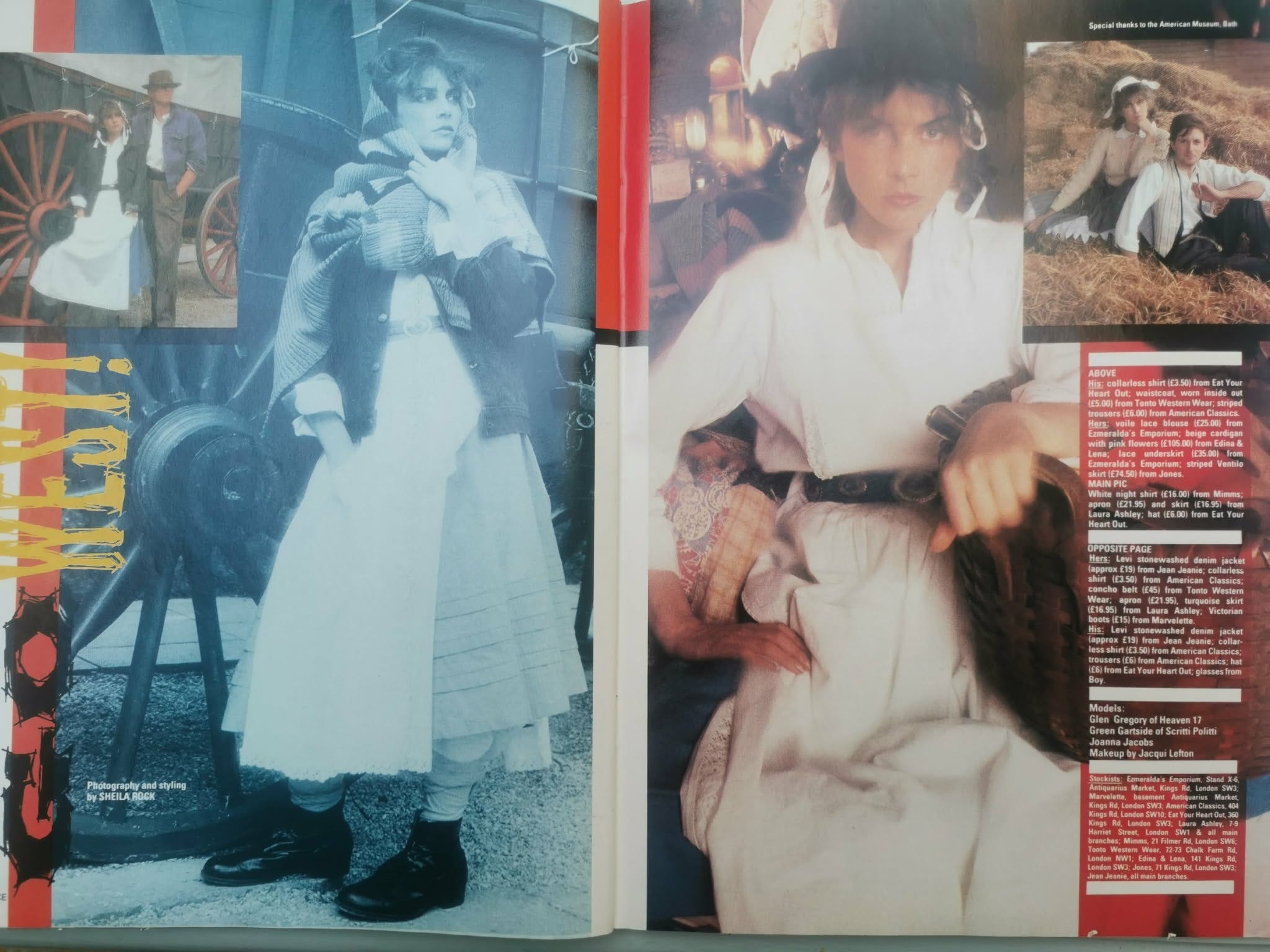
From this point onwards it is very muddy. The stylist flits between (or sometimes straddles both) clothing models and ‘image production’ – in regard to assembling a stage set and posing the models to create the desired photograph. Thus the ‘style’ is polysemic, being either a ‘real’ thing in terms of a set of clothes and a look for a consumer to go out and try to copy, or a highly-polished image – oftentimes both. I know that I fell for both, with my endless clipping and displaying (and worshipping) of these images.
Second extension
Alongside the proposal of what streetstyle isn’t – as listed in the preceding two pivot posts - a general agreement can also be made towards a positivist definition of streetstyle, in that it is (or was) a way of dressing that encompasses a subcultural approach. Now we have something to work with, something that finds traction in our past. It is also possible to fuse this with Clarke’s book, even if we have to counterintuitively strip away his main task of explaining the birth and dynamic of a stylist in all this.
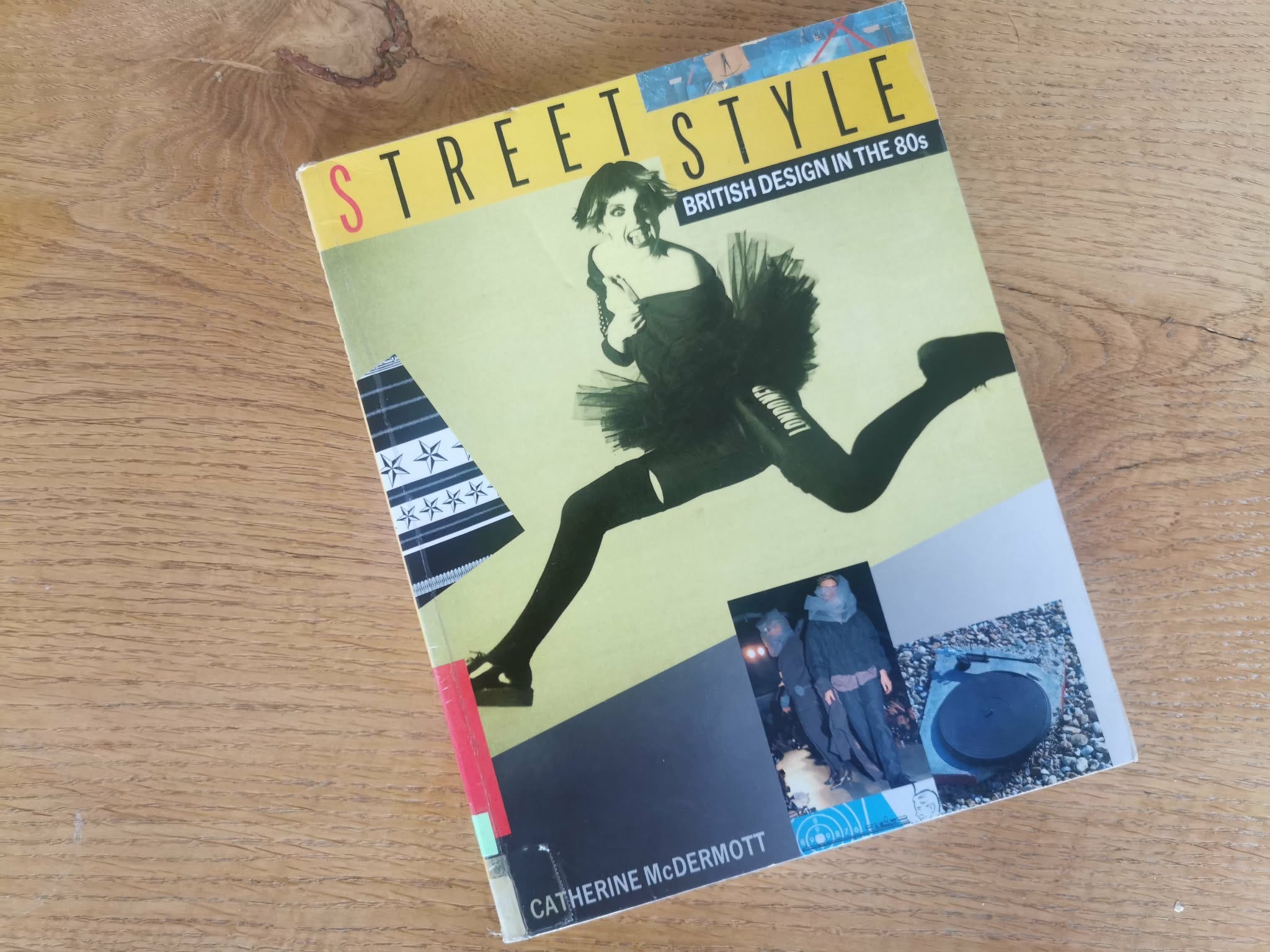
Away from the slew of academic projections onto and interpretations of subcultures, Catherine McDermott’s overlooked 1987 book Street Style is a good place to start. It sums up the creativity of British fashion and post-punk design in the 1980s before the decade has ended, but also before the commercial forces take over – written before the change, and seemingly blissfully unaware of what is about to happen by over-celebrating autonomy! The book documents the cutting edge of subcultural creativity and leans towards questions of future marketability for named designers midway between street and high-end, but there is also a lesser documented strand of everydayness and creativity.
In contrast to current times, subcultural clothing and accessories did not proliferate into high street shops. A friend recently reminded me of how he had to repurpose brass-headed document holder split pins to fashion up a punk studded wristband as late as 1979 – you simply could not buy studs (used to adorn punk clothes) in any shops or market stalls in the city where he lived. He used masking tape on the inside of the wristband to stop the sharp ends of the pins scratching his skin.
It was forever messy and experimental. Whilst the prime subcultural clothing outposts tended to cater for a scene in the heat of the moment, subcultural fashions eventually trickled down to market stalls and chance dealers who would run up quick and dirty subcultural garments. In terms of the history of youthful subcultures, this trailing edge of opportunist, copy-cat fashions was vitally important. And it was still a radical fashion. As one of the key collectors and directors of subcultural clothing Roger K. Burton attested to in his recent book, this clothing was Rebel Threads.
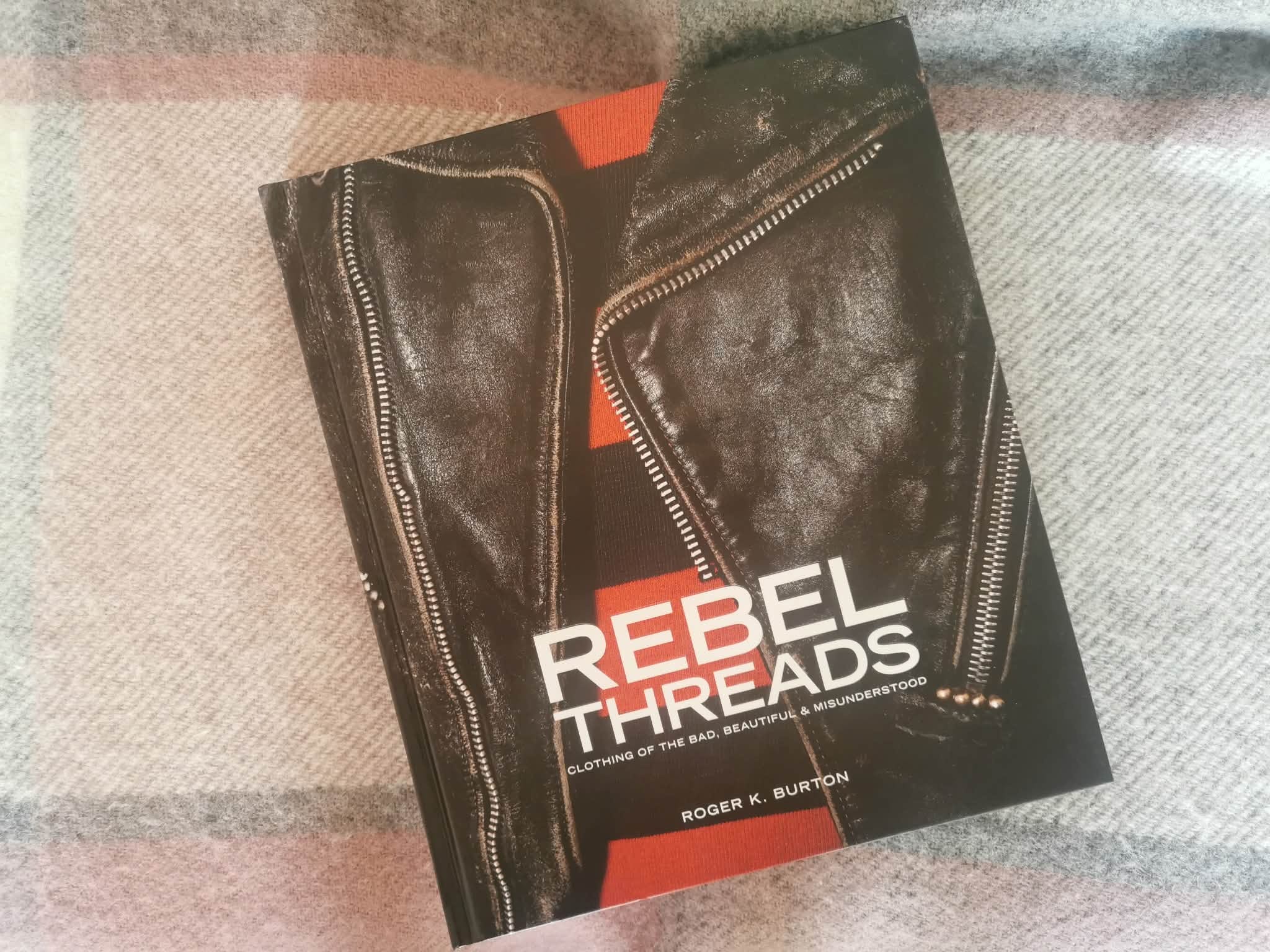
Whereas Burton operated at the sharp end of subcultural definition, most of us scurried around searching and making do. But it was equally important, equally rebellious. This trailing edge created overlap, temporal drag, and even stasis of scenes as they spread into the provinces, evincing a muddying and dedifferentiation of periodic staging. This is the world that I dwelt in, and the world covered by the more autobiographical essays in SUB>SUMED over the past few years.
Subcultural engagement expressed a feeling that there is more to life than that prescribed for and expected of you. Investing time, energy and resources into a subculture was a praxis towards utopia, a working-out of a possibility, a line of flight. As well as offering a sense of belonging and a new purpose, subcultures questioned and re-arranged the structures of value. It was, fleetingly, a glimpse of a truly radical fashion. However, around 1990 we passed through the eye of the needle. All we see now are now are marketing opportunities that try to pass back though, as either nostalgised reality or glib simulacra.
That moment in time really captured my imagination. I totally fell for those styled spreads (in fashion mags like Vogue too) and the repurposing of stuff from people like Judy Blame. My attempts at recreating it on myself though make me wince.