
Pivot
Street semantics, subcultures under erasure and the death of the 80s (part 2)

Surf culture via skate culture as a precursor to streetwear hegemony. Moving back in time, stepwise, we tend to take our modern day context with us, giving a skewed perspective of rationale or context of the times we are travelling back through.

A pivot moment via a screen grab. September 1988, a Top of the Pops appearance of the uber-fashion-conscious Pet Shop Boys performing ‘Domino Dancing’. As always, Neil Tennant wears a designer suit, boxy in construction, check in pattern, a single button fastened. I’m not sure of the designer, but it’s ‘designer’, it looks different to what passes as either the everyday suit or the expensive suit.
There’s an extra figure in view, backgrounded and so diminished between the main pairing. He supplies the flamenco guitar that gives the track a postmodern feel of borrowed elements, a bricolage of euro-disco and world music. Undistinguished in terms of visual prowess, he knows his place (sitting on a chair a metre or so behind the duo).
Next up, Chris Lowe stands sporting full surf wear like nothing seen before. It's a straight rip from the official video for the song. There’s no keyboard to lurk behind, so we get a full view – flipped baseball cap and shades, oversized surf print tee, garish Bermuda board shorts, and (via the aid of reflection) white sports socks and bright hi-tops (or trainers). His very unusual get-up evokes a typically snide comment from presenter Nicky Campbell, as he – or we - clearly isn’t ready for such a look being broadcast into our living rooms. It’s not the 1990s or 2000s sensibility looking back, it’s still the 1980s – such clothing is simply out of place.
Before they adopted their synchronised ultra-avant-garde designer outfits, the Pet Shop Boys were about two contrasting but complementing halves. Everything was suggested partly in denial and partly in the breaking of promises (to conform to norms). What we say, what we do, who we are. Fashion tribes, and those tribes outside of definitions and nomenclature, were beckoned – most famously the Paniniaro. That homosocial kinship and bonding glimpsed with Dexys. As an earlier song remarked: “But I don’t like to compete or talk street, street, street” – but the street (whatever that was) was always lurking in their imagery and evocations. Tennant in the designer suit, Lowe in something we were not accustomed to; who was in the fashion/style vanguard, who was in the street? As always, both at the same time and neither.
Let’s try to start again. We can easily imagine a post-Blitz pre-rave ‘interregnum’, when subculture goes into hiatus, meaning that fashion and style seek a new terra firma. But nothing is ever motionless, or existing in a vacuum. The more controlled and commercial worlds of prescriptive brand-led fashion (whether high-end Comme and Yohji for grown-up Blitz kids or mass-produced streetwear for an emergent generation) was always the endgame. If you were in the Pet Shop Boys you could show how these systems slipped around each other and were briefly exciting and seemingly under our aegis. But they never were, they were set out to consume us as the 1990s rolled in. We just let it happen. S-H-O-P-P-I-N-G, we’re shopping.
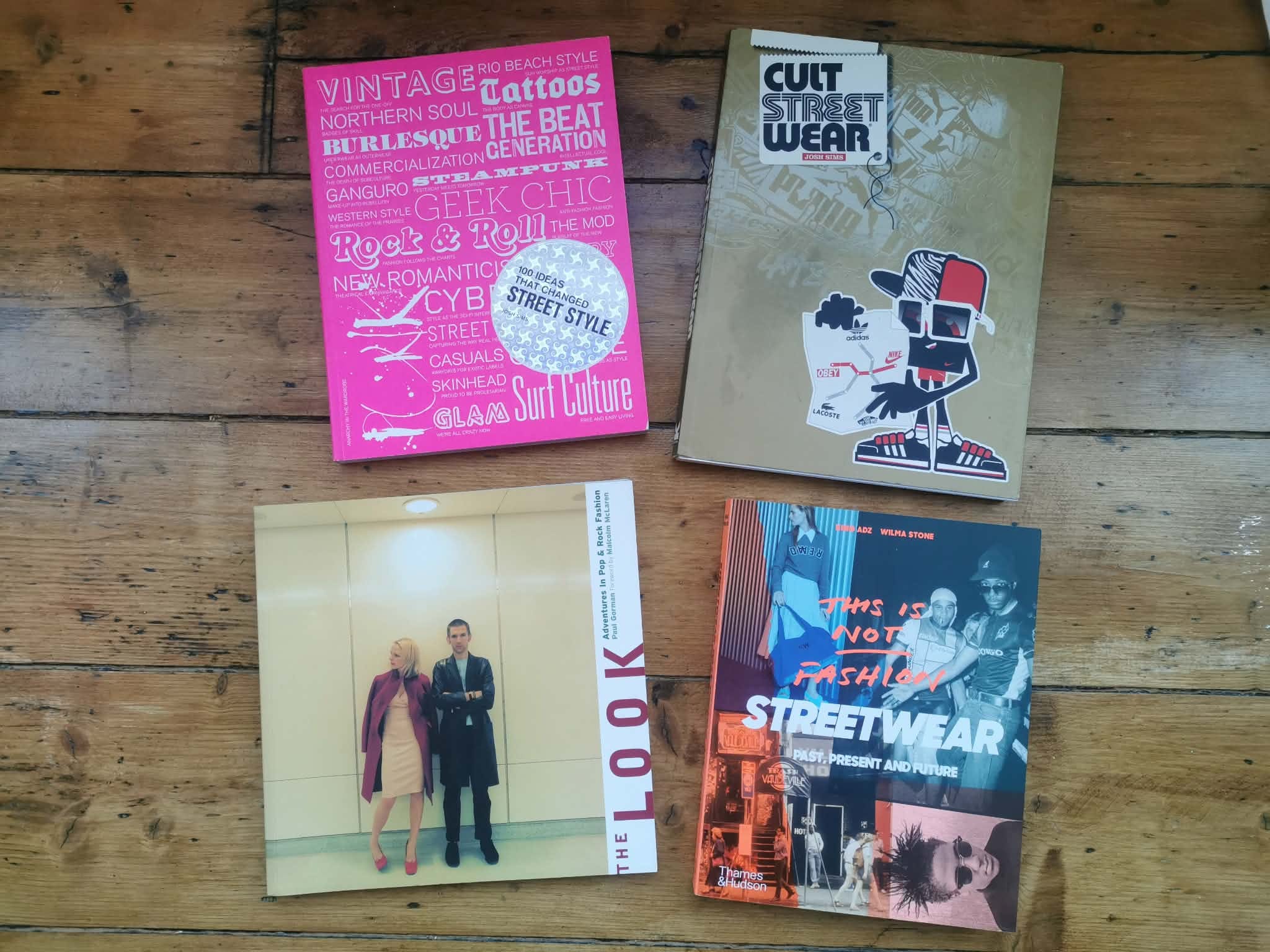
Back to the books to look for answers. Paul Gorman tracks some of this, with a London-centric bias, in his 2001 excursus The Look, ultimately prioritising the role of Stussy and new shops such as EndZone (in Newburgh Street), Bond and Passenger at the dawn of the 1990s. Stussy, as we shall see, were key. This is also picked up by a reflective article in Sleaze Nation magazine (a ‘Streetwear special’ feature from February 2001) which implicates Stussy as the “accidental architect” of the 1992 streetwear explosion.
Passing through to the other side of the mirror, the books of prominent commentator Josh Sims promise to be particularly insightful here. However, in one breath they simply list niche skateboarding and sporting brands, whilst Sims also tries to understand the factors in this change (the internet, digital photography, social media, globalisation all get bundled into the theory pot).
You could also bring in King Adz and Wilma Stone’s 2018 book This is not Fashion: Streetwear Past, Present and Future – a glorious mess of misconnecting ideas and threads, that sums up the confusing nature of understanding the movement between streetstyle and streetwear. So, what did really happen?
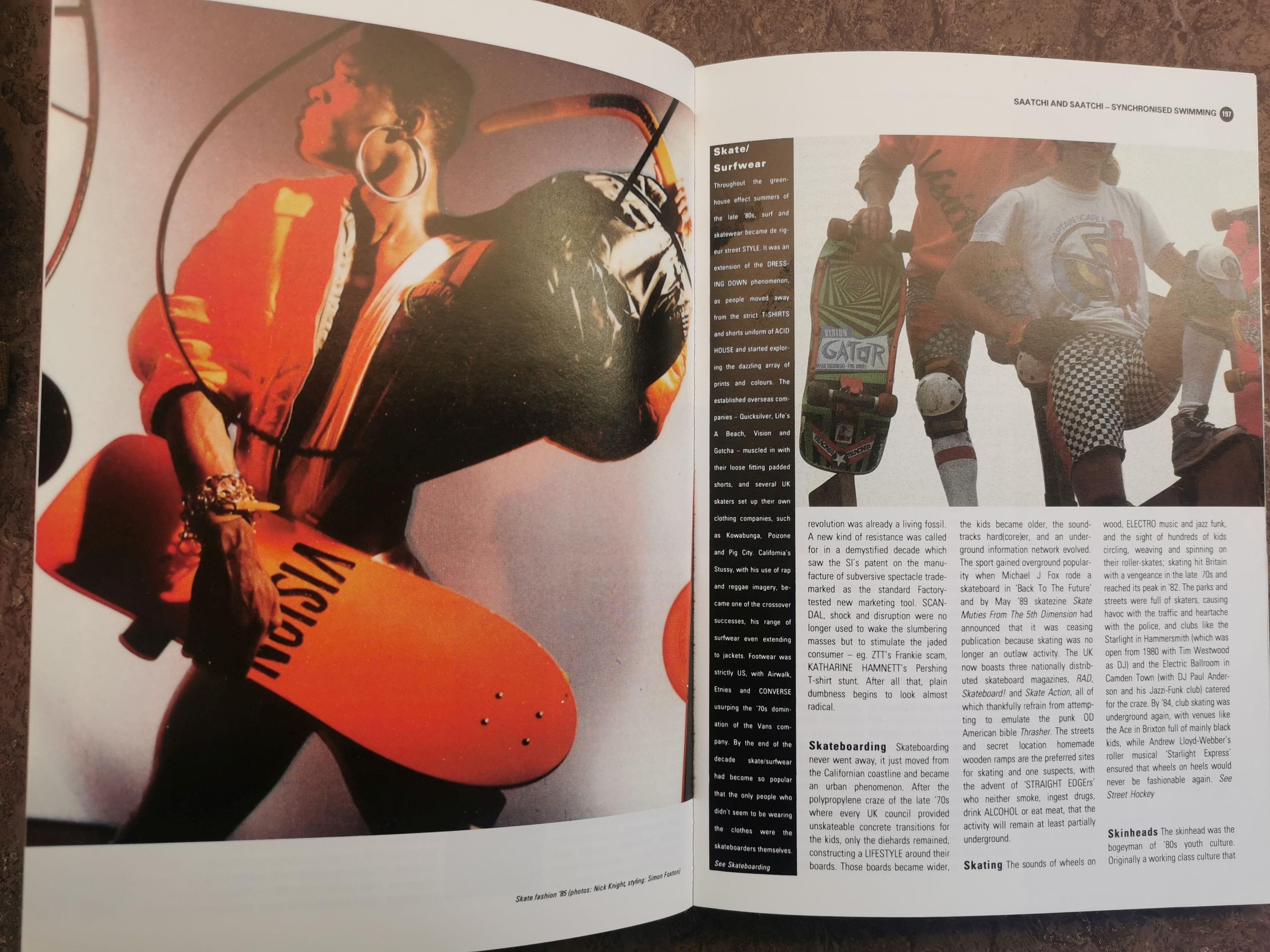
Let’s re-revisit a 1990 text as our pivot point, firstly looking backwards. Glancing over the previous decade, subcultural and streetstyle documenter i-D produced their bumper compendium A Decade of i-Deas: The Encyclopedia of the 80s, in which the themes, trends and principal players were set out in an alphabetical list. These were all drawn from a selective summary of the magazine which had been publishing exactly for a decade, launching in summer 1980.
Along with The Face (and to some extent Blitz), i-D had been at the forefront of documenting what we might now call ‘streetstyle’. That is, the individual tailoring of a look that worked within (and sometimes across) a subcultural scene, augmented by charity shop objects, military surplus, home-made artefacts, American college clothing via the Flip outlets, and pretty much anything else. These were tethered to music scenes (such that The Face was primarily a music magazine to start with) but the music scenes extolled certain styles and role models which were prioritised and foregrounded through shimmering photography.
This punk and post-punk bricolage approach to dressing was only really dominant in the first part of the decade. By the mid-1980s these magazines were featuring new designer labels that catered for the post-Blitz clubbing crowd and scenesters/self-appointed cognoscenti like Robert Elms. It was maybe a stretch to still call this streetstyle, give or take the odd Pet Shop Boys pronouncement.
In addition, the first babblings of brand-led streetwear were coming in, with surf, skate and sportswear brands creating label-fetishising scenes that were loosely attached to early hip-hop, house and pre-rave warehouse party scenes. If you say them fast enough, streetstyle and streetwear sound similar, or at least intimately related. This is not quite the case. What was essentially happening was that the role of i-D had shifted – from an impetus of reflection and reportage of ‘the street’, to a role of inspiring and nurturing a particular look in adventurous and inquisitive readers, and finally to a murkier and more insidious role of prescriptive brand pushing as the birth of streetwear ushered in the 1990s decade.
In 1990 it was at pivot point, although it is indicative that A Decade of i-Deas contains relatively little of this brand-affiliated streetwear fashion, even with the two ‘official’ years of the Second Summer of Love having passed and rave culture about to go rampant. There is a suggestion that rave culture, and its engagement of working-class youth, reversed this slow death of streetstyle - but that is a bigger argument for another day.
The Encyclopedia does contain a box-highlighted entry for skate/surfwear which suggests that “throughout the greenhouse effect summers of the late ‘80s, surf and skatewear became de rigueur street STYLE”, part of a dressing down phenomenon associated with acid house culture. It thus categorises this clothing as an extension of streetstyle, although history has proven it is something of a catalyst in the transition of streetstyle to streetwear. Surf and skate brands are part of the uniform at early raves, and more blatantly the company Stussy (along with Gotcha) is included in A Decade of i-Deas by virtue of a full-page (real) advertisement – this is clearly an immediate marker for what is to come in the 1990s.
In a similar pivot vein and at compiled at a similar time, Cynthia Rose’s Design After Dark (1991) assesses the roles of early 1980s subcultures and mid-to-late 1980s clubculture in the proposed design zeitgeist for a new decade to come. Within the greater work Rose tries to unearth a (UK) homegrown genealogy of skateboarding, lauding it as a pinnacle fashion movement with links to outdoor rave events such as Witchworld and Method Air which included a skateboarding element.
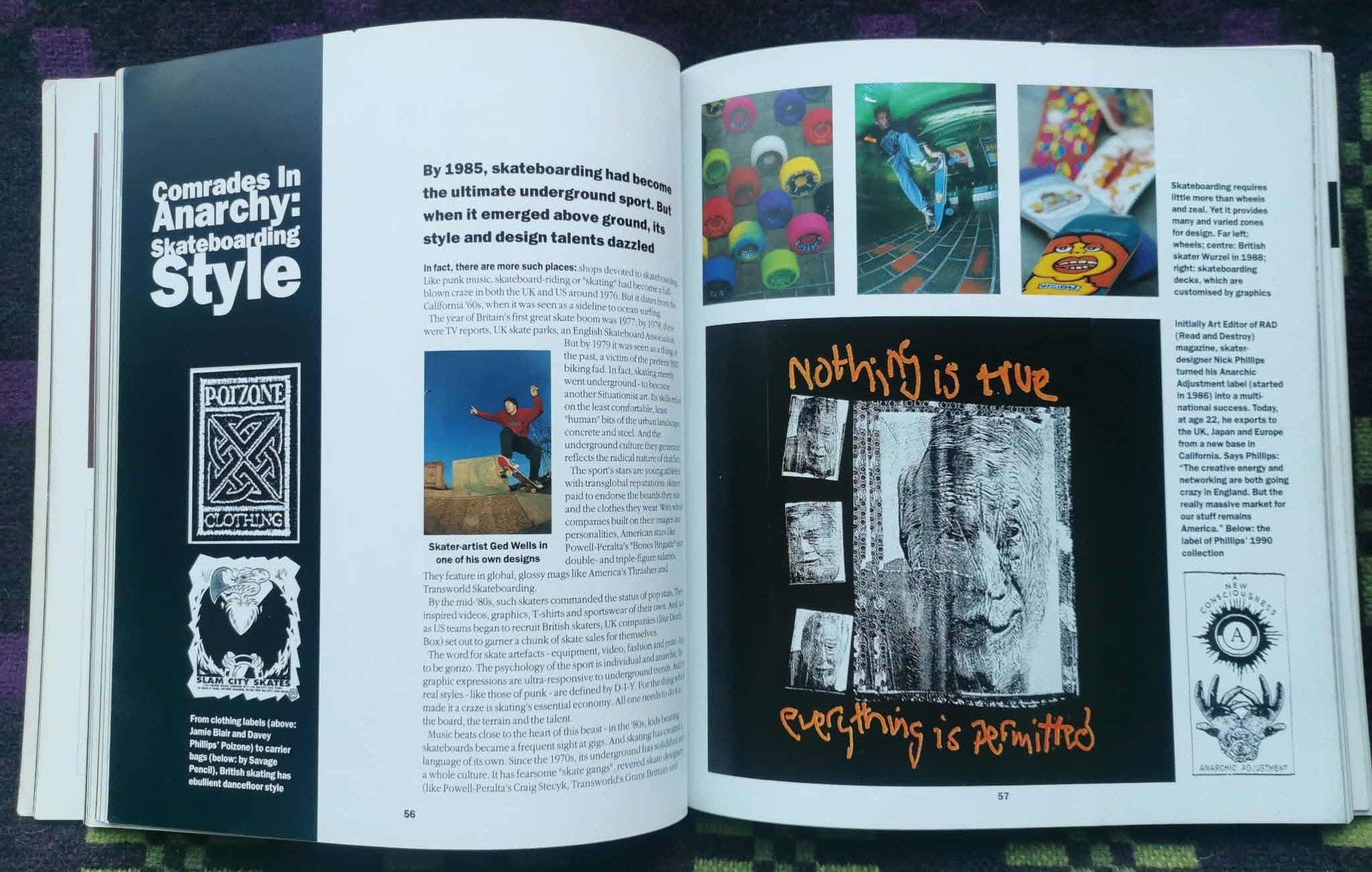
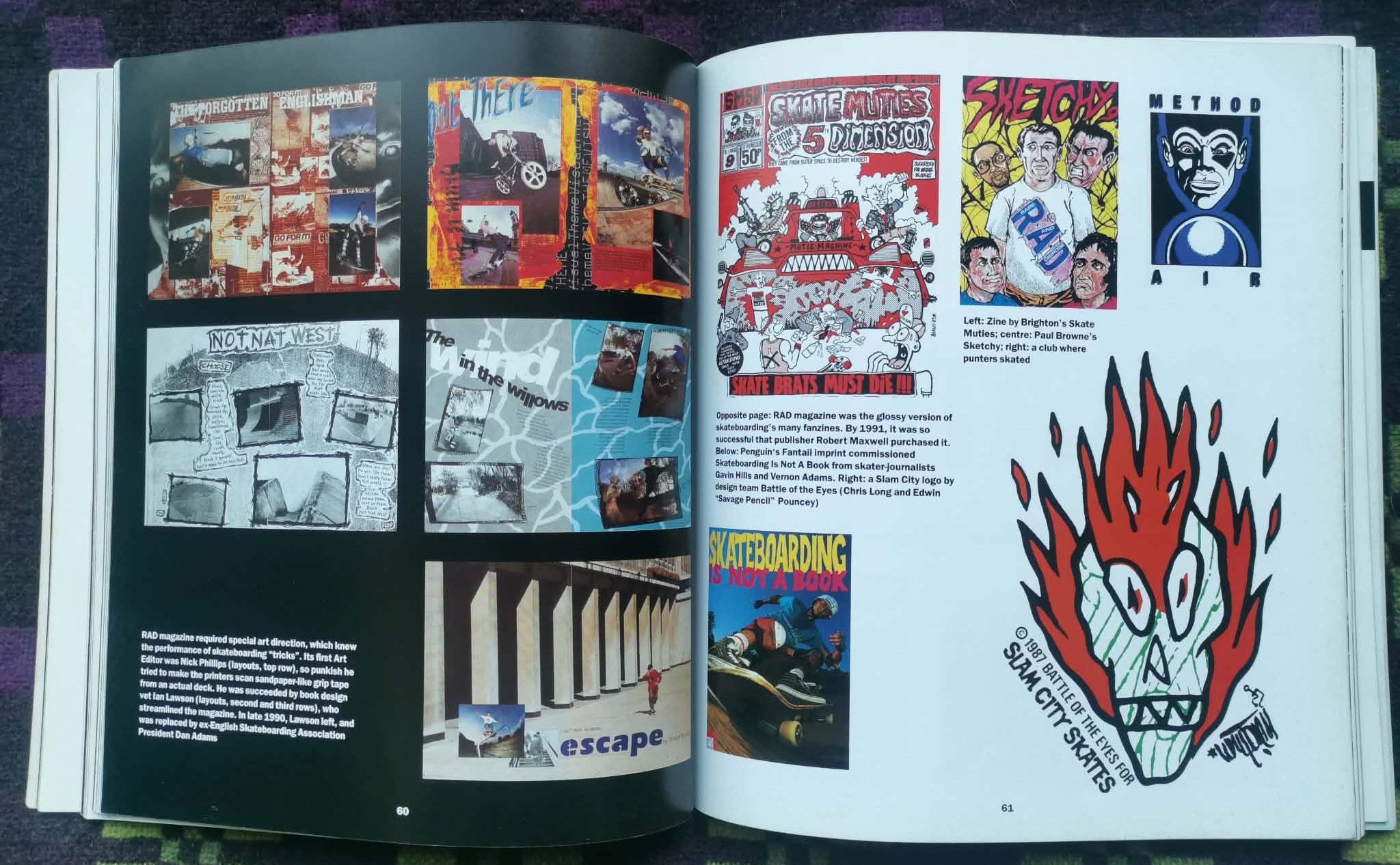
Rose has some background history in the early days of the 1980s revival of skateboarding, as she edited two significant features on this niche scene for music newspaper NME in 1987 (I discussed these in the earlier essays on skateboarding). In Design After Dark she builds on this to plot a DIY insurgence (labelled as “sound system theory”) through UK skateboarding culture with a profusion of home-movies and a celebration of the inane and mundane. It’s a great section of the book with fine layout. The roles of Slam City Skates and artists such as Ged Wells feature prominently. Although well-researched, it overlooks some key moments in the growth of this UK scene and its associated style, most significantly the connection to a thrash revival, which is surprising as Rose covered them in detail at the time in her 1987 NME articles. I’m not sure why she is airbrushing this from history?
The pre-rave aetiology of this surf and skate look as it courses through various subcultures is muddy at best. I have tried to put the argument across for a strong but secluded link up between early hardcore and thrash and skate/surf culture. But there are other tangents. I opened this essay segment with Pet Shop Boy Chris Lowe donning full surf wear on Top of the Pops in 1988. Subculture researcher Peter Jachimiak unearthed another variant strand of this with his amusing exploration of the ‘Acid Surf Mod’ look (Subbaculture issue 8) briefly glimpsed on Paul Weller and his Style Council as they took the stage at the Royal Albert Hall in July 1989 also bedecked in surf shorts, Converse and calf-length white socks. A collective sharp intake of breath.
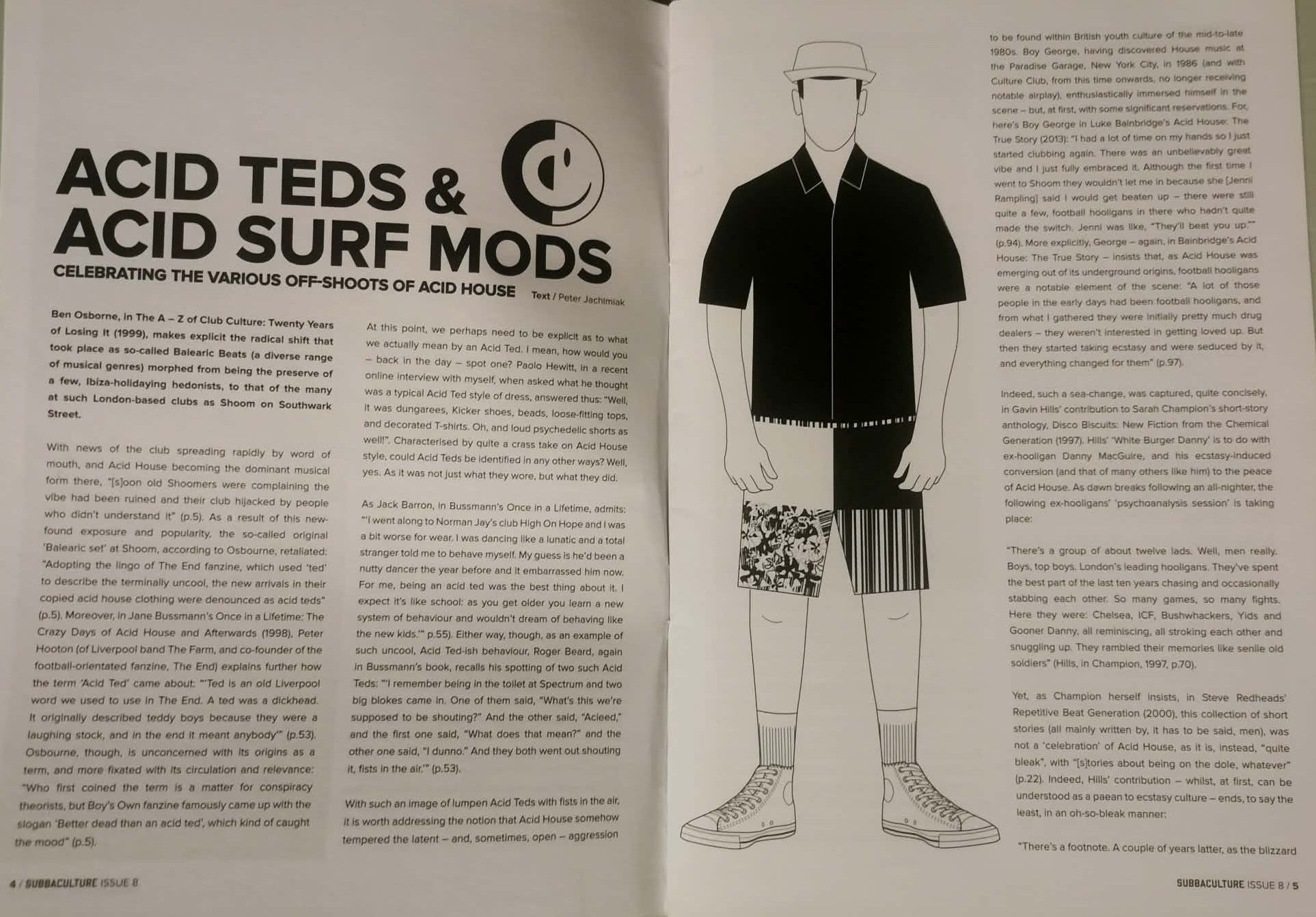
Jachimiak goes against the grain of attributing a broadly lumpen explanation of the surf gear grafting to rave culture (via Balearic Beats at Shoom going overground), instead pointing to Weller’s mod-ish glances to Italian culture via Style Council’s retooling in the ‘Italo house’ genre – a continuation of mod’s original longing gaze to the stylish Continent. It’s an interesting theory and would tie it into Pet Shop Boys with their Euro-culture gaze.
The period following the publication of A Decade of i-Deas and Design After Dark would see surf and skate culture as a main choice of clothing in a multitude of scenes, as well as a vibrant skating scene existing in its own right. More so, the precision marketing of Stussy in the UK by Michael Kopelman would quickly change the landscape of style culture from a fast-and-loose subcultural basis to a more prescriptive brand-led method.
Stussy was very much the litmus test for the changing roles of these magazines and how we understood streetstyle. Kopelman was a strategist with his eye on the prize - as the 1990s unfolded, skateboarding and this associated look reverberating in various music and clubbing scenes became big business. Stussy, the Tribe, and Kopelman’s marketing-of-cool prowess paved the way for streetwear shops such as Bond and Passenger.
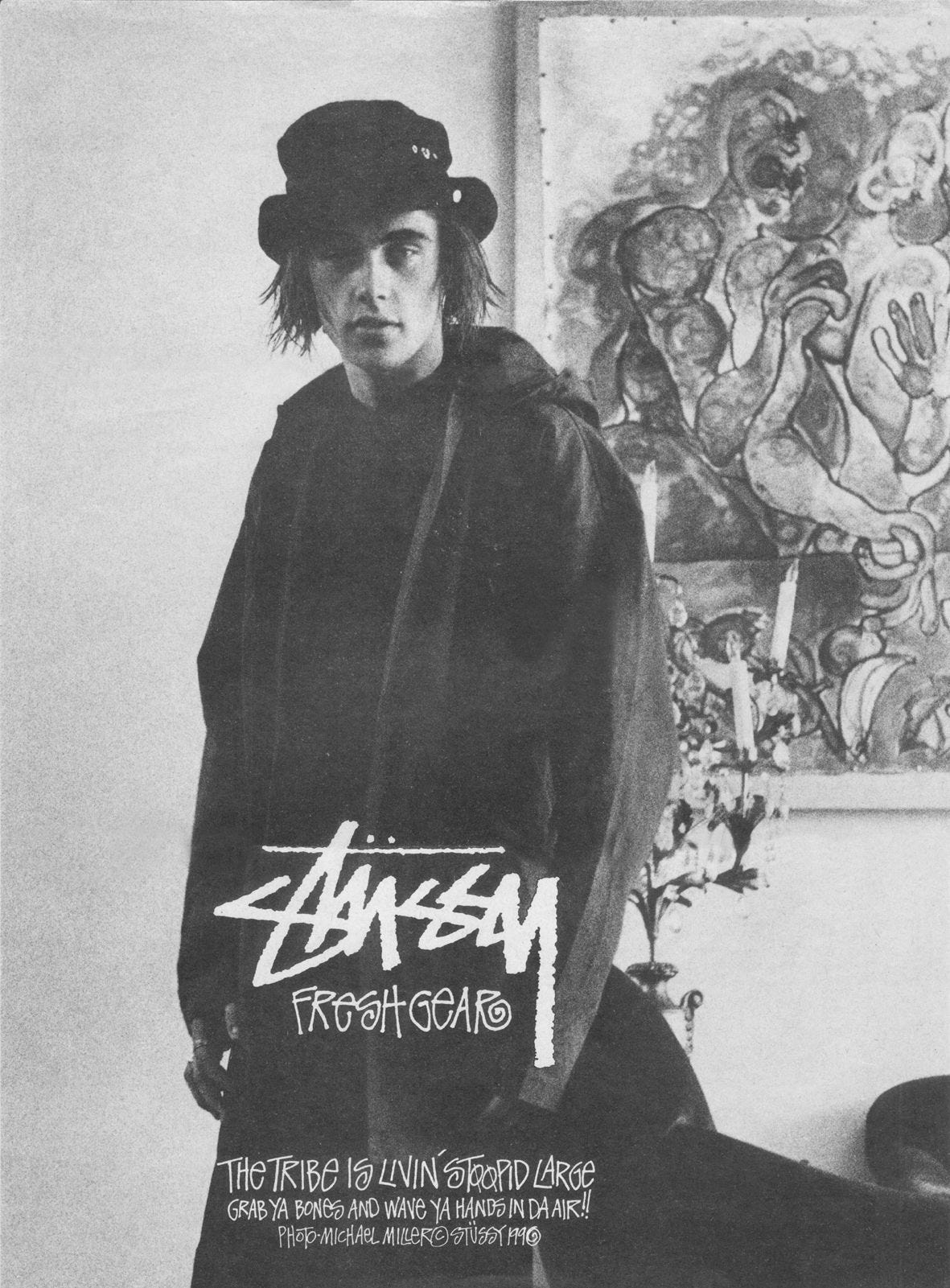
Both Sims and Adz cannot overemphasise the role played by Stussy and Kopelman. The vernacular sense of streetstyling that defined the 1980s was somehow erased. That knack of mixing-and-matching, accessorizing, seeking out quirky brands from niche (non-subcultural) worlds, was suddenly replaced with a more prescriptive and driven agenda. Sadly, it’s been like that ever since.
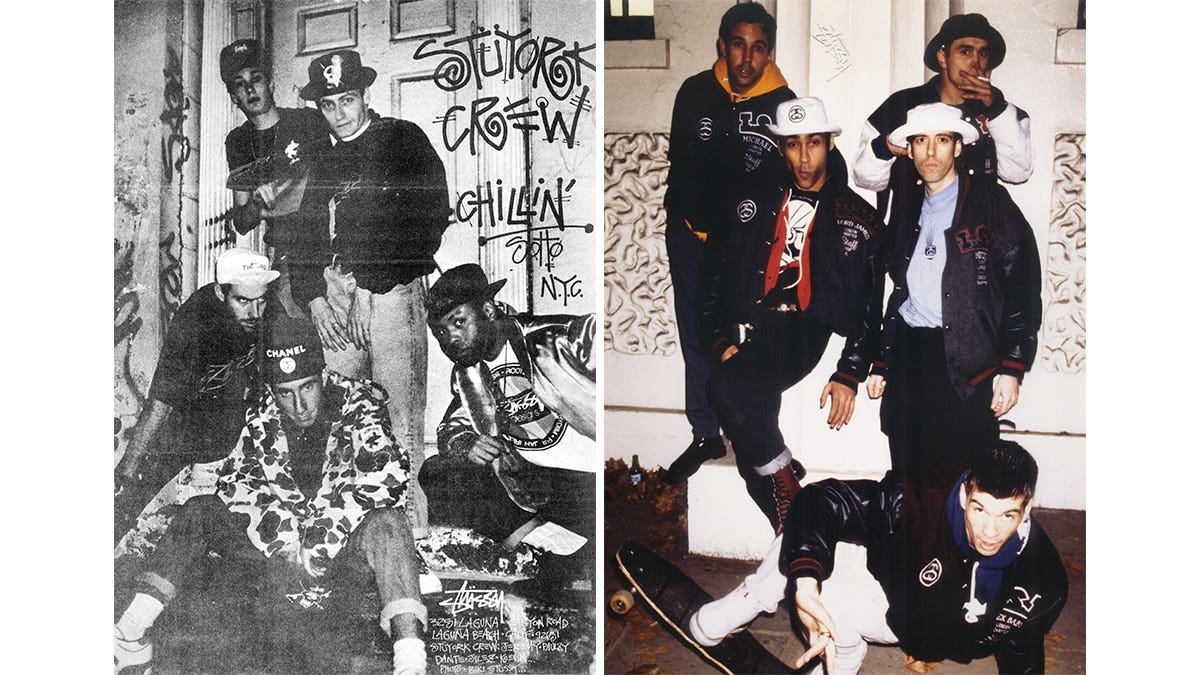
In the UK Stussy tribe we have a few musicians - 23 Skidoo’s Alex Turnbull who was a genuine skateboarder and punk-punk-industrial pioneer, and Mick Jones from Big Audio Dynamite. Jones might not have been a skater, but he was certainly at the forefront of exploring the confusing mess (and eventual burnout) of subcultures in the late-1980s. So our next port of call is the style trajectory of Big Audio Dynamite. But before that, there’s another new 1980s book to review…