
Punk Ghosts
An update from from 1976

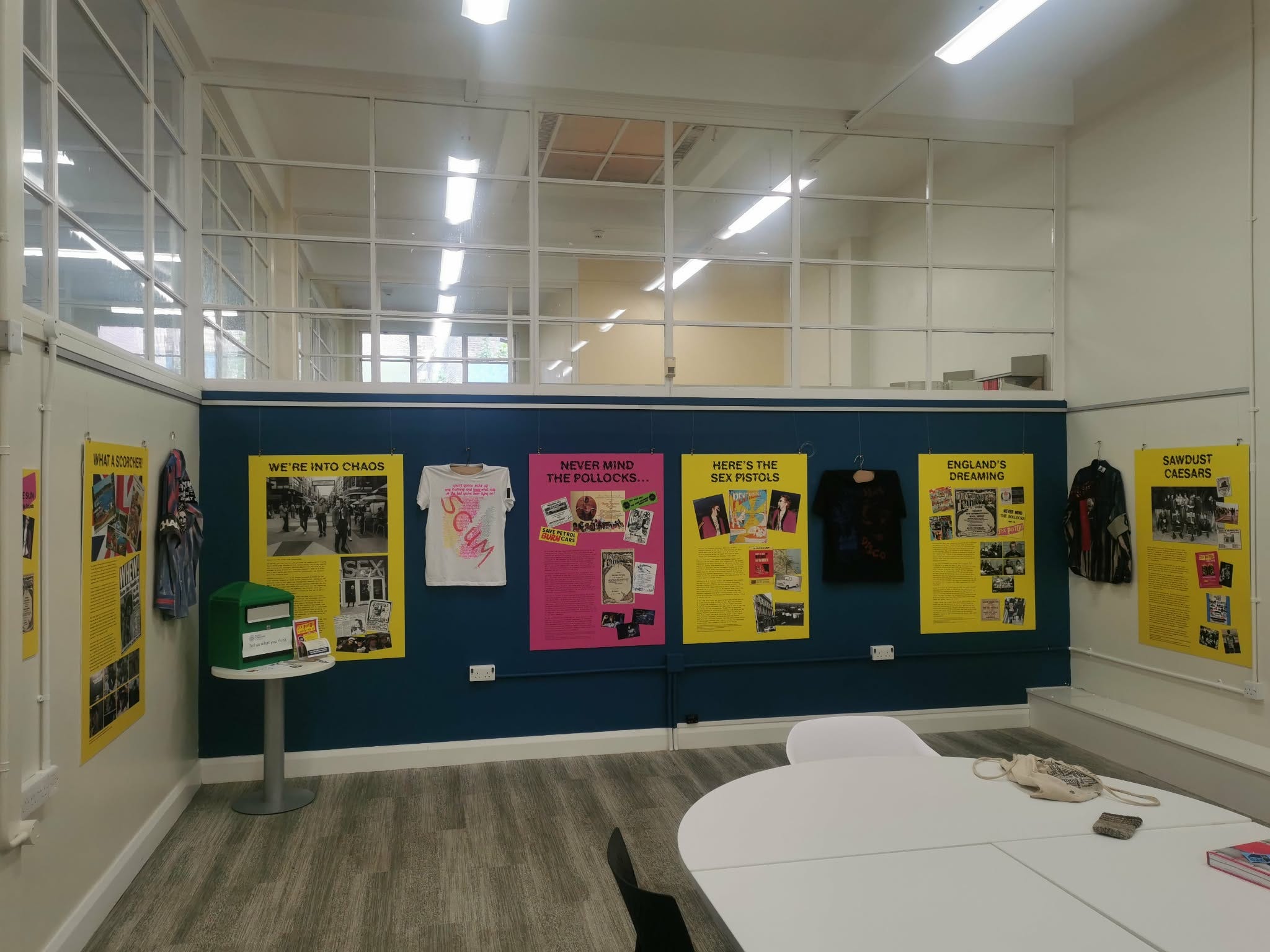
My exhibition at Scarborough Library is entering the final throes. I have an author evening tomorrow (Thursday 21st) with Dr Mark Goodall who has written the 33 1/3 series book on Never Mind the Bollocks. I’m expecting this to be a good conversation (we had a dry run, as by chance Mark doesn’t live to far from here). The exhibition then runs another week up until Saturday 30th. Hopefully it might re-emerge some time in the summer/autumn.
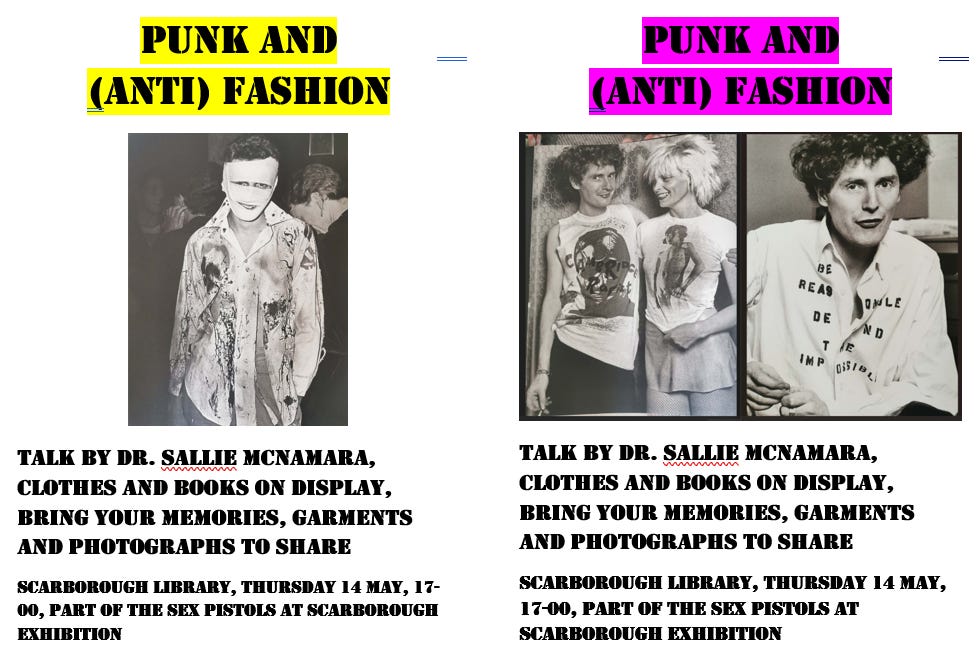
Two events have been completed – the opening ‘round table’ on seaside and subcultures, and a more interactive (anti) fashion evening. For the former I had local writer and curator Patrick Argent, local DIY punk activist Jonathan Dixon, and subcultural researcher Ian Gwinn all adding a different slant on the subject. It fitted together without either overlapping or leaving gaps, which was remarkable.
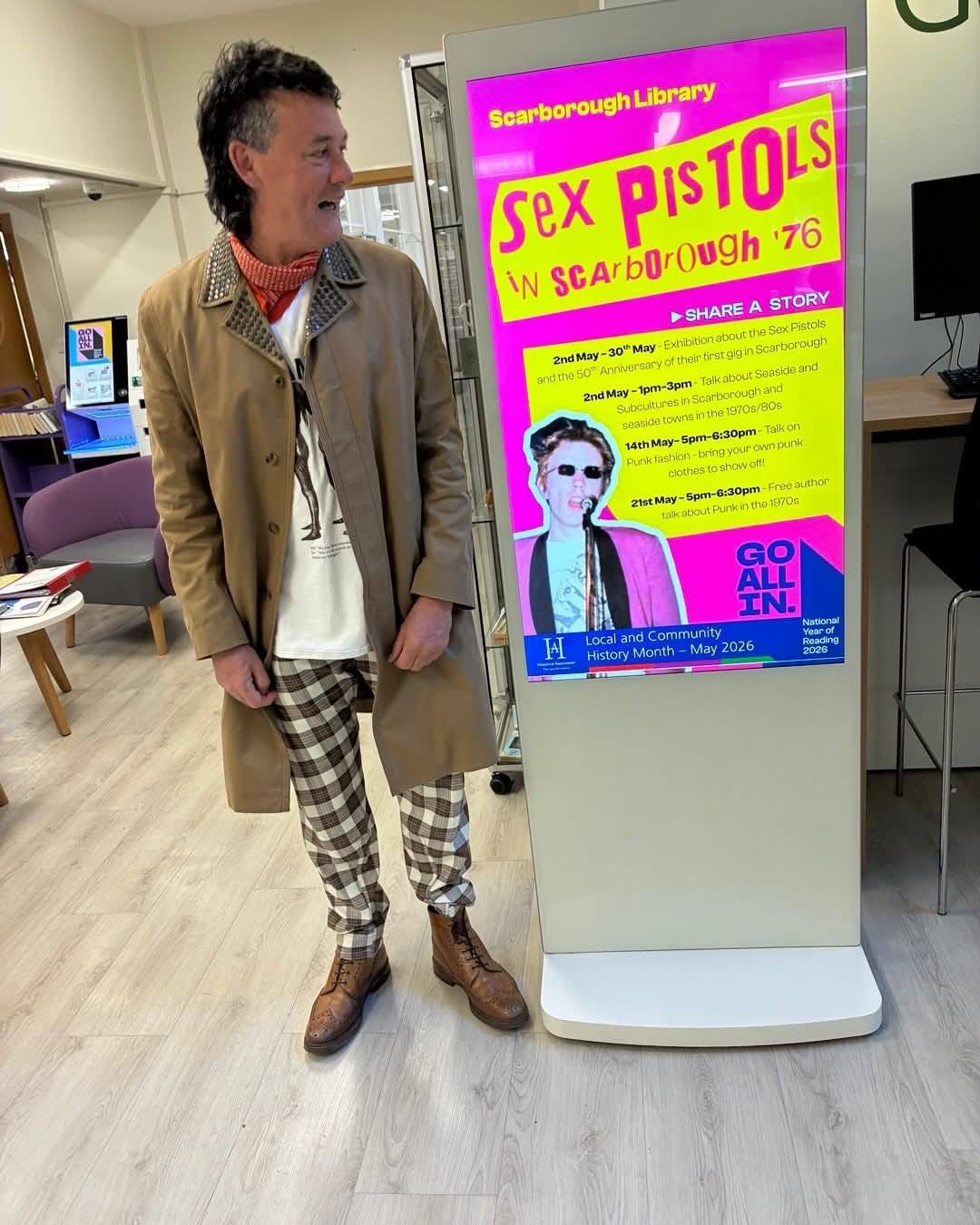
The fashion evening had short presentations by myself and Dr Sallie McNamara, and then a chance to share memories about how we constructed our desired punk looks, how we made them happen, and how these looks were taken out into various (often hostile) public arenas. In addition to talking in fine detail on women in punk, Sallie described how punk has infiltrated catwalk and couture fashion. It gave me a chance to dress up a bit. Not that I need an excuse. In homage to my original punk raincoat that was stashed in a plastic bag out of sight of my parents, I wore my Margiela caretaker caretaker coat. My partner Clare is not keen on this, but I don’t have to hide it in a carrier bag and bush at the end of the street.
There was an extra event as Northallerton Library made contact and asked for a talk to coincide with the actual FIRST non-London date by the band on 19th May 1976. This gave me a chance to explore the site of Sayers nightclub, on Elder Road. In 2026 it was cold and raining, as it was in 1976. Northallerton is swanky, the county town, with lots of Georgian and early Victorian housing, though Sayers nightclub was behind the scenes, at the end of a nondescript row of garages. The club was rebranded in the early 1980s to ‘Carousel’ and then met the club-crowds of the 1990s as ‘Amadeus’. It is still branded such, though seemingly a new building with an extended area of entertainment.
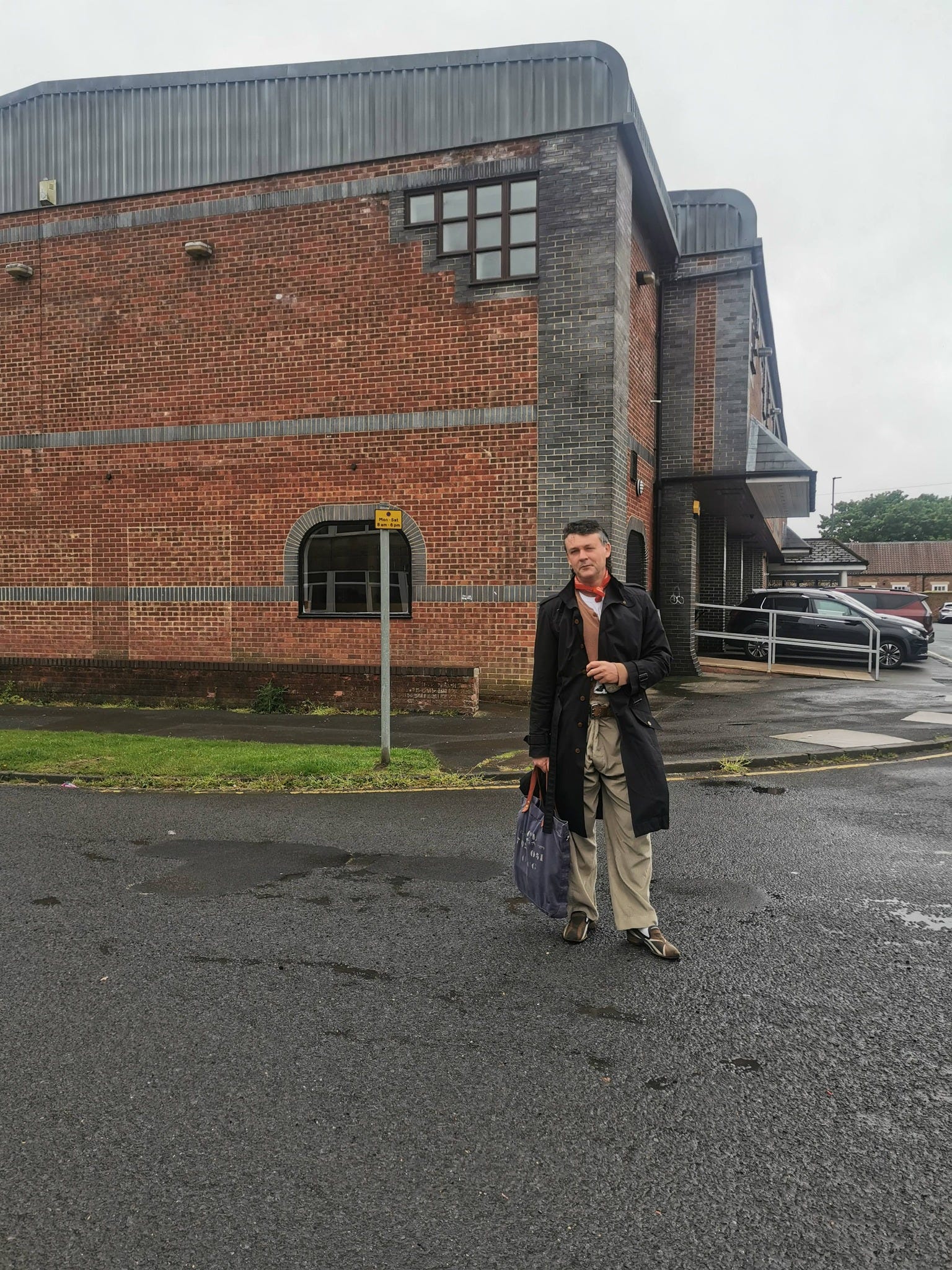
The new building was more clinical, in that postmodern drabness of ‘less is a bore’ combining skeuomorphic (naff) elements of the past rendered in Lego-style aesthetics – the wall behind me has numerous era windows, including the bricked over ‘window tax’ effects. The entrance to the club has fake Greek pillars, etc etc. You get the picture.
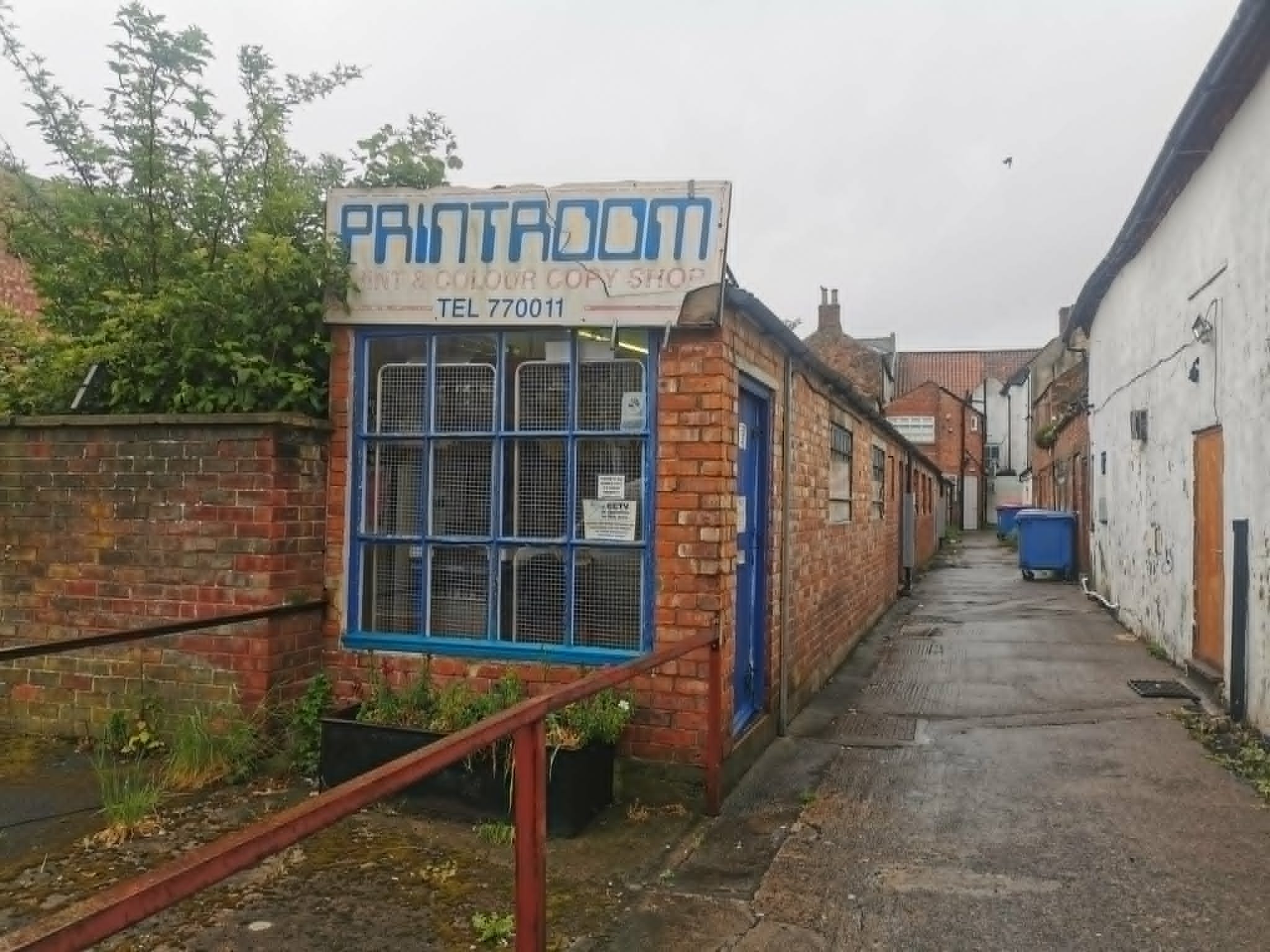
However, there were remnants of the past. A strange printing shop that, while not evoking 1976, certainly felt like a remnant/revenant from the 1980s. I felt, momentarily, that I was stepping back, awaiting the spluttering Transit van that was ferrying the band around these northern outposts to perform (or otherwise) in front of bemused and ultimately enraged, but generally meagre, crowds.
After some lunch it brightened up, and the talk at the Library was very well attended. We even had the town mayor and local councillors in attendance who used the opportunity to announce their intentions to place a heritage plaque on the current nightclub building.
----
I’ve written up the whole exhibition experience for the forthcoming SIG News paper published as part of UAL/LCC’s outreach. I’ve seen the issue (#5) and it’s got some incredible content. Here’s what I said about the project, as an attempt to sum up….
The Scarborough exhibition stripped things back to the everyday, to de-emphasise myth and instead recreate a contrast of worlds … the images and texts built a contrast between the everydayness of Scarborough and the deviant and decadent extraordinariness of the Sex Pistols. The exhibition also offered an insight into the motivations and ambitions of the band early in their timeline, in turn affording an opportunity to look at how history and memory are constructed through myth … In 2026 we will most likely see a public airing of standard punk myths, overused anecdotes and overembellished claims to importance. The intention here was to do something more quotidian and ‘honest’, to think about how punk grew at different scales in different places, and to understand how other – concomitant – narratives might apply.
I’ve just undertaken a Teams interview for the BBC, but I’m not sure it went well and whether I got the requisite points across. We got into a conversation about these five early gigs in Yorkshire, and the more myth-making gigs beginning with the first Manchester gig a few weeks after the Yorkshire tour.
The journalist was intrigued by the contrast, and whether we can ultimately take something from the poorly attended, bemused and harsh encounters between the band and the small audiences. Are we simply trying to create a false narrative and construct a mythical moment. My answer was in the negative, though I suggested it was more a “line in the sand”. Apart from us having a beach here in Scarborough, I’m not sure what that might mean.
Reflecting on this, you could ask what would have been different if these five gigs never happened. The trajectory of the Sex Pistols would quite likely be unchanged. Life in the Yorkshire towns would be unchanged. But they did serve a purpose. To allow the band to appreciate how the wider country would react to what they were doing. To force them to develop a strategy to cope, to continue, to infuriate further. I’d wager that there were large chunks of the small audience at Manchester gig 1 (and even gig 2) that were appalled by what they saw, and didn’t go home and make life-changing decisions and form new bands. These people get excluded from the myth-making of those gigs and the Pistols story.
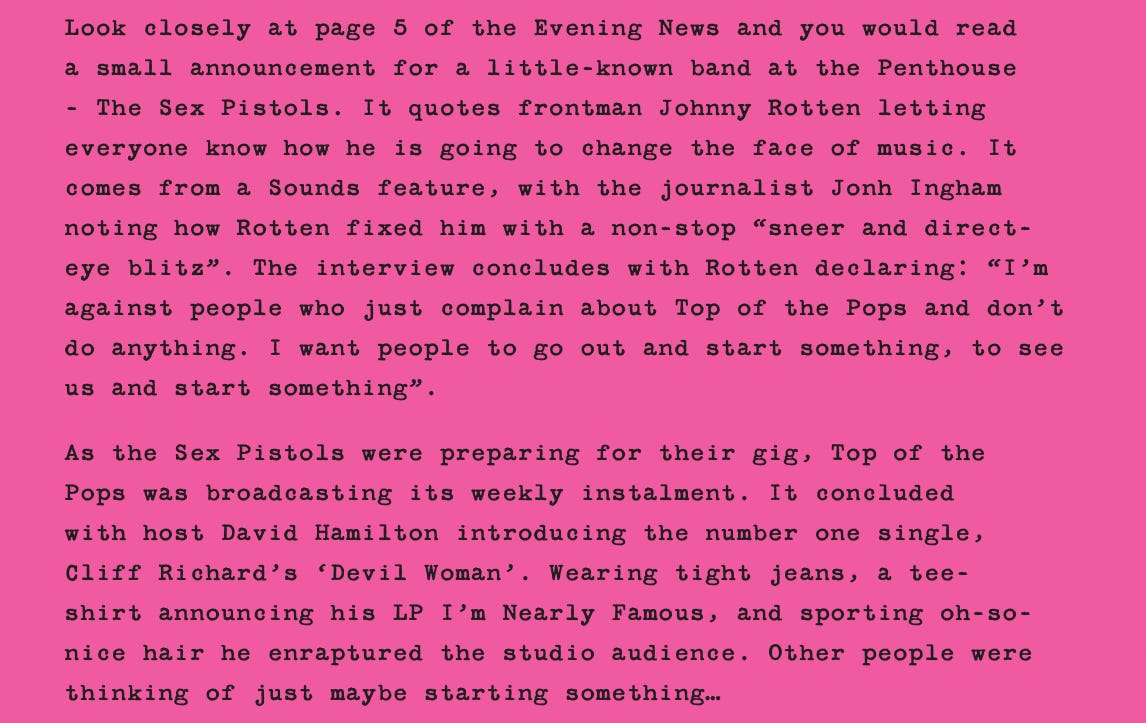
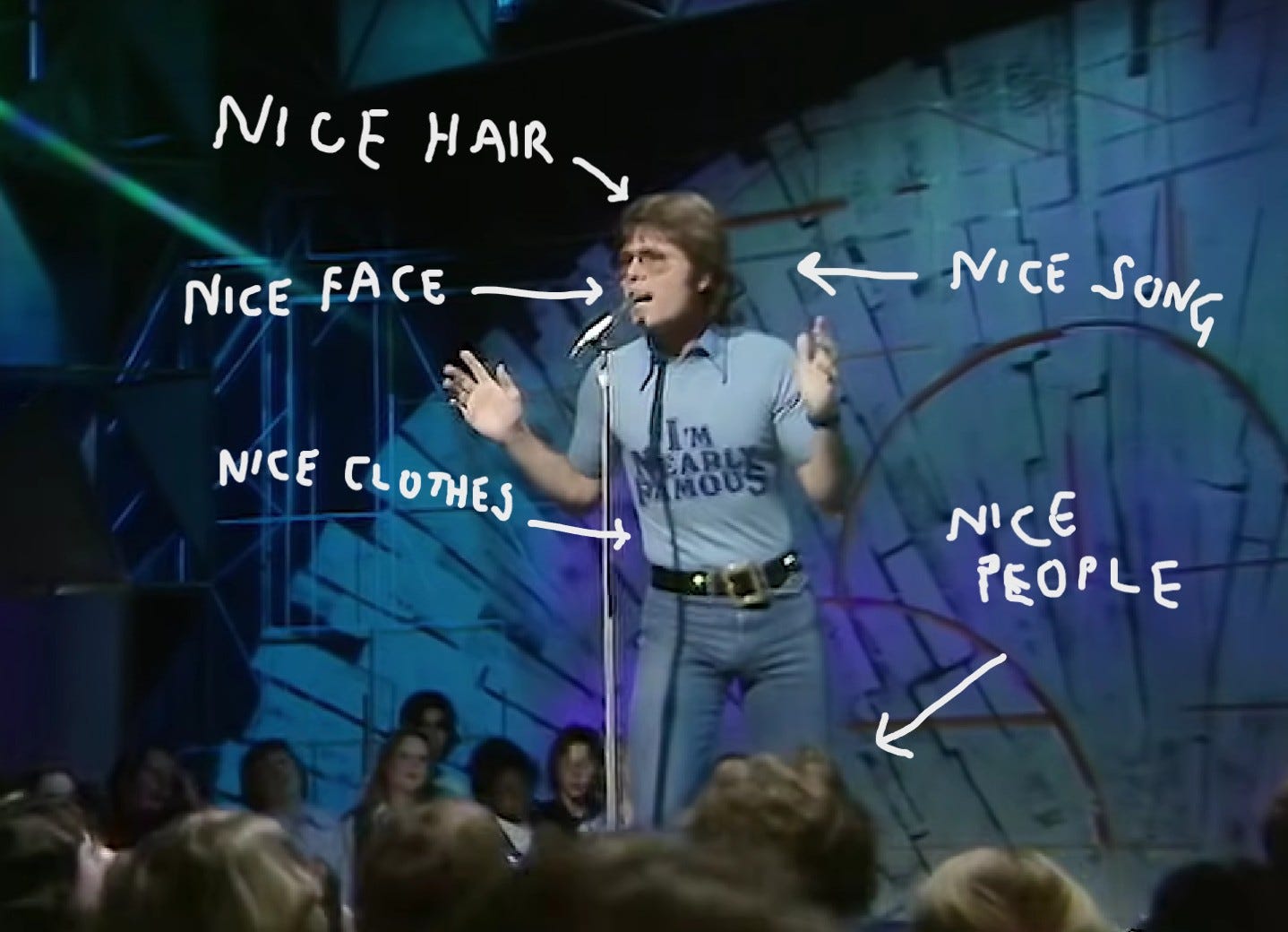
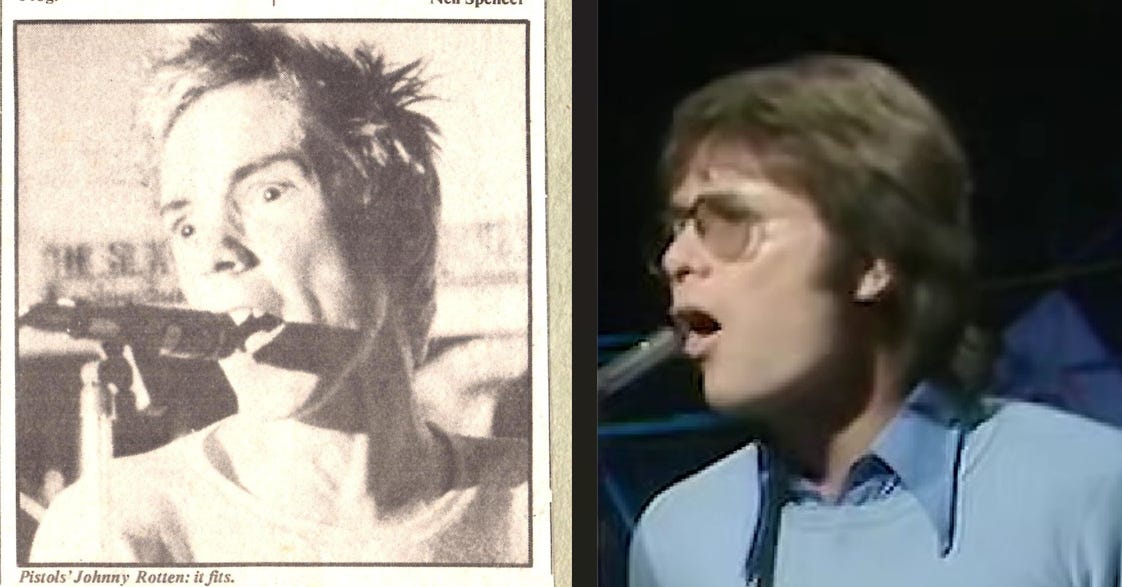
In the exhibition I fixed on a line from Jonh Ingham’s early Sounds interview with the band, and Rotten in particular. The frontman rages against Top of the Pops, and the complacency it engenders, suggesting that his band strive to inspire something more reactive. By chance, Top of the Pops was airing on the night the band played Scarborough, and a bit of research backed up with YouTube searching showed Cliff Richard to be topping the charts.
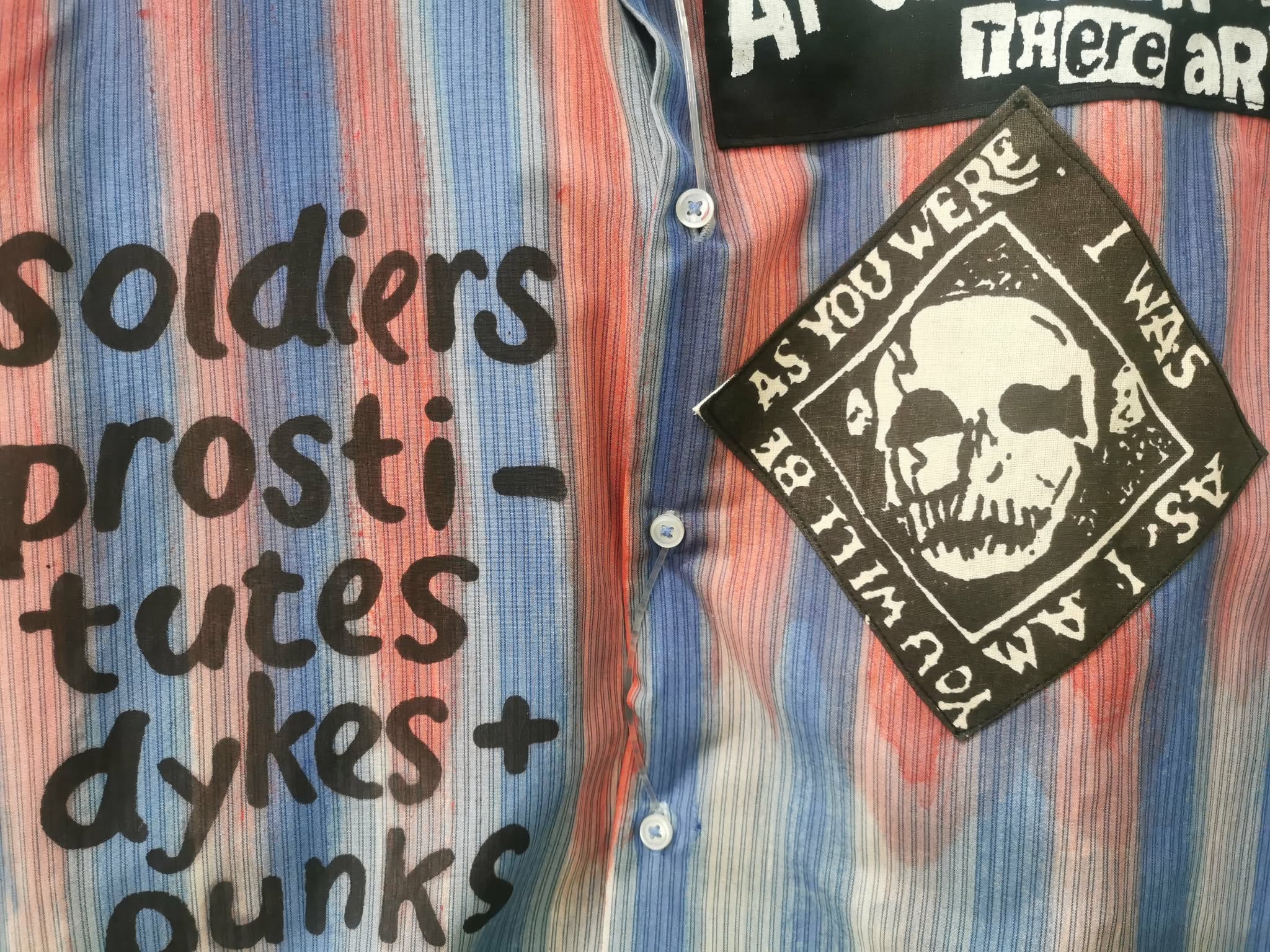
This led me to develop a line of potential flight, rooted in the past, like a hauntological seed. I plagiarised Jamie Reid’s suburban “niceness” collage which was later reused for the reverse of the ‘Holidays in the Sun’ sleeve (advertising the b-side ‘Satellite’, itself referencing the satellite towns of London). Cliff Richard takes the hit in my crude collage. Then we have the Seditionaries patch “As you were I was, as I am you will be”. This is a variation of the memento mori epitaph, a stark statement of mortality…
But which mortality does this refer to? Are we (am I) wishing Cliff dead? I’d better say no to that to keep things above board. Perhaps, everything that Cliff, and Top of the Pops, stood for in May 1976. The process of producing the product, the transmission, and the banal and endless consumption. Perhaps punk was even declaring – and celebrating - its mortality before it had life? And it wanted to drag everything, Rotten and Richard, down with it.
They played quite a few, no disrespect intended, off the beaten track places, and when you consider how few gigs they actually did ever manage, places like Scarborough and Huddersfield, for instance, saw perhaps more of the Pistols than did London. And New York never saw them at all!
A really interesting piece, Ian…thanks!
Was the 2nd May talk recorded?