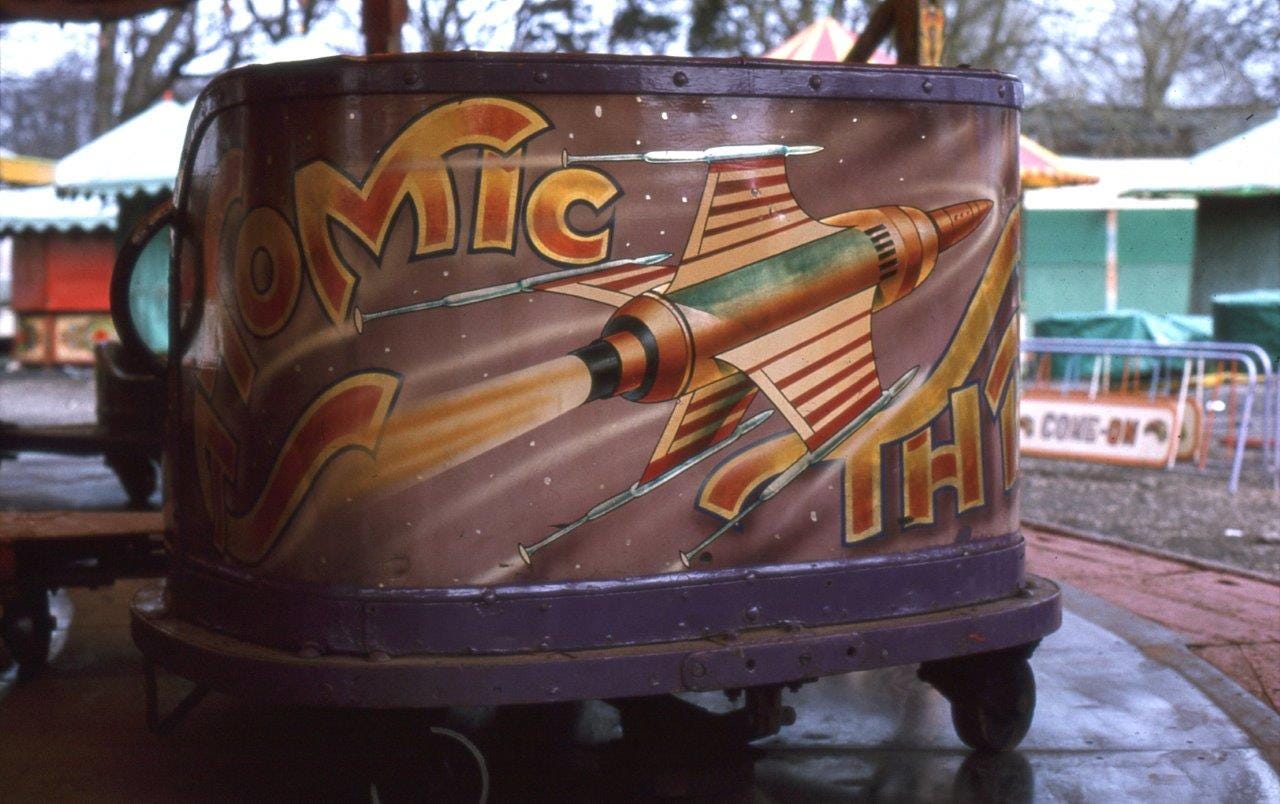
Space is the Place
Outer space fictions on the fairground

As well as SUB>SUMED being a repository for all my writing on music, subcultures and art, I will also include the occasional essay on fairground art. I have brought this in via a couple of earlier articles that saw fairgrounds cross over into music and subcultures, and I have also outlined my own autobiographical intersection with fairs. First up, an essay on space themes.
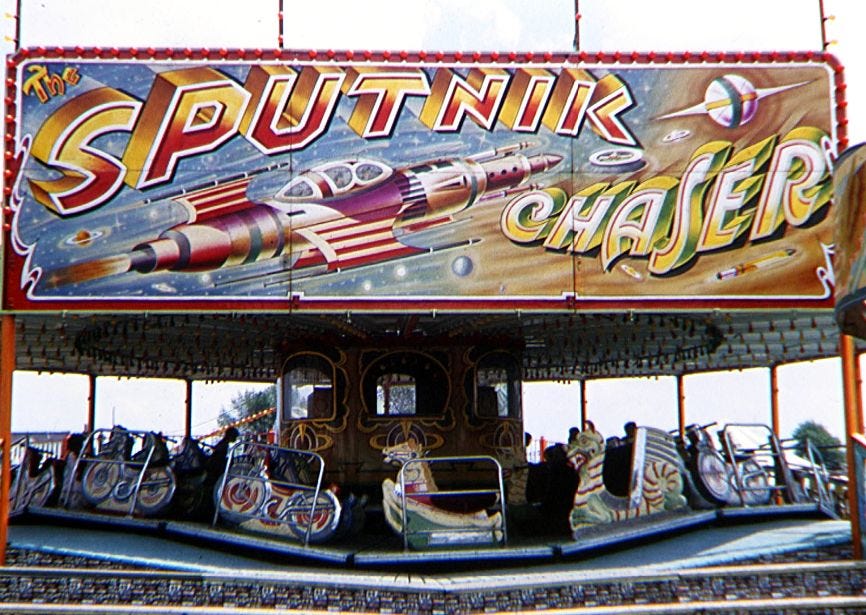
Let’s open with a photograph depicting a slice of classic space-themed decoration. The 1958-built Sputnik Chaser, and its futuristic rocket decoration by Fred Fowle – the driving force of post-war fairground art. As with most of Fred’s artwork, the depiction and imagination on this early ride is second to none, with the horizontally-inclined rocket ship laden with striped fins, boosters and front-facing guns and missile-launchers. A blast of flames shoots from the rear, the craft itself represented with a nested sequence of cylinders decreasing in diameter. This was how we all drew rockets on our schoolbooks.
The pilot and crew are encased under an elliptical cockpit with an arrangement of ovoid portals, as if blasting through space was akin to a motor race or even a ride on the fairground. The self-referentiality between the depiction and the ride itself was never accidental. Fred’s work in this period, through the late 1950s, 1960s and 1970s, saw the fantasy space rocket reach its peak of popularity on the fairground, appearing on rounding boards and shutters for round rides, and also adorning the multitude of surfaces, flat or otherwise, on the popular Hurricane Jets.
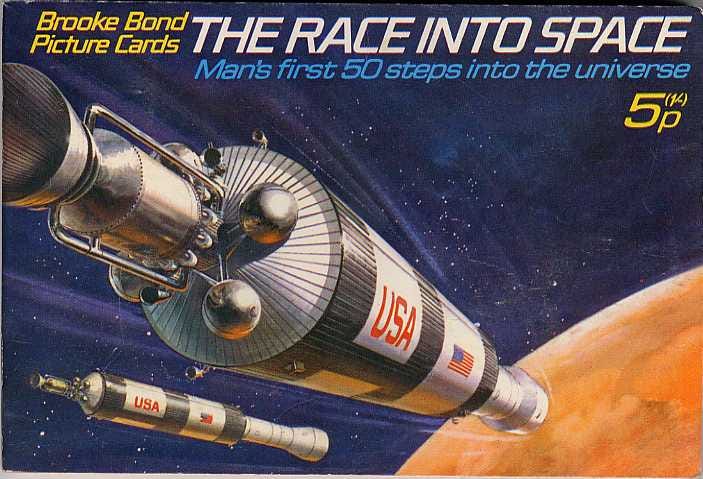
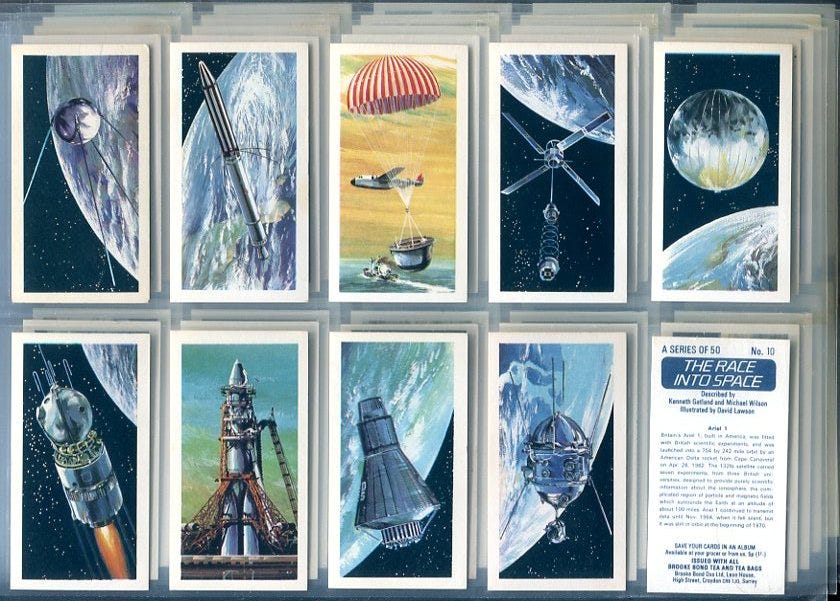
In the post-war period we became a nation obsessed with comic book jet-setters. Gerry Anderson set the tone of the imagination with a thrilling sequence of television series, and the “Race into Space” was celebrated with the iconic PG Tips collector cards from 1971, which had me gripped as a 6-year-old. Fact and fantasy overlapped to invade the everyday space of the home, with Doctor Who dioramas assembled from the back of Weetabix packets. As we arrive at the quarter point of the 21st Century the conquering of space continues apace, though it is very different. We now have megalomaniac billionaires verging on Bond villains such as Elon Musk and Richard Branson offering to take those with enough money into orbit. It doesn’t quite seem as ‘sexy’ or dashing to have Branson’s face bearing down from the backflash of a fairground ride.
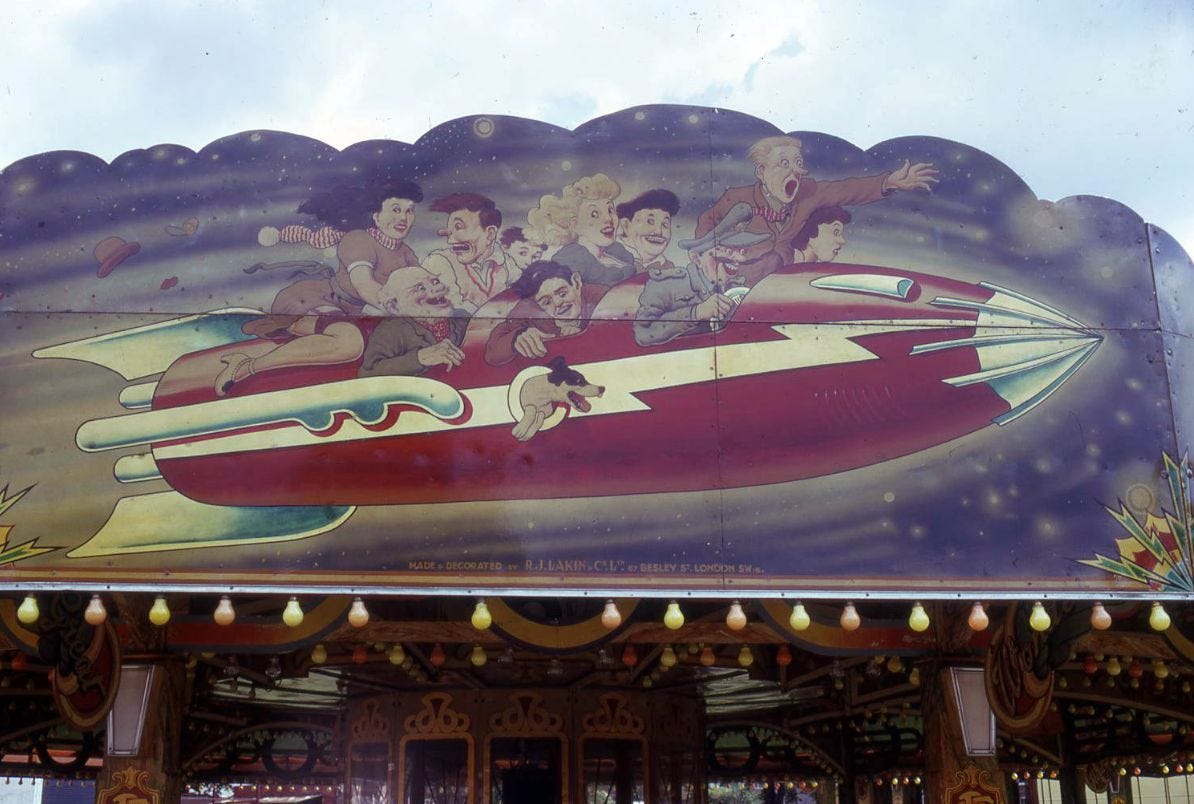
Putting Musk and Branson aside and taking things chronologically, early space themes actually arrived pre-war, with the onset of the Moonrocket ride in the 1930s starting things off. Their introduction into the UK is the cue for another great artist - Edwin Hall – to set to work depicting packed roadster-style rockets taking a trip to the Moon. Influence is likely to come from French filmmaker Georges Méliès ground-breaking 1902 short A Trip to the Moon, which was making a comeback in the public during the 1930s. The film is loosely based upon Jules Verne's 1865 novel From the Earth to the Moon and the 1870 sequel Around the Moon, as well as HG Wells' stirring story The First Men in the Moon from 1901. There are also strong arguments that Méliès’ film is itself motivated by the A Trip to the Moon attraction at the 1901 Pan-American Exposition in New York (a dark ride later housed at Coney Island's Luna Park).
The film documents a cannon-propelled capsule landing in the Moon's eye, and this strangely anthropomorphised Moon seems to be the limit of our imagination at this point in time. Edwin Hall’s depicted passengers seem unaware of the nuances of leaving the gravitational field and entering a different atmosphere, as they are packed into what is in effect an extended version of the rockets that carry the ride’s passengers. The modern-day safety dictum of “keeping your arms in the car at all times” doesn’t seem to apply, as frenetic squabbling is often breaking out with some passengers semi-ejected from the proceedings and clinging on for dear life. The facial and bodily expressions are a mix of grace, exhilaration and pure fear. This is unsurprising, as the characters in the artwork include a mix of comic figures (Marx Brothers, Laurel and Hardy), cartoon figures, Lakin employees, pets and notable faces. Sometimes there’s a smaller rocket in the distance, or a random encounter with a witch on a broomstick. Probably not the company you would chose to venture into space with.
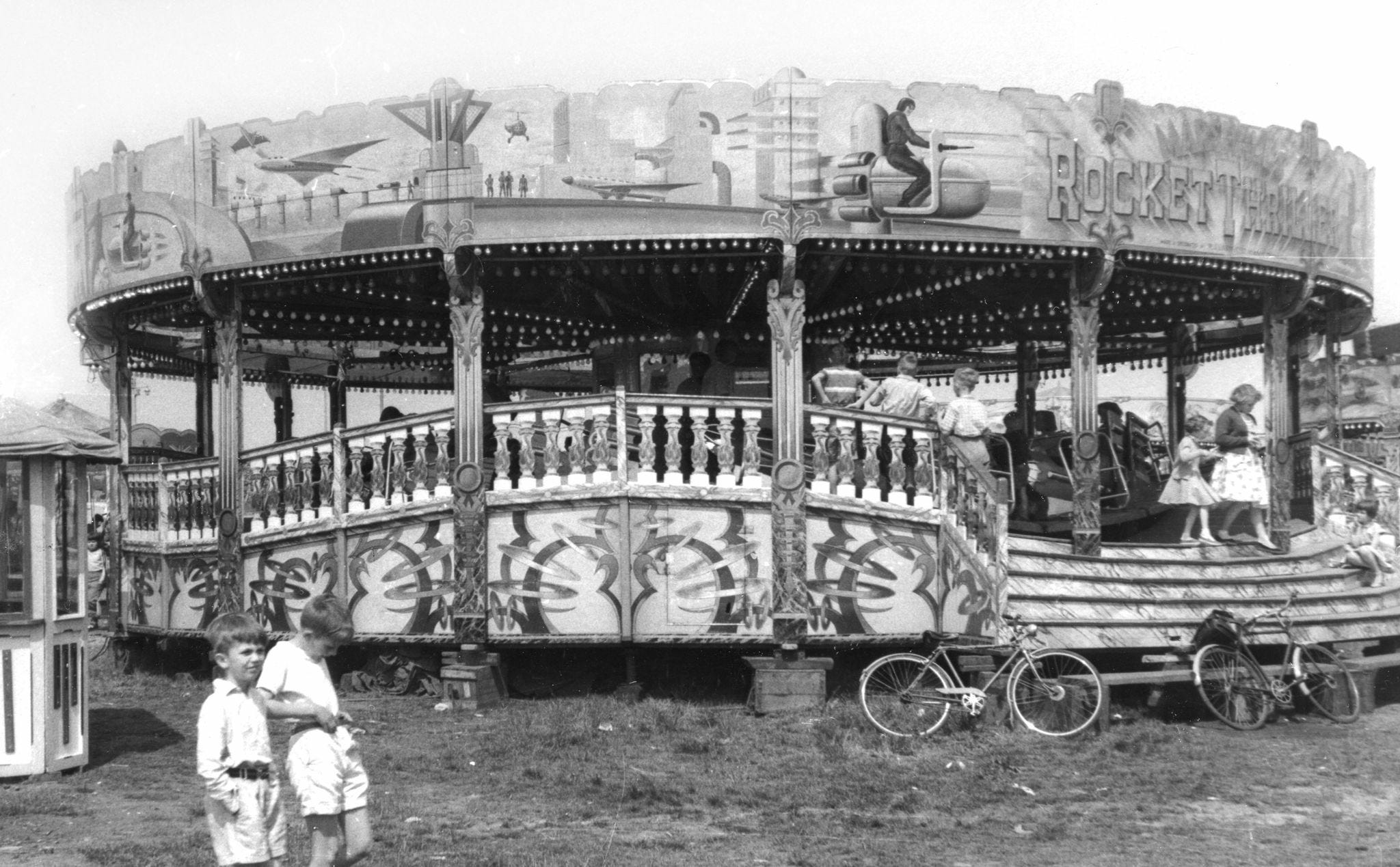
The rapidly proliferating Ark Speedway rides in the post-war period tended to stay with zoological miscellanea, hunt scenes and chariot races, and then settle for a long period on motorcycles and racing cars, before embracing disco fever. However, a few space artworks cropped up. This dovetailed with the popularity of outer space themes through the medium of comic strips, initially with features such as Flash Gordon who appeared in early 1930s as a serialised newspaper story, and then took a major step in 1950 with Frank Hampson introducing Dan Dare in the new-fangled Eagle comic. Documented in Alastair Crompton’s 1985 biography of the artist The Man Who Drew Tomorrow, issue 1 of the comic (April 1950) included the Dan Dare story ‘The Kingfisher Mission to Venus’ where readers were introduced to Hampson’s futuristic style of graphic illustration with his employment of long shots, panoramics and close-ups – very much an intermedial cinematic influence.
The array of rockets, both incoming and outgoing, was influenced by Hampson witnessing V2 bombs flying over Antwerp during his time stationed over there during the war. Other artists added elements to Eagle, not least Walkden Fisher and his Martian landscapes of drooping treacle which would inform Fred Fowle’s fairground work. Further afield, Dan Dare clones were drawn by artists such as Ron Turner (who pioneered Rick Random) and David Morton (the inventor of Jet Ace Logan).
The Lakin-built Ark (above) was decorated by Edwin Hall in the early 1950s. He utilised a scheme that was drawn entirely from the pages of Eagle. The front featured an array of angled rockets about to be launched with feverish activity and neo-classical buildings surrounding the dramatic launchpads. The shutters and rounding boards continued the theme with lots of strange futuristic vehicles such as the ‘jeepet’ (a car with a globe hood and gyroscopic ball) and ‘flying war chariot’ scooters – these were all introduced by the fertile mind of Hampson in the early days of the comic.
I opened this article with the Sputnik Chaser and its Fred Fowle decoration to set the tone, and it would be Fred who pushed things further. He was an incredibly clever artist, using shapes and motifs for their visual impact. He took themes and objects out of their original context (such as a comic book) and presented them as standalone graphic icons within a new assemblage of lettering and shapes, and he always had an incredible sense of colour. If you look closely at the whole of Sputnik Chaser you can see how it all works so well in terms of mood, movement and pure impact.
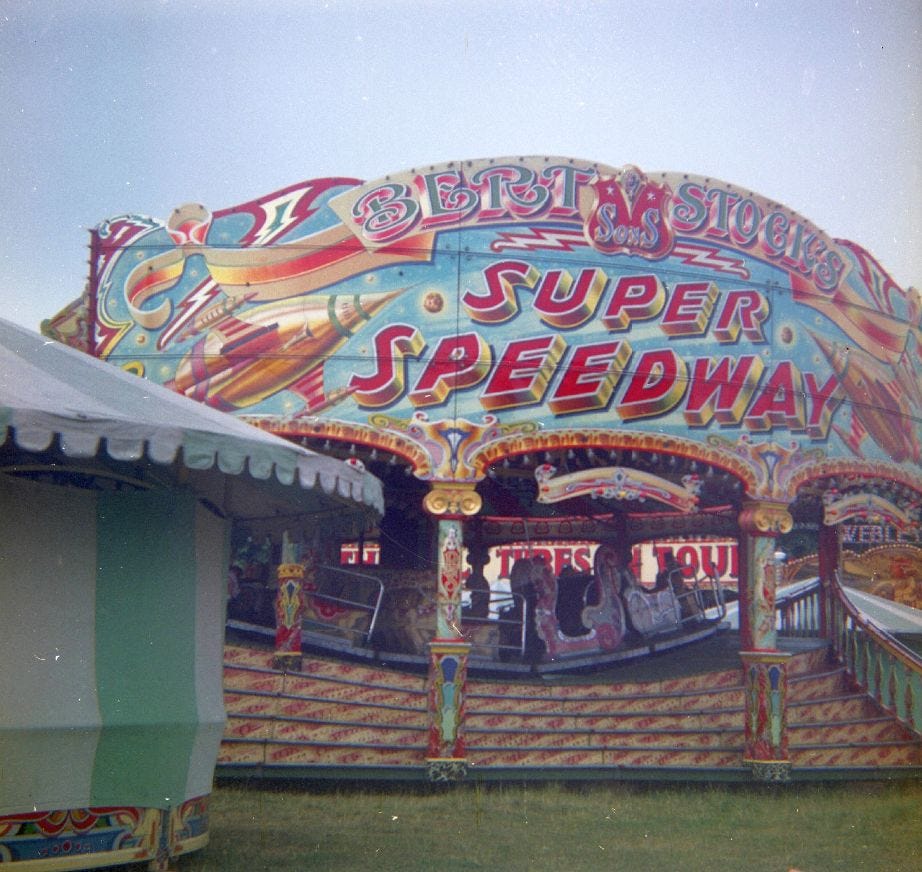
His Sputnik Chaser was seemingly ahead of its time, and the subsequent Ark Speedways did not venture into space, tending to keep with the general motorbike theme through the 1960s before embracing the disco. Fred’s rockets appeared on several repainted Arks, with a cracking example being the Lang Wheels Ark above, redecorated with an outer space theme by Hall & Fowle around 1961. Two angled rockets with squat bodies and bayonet-sharp nose cones project forwards either side of the ride’s name across a 3-bay front. The soft blue of the sky (rather than a deeper toned outer space) complements the red lettering and excess of gold.
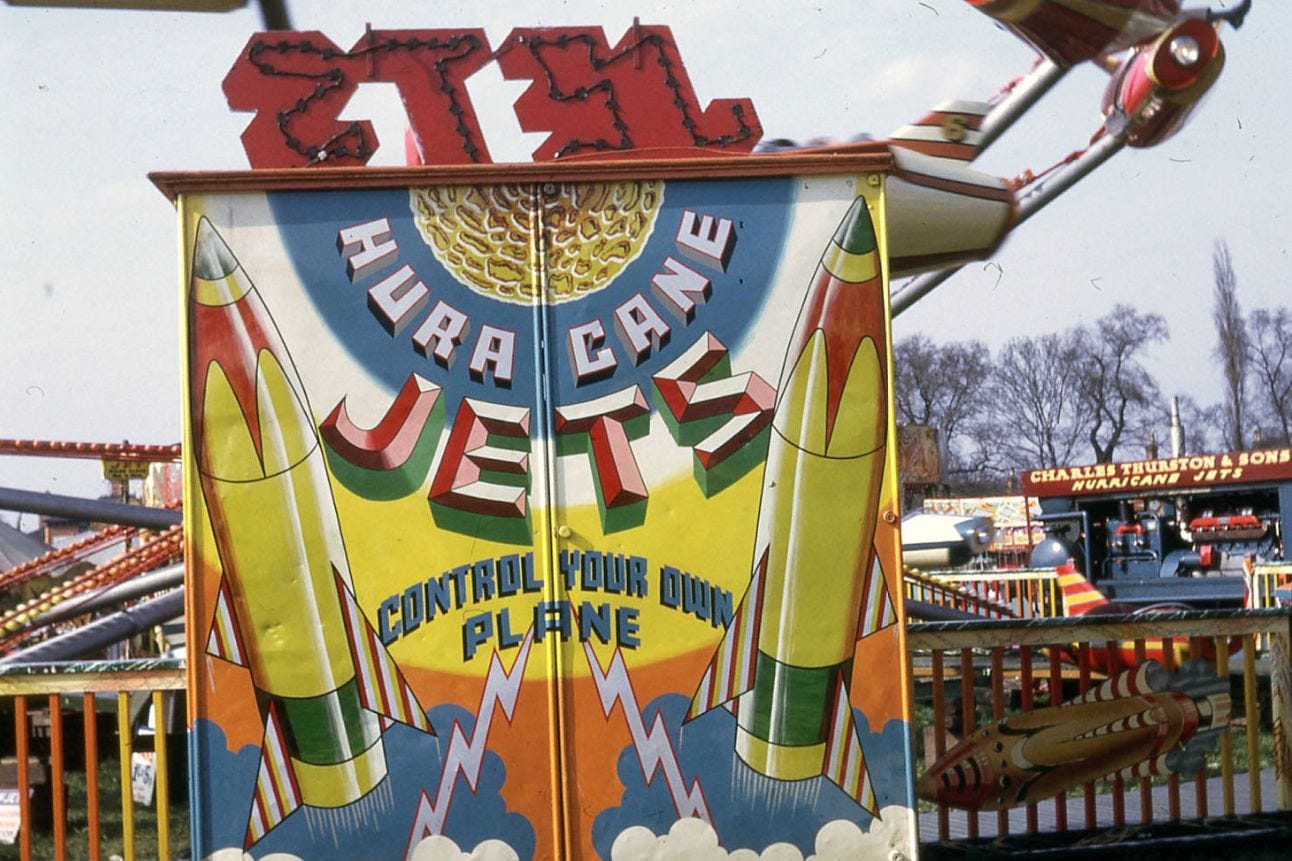
A new ride on the fairground took the rocket to heart - the Hurricane Jets. Without an obvious frontage, the Jets tended to individualise and advertise their thrills with an ornate centre piece of a vertically-inclined rocket and a space scene meticulously applied to the paybox rear. Above we have a set with a modernist interpretation with two narrow rockets angled slightly outwards to allow the ride’s name (originally misspelled as ‘Huracane Jets’) to curve around a semi-circle planet at the top edge that resembled a waffle biscuit.
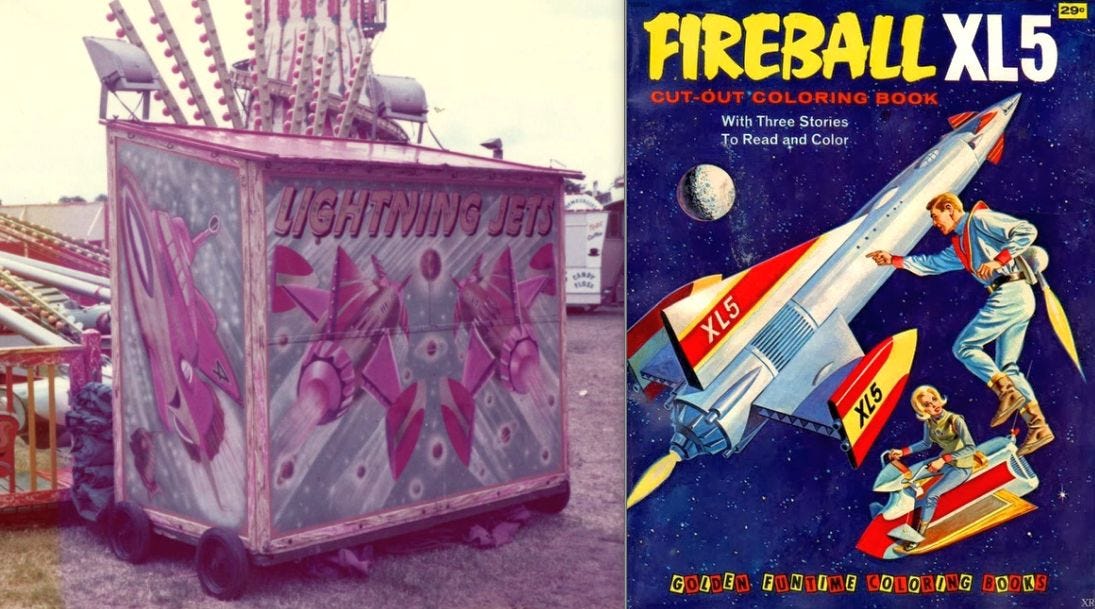
By the 1960s space themes were multiplying in popular culture. A key moment was the arrival of polymath Gerry Anderson with Fireball XL5 airing in 1962, quickly followed by Thunderbirds and Stingray. These puppet animation series were set a century into the future in the 2060s and portrayed a multitude of rockets engaged in a wide-ranging sequence of space wars to repel various invaders. Anderson would plot a course through the decades with further programmes such as UFO and Space 1999 feverishly gripping the teenage imagination. In many ways it meant that Fred’s Eagle-inspired rockets suddenly had their cultural cachet diminished, but Fred was quick to rise to the challenge and embrace the new space fantasies.
The photo above shows more of Fred’s work, clearly drawing upon Gerry Anderson’s oeuvre which would have just gathered pace as the paybox was decorated. The rear image is directly based on a pair of Fireball XL rockets, and the side panel has Stingray and a space fish.
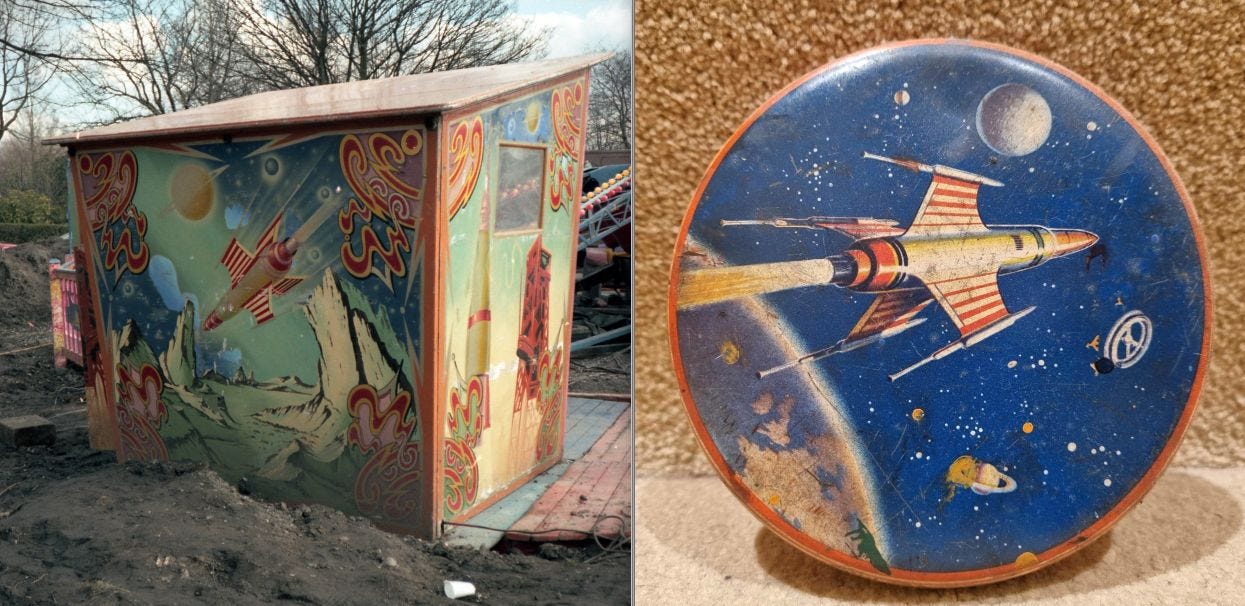
Toffee, treacle and the imagining of outer space terrain were bizarrely connected. Here is another classic work by Fred from the early 1970s depicting an ornate rocket venturing towards a forlorn planet with twisting rock precipices. The inspiration for the rocket in this instance comes directly from the lid of a tin of toffees, and the scenery from a greetings card – but there is an early Eagle comic influence in there showing how fairground art was ‘culturally polychronic’ and often retained older, popular motifs. It’s also proper ‘pop art’, sourcing from the everyday.
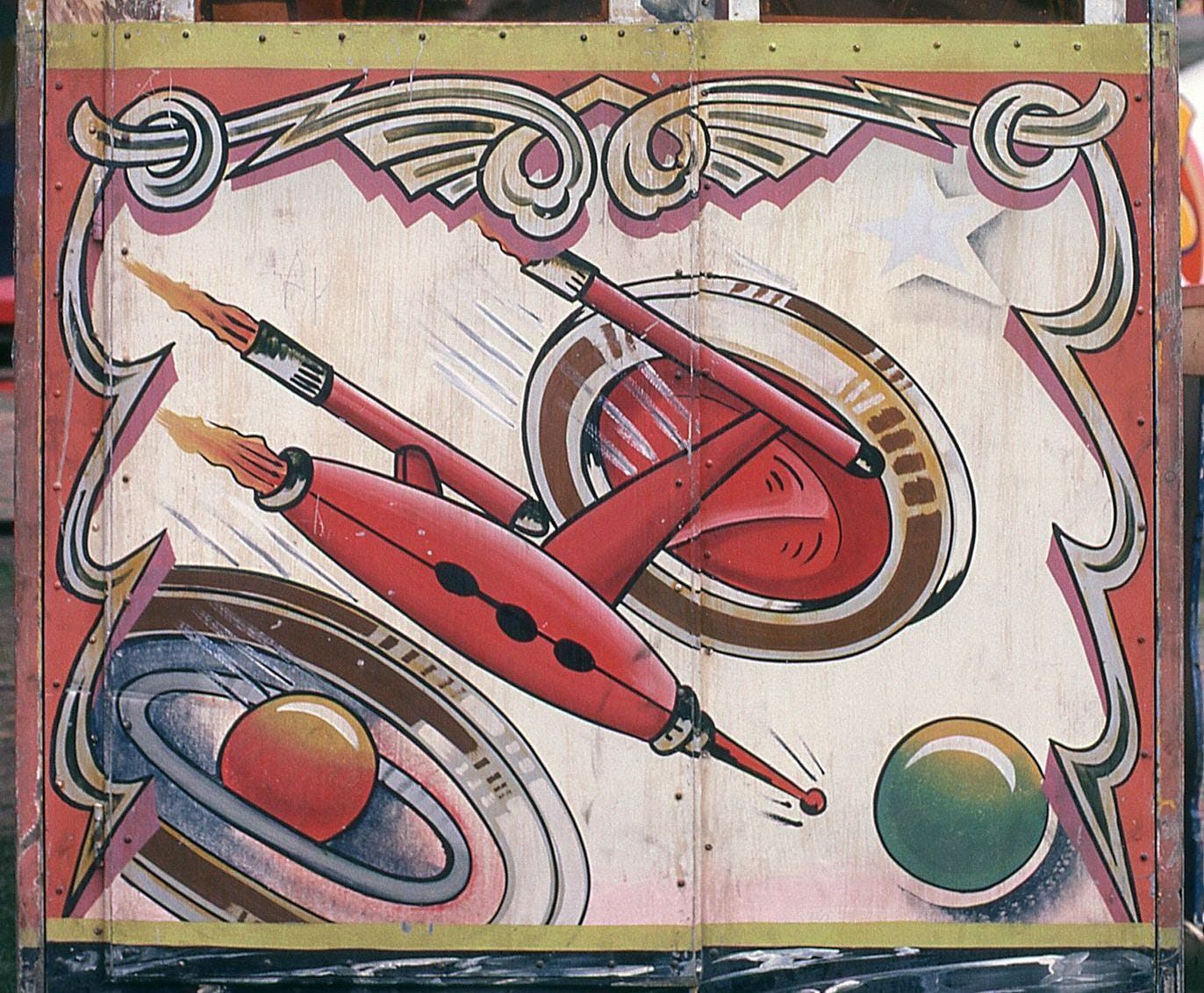
Other artists with lesser skills than Fred would interpret space and science fiction, with a great example of Star Trek artwork in a vernacular fairground style shown on the paybox of the above Jets. However, as the 1970s ensued, the rides themselves moved towards a more expressive architecture and motion, and became less reliant on artwork to invoke the imagination. Space themes as generic names were inevitably common and consistent, with machines such as the Orbiter, Meteorite and Enterprise proving popular examples.
Moving in to the 1980s, popular culture grew from simple comic books and TV series to include video games and new genres of music. Space remained very much the place, with genre-defying tracks such as Space’s ‘Magic Fly’ (the band appeared on Top of the Pops wearing astronaut suits in 1977) shortly followed by Sarah Brightman’s ‘Starship Trooper’ and the very much intergalactic ‘Italo-disco’ scene. As the decade progressed the reality of space exploration became slightly less romantic, as Ronald Reagan filled the upper atmosphere with his ‘Star Wars’ weaponry to beat the Russians in the game of annihilation, and the Space Shuttle Challenger spectacularly exploded in January 1986.
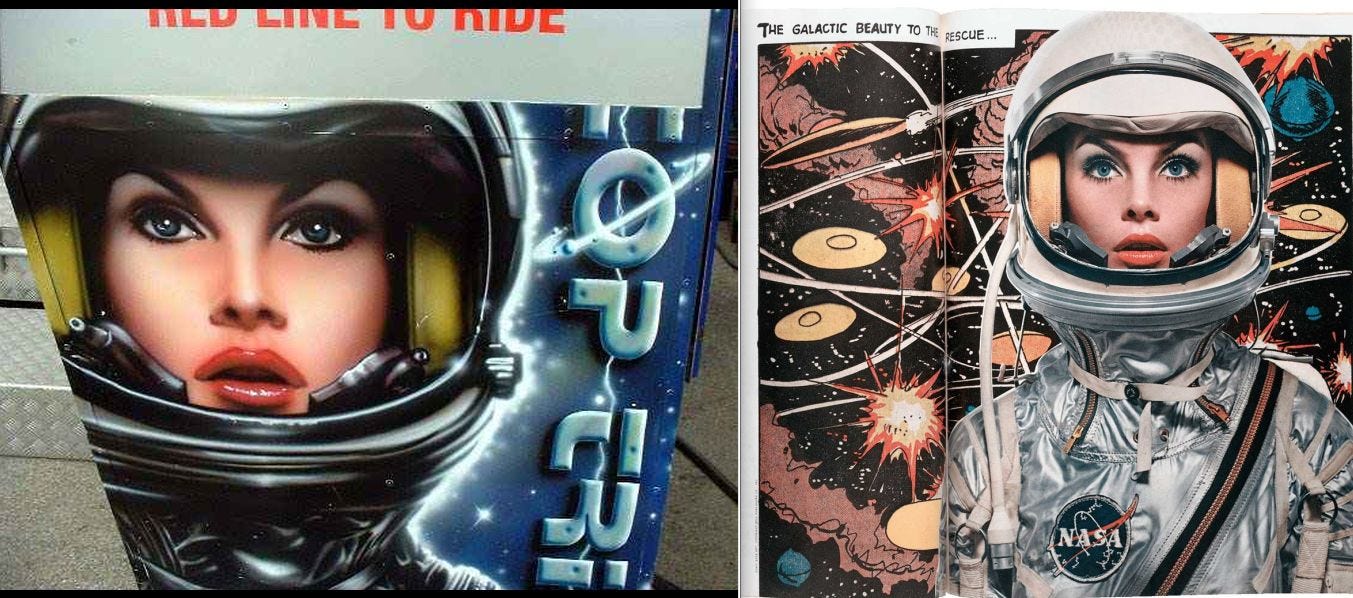
Finishing on a positive note – here is a retro-theme brought in the current era. Airbrush artist Matt sneaked in a female astronaut on Knightly’s Top Trip Miami in 1998. This motif went largely unnoticed until a similar figure formed the centrepiece of the Freefall Miami in 2019. The source for this is interesting, and it takes us right back into the mid-1960s and the age of space glamour and fantasy anticipation. It is from a fashion shoot by society photographer Richard Avedon for the American society magazine Harper’s Bazaar (cover date April 1965 – possibly the specially commissioned issue that excluded Warhol much to his annoyance). Avedon encased the archetypical ‘doe-eyed’ British model and swinging sixties icon Jean Shrimpton in a NASA space helmet and suit, though her modelling features and bright red lip gloss still shone through.