
Start the Dance
Rave culture and 1990s artwork on the fairground (part 1)

This post continues my linking of popular visual culture and music scenes with fairgrounds and their art – written from a UK context. So, be warned, if fairs are not your thing then this isn’t for you!
I have already sketched out a broader relationship between fairgrounds and music (with an 80s test-case) and followed this up by looking at the links between outer space in popular culture and fairground theming. This longer essay focusses on how fairgrounds had, and still have, a tighter relationship with dance music, and how this reached a critical mass with the explosion of rave culture in the 1990s. I’m splitting it into three parts – as per usual I’m going in to quite a bit of detail.
This first part sets the scene and provides a brief sketch of dance music and fairgrounds. At a wider societal level, the dominance and prevalence of dance music within the wider panoply of musical styles and genres (rock, popular, indie, etc) is something that ebbs and flows. Fairground showmen were quick to grasp the power of rock’n’roll and offer youngsters a chance to experience this forbidden music in a social context. The artwork on the rides quickly followed to express this linkage, even if the early figurative work was somewhat tame (though, misty eyes or otherwise, very evocative).
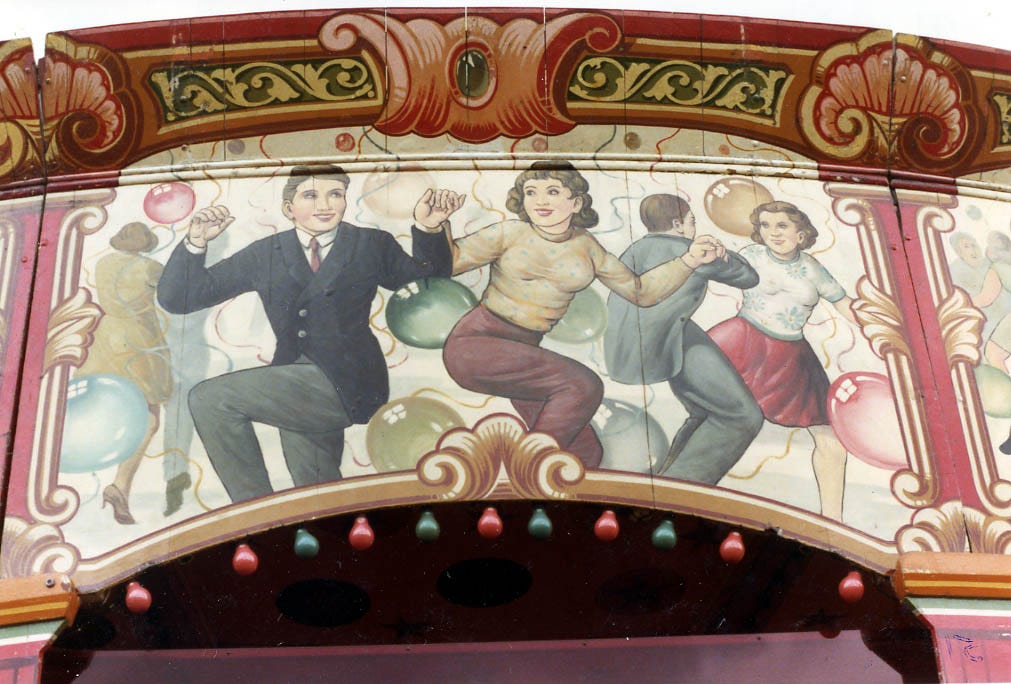
From the 1950s and 1960s things hotted up and music progressed through many genres. When not playing a more general pop music, fairgrounds traditionally sought out the nightclub sounds of disco and northern soul. The energy and vicarious movement in this music works well with fairground rides. Once again, these music scenes were represented stylistically on the rides with slogans and lettering that reflected a mix of stylised writing from the music genre combined with the fairground artist’s skill to add dynamic shape and movement. Unsurprisingly, there were lots of scantily clad female figures attached to the vernacular art of the disco. I’m pointing this out, as it is something that recurs, and recurs, and recurs.
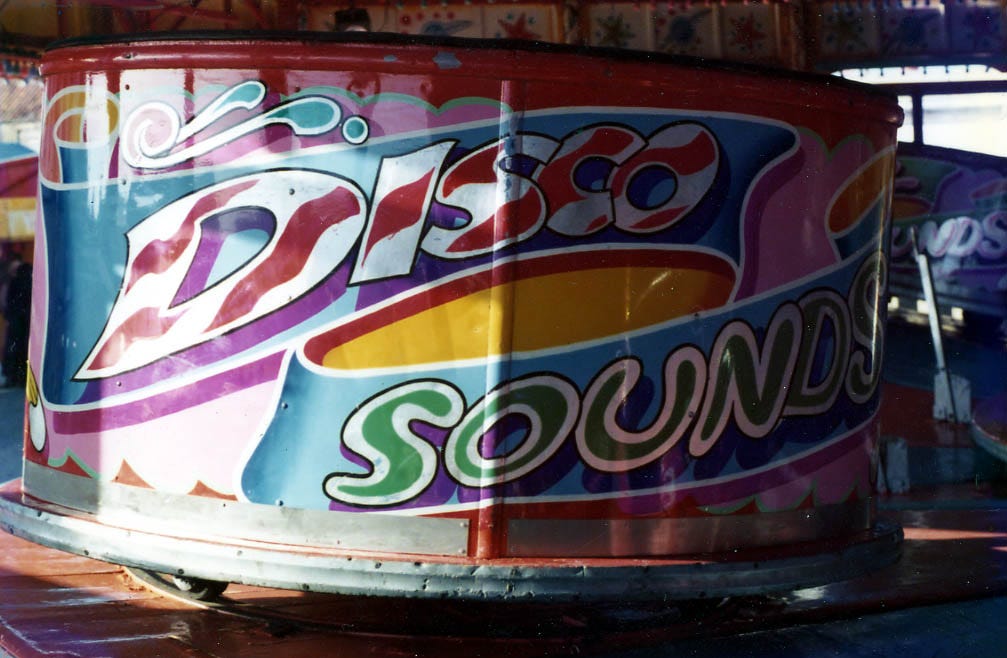
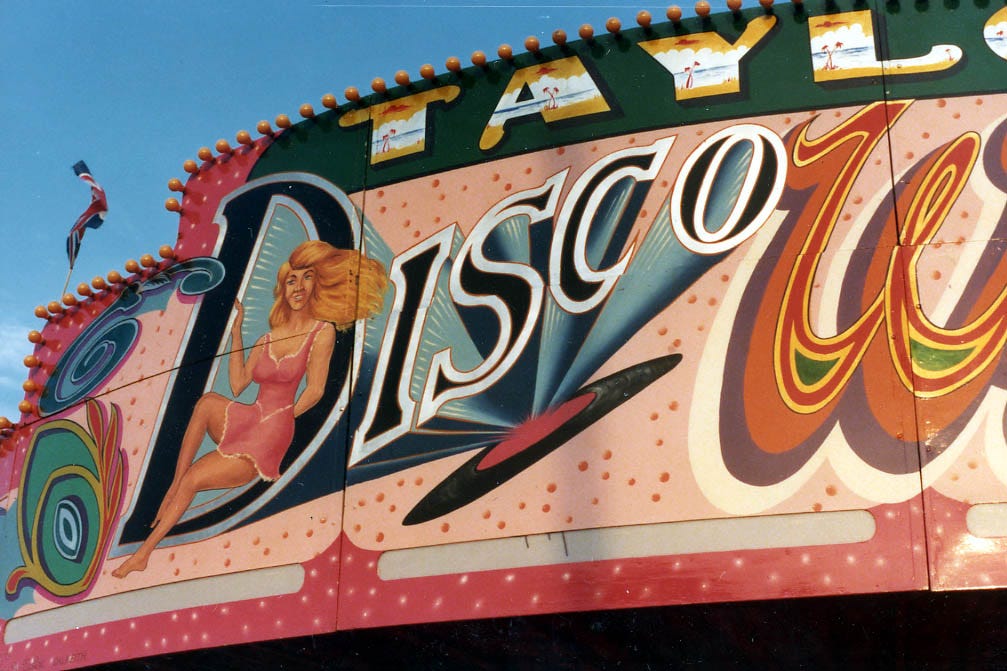
Through the early 1980s the UK had a broad set of overlapping and ephemeral niche musical styles that sat just below the iceberg of popular music. The fallout of punk into various experimental genres, a buoyant revival of mod due to the 1979 film Quadrophenia, a feisty ska and skinhead revival through 2 Tone Records, another revival of rockabilly with bands like the Stray Cats, a vibrant (but underground) reggae scene, the last vestiges of the disco and soul scenes, the niche sounds of hi-energy music that aligned itself to the gay scene, and a ‘synth-pop’ scene that grew from the previous new romantic scene. It was a heady mix, and many tracks from these genres would suddenly cross over into the mainstream and become (briefly) more visible. I have already given a detailed account of a classic 1980s piece of fairground art that tried to link to the polymorphous pop of the era, but what happened next? It felt like music was playing a waiting game, anticipating something big.
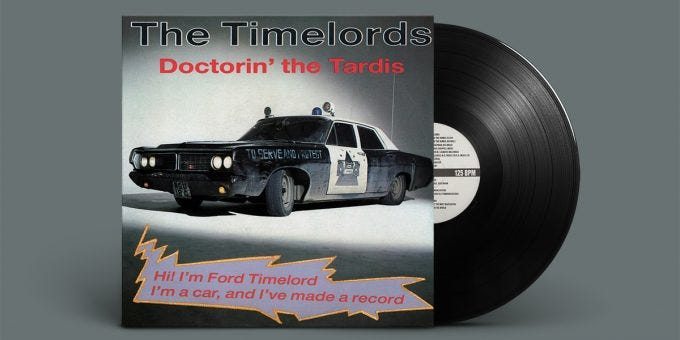
And so it came. Dance music historians argue the minute details and timelines of a major shift at the end of the decade, but we can cut to the chase and avoid the internecine marginalia. By the close of the 1980s we had a vibrant new strand of dance music that had obliterated the earlier proliferation of disparate genres. We were given warnings, with ‘novelty’ tracks like the ‘Doctorin’ the Tardis’ by The Timelords (KLF) in Spring 1988. In dance music terms this is something of an (unwelcome) outlier, as it depends upon a glitter beat and direct glam lift from The Sweet. Dance music snobs might pass over the relevance of this track, but it was an absolute belter on the fairground with its infectiously participative “oggy oggy” football type chanting throughout the verse and chorus. Alongside this we had ‘Theme from S-Express’, structurally similar to ‘Doctorin’’ in terms of it being sample-driven by catchy snippets of past genres and also having a driving and rise-and-fall momentum that fitted perfectly to an after-dark fairground ride experience. So, these were proto-rave tracks, but huge hits on the fairground.
A new scene came into focus during what has become known as ‘the second summer of love’ – attributed to a period encompassing the two summers of 1988 and 1989. This saw the dominant rise of rave culture as a leisure pursuit, a new musical genre called acid house, and new ways of experiencing new music. Whilst the sound predominantly drew from pre-existing genres such as disco and electro, the fabric of the music was much harsher and repetitive, relying on newly affordable drum machines, samplers and bass synthesisers. Tracks freely sampled old (and not so old) records and snatches of sci-fi film dialogue – these proliferated from track to track like an earworm as record production shifted from expensive studios to bedroom production. Budding DJs exchanged mixtapes, and an explosion of pirate radio stations helped bolster the onslaught of what quickly became a major shift in music, quickly followed by a press backlash of demonisation.
Showmen were equally quick to adapt, and as we entered the 1990s fairground rides were regularly included at big indoor events such as Westworld and later as part of outdoor events. To be precise, the Westworld events were actually a precursor to raves proper: they were labelled as warehouse parties that grew larger and more extravagant whilst keeping an illegal or semi-legal status. The scene was popular in the style magazines of the time as it felt like the next movement of underground youth culture following on from punk and new romantic.
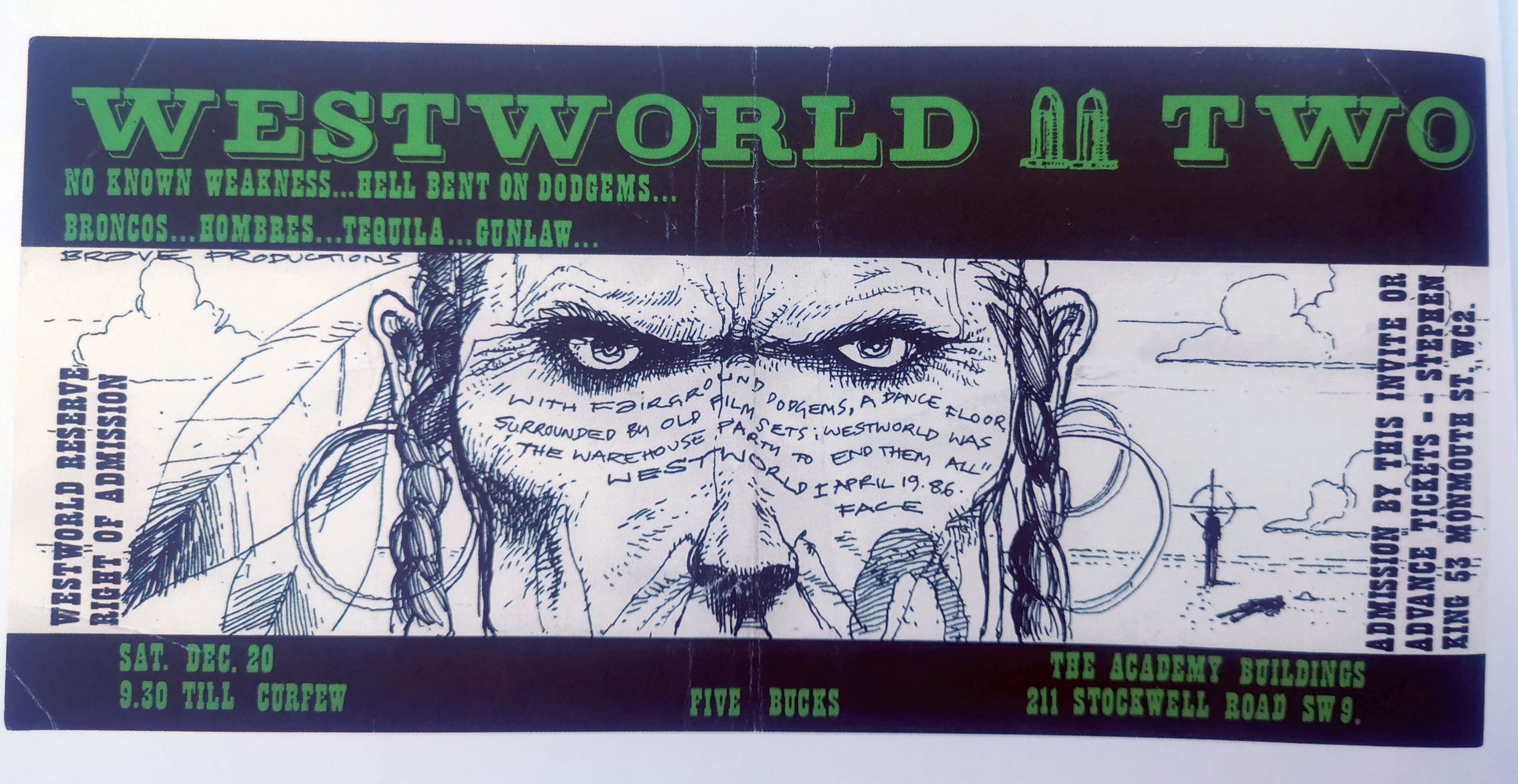
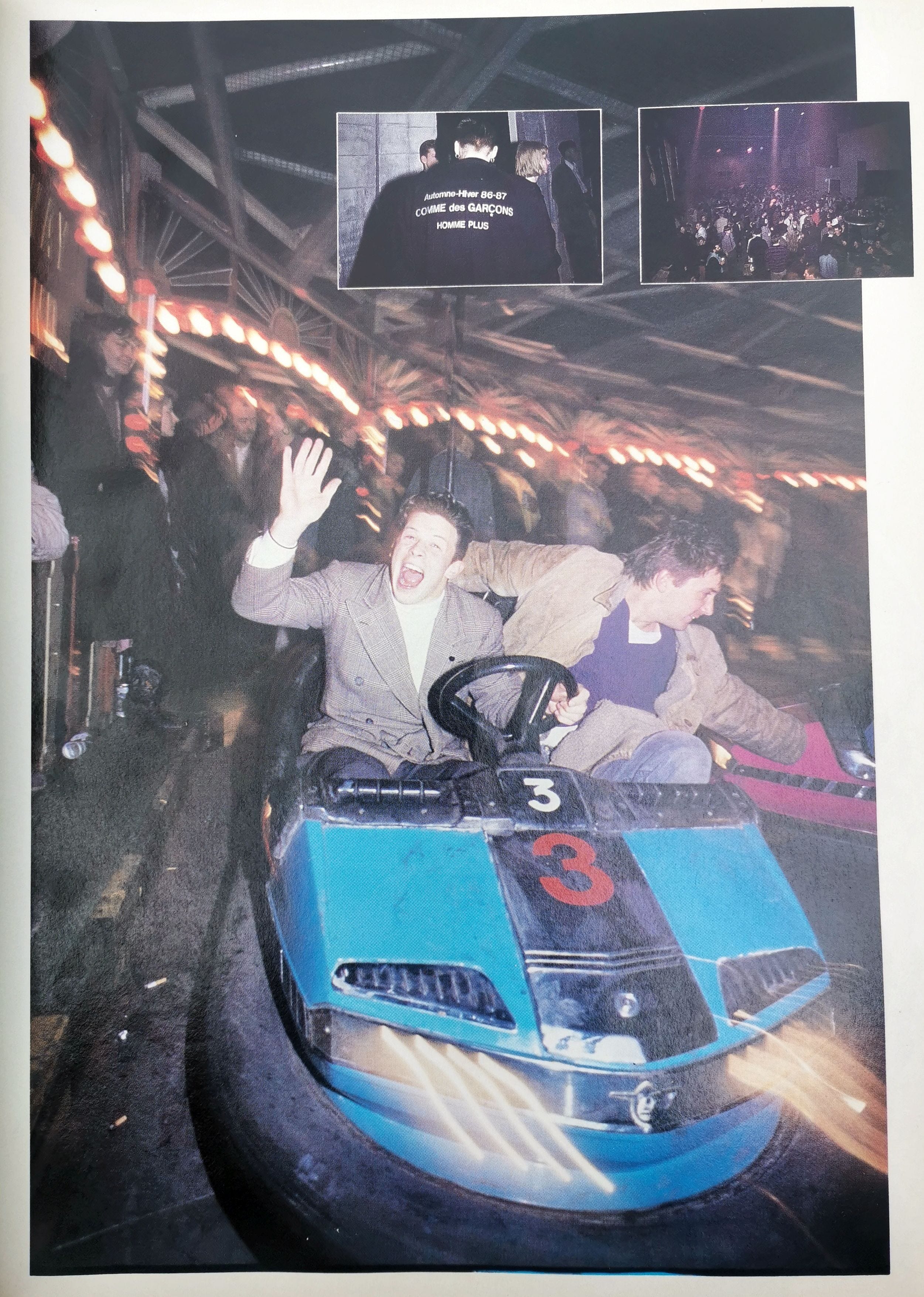
Westworld parties from 1986 were documented and clippings survive as shown here. The flyer comes from the excellent (and recently republished) book Rave Art which is an essential resource I will draw from throughout this series of posts. It advertises the second event in the sequence pencilled in for Christmas 1986, and we see the inclusion of Dodgems. The photograph comes from The Face (September 1986, issue #77) and shows the inaugural Westworld with the chaotic Dodgems taking centre spot. These warehouse parties drew an audience from a mid-80s crowd of London fashionistas (known as Buffalo boys and girls as christened and styled by Ray Petri in magazines such as The Face), though the event itself tended towards something more hedonistic and primitive. The photograph shows this clash of fashion cultures, with some newly-minted Comme des Garcons clobber on show – not what you want to wear when spinning round on sick-inducing fairground ride.
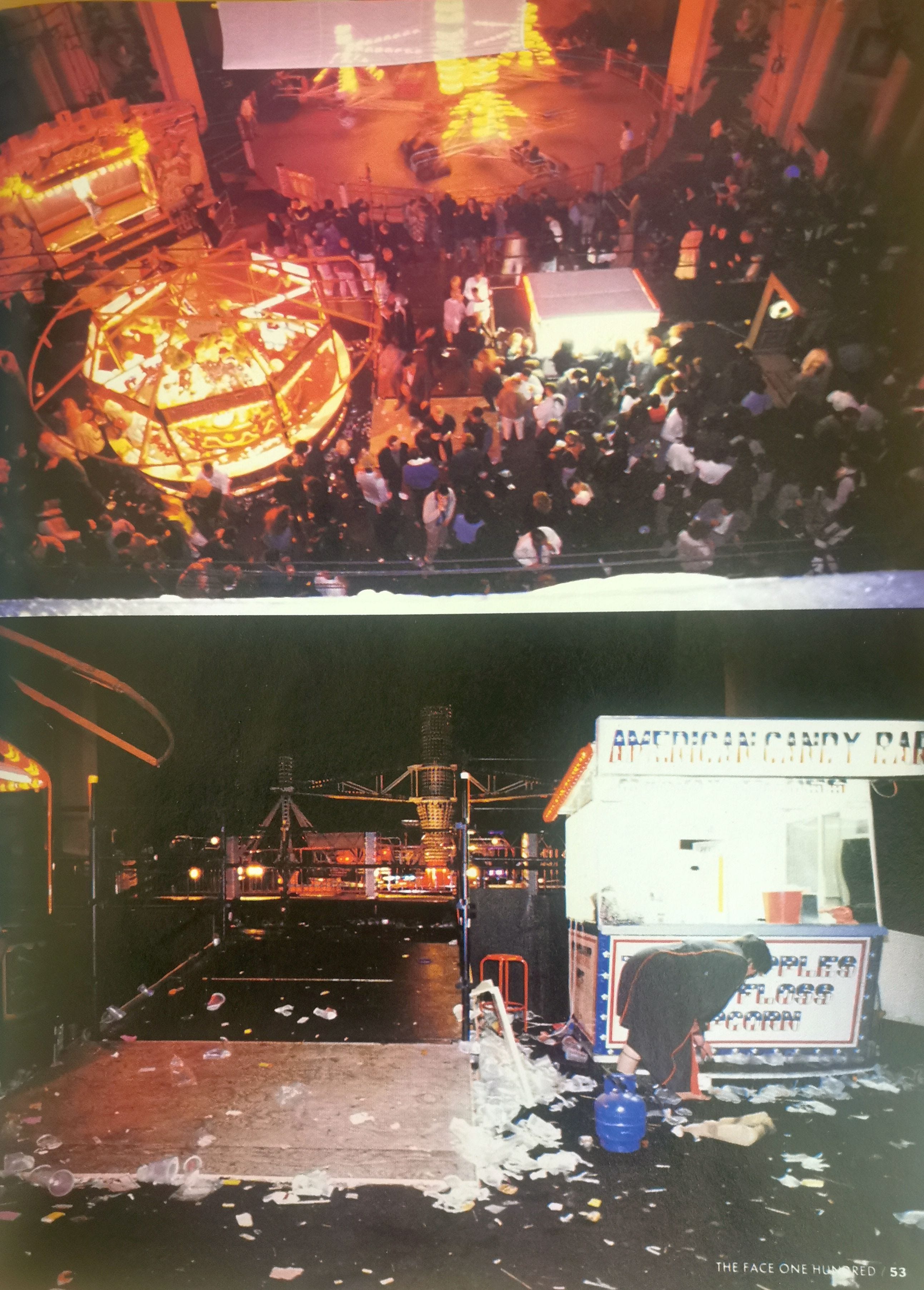
The Face issue 100 looks back over the magazine’s first chapter and includes this second picture from Westworld – possibly a later event as we have different rides on show. Here we have a chaotic fairground Twist and a just glimpsed Mystic Swing (or Rib Tickler) ride. This is an interesting attraction as it is illusion of movement ride where you enter a darkened tombola like structure and the outer structure rotates giving you the feeling of going ‘over the top’. The rave and the fairground share common themes: a sense of displacement (the ‘locative grounding’ of the event is shifted into a new realm) and a sense of bodily and mindful disorientation. Whilst sensory extremes are often instigated by (or at least augmented by) drugs in a rave environment, it is beguiling to think how these might be compounded by a motion-illusion fairground ride. Get the mop and sick bucket ready.
If we were to project this backwards, it could be said that Westworld was itself drawing on events like the 14 Hour Technicolour Dream held in April 1967 in the Great Hall at Alexandra Palace which featured a fairground Helter Skelter between the two ends of the hall whilst bands like Pink Floyd performed through the night amidst smoke and light displays. Whilst Pink Floyd might not have plied their trade in the pantheon of dance music, we can see the connection to drug and psychedelic culture that links the first and second summer of love.
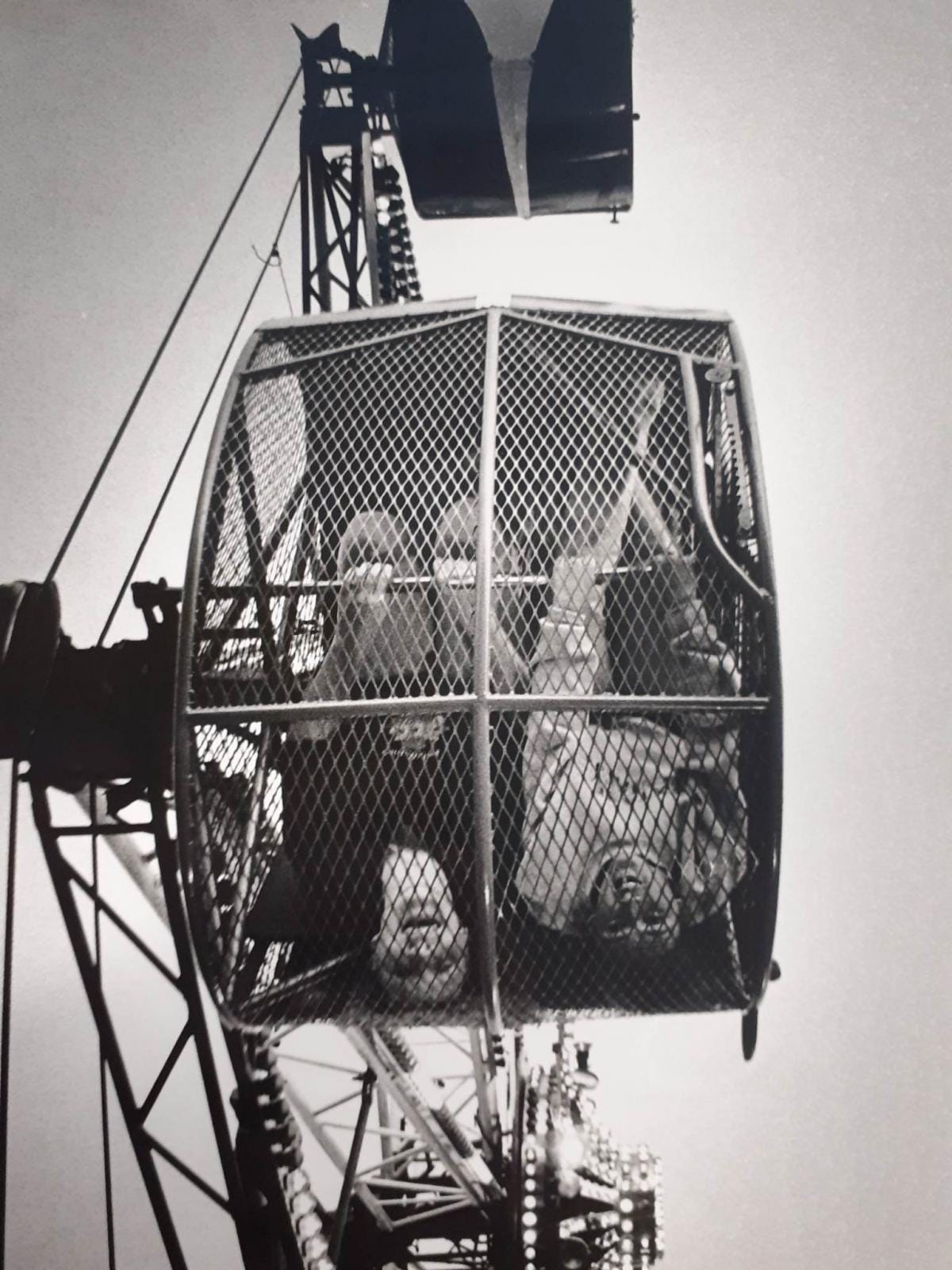
As warehouse parties morphed into raves, and acid house emerged in clubs such as Shoom and Spectrum, the dressy ‘buffalo’ crowd either stepped back or adjusted to embrace a new mentality of treating dance music as a kind of endless party in a mythical holiday resort. Surf wear, bandanas, dungarees, whistles, trainers and smiley tee-shirts became a cheap and attainable uniform. A new vernacular of phrases and expressions drawing from drug culture quickly took root. The photograph above shows a rave in Monmouthshire in the early 1990s, with a couple of gurning ravers turning upside down as dusk sets in.
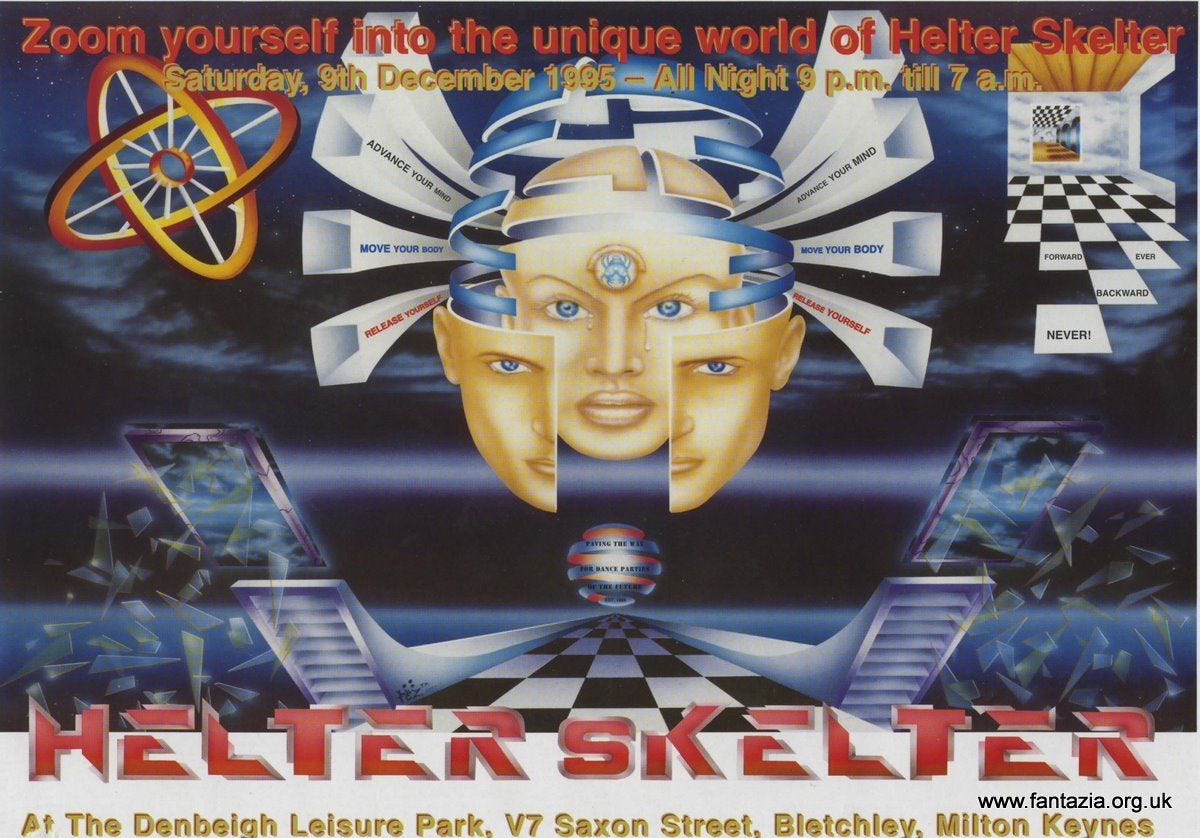
The space of the rave attempted to become something else for the duration of the evening, much like how a fairground works. The rave space might be an impromptu gathering in a farmer’s field or a larger event such as Fantazia and Raindance that had a similar scope and magnetic pull to the Glastonbury music festival. There was a natural affinity to the fairground. Taking it further, the major rave organiser Helter Skelter was set up at the tail end of the summer of love by members of the Oxfordshire-based Pratley family, who had roots in the fairground. At the same time, early manifestations of this new dance music were taken up by showpeople (or perhaps the next generation down) and pumped out through the sound systems on the rides. It was dance music, driven by rhythm and bass… it had a natural home on the fairground, for those avid fans of tracks like ‘Doctorin’ the Tardis’.
The bonding of fairgrounds and dance music culture through the 1990s proved greater than anything previously encountered. It meant that fairground art quickly mutated to reflect the visuals of rave culture, and suddenly the whole visual landscape of the fair was transformed. Part 2 will look at this in detail, and explore where the visual culture of the rave grew, and how fairground art tried to reproduce this.
Really intrigued by these links. It’s not something I have thought a lot about but you make it seem so obvious.