
Sulky Belgians
MM 0.0 – Martin Margiela groundwork

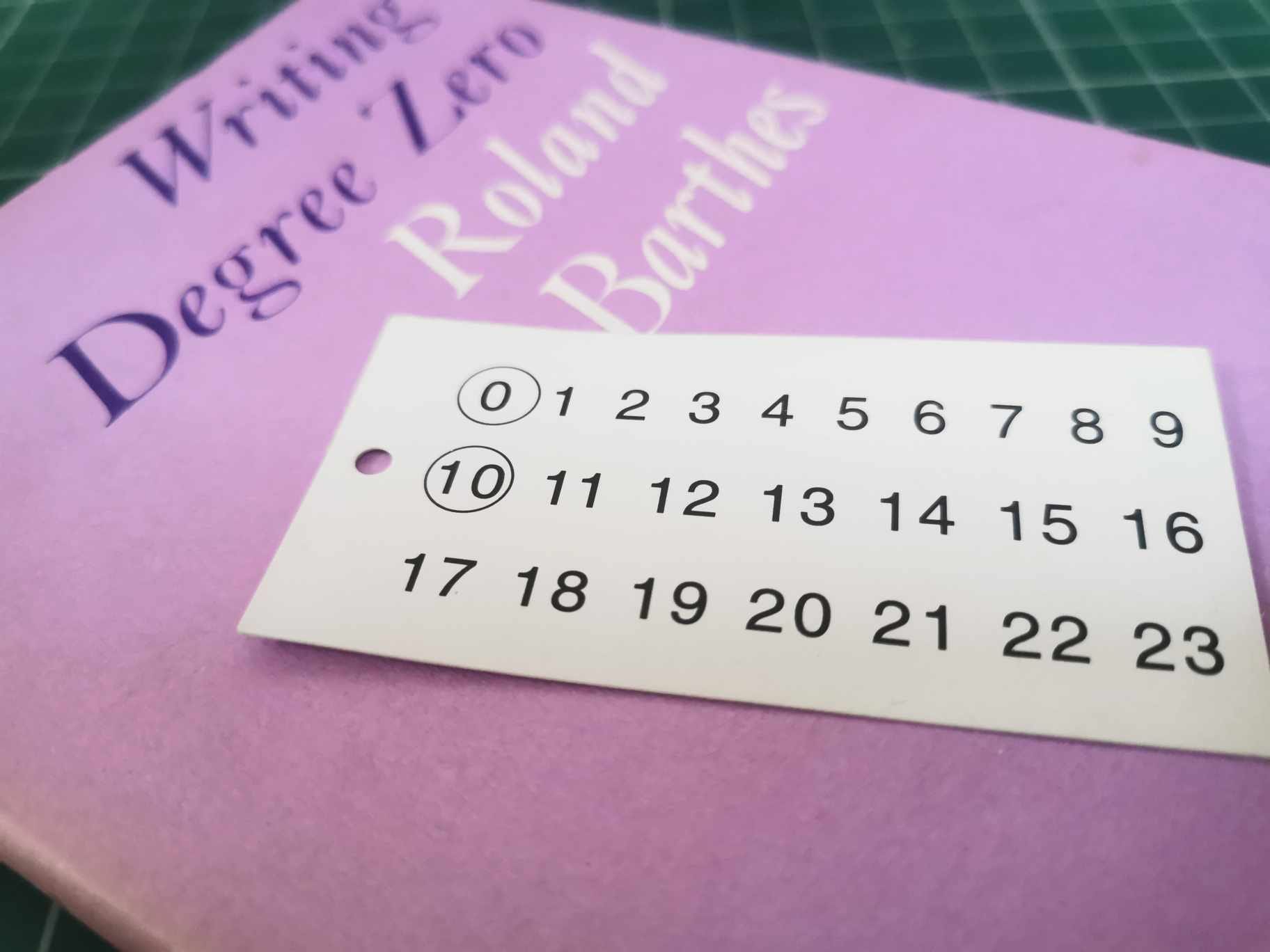
As a youth in the early 1980s I had little reference to, or interest in, Belgium. It was not a time for internationalism, instead bordering on parochialism and an at times xenophobia that was nurtured through popular culture, the press and TV comedy. But moments arrived like a punch – what Roland Barthes (in regard to photography) would call the punctum – to rupture sensibility and stay with you through the years. I recall watching Top of the Pops in early 1982 when Theatre of Hate had their one and only appearance in the charts with ‘Do You Believe in the Westworld?’. Obviously a big moment for me, what with the band in the middle of their seemingly infinite tour and myself having witnessed them, and their ensemble of followers and support acts. It put me in a near spellbound state causing a radical rethink of my haircut, my wardrobe, my everything.
This particular episode was introduced by John Peel, who was then something of a stranger to the programme, but no stranger to fans of punk, post-punk and indeed Theatre of Hate. Peel felt a need to introduce himself before introducing Theatre of Hate as the opening act. He declared: “I’m the bloke who comes on the radio late at night and plays you lots of records by sulky Belgians. These people are not Belgian… Theatre of Hate”. Before the nuance of Peel’s irony sets in we are swept away by Kirk and the boys, creating one of those Top of the Pops instances as they affront the viewer with a wall of guitars, hard poses, and scintillating gear of cut-off rockabilly and western attire, 501s with turn-ups and white socks, and DM-soled buckle shoes that were the staple of the motorway-dweller crew who followed the band. By then, I felt part of the clique. The record, evidently catapulted into the chart to gain the rights for an appearance, dropped in the charts next week. But never mind.
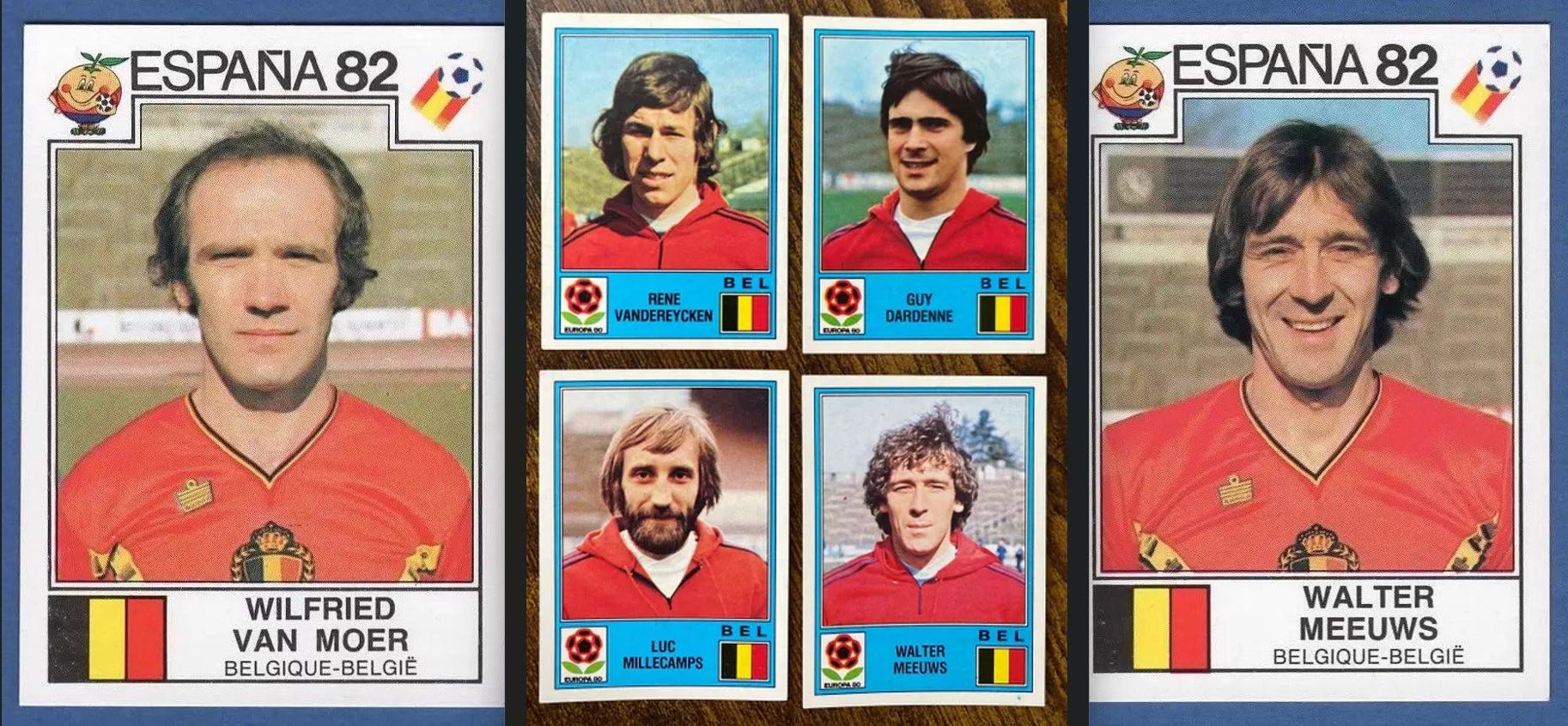
Peel’s Belgian quip stayed with me, though I never thought about Belgians in any detail, aside from the naff (xenophobic) jokes about naming a national football squad using variations on the ‘Van’ surname prefix (Hertz Van Rental, Transit Van Brokendown, etc). You would encounter them in their red kits in the Panini albums, with bad 70s haircuts that hadn’t quite reached the apogee of bad 80s footballer haircuts (note – these 70s haircuts will be reconsidered in the context of Margiela). I guess as stereotypes went, the Belgians got away lightly, though I’m informed that they form the butt of jokes regarding stupidity for French people in much the same way that Irish people did for the UK mainland.
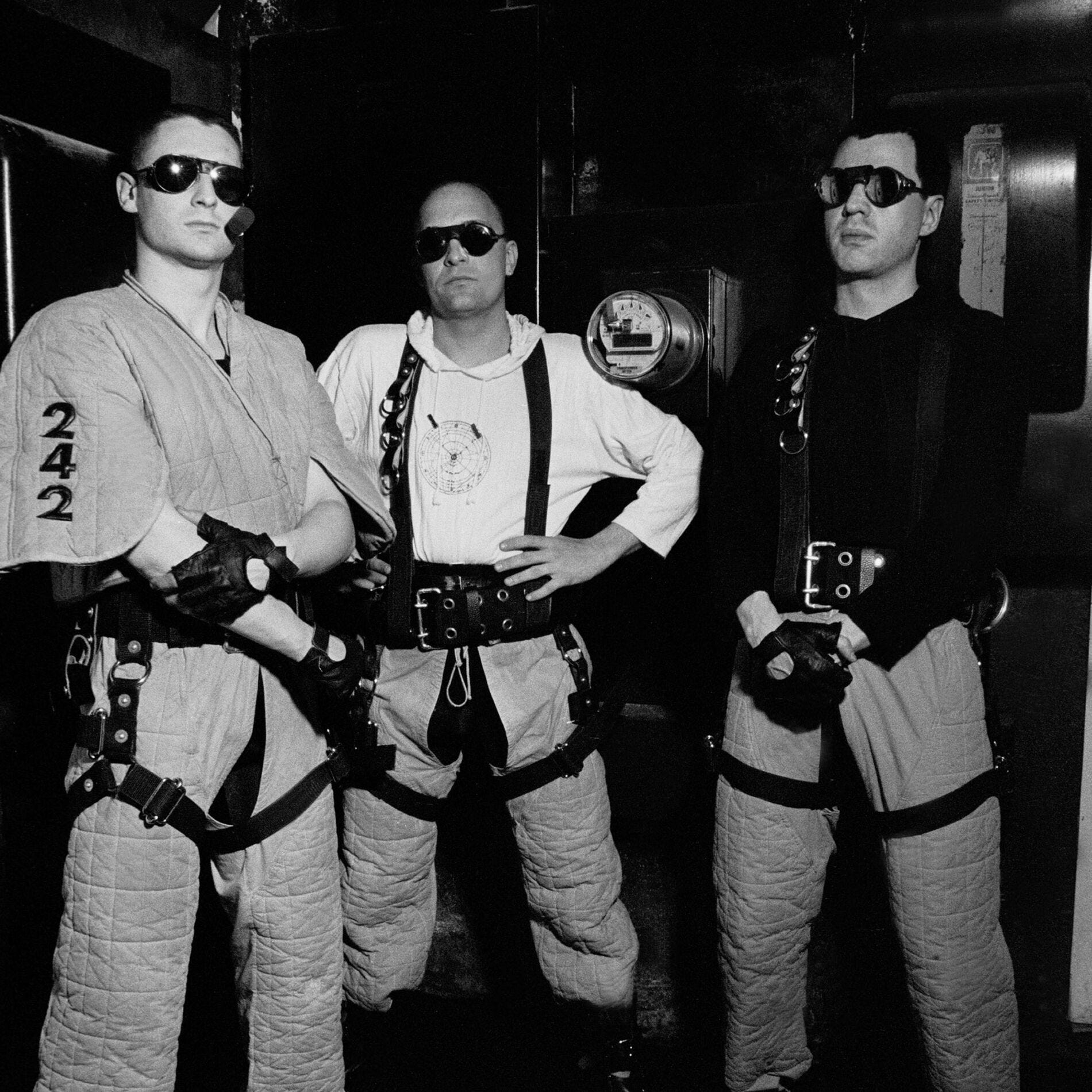
Sulky or otherwise, Belgium kept on. In the middle of the decade there was a strange new genre, apparently accidentally invented in Antwerp with a record played at the wrong speed – new beat. New bands like Front 242 quickly latched on to and personified this sound – they had a space-military but slightly comical look with homemade costumes looking like cast-offs from Blakes 7 about to jetwash a tall building using ropes and harnesses. It didn’t hold up to British subcultural and new pop stylings, but maybe that’s the lingering xenophobia talking. New beat, or electronic body music, was interesting, in that you felt it took on the more structured and pulsating aspects of industrial, keeping the thunderous clonks and metal hammer thuds but turning it into a new type of dance music. It was a European forerunner to techno.
Towards the end of the decade we had Jean-Claude Van Damme as ‘the muscles from Brussels’ and his strand of brutal martial arts films accompanied by a very 80s mullet. This was followed shortly by a strange strand of rave music with the ‘Belgian hoover sound’ pioneered by Joey Beltram (who was not Belgian), but often seen as an evolution of the new beat scene.
So, a very skew-eyed myopic view of Belgian culture in the 80s and beyond.
Meanwhile, in the latter half of the 80s my fashion sensors were elsewhere, moving away from the style magazines, so the discreet arrival of a gang of conceptual Belgian designers in 1986 (or 1987) would have passed me by. British fashion and its ‘ownership’ of the London Fashion Week (a rebranding of the earlier London Designer Collections) was very much a self-congratulatory environment for the handful of designers who had emerged from the punk and new romantic scenes. As I have shown in other essays, this was a movement away from more subcultural and streetstyle attire, and could almost be encapsulated as second wave new romantic (my previous essay on the Outlaws exhibition considered and queried this historification). Designers who ruled the roost included BodyMap, Richmond/Cornejo, Galliano, Hamnett, Westwood, Crolla, etc. Though these designers played upon a niche-subcultural (or clubcultural) audience and customer base. At the same time it was something of a caesura, a subcultural abeyance until the arrival of acid house and rave culture at the end of the decade. Whilst it wasn’t fashion for rich people, it felt like fashion for a small coterie of those in the know or invited past the rigorous door policy.
The arrival of a gang of Belgian interlopers or gatecrashers was not on the cards, and it seriously disrupted the triumphalism of the British scene and rocked the passive complacency. The Belgians were doing weird things with tailoring, asking questions rather than simply extrapolating tangents of dressing up (ok, that might sound a bit harsh on the British designers). This paved way (eventually) for a new way of thinking about fashion, even if we (in regard to the critical style press) didn’t immediately grasp the opportunity or challenge. Perhaps what we call Continental philosophy had not quite made it across the Channel, and we were stuck with stodgy logic, sensible sensibilities, and Wittgenstein’s mathematical interrogation of language clauses. None of this was leaping out to be applied to fashion criticism (even though Scritti Politti’s Green Gartside had squeezed in a line about the Tractatus into one of his songs).
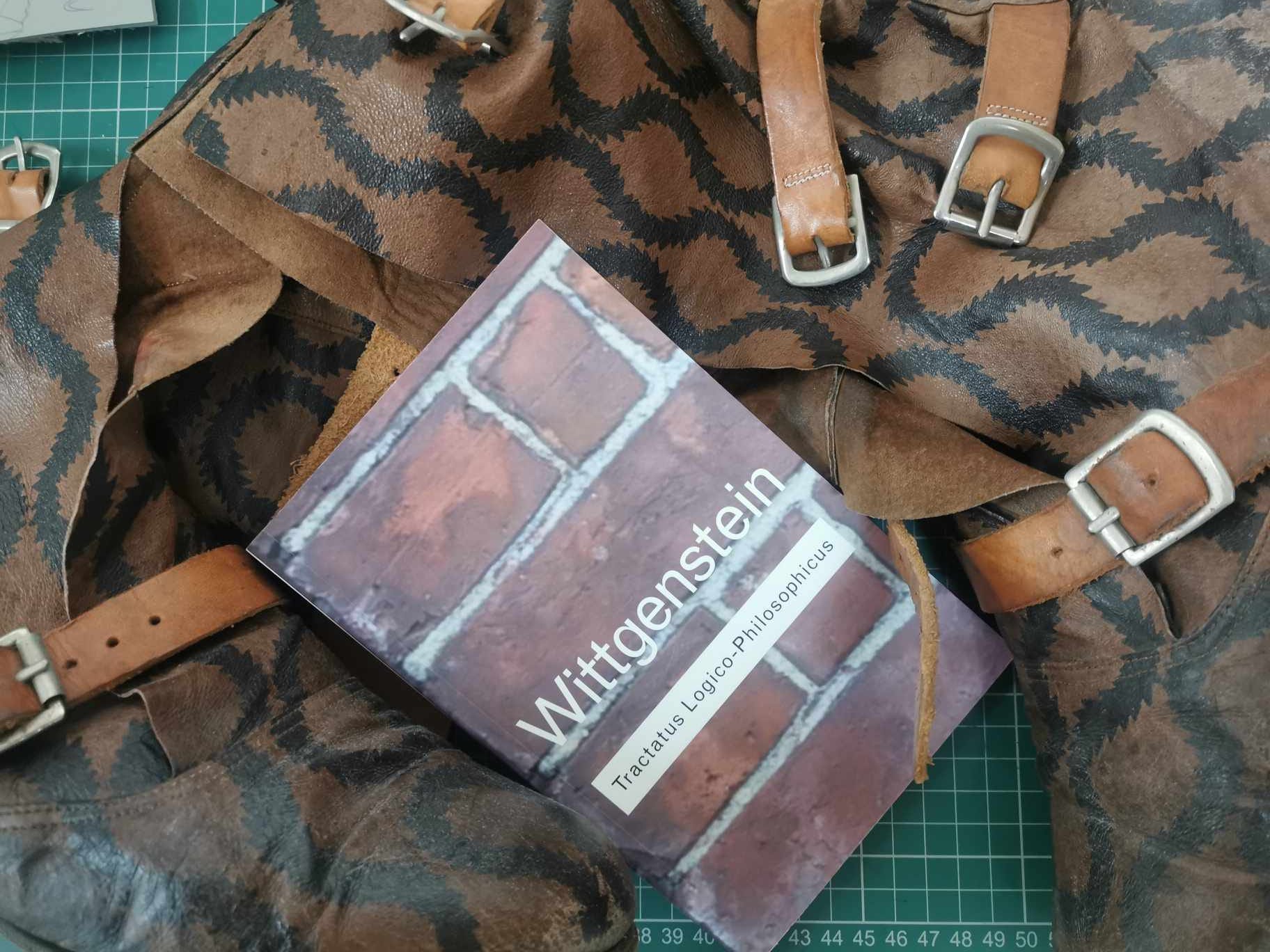
However, when I re-engaged a fashion interest in the early 2000s, with my visits to Pollyanna and elsewhere, and when that interest with coupled with a quest for context, then the legacy of the Belgian designers was still burning bright. In particular, the designers Martin Margiela and Raf Simons, were offering up a hugely intellectual body of design, writing and activism.
The immediate output for SUB>SUMED will be concerned with Martin Margiela for the next few posts. I will return to Raf Simons for a second series of essays some time in 2025. But for now you are going to get an extended bill of Margiela which will probably outrun my mammoth session on Heaven 17. I mentioned Margiela briefly in my earlier post about greyness, and that greyness will be revisited. After this initial grounding essay, and a follow up looking at conflicting mythologies of the Antwerp 6, I will look at some contextual and conceptual frames for Margiela. For your philosophical delectation there will be a musing on Being and Time mixed with the idea of literary and fashion fugitives.
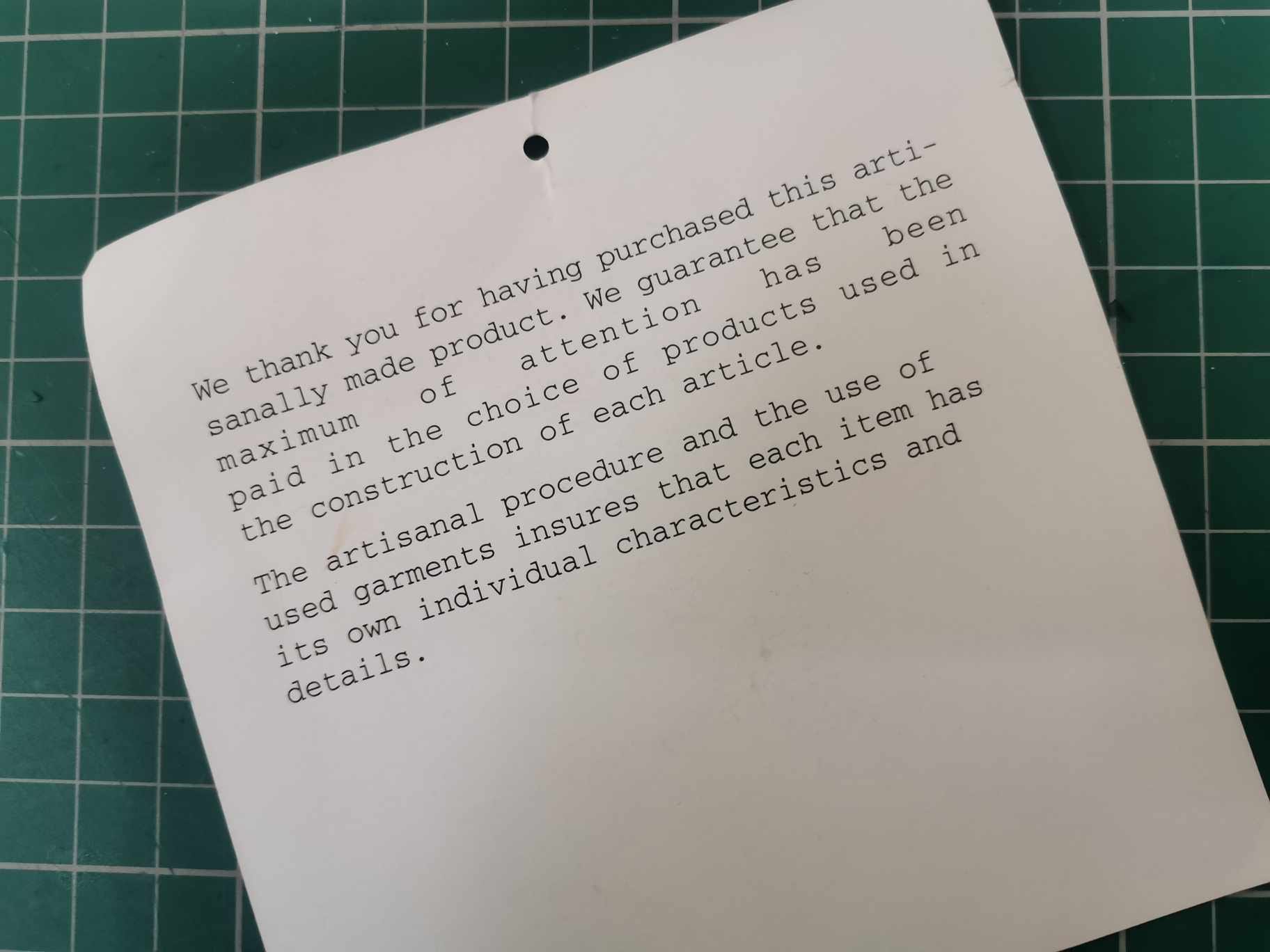
Further context follows, focussing on conceptualism, postmodernism and the tricky subject of deconstruction and its misuse in fashion. There then follows a long essay called ‘Clothing the Discontented’ which forms a speculative body of work between Margiela and Joy Division. This goes against the grain of common thinking on Margiela and the Antwerp 6, who are seen as emerging from a radically different set of circumstances to subculture. It also works through Margiela’s menswear which is less considered than his artistic work in womenswear (it is easy to see Margiela’s menswear as an afterthought). Embracing pop culture, this piece will also examine how Joy Division became their own ‘Atrocity Exhibition’. Finally, I work through a 2006 Margiela purchase as a ‘thinkpiece’ to project back an essay on the donkey jacket. In much the same way as my research into the MA-1, this final essay will continue the fold back into pop culture and the usual ground of SUB>SUMED, using the opportunity to extol a love of Dexys and their style shifts.
Happy new year and all that.
Takes me back to the first time I heard CJ Bolland’s ‘Rave Signal’ in a field…in Leeds…or somewhere. I guess Dries doesn’t have that je ne sais quoi your after, bit knitwear…Hope you are having a lovely holiday! J