
The Sailor’s Nightmare
An Appreciation of the Fairground Octopus and its Artwork (part 1)

Octopus. Noun. A mollusk with eight sucker-bearing arms, a soft sac-like body, strong beak-like jaws, and no internal shell. A taxonomic genus within the family octopodidae. Origin: Greek, from OKTO-, meaning “eight,” plus -POUS, meaning “foot.” Plural: debatable.
Octopus. Noun. Circular fairground ride debuting around 1937 built by Lusse (Blackpool) and then Hayes Fabrication (Yiewsley). Consists of eight rotating arms that are lifted and lowered in sequence by a counter-rotating offset crank and pulley. Each arm supports an ovoid car that seats two or three passengers. The car is mounted on a spindle that allows it to spin freely, prompted by the up and down and circulating movements of the arms. Plural: debatable.
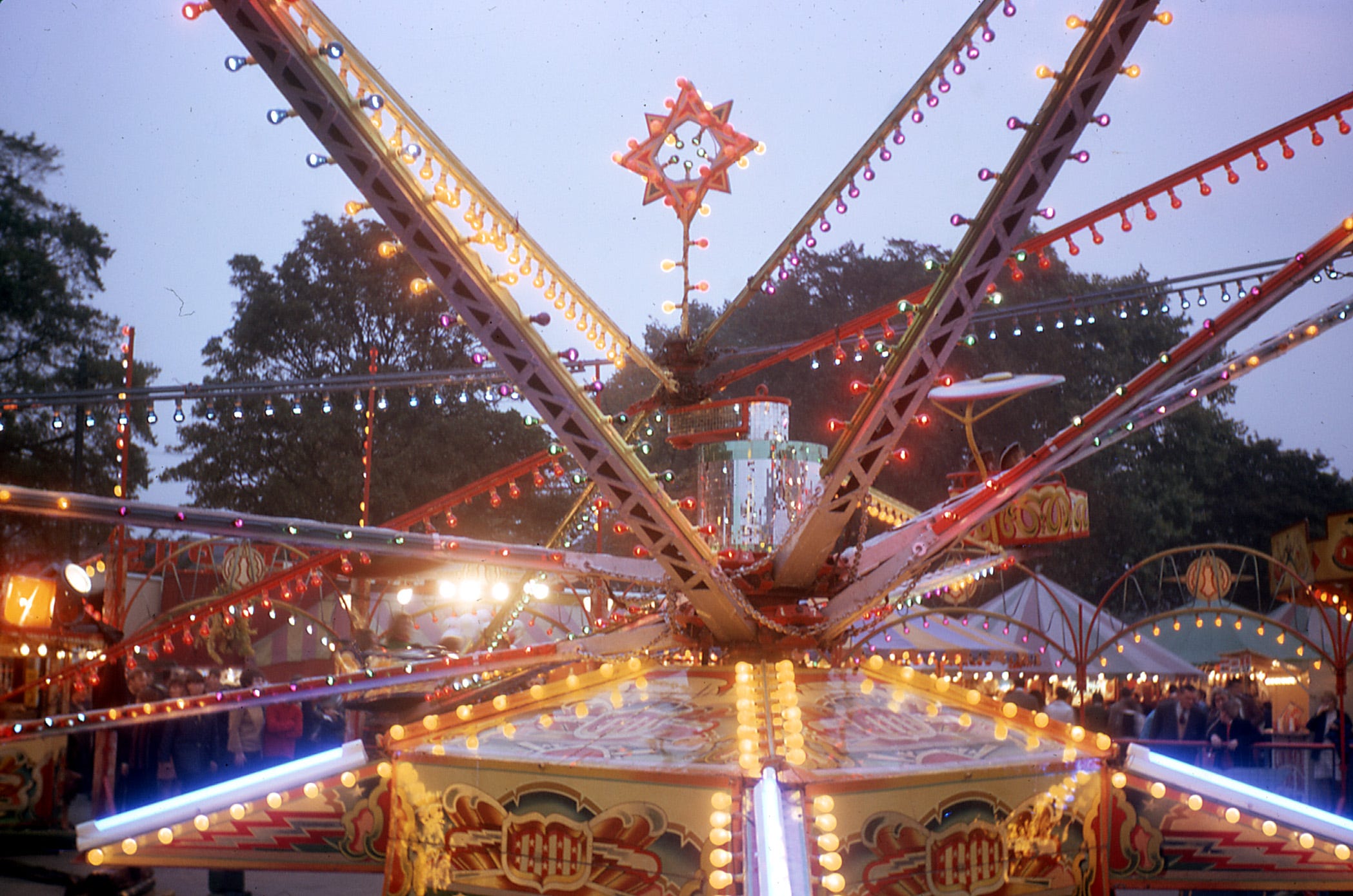
For the onlooker a Giant Octopus ride in full flight, sitting in the centre of the fairground and brimming over with bulbs, is both scintillating and captivating. The movement of the arms is hypnotic like a crashing sea wave in a tight cylindrical circle. The more you try to decipher the wellspring and pattern of the movement the more you are spellbound, as you glimpse the counter-rotating and offset crank that pulls the arms up (and down) in a system that gets about as close to chaos theory as you will find on a fairground ride.
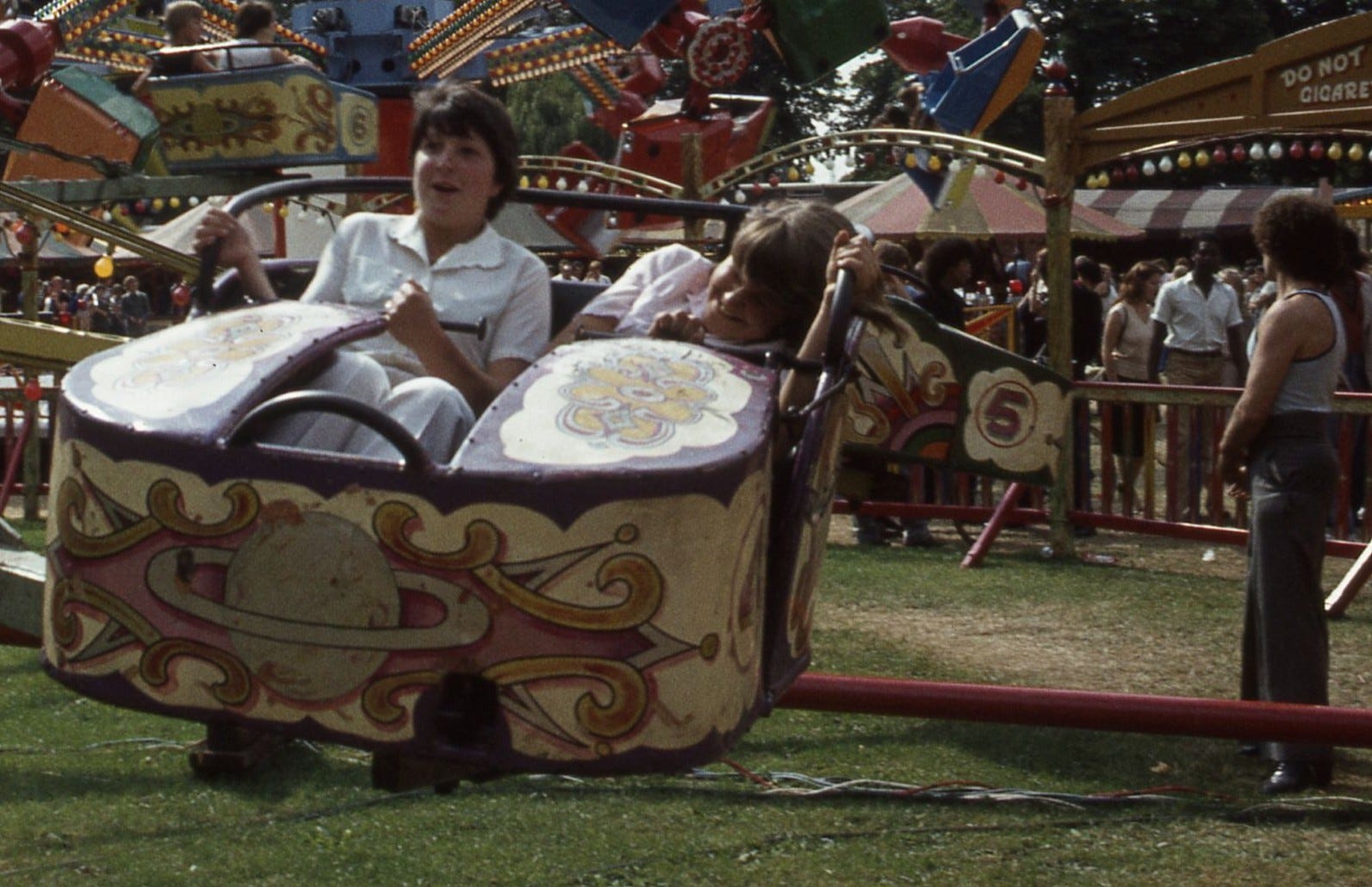
For me, starting out on Notts and Derbyshire fairs as a teenager at the end of the 1970s, the Octopus was a rite of passage. Firstly, there was not a plethora of skyward reaching rides. Sure, we had all ridden the Lifting Paratrooper with its blaze of yellow lights, but it felt sedate and totally controlled. Calm and collected, a ride for posing like a cruise in a convertible car with the wind in your hair (in our imagination). A ride to take a possible suitor on, to impress with your cool demeanour. Look, no hands. But the Octopus was apparently chaotic and unpredictable, akin to a swarm of gnats buzzing in a tight circle. Keep away if you want to keep your dignity intact. You had to submit yourself to it, a form of turbulent and self-deprecating therapy, part terror and part humiliation. And then there was the car. To me it resembled a hinged sardine can, bolted in to place around you with clunk and twist of metal pins, like an iron lung. Stepping up to ride, past the paybox, entering through the gate on the right, meeting the car that had been momentarily calmed to enable embarkment… that grip of fear and anticipation.
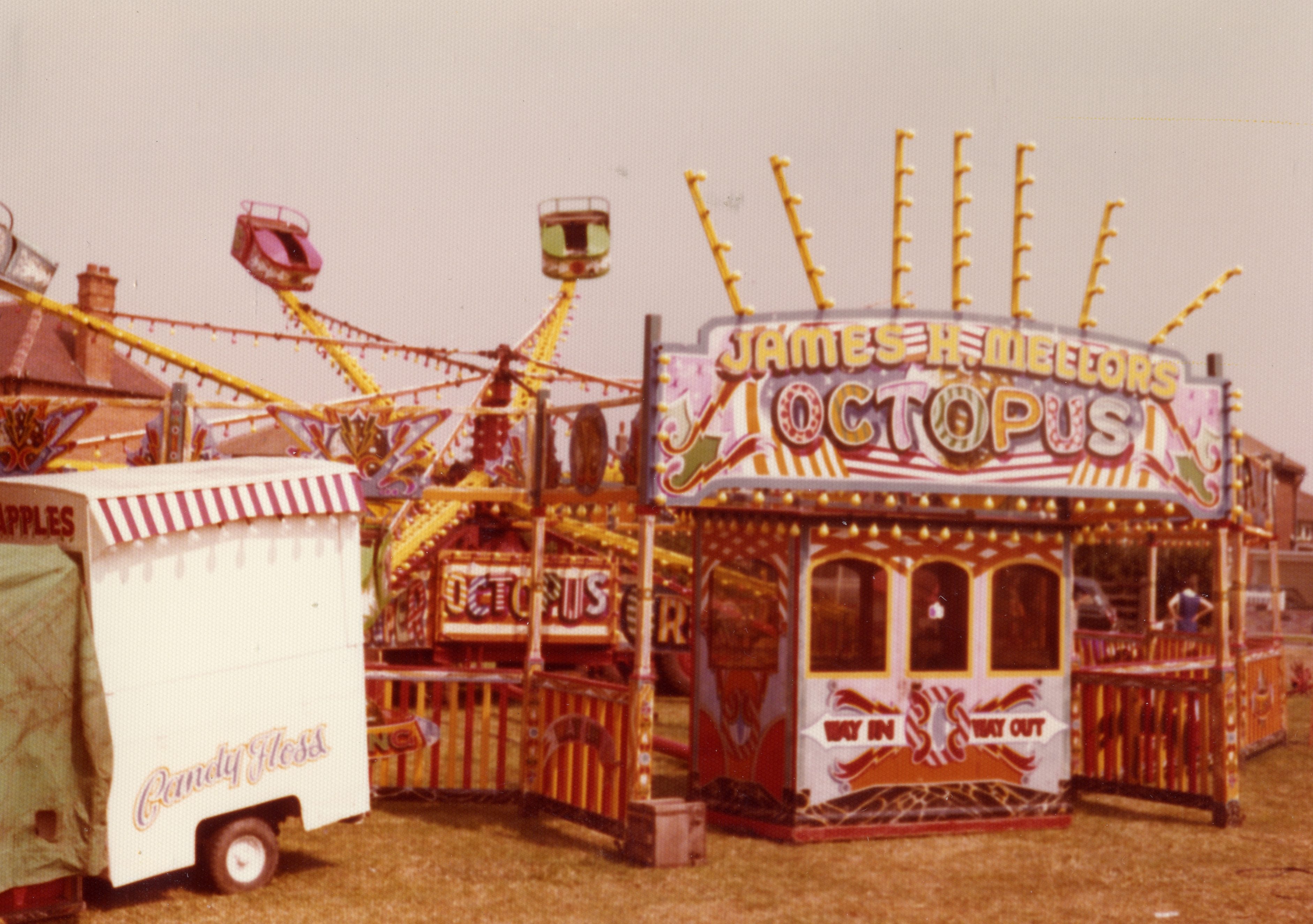
It is said that 12 machines were initially created by Lusse for amusement parks, most of which were uprooted from their static locations and moved in to a travelling situation. Much like the sea-dwelling giant cephalopods of 1950s popular culture who rampaged ships, ports and beaches. Hayes Fabrication resumed the production of Octopus rides from around 1959. It is with these machines that a distinctive aesthetic look developed.
The aesthetic styling of the Octopus is what I want to cover in this pair of articles. Even though it was very much an ‘explicit construction’ that revealed its motion and mechanism, it started to gain some decoration and identity. The ride did not pretend to be something else (like a jet-plane, motorcycle, or racing car) and instead celebrated its innovative motion. The eight arms immediately gave it the name of Octopus, and the artwork followed suit with decorative payboxes with porthole windows and swirling patterns on cars in the style of fairground art replicating the movement of the ride. Early examples tended towards what we might call a classic décor with block-and-shadow dimensional lettering, scrolls and podiums, garlanded scripts, a dominance of red, gold and bright blue. The fleet of cars often had a numbering system with a bold number in a bright circle giving the impression of a pop art countdown.
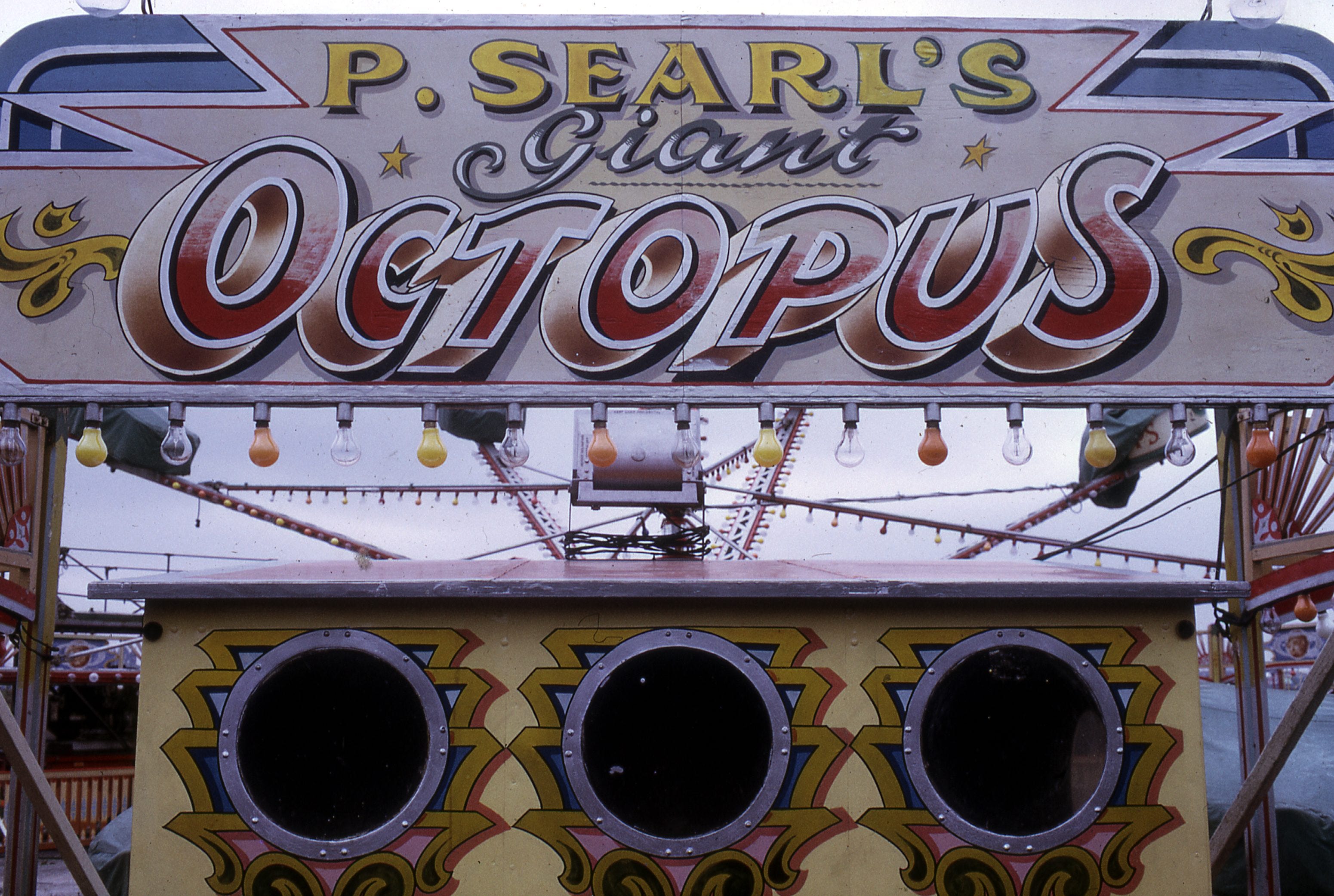
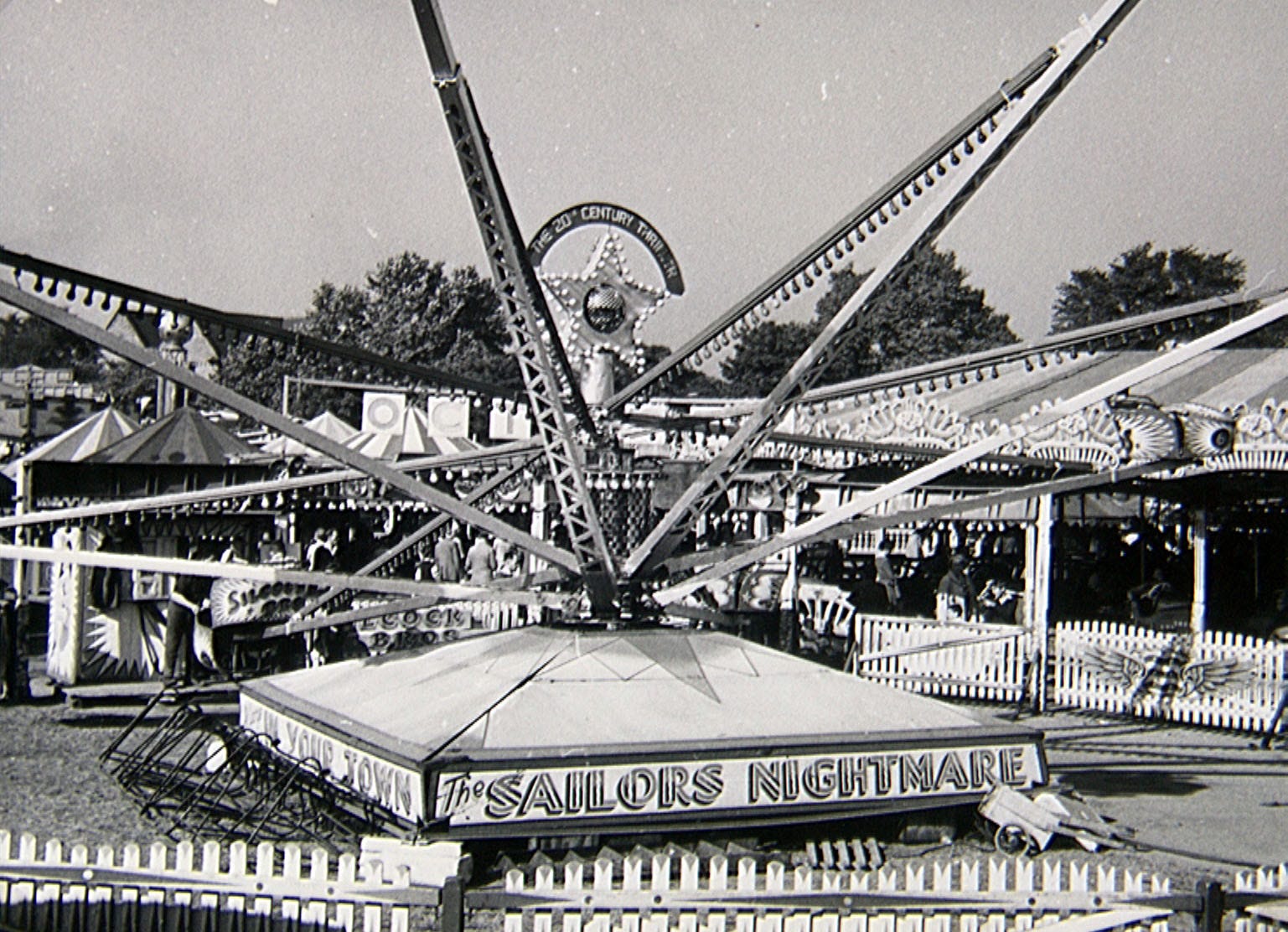
The greater question still lingered – how might we make a figurative depiction of an octopus or squid have cultural relevance or aesthetic splendour amidst the fairground art of the 1950s and beyond? An early example that provides a clue is the “Sailor's Nightmare”, with a name that captures the popular appeal (or terror) of this alien creature.
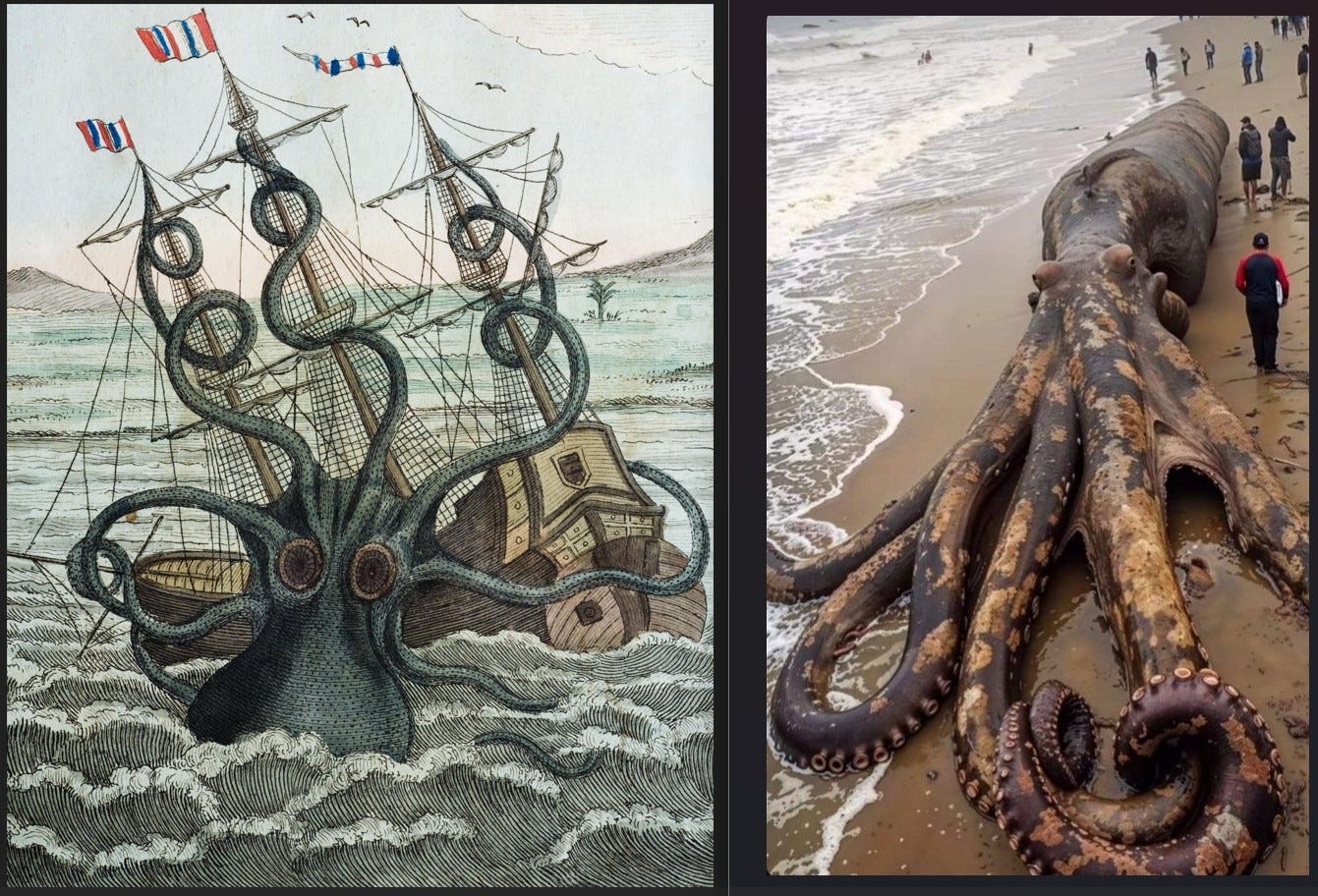
As a sea-dwelling beast, the octopus has been in battle with the shark for decades over the mantle of ocean terror. The giant whale of Moby Dick was also in the running, but that was more a story of a state of mind. The shark is a brute and blunt force, a killing machine with razor-sharp teeth and a blank expression of dead eyes. It haunts the ocean in clear sight, swimming close to the surface with a protruding fin, able to smell blood at a fantastic distance. We can’t think about this animal without summoning John Williams’ terrifying signature for the 1975 film Jaws. In contrast to the shark, the octopus is pure alien – unfathomable, exotic, and unbounded, dwelling in the darkened depths. What the philosopher Immanuel Kant called noumenal - a thing in itself that exists independently of our senses being able to grasp it. It is amorphous in body, depicted with beady eyes, and eight extending tentacles equipped with gripping suckers that can pin down a victim or apparently tear off clothes from a busty blond or brunette. In recent times it is a popular fantasy subject of AI-generated ‘factual’ photographs.
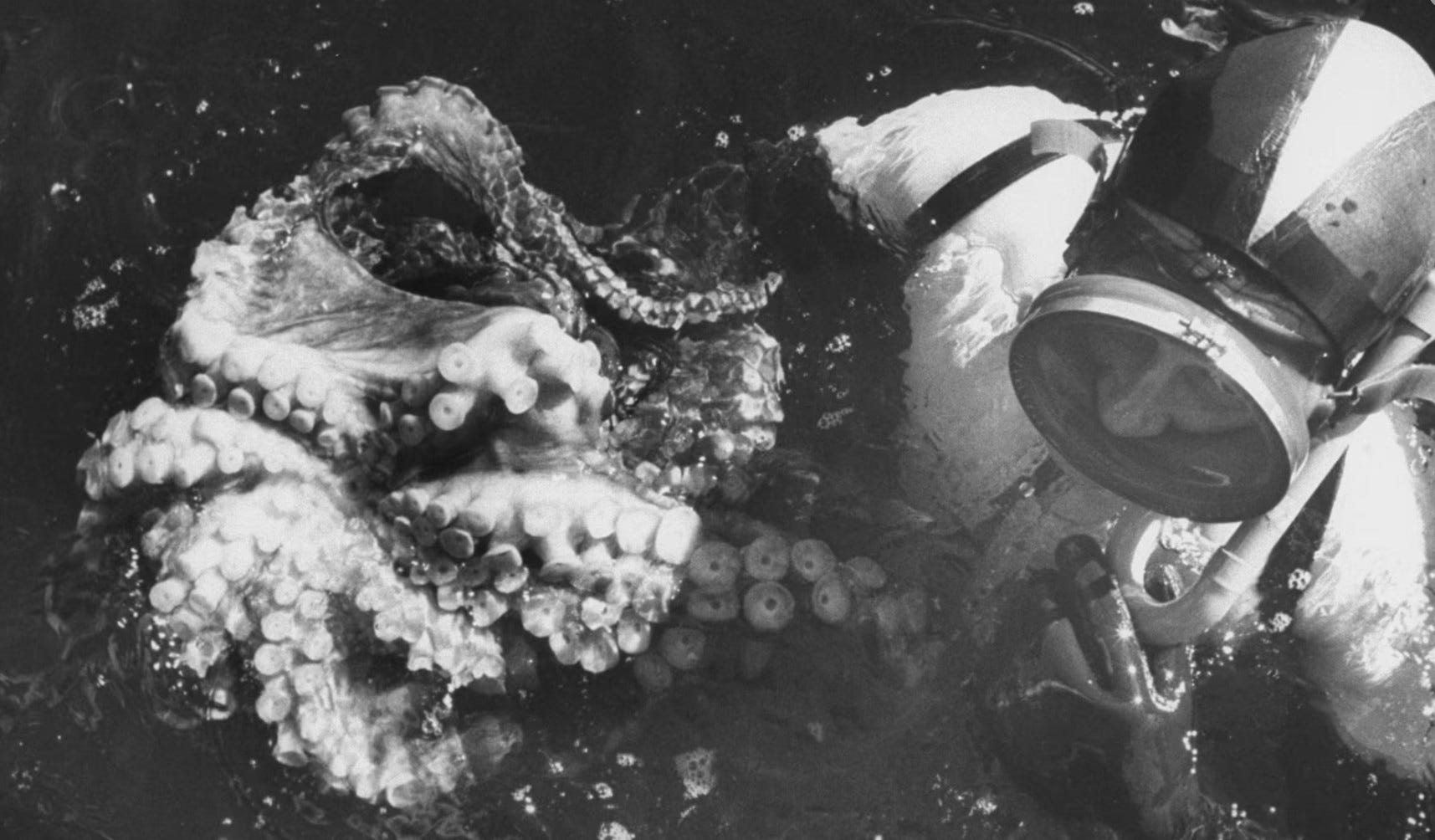
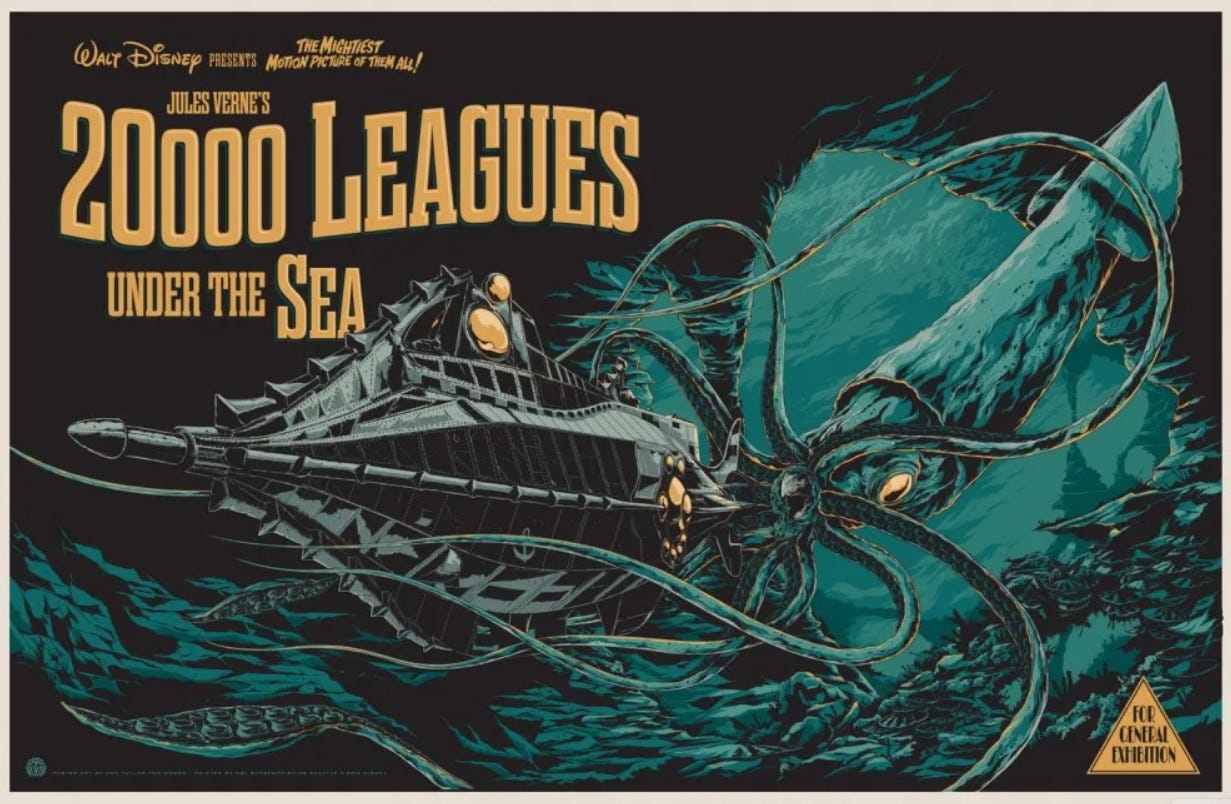
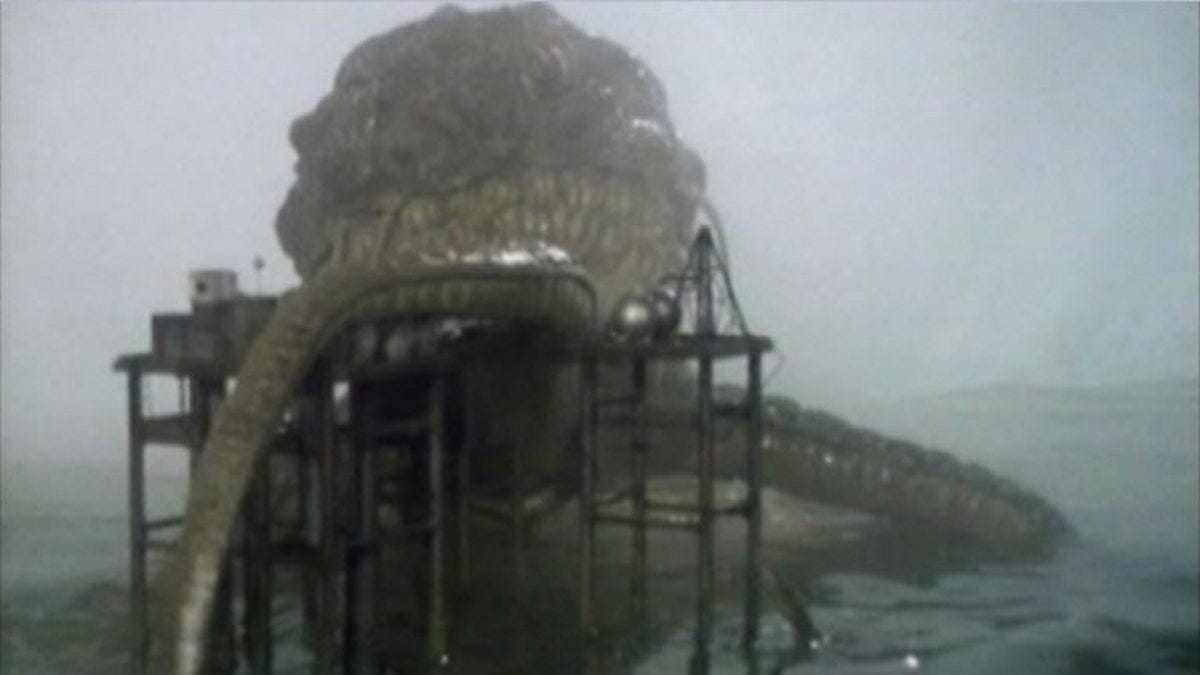
Pulling these creatures from the hidden world of the ocean bed, the unquestionably cruel and intrusive ‘sport’ of octopus wrestling gained popularity from around 1949, with televised world championships extending into the 1960s as something of an exotic novelty like the cliff-diving broadcast on Saturday afternoon’s World of Sport. Comedy octopus scenes also featured in the series of Road to… movies starring Bing Crosby and Bob Hope. More significantly, the terror of the animal was unleashed on cinema screens in 1954, with the adaptation of Jules Verne’s 1870 novel 20,000 Leagues Under the Sea. It was one of the first CinemaScope features maximised for terror with Kirk Douglas and James Mason (as Captain Nemo) undertaking an epic battle with an octopus.
Copycat films followed with It Came from Beneath the Sea in 1955, combining the fear of the atomic age as an octopus is monstrously enlarged following exposure to hydrogen bomb tests. The iconic Ray Harryhausen created a wealth of special effects for the 1961 film Mysterious Island, another Jules Verne adaptation where everything is super-sized. Harryhausen was famed for his Sinbad and Jason and the Argonauts films, but he made an octopus terrify cinema audiences. In fact, 1961 was a bumper year, as we also had Voyage to the Bottom of the Sea with a legendary octopus fight occurring during the laying of undersea cables.
The Doctor Octopus adversary debuted in Spiderman comics in 1963 – not technically an octopus, but drawing on our fear and fascination of the creature. It took a while, but Doctor Who joined the octopus frenzy with ‘The Power of Kroll’ in 1978 featuring Tom Baker – and of course in recent years the popular alien Ood has close resemblance to the uncanny nature of an octopus. Octopus horror films inevitably gained a sexual element with bikini clad women or primitive tribespeople in fur bras often coming off worse in their tangles with cephalopods. A typical example is the 1978 film Warlords of Atlantis. It was generally harmless fun, with tentacles probing over and around skimpy dresses and swimsuits, though there is an earlier precedent in Japanese art of ‘tentacle erotica’ which I won’t go into here! This saucy side to the octopus was grabbed with both hands by fairground artists.
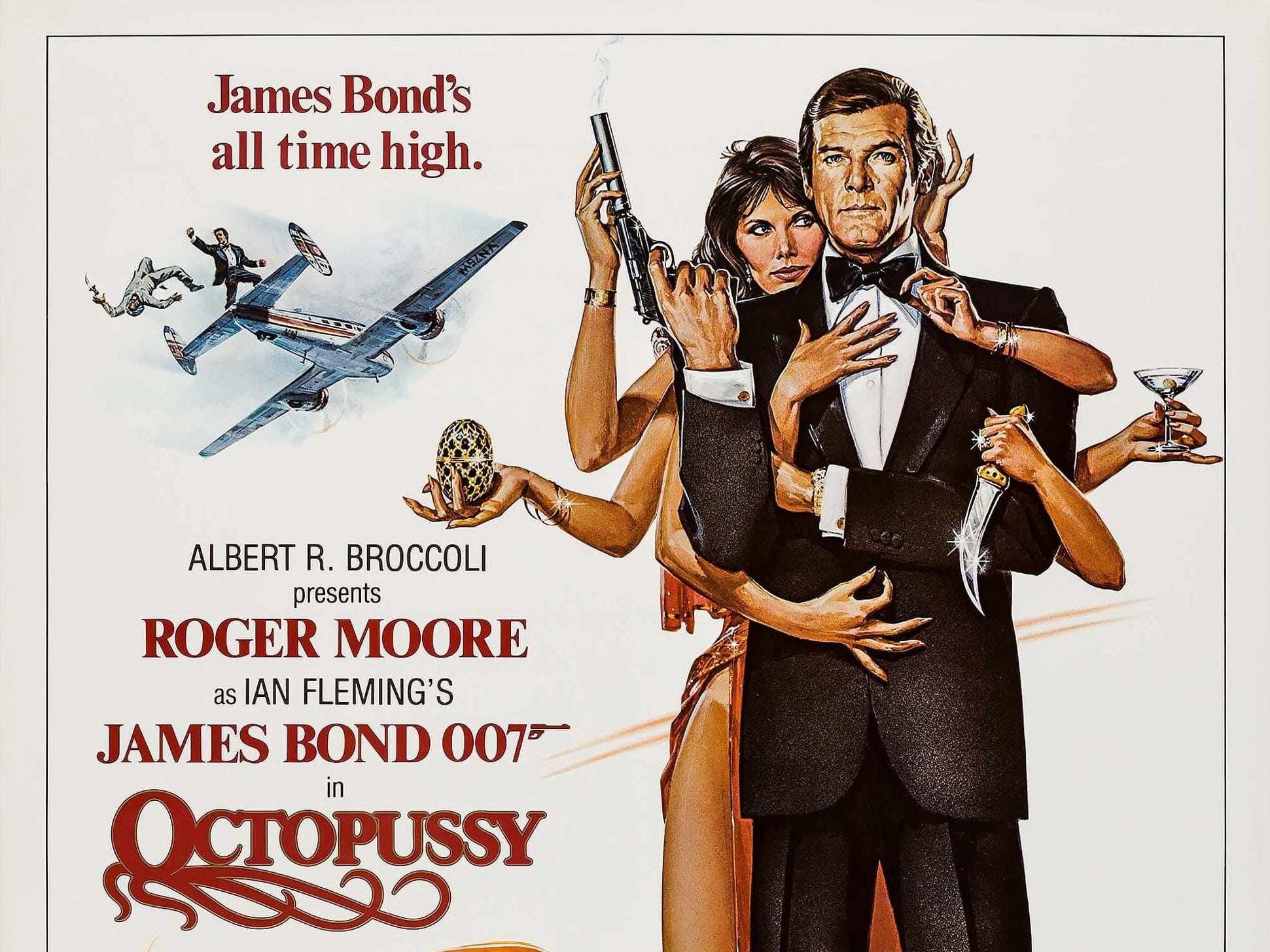
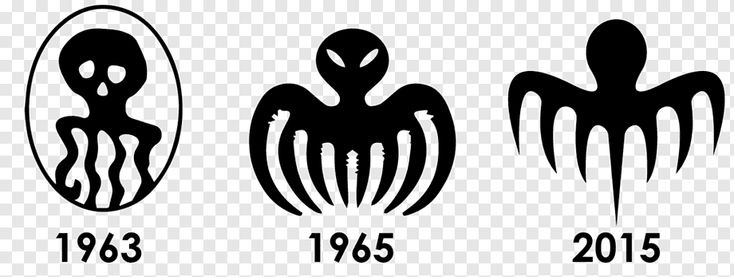
We could class the 1983 James Bond film Octopussy, with Maud Adams playing the film’s title character, as a continuation of the sexual connotations of the animal. The film’s poster has his adversary/conquest using an imaginary eight arms to perform various simultaneous tasks of subterfuge and seduction. However, the image of the octopus makes a more important appearance in the franchise as the emblem for the secretive organisation Spectre. The notion of eight arms exerting multivarious and penetrating ‘tentacles’ of control and puppeteering string-pulling makes the octopus a common visual currency of latter-day conspiracy theorists.
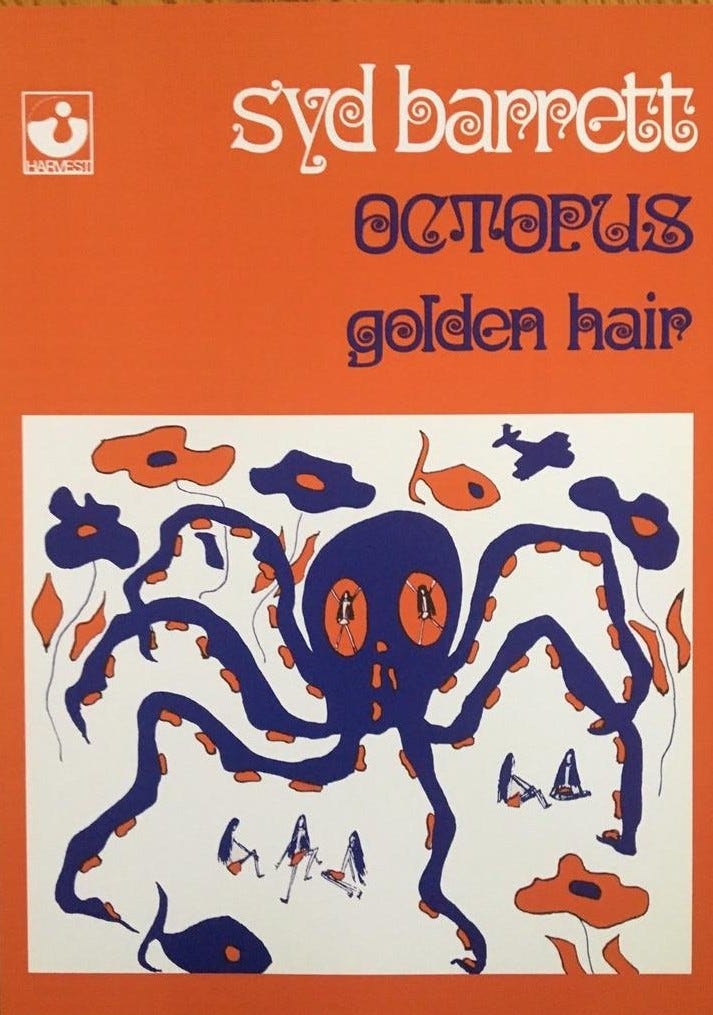
Finally, it is worth mentioning the troubled Pink Floyd frontman Syd Barrett who went solo with a 1969 single entitled ‘Octopus’, said to be based upon his love of the fairground at his home city of Cambridge. The sleeve depicts an Octopus as a possible fairground ride, with Barrett’s contemporaries relaxing between its arms – very much joyous and idyllic rather than fear-inducing. Which puts us back on the fairground, where part two of this article will focus.
Fascinating. Thank you for this.