Uneasy Rider
Leather jackets, subcultures, academic tribes, high-end fashion

In the post-war years, when the teenager was said to be born, various tribes and styles of dressing emerged, starting with the Teddy boys. Places to hang out, rules of engagement, accessories, modes, manners and habits became clustered and cohered, only to unpack, mutate, hybridise and resurface elsewhere. As these fashion tribes diversified enemy lines were established and battles etched out. Early studies of these scenes tend to focus on the participants and key figures, such as Nik Cohn’s book on the post-war menswear fashion movements Today There are No Gentlemen. He wrote from a situated position, finalising and gathering his thoughts in 1971 – by coincidence the year that Malcolm McLaren and Vivienne Westwood took over the back part of the important landmark 430 King’s Road. As Cohn signs off his book, a new chapter begins, and Paul Gorman’s recent biography of McLaren indicates the unique importance of Cohn’s book in propelling McLaren forward into his clothing and music adventures. A ‘Wittgensteinian thread’. In 1971 McLaren is starting out selling old rock and roll records and thinking towards re-crafting some Teddy boy clothing for an unsuspecting market. We all know what happened next.
However, something also happened outside of the mythical ‘street’ of subcultures. Between Cohn’s observational writing and the summarisation of McLaren’s street craft, the notion of subcultures takes root in academic circles through the Centre for Contemporary Cultural Studies (CCCS) at Birmingham University. The new tool of cultural Marxism honed in on these youth gangs with their complex rules and rituals that escaped the clutches of workaday life. Whereas writers such as Cohn would have knowledge from experience, or seek knowledge from interviewing people on the scene, the CCCS academics tended to postulate from a position on high, projecting their own ideologies onto their subjects.
Ironically, the CCCS became an academic subculture of sorts. The allegorical device of the camera obscura is proposed by Marx as way of saying that sociology is not enough, since life and ideas will always present themselves in a constructed reality. Thus, the object of study is encountered upside down as if viewed through the optical lens. The CCCS approached subcultures with a similar outlook, but failed to re-align the image, and instead inverted it further, from upside down to back-to-front. Subcultures are proposed to have hidden or magical meanings that reflect class struggle and stymied class aspirations, and study becomes less about how they construct and present themselves and more about what these construction and presentations might mean or achieve in a particularly narrow context. The 1975 CCCS landmark text Resistance Through Rituals is considered as the launch-pad for this way of thinking, and it has taken many years to either shrug off or challenge this mind-set.
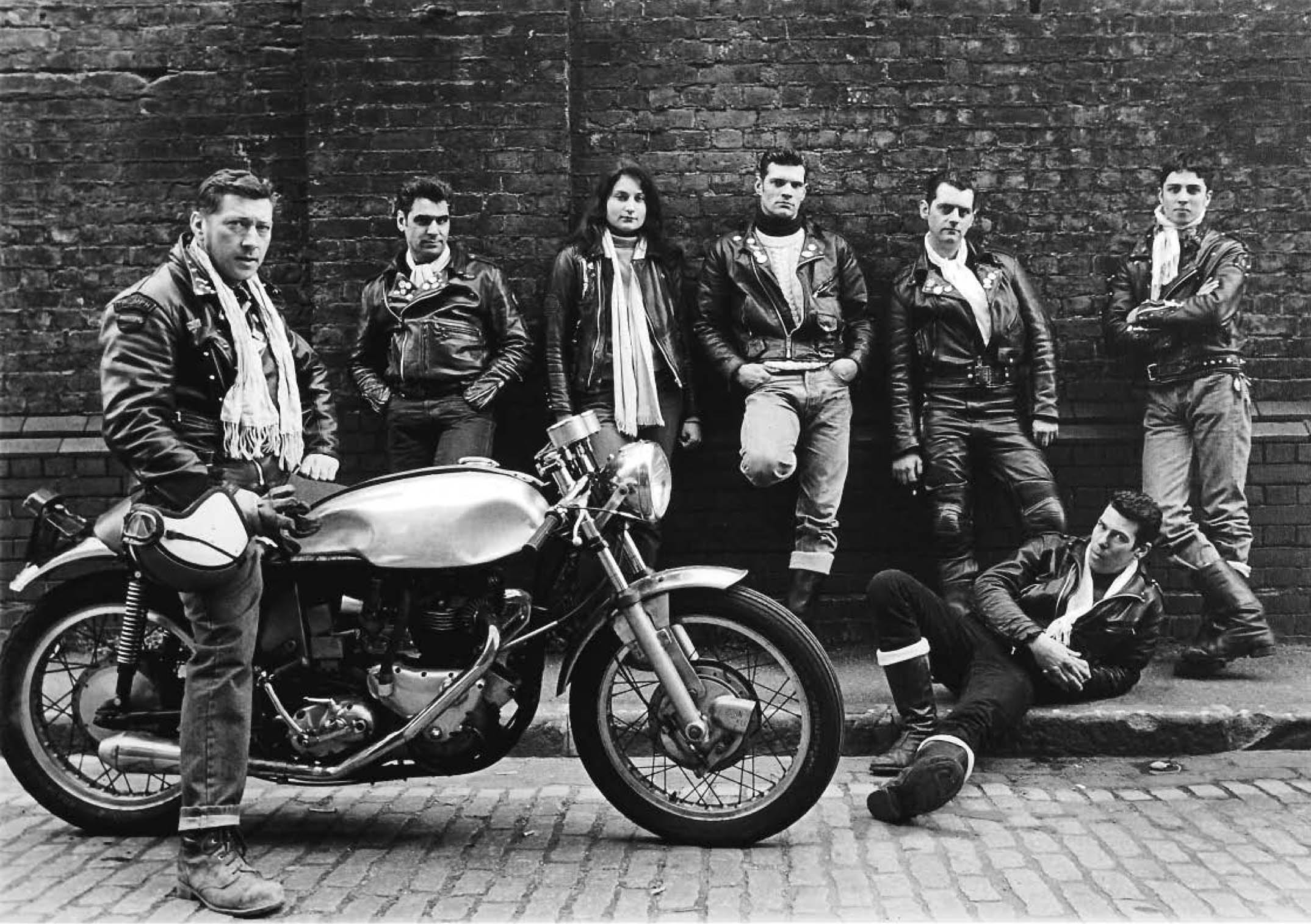
In a more simplified world of interpreting subcultures there is a bifurcating binary between ‘good’ and ‘bad’, installed after the original tribe of Teddy boys gave way to mods and rockers - well, maybe ‘bad’ and ‘worse’ in the wider societal purview. Subcultures undergo acts of scissiparity, branching like an evolutionary tree. The leather biker jacket sits on the bad side, the garment of choice for the rockers, bikers, or ton-up boys that raced around the London roads and gathered around jukeboxes in places like the Ace Café.
The jacket was invented in 1928, with the asymmetric zip allowing the wearer to bend down or hunch over the handlebars without the jacket constricting movement. It came to popular appeal with Marlon Brando’s central role in the 1953 film The Wild One. As is often the case, a film that depicts teenage gangs kicking back against boredom and creating trouble will automatically achieve both a chastised status in mainstream society and a cachet of cool amongst youth, disenfranchised or otherwise. This rocker subculture evolved more gradually and obviously than its mod equivalent, with subsequent biker-centred subcultures such as greasers and hell’s angels resonating with later films such as 1969’s Easy Rider.

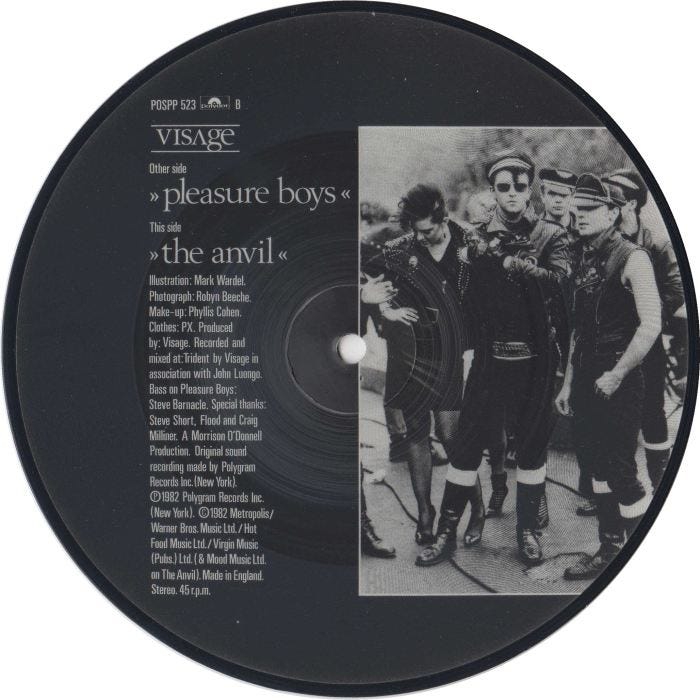
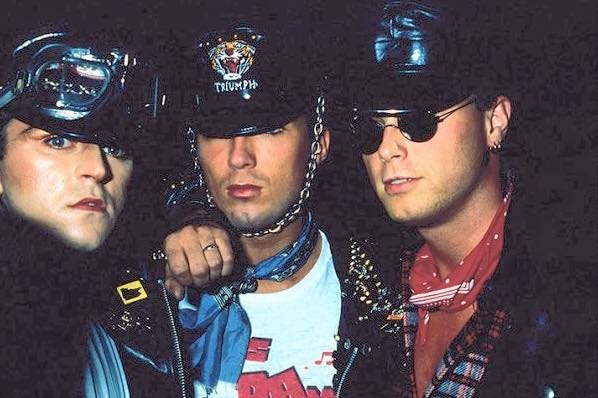
In truth, much of the greaser look was actually denim jackets pickled in engine oil such that they gave the impression of being made of leather. It would resurface as a punk garment, more from the pub-rock side than art-punk side, with the ‘live fast, die young’ figure of Sid Vicious flying the flag in the UK and the Ramones doing likewise over in the USA. Some diversion points crop up, such as the superannuated teenager Fonz in Happy Days, the Kenny Everett character ‘Sid Snot’ who lampooned Sid Vicious, and the new romantic band Visage adopting the look for their winter 1982 single ‘Pleasure Boys’.
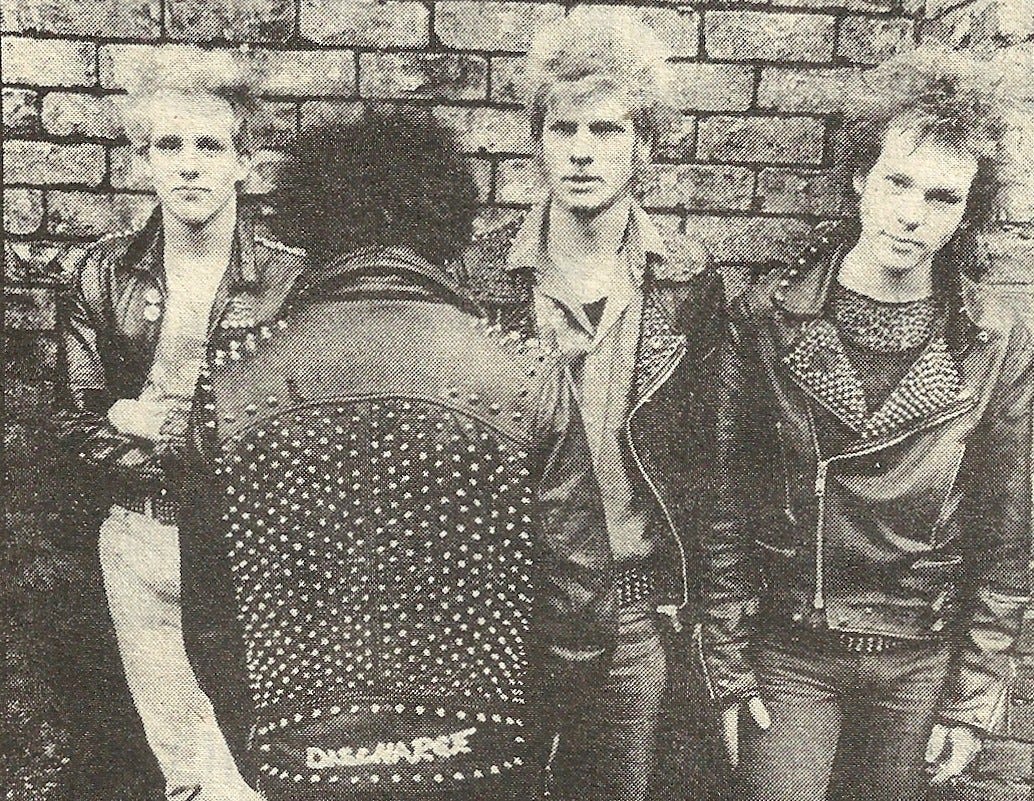
Its final resting point in subcultures would be as the staple garment in the UK82 second-wave punk scene. Here the jacket becomes battle-worn (an aegis) and encrusted with conical studs and crudely painted band names, with the Stoke-on-Trent band Discharge introducing this visual style in 1980 with their ‘Realities of War’ ep that featured a cropped and heavily contrasted jacket reverse as the picture sleeve image. The jacket, worn by the guitarist Bones, is shown to display the back panel – it is a mesmerising work of art, with the conical studs placed in perfect precision that conflate figure and ground with diagonal avenues and spiralling shapes. It is akin to a geometrical sequence artwork by the likes of Sol LeWitt or an optical pattern by Frank Stella.
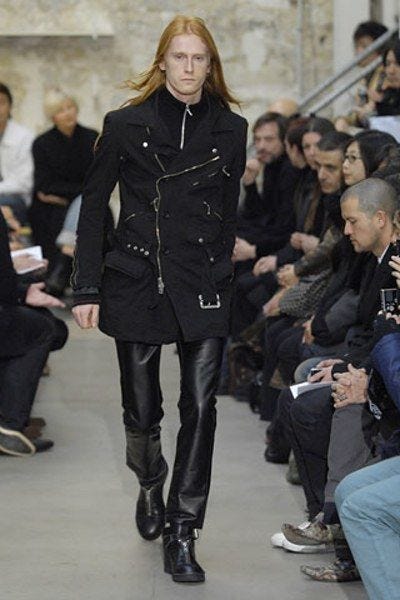
Through the late 1980s and 1990s the biker jacket became a standard object in most luxury fashion collections, this in turn paving the way for it to become part of the high street mainstream fashion. Ted Polhemus in his 1994 book Streetstyle suggests that the biker jacket is an exemplar of the process of “bubble-up”, which reverses American sociologist Thorstein Veblen’s historical proposition of fashion embodying a trickle-down direction from the wealthy classes and their self-assured position as aspirational guiders of society. Polhemus cleverly shows how the biker jacket was a provenance of the posing punks in 1980, to be picked up by what he calls “street-cred” designers such as Katharine Hamnett, Pam Hogg and Jean-Paul Gauliter. It quickly shifts a gear to be included in collections by Versace and Thierry Mugler. This dynamic mirrors the fashion printed media of the time: i-D (and occasionally The Face) initially have a reliance on a vernacular street fashion leading the way, and, as the street fashions are taken from the street onto the catwalk, magazines such as Vogue and Elle move in to cover it. It casts a penumbra over the tradition of street-focussed magazines such as i-D – not a wholesale revaluation or repudiation, more a sense of doubt and confusion. British cultural sociologist Angela McRobbie captures this retrospective uncertainty in her 1998 book British Fashion Design, setting out a taxonomy of users and uses of i-D. This ranges from an autotelic impulse to have a street feel, to fashion designers poring over the pages of photographs to get a jump-start on ideas, to everyday subcultural consumers looking to gain insider knowledge and (borrowing a phrase from subcultures author Sarah Thornton) ‘subcultural capital’.
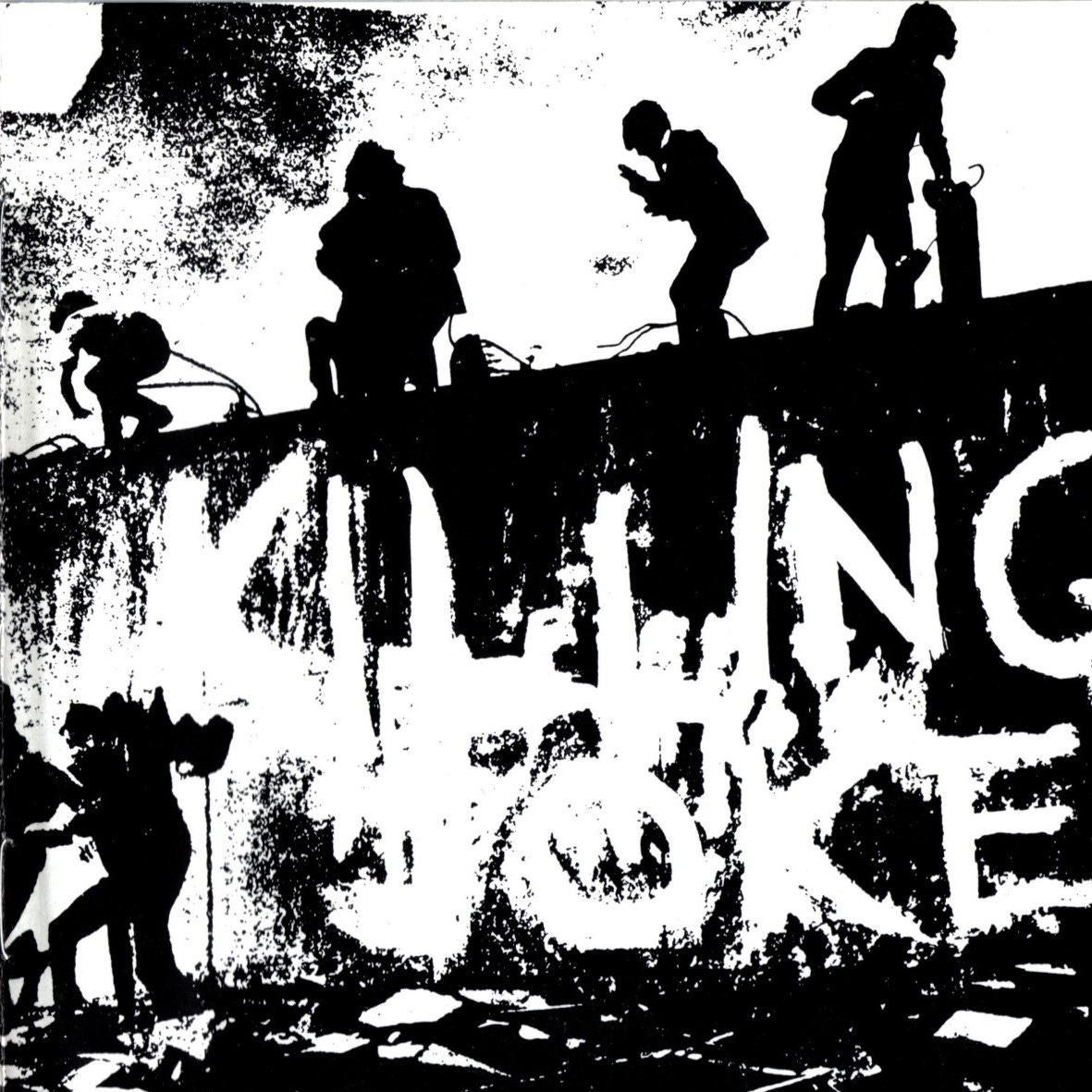
As a teenager I tried, and inevitably failed, to model the punk biker jacket look. My first jacket was a cheap PVC version, obviously to the chagrin of my fellow punks, though I persevered and stencilled the graphic from the front of Killing Joke’s first album from 1980 on the back section of the jacket using Tippex. Getting the name or graphics of a band on a jacket was a tense decision in both choice and execution. I was recently reminded of this in Pulp drummer Nick Banks’ autobiography, where he recalls an intricately reproduced Stranglers album sleeve on his brother’s jacket that opened the way to a date with a punk girl. No such luck for me. I had seen Killing Joke live in 1980, early in their career, and was very much taken by their raggedy look, disinterested or aloof countenance and powerful bass-heavy sound. Furthermore, the artwork to their album was darkly spellbinding with its contrasted outline image of (apparently) four figures, loaded with punk frisson and edginess. It was a good choice for a jacket.
Killing Joke, and their designer Mike Coles, had in turn appropriated this image from a 1971 Don McCullin photograph of Derry youths escaping a CS gas attack during the Irish troubles, jumping down from the ruined wall of a burnt-out sorting office, fleeing the encroaching gas cloud. Coles pulls off a remarkable switch with this image, folding it around the front and back of the gatefold sleeve such that the original photograph is cropped to its right-hand section as the front cover of the album. With a normal gatefold sleeve or wraparound image you have a continuous narrative, a co-dependency between the front and back. Gatefold sleeves were perceived as somewhat lavish, perhaps in the realm of prog rock, and so not particularly punk. But they were creeping in to the genre with big label bands like Sham 69 and Siouxsie and the Banshees opting for them.
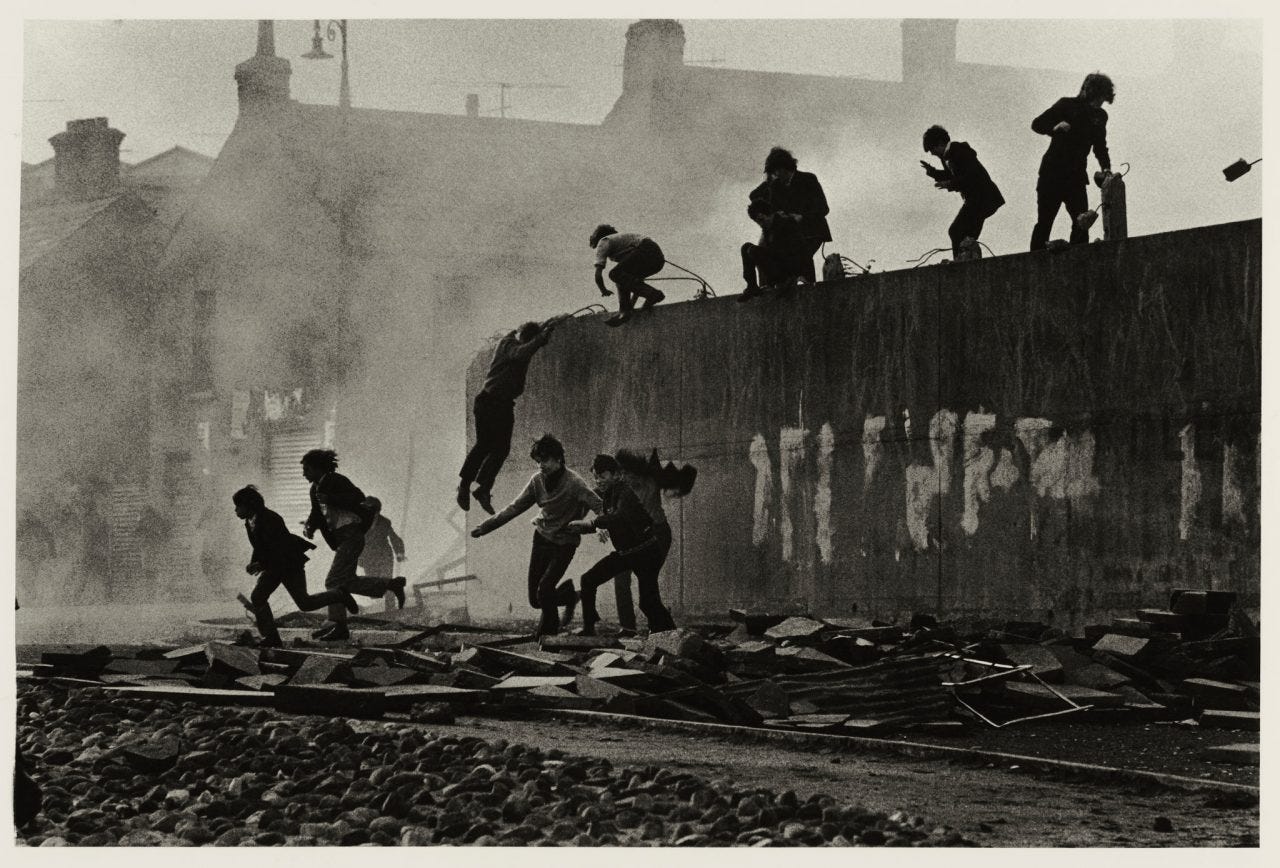
For Killing Joke’s eponymous debut album, an auspicious independent gatefold, the front and back are more co-independent, each taking on a life of their own. Using multiple passes of photocopying and manipulation the contrast is ramped up to convert the image to a stark black and white composition. By applying white gouache, Coles then augments the previously inchoate markings on the wall – possibly some obliterated sectarian graffiti or the vestiges of an eradicated flypostering session – to spell out the band’s name, cleverly blending the letters into the visual urgency and chaos of the original photograph that reflects a hectic and harrowing real life situation.
However, the reality of the situation is further warped by Coles. By isolating the figures on the sharp, sloping edge of the wall as black silhouettes standing against a dissipating cloud of CS gas (now rendered as blinding white as opposed to simply blinding) he gives them a new charge. Greyscale details are eliminated meaning that interrogating the figures in the image to ascertain their specific movements, intents and possible feelings (or fears) is no longer an option. Furthermore, the pair of overlapping figures third from the right are rendered as a single figure. What we are left to gaze upon are apparently four figures, and they appear in poses that symbolise a rapturous skanking dance, perfect for the dub-heavy post-punk of Killing Joke that thrives in the broken-down post-industrial cityscape. The concrete blocks and disarrayed steel bars of the smashed structure become speakers and wires – transforming to an image of the four figures of the band performing on a high stage, amidst the end of the world. I have effectively described this image backwards, starting with what I now know (the McCullin photograph original) – however, to the 15-year-old me, oblivious to McCullin’s oeuvre, the first impression is that of a snapshot of an authority-amidst-chaos cool-under-pressure performance of the band itself.
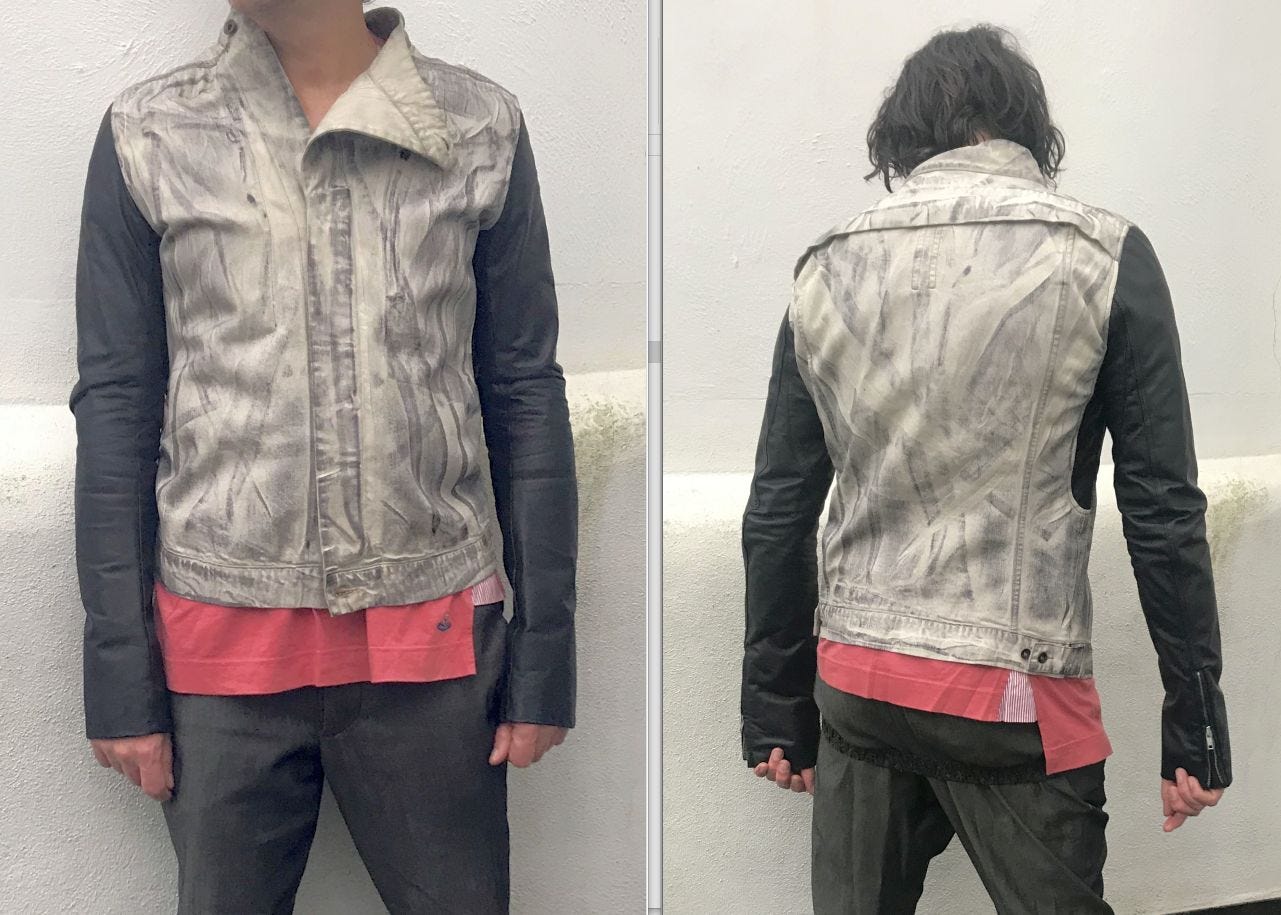
This jacket – and its artwork, which soon peeled away and was replaced by a Bauhaus design - did not last long, and my only memory of it is wearing it with a UK Subs luminous tee-shirt for the ‘non-uniform day’ at secondary school. I was subsequently told off by numerous teachers who berated me in various terms as to how they “thought better of me”. Sadly, no photographs exist. Shortly after this, my dad bought me a proper leather motorcycle jacket from someone he knew at work, but this was a heavily padded jacket with red shoulders and elbow protectors and absolutely swamped my puny frame. It was not punk in any way whatsoever, but I managed to sell this on to a school friend who had ambitions on owning a powerful motorbike. It wouldn’t be until over 40 years later that I crossed paths with a biker jacket again, after purchasing a (heavily discounted) Rick Owens jacket with calf-leather sleeves and a rough canvas body decorated with oil marks. I’m resisting the temptation to paint a band logo on the back – Tippex or otherwise.